Systematically Distributing Holiday Cheer

The holiday season is about giving and the classic song quantifies the largess. The American Museum of Natural History is home to many happy childhood memories and I embrace their scientific form of expressing holiday cheer. Not everyone can claim their “True Love” is a “Science Geek” – but kudos to AMNHNYC for helping us all be Science Lovers!


Ancient Trees: Portraits of Time

Photo by Beth Moon. Via thisiscolossal.com

For obvious reasons, we’re big fans of trees. We’ve shared a piece on tree-sitting (which is, of course, linked to tree-hugging), and featured an environmental history essay that included some hypothetical dendrochronology. Now, we’re happy to find some amazing photographs developed in the almost lost art of painstaking platinum/palladium processing by Beth Moon.

Photo by Beth Moon.

Abbeville Press on Beth Moon’s book of photography, Ancient Trees: Portraits of Time:

Beth Moon’s fourteen-year quest to photograph ancient trees has taken her across the United States, Europe, Asia, the Middle East, and Africa. Some of her subjects grow in isolation, on remote mountainsides, private estates, or nature preserves; others maintain a proud, though often precarious, existence in the midst of civilization. All, however, share a mysterious beauty perfected by age and the power to connect us to a sense of time and nature much greater than ourselves. It is this beauty, and this power, that Moon captures in her remarkable photographs.

Continue reading

Counting Monarchs

Creating Breeding Habitat for Monarchs: To reverse the breeding habitat loss in the U.S., the Monarch Joint Venture promotes the inclusion of native milkweed and nectar plants in restoration efforts across the country ranging from small gardens to natural areas and corporate landscapes. (Photo by Giuseppina Croce)

We’ve seen some information on how much people value monarch butterflies. Now we’re learning that the beautiful orange lepidopterans have their own citizen science Thanksgiving count and might soon be labeled as a threatened species under the Endangered Species Act if a petition has any effect.

Beloved by tattoo parlors and fantasy princess landscapes, the king of butterflies is in decline. During their annual migration, monarch butterflies are famous for gathering in innumerable flutters as they fly from summer breeding grounds in the U.S. and Canada to warmer sites in Mexico and California. At one time, there were over a billion monarchs making this journey. Now, less than 4% are left.

Over the years, human behaviors, particularly agricultural practices have contributed to the monarch’s decline. In a petition to protect monarchs scientists point to habitat loss as grassland is converted to farmland and overwintering sites are deforested as a major factor. On top of that, the cultivation of certain genetically engineered crops enable farmers to apply broad-spectrum herbicides killing weeds such as milkweed, the monarch caterpillar’s sole food source.

Continue reading

Pink Pigeons in Mauritius

Left, pink pigeon via Dick Daniels/CarolinaBirds.org/Wikimedia Commons; right Madagascan turtle dove via Roland zh/Wikimedia Commons.

We’ve featured pieces on another, less fortunate species of pigeon before, and it’s great to read news about a critically endangered species that has been making a comeback after conservation efforts. As the article by Jason Goldman for Conservation Magazine shows, however, there’s still a ways to go before the pink pigeon has fully recovered as a species:

The pink pigeon is the lone survivor of all the columbids – pigeons and doves – native to Mauritius. In 1990 the species was down to just nine individuals, but thanks to the work of the Mauritian Wildlife Foundation, there were some 400 individuals flying the skies of the island by 2013. In the year 2000, the IUCN downgraded the species from “critically endangered” to “endangered.” They’re not out of the woods yet, but their recovery remains an impressive and rare example of good news in conservation.

Continue reading

Kleptothermy

Photo of Blue-lipped sea krait (Laticauda laticaudata), Anemone Reef, Thailand. Credit: Jon Hanson.

We’ve featured a post on biological theft before, under the name of mycocleptism. In that case the thief was a species of beetle that lived off the fungal tunnels of another beetle species, and now we are learning of a different type of behavior: stealing heat. Apparently certain reptiles, which are unable to bask in the sun at night, have found an effective method of transferring warmth that does not involve time travel. Instead, they snuggle up in the nests of birds. Brian Switek reports on the phenomenon for Nat Geo below, but one question that seems to remain unanswered is whether the feathered members of the deal are getting anything out of their reptilian visitors. For example, sea snakes like the ones mentioned in the referenced article are venomous — could it be that their presence in a shearwater nest would protect the birds from potential predators?

You could bask in the sun to remedy the cold. That’s a classic reptile way of working some warmth back beneath those scales. But there’s another option. You could steal your warmth. All you’d have to do is find some seabirds.

Continue reading

The Differences Between Rabbits and Hares

A female European hare (right) boxes with a male in Wales. PHOTOGRAPH BY ANDY ROUSE, 2020VISION/NATURE PICTURE LIBRARY/CORBIS. Via National Geographic.

Thank you to Liz Langley from National Geographic for highlighting differences that we have always been curious about but never thought about looking into until they were laid out so clearly in a single place. And with cute photos and a couple puns to boot. The article below comes from Nat Geo’s “Weird Animal Question of the Week,” which we will be sure to visit in the future.

Hares and rabbits are in the same family, Leporidae, but they’re “different species, like sheep and goats are different species,” Steven Lukefahr, a geneticist at Texas A&M University in Kingsville, said via email.

Hares are also larger, have longer ears, and are less social than rabbits. The “most profound difference” is seen in baby hares versus baby bunnies, said Philip Stott, a wildlife ecologist at the University of Adelaide in Australia. (See National Geographic’s pictures of baby animals.)

First off, a hare’s pregnancy lasts 42 days, compared with rabbits’ 30-31 days with a bun(ny) in the oven.

Continue reading

Let Them Eat Cake

This slideshow requires JavaScript.

Thanks to NPR we learned that Kerala isn’t the only state with a history of Plum Cakes and Fruit Cakes in late December. We love this facinating non-sectarian history!

Cake knows no religion…. Jewish bakeries and Muslim bakers in a predominantly Hindu city, baking Christmas cakes round the clock. You could call it a triumph of capitalism. Or a slice of peace and goodwill for all. With almond icing.

The Beauty of Life With X-Ray Vision

Python and protea flower. The snake’s trachea is visible (credit: Arie van ’t Riet / SPL)

Thank you to the BBC’s Earth section for sharing Dutch medical physicist and artist Arie van ’t Riet’s work, which he accomplishes with his home x-ray machine and dead flora and fauna.

Arie van ’t Riet has a unique view of life on earth.

As a medical physicist based in the Netherlands, van ’t Riet teaches radiographers about radiation physics and safety. As part of his teaching program, van ’t Riet searched for an example to demonstrate and visualise the influence of x-ray energy on the contrast of an x-ray image. The higher the x-ray energy, the lower the contrast.

“I arrived at flowers. After some years I started to edit and partly colour these x-ray images. And I added animals,” he says.

Continue reading

Canadian Outdoor Hockey – Threatened by Climate Change?

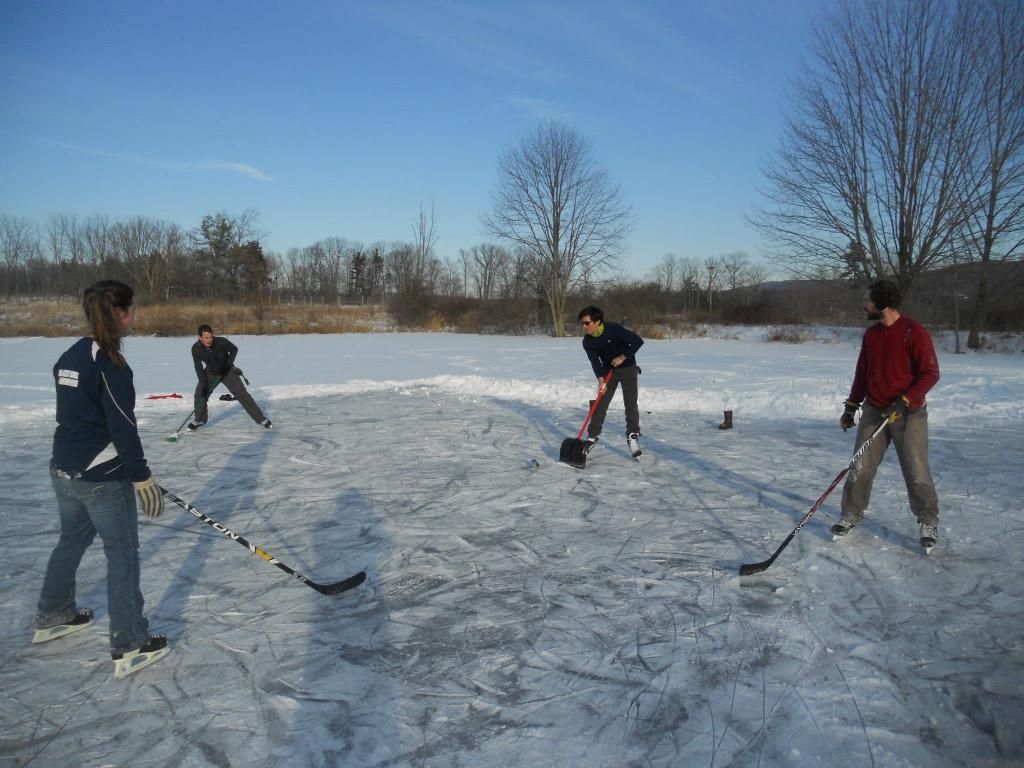
Photo of Cornell students playing outdoor hockey somewhere in NY, by Miles Luo

While a student at Cornell University, I played hockey out on a pond multiple times, and always had fun even on the occasions when several of us needed to use brooms or shovels as hockey sticks, and a crushed pineapple juice can as a puck. In recent years, it’s been a little tougher to find a good time to play since temperatures have fluctuated so wildly sometimes. Since my friends and I like to stay very conservative with our estimates on the ice’s thickness, an unusually warm day after a series of extremely cold — and typical Ithaca — ones can set us back a bit as we wait for a safer time to get on a pond.

So I at least partly understand the angst of all outdoor hockey-loving Canadians as described by Dave Levitan for Conservation Magazine:

Take anything from Canadians, anything at all—anything except hockey.

Few countries have such a relationship with an individual sport; cricket in India, soccer (football) in Brazil or various others, hockey in Canada. And while the Maple Leafs and the Canadiens aren’t going anywhere, the sport as it is played by millions of others in Canada is in serious danger thanks to climate change.

Continue reading

Algae Could Turn Toxic Water Into Metal and Biofuel

Contaminated water at Wheal Jane, where the Department for Environment is spending £2m a year on combating pollution. Photograph: Rex Features. Via The Guardian.

We’ve featured pieces on different biofuels before, though probably not enough of them. We’ve also recently seen an example of how science can help clean up the messes that other scientifically informed — but less environmentally scrupulous — activities create, like the new carbon-scrubbing structures that might be used in coal plants. The topic of bioremediation is one of great interest and which we plan on sharing more about, especially in the mycological realm. For now we’ll start with this story of algal bioremediation and resource recuperation in Cornwall, one of England’s most historically important mining regions. Jamie Doward reports for The Guardian:

A groundbreaking research project to clean up a flooded Cornish tin mine is using algae to harvest the precious heavy metals in its toxic water, while simultaneously producing biofuel.

If the project, which is at a very early stage, is proven to work, it could have huge environmental benefits around the world.

Continue reading

The Glossiness of Tinamou Eggs

Eggs from tinamous being used for research at Hunter College. Tinamou eggs are up to 14 times as glossy as the average chicken egg. Credit Fred R. Conrad/The New York Times

Readers of the blog who have visited in recent months will know that I do a lot of work with chicken eggs for artistic purposes, and readers from years ago might remember that I worked with Celebrate Urban Birds at the Cornell Lab of Ornithology, and I often wrote about bird-related topics (and still do!). During one of CUBs’ photo competitions called Funky Nests, I posted on egg coloration, and looking back on that post I am very surprised to see that I didn’t mention the eggs of a family of birds called tinamous. I’m puzzled as to why I wouldn’t have written about tinamou eggs because they are curiously glossy. In addition to having quite pretty colors, the eggs are extremely shiny to the point of looking fake, or varnished by wood elves after they’re laid.

Perhaps I didn’t include tinamou eggs in my post because very little is understood about why their glossiness exists, as Rachel Nuwer reports for the New York Times this week in an article with a title that obviously caught my eye:

Easter Eggs Without a Kit

The Shy, Drab Tinamou Has a Stunning Palette That Still Holds More Mysteries Than Answers.

When it comes to shell color, most birds’ eggs conform to one of four motifs: colored with spots, colored without spots, white with spots or pure white.

Continue reading

Sloths’ and Armadillos’ Sight Stinks

Photo credit: Mwcolgan8. Via National Geographic.

Watching the pair of nine-banded armadillos in this video root around the forest floor looking for food, you’d think that in addition to their snuffling and sensitive noses, the armored mammals would also be using their eyes to spot scurrying insects or the white flash of a grub in the dirt. And a three-toed sloth like the one in this other video should definitely be able to scan the skies for predatory birds when it is taking care of its vulnerable young, right? Well actually, as NatGeo contributor Ed Yong reports, scientists at UC Riverside believe the genes that build color-detecting cone cells in eyes are broken in sloths, armadillos, and several other mammal species descended from the same burrowing ancestor:

Armadillos have terrible vision. In 1913, American zoologists Horatio H. Newman and J. Thomas Patterson wrote, “The eyes [of the nine-banded armadillo] are rudimentary and practically useless. If disturbed an armadillo will charge off in a straight line and is as apt to run into a tree trunk as to avoid it.”

The three-toed sloth isn’t much better. “If an infant sloth is placed five feet away from its mother on a horizontal branch at the same level, at once the young sloth begins to cry, the mother shows that she heard it calling and turns her head in all directions. Many times she looks straight in the direction of her offspring but neither sight, hearing nor smell apparently avail anything,” wrote Michel Goffart in 1971. And more comically: “Infuriated male [sloths] try to hit each other when they are still distant by more than a metre and a half.”

Continue reading

Australian Emissions Drop With New Carbon Tax

Via The Guardian

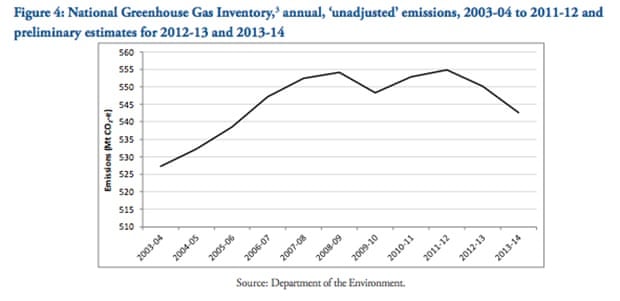
In 2012, Australia introduced a carbon tax, or carbon “price,” with the goal of reducing the country’s greenhouse gas emissions. Then, this July, the Australian government — under a different party than in 2012 — abolished the carbon tax to fulfill an election promise, since they argued that the tax was too much of a burden on homeowners and also discouraging industry. But data released this month by the Department of the Environment shows that Australia’s emissions dropped 1.4% during 2013 (the second year of the tax), which is the highest annual decrease in the country’s emissions within the last decade. Oliver Milman reports for The Guardian:

The latest greenhouse gas inventory showed emissions from the electricity sector, the industry most affected by carbon pricing, fell 4% in the year to June.

Electricity emissions account for a third of Australia’s emissions output, which stood at 542.6m tonnes in the year to June, down from 550.2m tonnes in the previous 12 months.

Emissions from transport dropped 0.4% in the year to June, with gases released by the agriculture industry decreasing by 2.6%. Industrial processes emitted 1.3% less greenhouse gas during the year, although fugitive emissions, such as those from mining, rose 5.1%.

Electricity emissions peaked in 2008 and have steadily decreased ever since, driven by a number of factors such as the winding down of parts of Australia’s manufacturing base and energy efficiency initiatives.

Continue reading

Finger Lakes, Just Say No

It is not a simple matter to resist all the various ways in which our natural environment is being threatened in insidious manner on a regular basis, especially proposals that appear to solve energy needs. Please, no snickering about chardonnay-sipping liberals while you read the latest such proposal in the region a number of our contributors call home, because these are actually salt of the earth farmers and craft level producers of a sacred beverage (yes, we can pour it on when properly motivated) who will suffer most if this project is implemented as proposed:

WATKINS-slide-WT0Z-thumbStandardWhat Pairs Well With a Finger Lakes White? Not Propane, Vintners Say

Local vintners are fighting a project under which tens of millions of gallons of liquefied petroleum gas, and up to two billion cubic feet of natural gas, would be stored in caverns near Seneca Lake.