Katherine J. Wu On Grizzlies

a black-and-white photo of several brown bears walking across a grassy plain, in front of mountains

Getty

We always appreciate Katherine J. Wu‘s writings on nature, especially her use of archival material to make a point:

Grizzly Bears Are Mostly Vegan

But humans made them more carnivorous.

On the subject of grizzly bears, the San Francisco Call—a short-lived newspaper that went out of print in 1913—wasn’t what you’d call kind. Continue reading

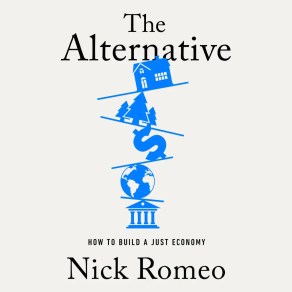
The Alternative, Reviewed

Nick Romeo has a new book coming out, and the Guardian recommends it, tentatively. It is up to all of us to answer the reviewer’s doubts through our choices and actions:

The Alternative by Nick Romeo review – moral substitutes for the free market model

A survey of the global alternatives to the current economic system makes for an enlightening, inspiring read, but you’re left wondering why such initiatives have failed to take hold

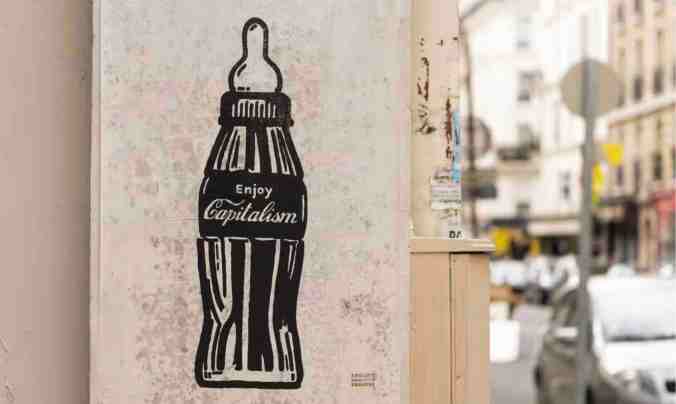
Anti-capitalist street art in the 11th arrondissement of Paris. Photograph: Soma/Alamy

I wrestled with how to approach this review. On the one hand, The Alternative brings together an appealing range of ways people across the west are imaginatively and determinedly contesting the givens in today’s capitalism. There is an ache for better – for more just ways of organising the way we work and adding more meaning to our lives. Continue reading

Nature, Peer-Reviewed Science Since 1869

The scientific journal Nature shows up in exactly one search result among thousands of posts here. And that one, because photos have such a wide audience. We have not linked to their articles because, since 1869, they are written by and oriented to highly credentialed scientists. A look at ten influential articles makes the point. And we can only respect what they do, even if we wish more of us could digest more of the science. Now that they offer some articles in audio version, this may make the science more accessible to those who hear better than they read. Judge for yourself, if you want to pay to play. The audio version of the article below (available on YouTube above) is free, but unless you have a subscription the written version is available for a small charge:

Rooftop solar panels in China. Tandem cells could boost power density in crowded urban areas. Credit: VCG/Getty

A new kind of solar cell is coming: is it the future of green energy?

Firms commercializing perovskite–silicon ‘tandem’ photovoltaics say that the panels will be more efficient and could lead to cheaper electricity.

On the outskirts of Brandenburg an der Havel, Germany, nestled among car dealerships and hardware shops, sits a two-storey factory stuffed with solar-power secrets. It’s here where UK firm Oxford PV is producing commercial solar cells using perovskites: cheap, abundant photovoltaic (PV) materials that some have hailed as the future of green energy. Surrounded by unkempt grass and a weed-strewn car park, the factory is a modest cradle for such a potentially transformative technology, but the firm’s chief technology officer Chris Case is clearly in love with the place. “This is the culmination of my dreams,” he says.

The Irony Of Patriotic Fervor

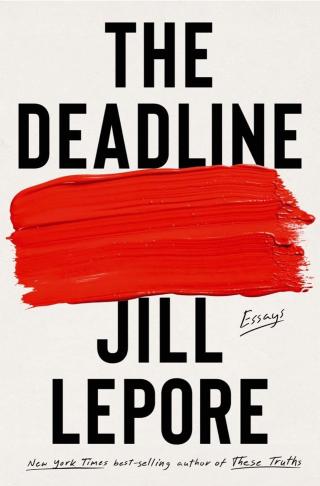
There is an interview with Jill Lepore discussing this book to the left, which I link to below. It got me thinking about an earlier post I wrote about having read April Morning and The Hessian in my teens and my brief encounter with their author Howard Fast. That post was primarily a thank you to the librarians who got me interested in reading. I knew from the return address on the letter he sent me that Mr. Fast lived on my same street, a five minute walk from my home. I enjoyed that fact because I enjoyed the two of his books that I had read. But I never saw him after the library lecture.

Who I did see frequently, because he drove an easily identifiable red convertible Cadillac, and also lived close by, was Roy Cohn. Yes, that guy. If you know a certain bit of mid-20th Century history, the bit called the Red Scare, you might understand my first glimpse of irony. I had learned that Howard Fast was punished early in his career for his political beliefs. By the time I knew who Roy Cohn was I knew he had something to do with that punishment, directly or indirectly. What I found ironic, as a teenager, was that Howard Fast was influential on my sense of why patriotism exists; and Roy Cohn, a self-proclaimed protector of American values, made me fear patriotism. I always wondered if they knew they lived so close to one another. History does not seem to have recorded anything about that. The interview by Julien Crockett below reminded me of that irony of patriotic fervor I sensed in my teens:

The Hold of the Dead Over the Living: A Conversation with Jill Lepore

“I WROTE THESE essays during a period of terrible, tragic decline in the United States,” historian Jill Lepore writes in the introduction to her new essay collection, The Deadline. Wide-ranging and often provocative, the essays cover the past decade of “political violence, endless vicious culture war, a series of constitutional crises, catastrophic climate change, and a global pandemic.” In short, “a time that felt like a time, felt like history.” Continue reading

Rishi’s Wrong, Skidmore’s Right

Chris Skidmore said he could ‘no longer condone nor continue to support a government that is committed to a course of action that I know is wrong’. Photograph: Chris McAndrew/UK Parliament/PA

We rarely applaud those on the right side of the political spectrum when it comes to environmental issues. Most have been on the wrong side of history with regard to climate change. When one stands up and challenges the status quo, applause applause:

Chris Skidmore resigns Conservative whip over Sunak’s oil and gas licence plan

Former minister also resigns as an MP, which will trigger byelection in his Kingswood constituency

A former Conservative minister has announced he is resigning as an MP in protest at the party’s dash for oil and gas, setting up an awkward vote for the prime minister on the issue on Monday and an even more difficult byelection within weeks. Continue reading

Dragon Fruit, Pineapple & Tropical Mix, Oh My

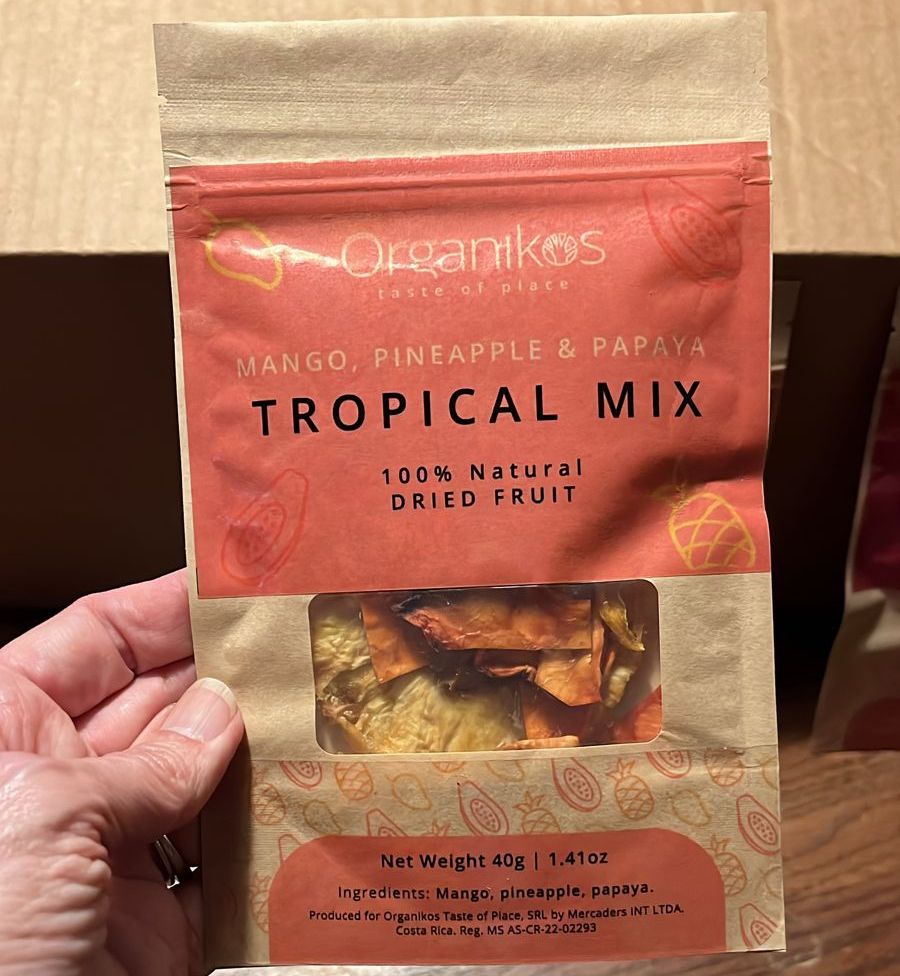
It started with the dehydrated Pitaya. I was sent a sample. I did not open it for many days because the last time a food artisan tried making something from this fruit I did not like it. Love the fruit, did not love that attempt at hot sauce. The man who sent me the sample called me to ask how I liked what he sent, and because the sample was sitting right next to me I opened it and tried it. Oh. My.

Then I opened the pineapple. Oh my, again.

And then the mix of mango, pineapple and papaya, the latter of which is difficult to dehydrate without making tough to chew. Again, oh my.

So now all three are in our packaging, and going in the Authentica shops today.

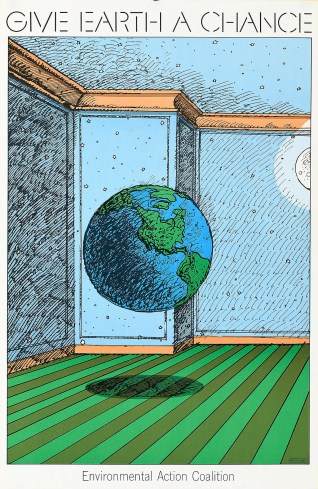
Give Earth A Chance, & Other EcoPosters

A poster from 1970 by Milton Glaser. via Poster House

If you happen to be in New York City and enjoy graphic design related to conservation you might enjoy this:

Told Ya So: The Prescient Posters of the Environmental Movement

Graphic artists have been helping call attention to climate change for decades, and a new exhibition charts the evolution of their pleas.

Last year was the warmest in recorded history. The graphic artists of the environmental movement tried to warn us. Their posters aimed to scare people straight with pictures of ecological ruin, or glorified nature, clean air and water, sunshine and verdure. Some offered earworm-y slogans and haunting visuals. Whatever their approach — bright, witty, somber, blunt, even sexy — they sought an image, a phrase, that could change enough minds to literally save the world. Continue reading

Tipped Bus, Photo Found, Auspicious Start

Authentica’s opening at Hacienda El Viejo over the last couple weeks has been more auspicious than the interrupted bus ride pictured here. That said, we all seem to have kept our sense of humor intact, and maybe learned something about resiliency. It has come in handy over the 25 years since then.

Ted Greene’s Treetime

Thanks to the Guardian for bringing the above book to our attention:

Ted Green, a conservation adviser to the crown estate at Windsor, has a provocative take on our ‘living heritage’

Ted Green is a rebel. He calls sheep “land maggots”. A horse-riding centre is “a dog-food complex”. And the ancient tree expert’s new book includes a photo of him sticking up two fingers at a portrait of Margaret Thatcher. Continue reading

More Honey & Bees, Also

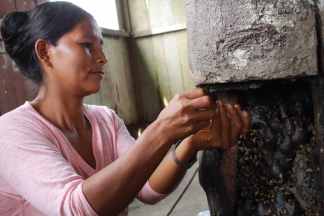
Tarkis Ríos Ushiñahua harvesting honey from stingless bees in a tree-trunk hive, at her home in Puerto Huamán in the Peruvian Amazon, 2019. [Hannah Hutchinson]

Along with anything else to get 2024 off to a good start, an article by Andrew Wingfield and Michael P. Gilmore that we missed from last year. The topic is one that we have only briefly touched on a couple times. The wider world of honey and the bees responsible for it are topics we hope to share more of this year.

To begin, let this bring some joy:

A Sweet and Potent Harvest

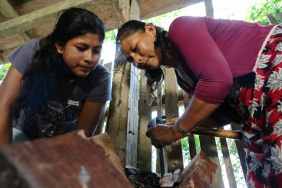
Tarkis Ríos Ushiñahua teaches her daughter to divide a hive, 2022. [Dylan Francis]

For the Maijuna of the Peruvian Amazon, harvesting honey from stingless bees is bringing prosperity and empowerment. Local beekeeping might also help preserve a vast ancestral forest.When Tarkis Ríos Ushiñahua collects honey from one of her beehives, she wears no protective clothing and uses just one tool, a large plastic syringe. 1 As she lifts the lid from the wooden box housing the hive, the bees swarm. They buzz around her face, land on her back, and settle in strands of her straight black hair, but they do no harm — these bees are stingless.

The bee yard of Loida Ríos Tamayo and Saúl Peterman Mosoline, 2021. [Enrique Redondo Navarro]

The slender tip of Ríos Ushiñahua’s syringe fits neatly inside the hive’s honeypots, brownish, papery-looking pouches that the bees have fashioned from wax and plant resins. Continue reading