South Indian Music at the Kathakali Culture Center

I had the pleasure of listening to classical South Indian music the other night with a guest I happened to connect with at the 51 restaurant in Spice Harbour. We went to the oldest remaining theater in Fort Cochin for Kathakali, which is a traditional art form of Kerala that originated in the early 17th century. In this theater, they have famous Kathakali dance as well as classical music, meditation, and yoga. Even though we just went for the music, I got to learn a little bit more about the dance.

kathakali2

The made-up face of the Kathakali dancers is ubiquitous around Kerala. To do the make up takes at least one hour.

In Malayalam, ‘Katha’ means story and ‘Kali’ means play. I didn’t see the traditional Kathakali dance but from what I learned the dance has a storyline that is acted out through mime and drama. The stories are mostly based on Hindu mythology.

The instruments that we listened to were flute, mridangam, and kanjira. Mridangam and kanjira are drums. There was also a drone playing from an electronic shruti box.

The music put me into a dreamy state of mind. As I was listening I found my mind drifting back to all my music theory classes to help me wrap my mind around what I was listening to.  In the beginning they told us the ragas were in 8 count rhythm. Our minds can easily predict phrases that fit within a 4 count rhythm, so I wondered what made an 8 count so different. Then I realized the emphasis was on the 5th and 7th count which was pretty cool and made me understand why the phrasing was so unpredictable. Something about the syncopated rhythm and the ambiance sent me into a theta state of deep relaxation.

I was grateful to spontaneously meet that friend and get to experience that traditional aspect of Kerala culture!

 

Banksy, Entrepreneurial Conservationist?

_77174539_mobile_lovers_by_banksy

Banksy’s Mobile Lovers appeared in a doorway in April

Street art is not everyone’s cup of tea, but you kind of have no choice but to love this story:

Banksy’s Mobile Lovers sale to ‘keep Broad Plain boys’ club open’

A Banksy artwork has been sold to a private collector for enough money to keep the seller – a cash-strapped boys’ club – open for “a few years”.

The sale price of Mobile Lovers, which has been on display at Bristol Museum and Art Gallery, will be revealed on Wednesday when it is handed over.

The piece of street art appeared in a Bristol doorway in April, but a row broke out over who owned it.

Banksy then wrote to hard-up Broad Plain Boys’ Club saying it was theirs.

Broad Plain will be sharing a portion of the proceeds with a number of other voluntary sector youth clubs across the city. Continue reading

Ospreys At Cornell

Volunteer birders capture fledging of young ospreys on campus

Volunteer birders capture fledging of young ospreys on campus

Click the image above to watch three minutes of video from the Cornell Lab of Ornithology:

Cornell employees and volunteer “birders-on-the-ground” Cindy and Karel Sedlacek and Suzanne and William Horning capture the fledging of two young ospreys from their nest on a light pole above the soccer field on Game Farm Road, August 8, 2014.

Ospreys build nests on high outcropings and forks in trees. Utility Poles and platforms are a frequent substitute, often built especially for this purpose.

Competitive Upright Bipedalism

We are in awe about how many things we find out, on a daily basis, we did not know.  And for the things that we realize we want to know more about, thank goodness for longform writers of the quality that the New Yorker staff has consistently fielded since its founding. One of the great essayists of our time reviews recent writings on a history we had not the slightest clue about:

Why people walk is a hard question that looks easy. Upright bipedalism seems such an obvious advantage from the viewpoint of those already upright that we rarely see its difficulty. In the famous diagram, Darwinian man unfolds himself from frightened crouch to strong surveyor of the ages, and it looks like a natural ascension: you start out bending over, knuckles dragging, timidly scouring the ground for grubs, then you slowly straighten up until there you are, staring at the skies and counting the stars and thinking up gods to rule them. But the advantages of walking have actually been tricky to calculate. One guess among the evolutionary biologists has been that a significant advantage may simply be that walking on two legs frees up your hands to throw rocks at what might become your food—or to throw rocks at other bipedal creatures who are throwing rocks at what might become their food. Although walking upright seems to have preceded throwing rocks, the rock throwing, the biologists point out, is rarer than the bipedalism alone, which we share with all the birds, including awkward penguins and ostriches, and with angry bears. Meanwhile, the certainty of human back pain, like the inevitability of labor pains, is evidence of the jury-rigged, best-solution-at-hand nature of evolution. Continue reading

A Biodiversity Triumph at Marari

As I mentioned in my last post, the new property, Marari Pearl, could easily be called the Beach Banana Genome Project because it has 30 varieties of bananas being grown on it. When Amie and I saw the list of everything being grown on the property, our joy was akin to kids on christmas.

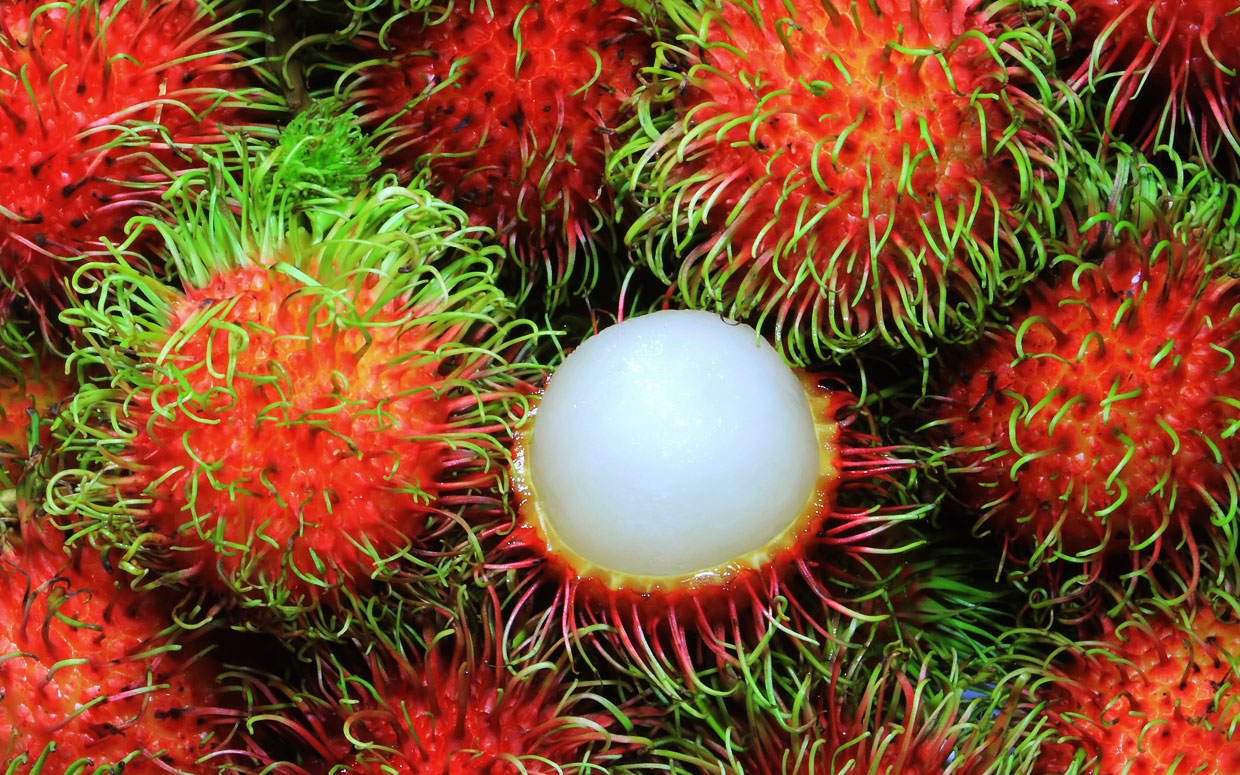
Have you ever seen a rambutan?

Have you ever seen a rambutan?

Since I’ve been reading The Fruit Hunters by Adam Leith Gollner, I’ve realized the role variety awareness plays in conserving biodiversity. Simply not knowing about all the varieties allows agribusiness to monopolize the market with one or two varieties that best suit global trade. For example, when people only saw red and yellow apples in the supermarket, they did not know what they were missing out on, so they weren’t as picky. Once Fujis and Galas became known, customers began to demand more. Knowledge of varieties is seen as a threat to supermarket because customers focused on varieties become less easy to please with subpar, out-of-season fruits.

So with that being said, simple awareness of varieties is a method of raising the bar. It helps promote biodiversity because people are less willing to accept generic and standardized fruit.

On the Marari Pearl property, there are pomelos, rambutans, and tamarinds. There are several types of jackfruit,  lovi-lovis, mangos, and oranges. I was particularly excited to see the miracle fruit on the list. Continue reading

Past, Present & Future Food

grid_2048

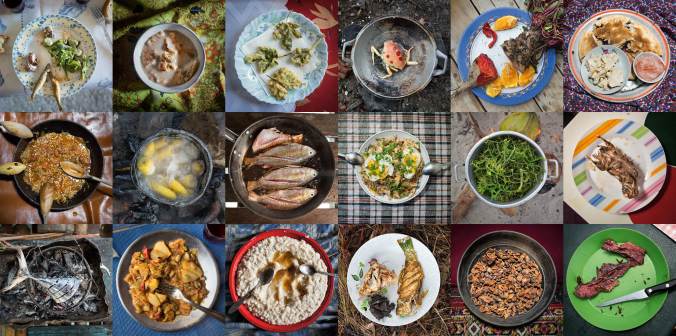
Top row: escargots, sardines, and fava beans (Crete); naan in salty yak-milk tea (Afghanistan); fried geranium leaves (Crete); boiled crab (Malaysia); raw beetroot and oranges (Crete); chapati, yak butter, and rock salt (Pakistan). Middle row: dried-apricot soup (Pakistan); boiled plantains (Bolivia); fried coral reef fish (Malaysia); bulgur, boiled eggs, and parsley (Tajikistan); stewed-seaweed salad (Malaysia); boiled ptarmigan (Greenland). Bottom row: grilled tuna (Malaysia); cooked potatoes, tomatoes, and fava beans in olive oil (Crete); rice with melted yak butter (Afghanistan); fried fish with tamarind (Malaysia); dried apricots (Pakistan); grilled impala (Tanzania; photographer’s utensils shown).

Thanks to National Geographic for this article:

The Evolution of Diet

Some experts say modern humans should eat from a Stone Age menu. What’s on it may surprise you.

It’s suppertime in the Amazon of lowland Bolivia, and Ana Cuata Maito is stirring a porridge of plantains and sweet manioc over a fire smoldering on the dirt floor of her thatched hut, listening for the voice of her husband as he returns from the forest with his scrawny hunting dog. Continue reading

Technology Aids Access Of Classicists To Classics

The Loeb classics, newly available online

The Loeb classics, newly available online

We do not know whether James has made his way to the library yet, but we imagine there are classical treasures in the vaults at Harvard University that can only be appreciated in person. But a scholar’s best friend will likely, increasingly be technology like this:

WHEN JAMES LOEB designed his soon-to-be-launched series of Greek and Roman texts at the turn of the twentieth century, he envisioned the production of volumes that could easily fit in readers’ coat pockets. A century later, that compact format is still one of the collection’s hallmarks. Beginning in September, however, the iconic books will be far handier than Loeb had hoped: users of the Loeb Classical Library (LCL) will have the entire collection at their fingertips. After five years of dedicated work on the part of the library’s trustees and Harvard University Press (HUP), which has overseen LCL since its creator’s death in 1933, the more than 520 volumes of literature that make up the series will be accessible online. Besides allowing users to browse the digitized volumes, which retain the unique side-by-side view of the original text and its English translation, the Digital Loeb Classical Library will enable readers to search for words and phrases across the entire corpus, to annotate content, to share notes and reading lists with others, and to create their own libraries using personal workspaces.  Continue reading

A little taste of Kerala

photo 2

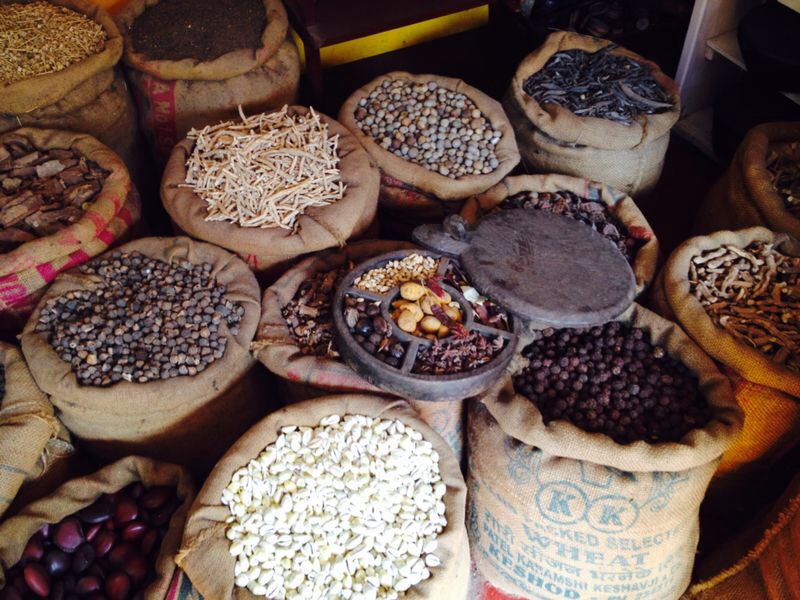
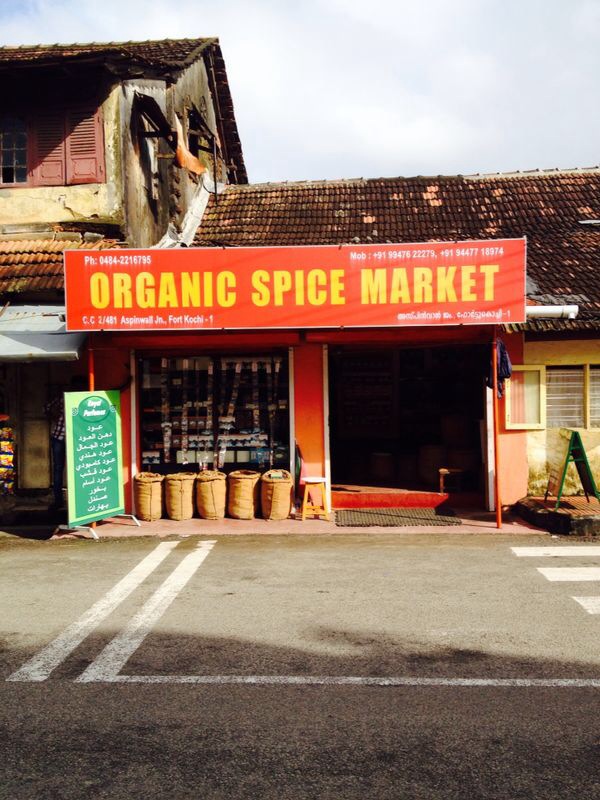
Just down the street in Mattancherry is an organic spice shop with a wide variety of classic South Indian spices. The aroma inside of the shop definitely met my olfactory needs for new smells.

The 51 restaurant at Spice Harbour serves a Xandari Salad to represent Raxa Collective’s other property, Xandari Resorts. The Xandari Salad has become a favorite at 51 with its tahini-yogurt dressing, avocado, roasted cashews, and feta cheese on top of a fresh lettuce mix.

photo 1
Continue reading

Tourism, Conservation, Whale Sharks

shark-shutterstock_127906316-680x450

shutterstock.com

Thanks to Conservation for this item about entrepreneurial conservation of the ecosystems where one of the greatest of sea creatures dwell:

HOW CAN WHALE SHARK TOURISM BE KEPT SUSTAINABLE?

August 22, 2014

When the revenue generated by wildlife-related tourism is higher than that generated by the consumption of that wildlife, then the animals in question are worth more alive than dead. This seems intuitive, but the economics of wildlife tourism aren’t always easy to work out.

Over the last couple decades, one form of wildlife-based tourism that has quickly become popular is diving alongside free-swimming whale sharks. While they’re the largest fishes in the sea, whale sharks are actually quite docile and have highly predictable seasonal movement patterns. That makes them particularly attractive to dive operators. While whale shark tourism has operated in Western Australia’s Ningaloo Reef since the late 1980s or early 1990s, most whale shark tourism outfits have sprung up more recently, in the eastern Gulf of Mexico, Honduras, Belize, the Philippines, Mozambique, Seychelles, and the Maldives. While some attempts have been made to quantify the economic impacts of whale shark tourism in Ningaloo, Belize, and the Seychelles, nobody has done so for the Maldives. Measuring the economic value of the industry is especially important because it is difficult for local governments, with limited powers especially when it comes to environmental protection, to prioritize conservation without that information. Continue reading

Ocean Conservation, Of Vital Interest Among Islanders Everywhere, Gets Its Due From The Relatively Tiny Barbuda

A map of protected marine zones that are being established around the Caribbean island of Barbuda. Credit Waitt Institute

A map of protected marine zones that are being established around the Caribbean island of Barbuda. Credit Waitt Institute

We had not expected to see Dot Earth again, but all of a sudden, thanks again for the surprise Mr. Revkin:

A Small Island Takes a Big Step on Ocean Conservation

Marine life in the Caribbean has been badly hurt in recent decades by everything from an introduced pathogen that killed off reef-grooming sea urchins to more familiar insults like overfishing and impacts of tourism and coastal development.

Some small island states are now trying to restore once-rich ecosystems while sustaining their economies. A case in point is Barbuda, population 1,600 or so, where the governing council on Aug. 12 passed a suite of regulations restricting activities on a third of the island’s waters. The regulations and reef “zoning,” in essence, came about after months of discussions involving fishing communities, marine biologists and other interested parties, facilitated by the Waitt Institute, a nonprofit conservation organization. Continue reading

Masters of Disguise

The green coloration helps this cricket blend into its leafy environment

Members of the animal kingdom have developed an amazing number of ways of defending themselves from predators. Some have highly evolved poisons that can wound or kill animals many times larger than themselves (think venomous snakes and spiders, or poison dart frogs); others have barbs, spines, or just generally prickly parts that render them unappetizing, making would-be-assailants think twice about the hassle of getting the creature into its craw; finally, there are more innocuous methods of self-defense, like cryptic camouflage. Cryptic camouflage makes the creature more Continue reading

Beach Banana Genome Project

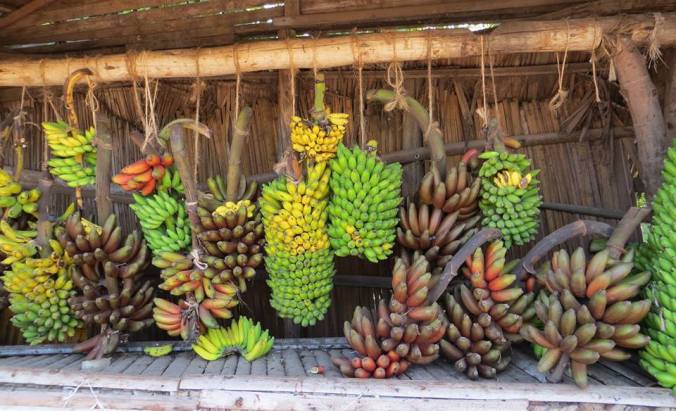
The next Xandari property that La Paz Group is developing is at Marari beach, and in my mind it could easily be called the “Beach Banana Genome Project” due to the 30 varieties of bananas being planted on site.

banana wonders

There are actually over 1000 varieties of bananas in the world, which is pretty crazy to think about since the main variety in global commerce is the Cavendish. There are red bananas, dwarf bananas, sugared-fig bananas, pregnant bananas, ice cream bananas, Popoulou bananas, the golden aromatic bananas, Macaboos, Thousand-Fingered bananas, and the list goes on. Out of the 1000+ types of bananas, grocery stores in the United States only offer one main type? Why?

That’s because our grocery stores are in a permanent global summertime, as Adam Gollner puts it in his book “The Fruit Hunters”. Because our fruits aren’t sourced locally in the United States, they must be able to endure the rigorous journey of international trade. If I hadn’t traveled to India for the summer, I would’ve probably never been offered the range of varieties I’ve gotten to taste here.

Most people in the United States won’t get exposed to a diverse range of options and therefore do not demand them. Big banana agribusiness makes is buck with monoculture. They can reliably deliver the same subpar banana. 

It’s not as reliable though in the long run because monoculture invites disease. Thats why before the Cavendish banana was the world’s top banana, there was the Gros Michel banana. It was struck by a fungus called the Panama Disease, and now a mutation of that disease is threatening the Cavendish. Biodiversity acts as a natural buffer to disease but biodiversity isn’t conducive to agrarian capitalism. Continue reading

Our Daily Bread, Please

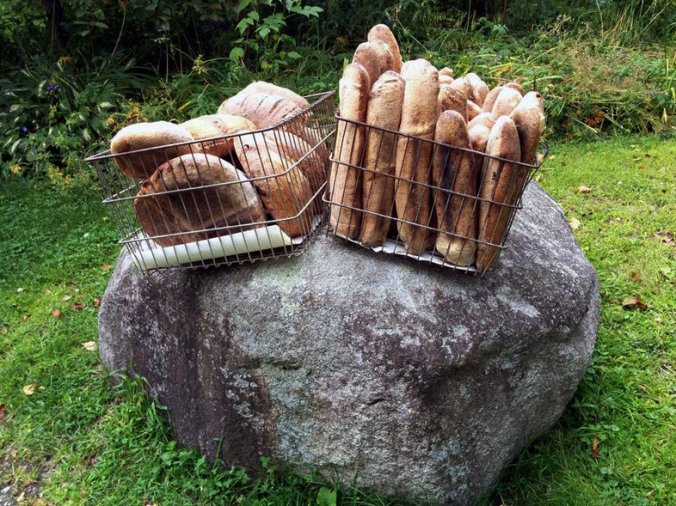
Rabin bread on a rock at the farmers market in Plainfield prior to setting up the table. Jon Kalish for NPR

Rabin bread on a rock at the farmers market in Plainfield prior to setting up the table. Jon Kalish for NPR

Where can we find the stones, here in Kerala, to build the oven to bake the bread to allow the reincarnation of this labor of love when the oven man and his wife of great heart from Vermont stop baking? We will find out. We will surely let you know. Meanwhile listen to and/or read this story, thanks to National Public Radio (USA):

When Jules Rabin lost his job teaching anthropology in 1977, he and his wife, Helen, turned to baking to keep their family afloat. For 37 years they’ve baked sourdough bread that people in central Vermont can’t seem to live without.

The year before Jules left Goddard College, he and Helen built a replica of a 19th century peasant oven, hauling 70 tons of fieldstone from nearby fields. The stones covered an igloo-shaped brick baking chamber 5 1/2 feet in diameter. Continue reading

Souvenirs Of A Travel Junkie Architect

Photo by Greg Vore

Photo by Greg Vore

When we first heard of him two years ago, he caught our attention with the choice he made at a young age:

Architect Mark Leininger credits his parents for choosing travel to China, Antigua, Colombia and other foreign destinations over material things throughout his childhood, instilling a love that has endured. Case in point: He remembers asking his mother for a pool table in third grade.

“Do you want a pool table or a trip to Jamaica?” she replied. He wisely opted for the travel, collecting the airline timetables that used to pile up at airport ticket counters in the pre-Internet era. Continue reading