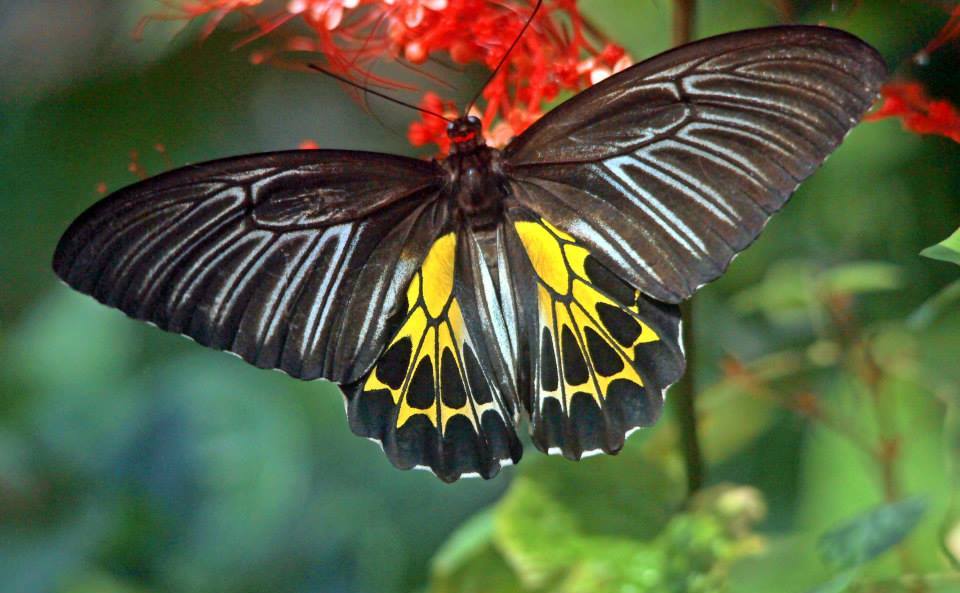
Southern Birdwing Butterfly

Photo credits : Josekallukaran

Photo credits: Jose Kallukaran

The Southern Birdwing butterfly  is the largest butterfly in India, and is endemic to the Western Ghats. Males are more frequently seen than females, mainly feeding on flowers of the Pagoda plant, west Indian jasmine, mimosa, and other ornamental bushes. Unlike many butterfly species that prefer full sun, the southern birdwing tends to be more active during the evening. Continue reading

Shakespeare, Crown Toady?

Shakespeare

In honor of the departure of James from Xandari, we send him off with a blast of relative modernity. Shakespeare is certainly classic, but tres nouveau in terms of a classicist.

Little did any of the liberal arts majors among Raxa Collective contributors know that the image we have of a witty, well-versed but ultimately populist entertainer is confounded by a consistent streak of conservatism. But we are thankful for the enlightenment, that far from being an equal opportunity observer and critic of all forms of foible, the Bard was so unwilling to bite the hand that fed:

Ira Glass recently admitted that he is not all that into Shakespeare, explaining that Shakespeare’s plays are “not relatable [and are] unemotional.” This caused a certain amount of incredulity and horror—but The Washington Post’s Alyssa Rosenberg took the opportunity to point out that Shakespeare reverence can be deadening. “It does greater honor to Shakespeare to recognize that he was a man rather than a god. We keep him [Shakespeare] alive best by debating his work and the work that others do with it rather than by locking him away to dusty, honored and ultimately doomed posterity,” she argued. Continue reading

Newspaper Bag Station at Cardamom County

???????????????????????????????

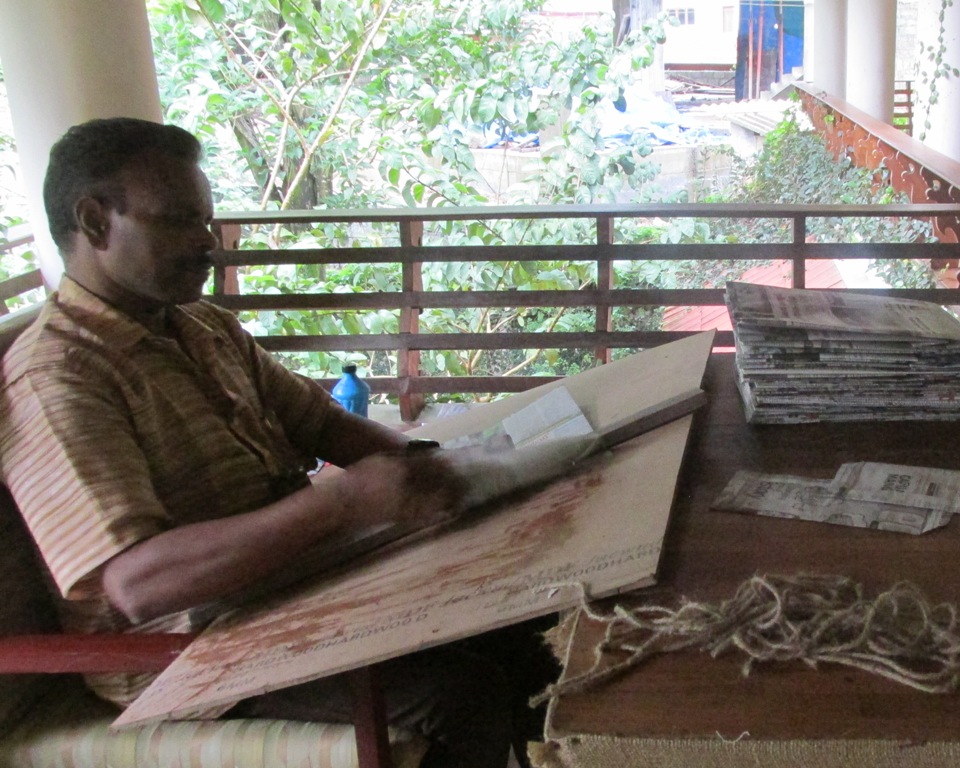
New member of PaperTrails stationed at Cardamom County

At Cardamom County, we have been working to get the local community involved through the group PaperTrails. PaperTrails helps provide jobs for people who could otherwise not get them. La Paz Group has appreciated the way it involves the locals by providing work and  re-purposing old newspaper. For La Paz Group they make gift bags out of recycled newspaper and sanitary bags from recycled paper. Now, we have a new member of the PaperTrails team stationed at Cardamom County. He is stationed on the second level of the Ayurvedic Center and makes bags for all the La Paz Group properties.. We like this because now guests can engage with the paper bag initiative in a new way. They can see how they are made and learn to make them as well.  Continue reading

The Best Half Hour Of The Day

9780393244663_custom-da8d85d278c41cd52ad546688f20e67f743942dd-s3-c85Busy, busy. Not always enough time to read books even by authors we know to be gifted explainers of complicated, important phenomena. Back around the date this book was published, its author gave an interview. In just over half an hour he managed to explain one of the most complicated human activities imaginable, in terms most of us could understand:

“The stock market is rigged,” Michael Lewis tells Fresh Air‘s Terry Gross. “It’s rigged for the benefit for really a handful of insiders. It’s rigged to … maximize the take of Wall Street, of banks, the exchanges and the high-frequency traders at the expense of ordinary investors.”

Continue reading

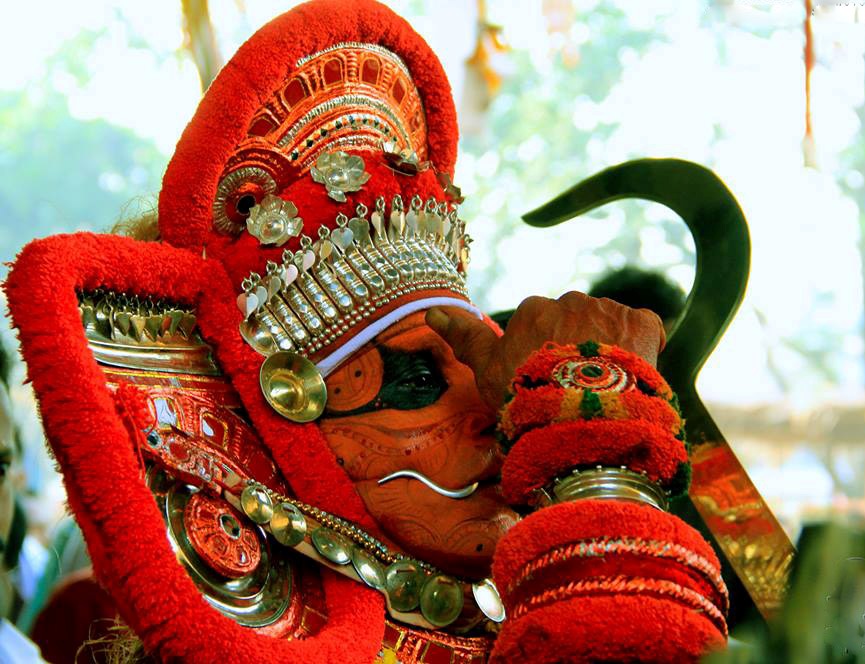
Festival Of The Gods – Theyyam

Photo credits : Shymon G

Photo credits: Shymon G

Theyyam is one of the most popular ritualistic dances of Kerala. It is a devotional performance with a surrealistic representation of the divine. Almost every village in Kerala has its own temple with an annual festival. So there’s always a local festival happening somewhere or the other, each with its own special flavour. Continue reading

Al Fresco Meals Across Time and Space

This slideshow requires JavaScript.

Long after humans made living indoors commonplace we still carry the strong desire to commune with nature in one way or another. Whether through gardening or exploration, we crave being outdoors, and that often has meant bringing our meals with us.

The origin of the word “picnic” is unclear. It first appeared in an English dictionary in 1748, and it probably derived from the French pique-nique.

A 17th-century French pique-nique may have been what we now think of as a potluck. In the 18th century, its American counterpart may have been more like a salon gathering. By the 19th century, though, it had become common for Americans to hold these events outside. Continue reading

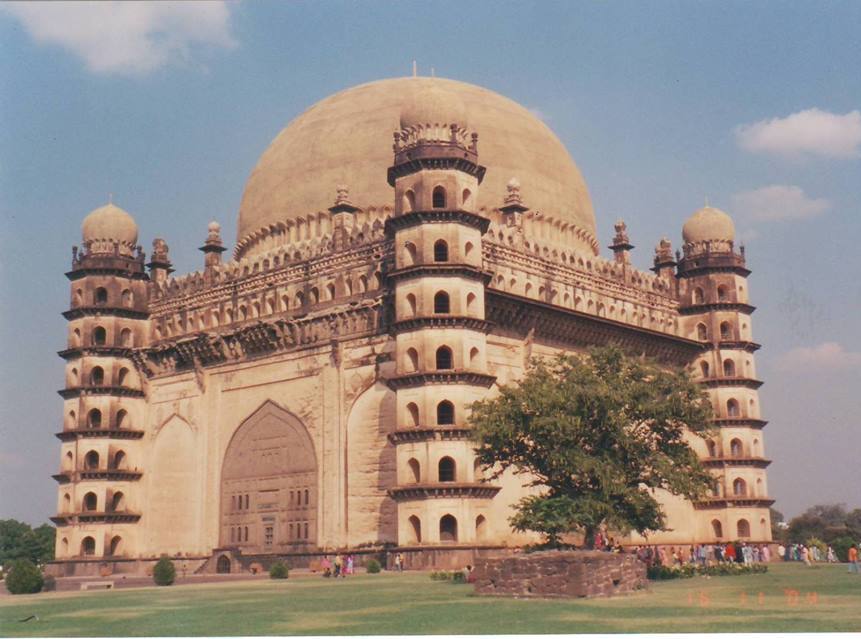
Gol Gumbaz

Photo credits : Vijay Mampilly

Photo credits : Vijay Mampilly

Gol Gumbaz is one of the largest and most famous monuments in India. Gol Gumbaz was constructed as a mausoleum for Sultan Mohammed Adil Shah, the seventh ruler of Adil Shah dynasty (1627- 57). Construction was completed in 1656. The monument’s central tomb remains a popular tourist attraction, but in fact the entire building, despite its simple design, stands as a masterpiece of Deccan-era architecture. Continue reading

Seeing in the Dark

7296_591181947589412_1926452569_n

Full moon shot Kayal Villa. Photo: Milo Inman

That traveling state of mind woke up a part of my brain that’s been sleeping for a while. I’ve been feeling my grey matter stretch as a fellow Raxa friend put it. An idea I’ve been thinking about started while on the Camino de Santiago pilgrimage when a man told my friend and me not to walk the Camino at night. He said, “If God wanted us to walk the Camino at night, he would have put a light in the sky so we could see the Camino’s beauty”.

We were confused- why didn’t he see beauty in walking at night under the full moon and stars? After that, my friend and I began to contemplate how darkness has been associated in both sacred and secular literature with the lack of spiritual enlightenment, lack of awareness; in our language, to say something is dark has bad connotations. We felt more motivated than ever to walk at night.

We began to question how a society’s aversion to darkness could inform everything. We considered how the aversion to darkness could be a deeper layer to the resistance to female equality and even environmental understanding of the interdependency of nature and cycles of dark and light.

Continue reading

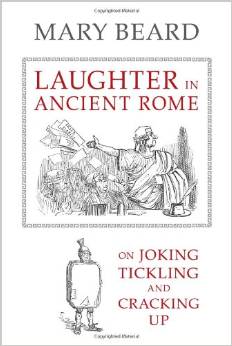
Laughing At, And With, Ancient Rome

romelaughThis post is about as random as we get on this blog, but still, there is a mission-driven point. Along with all our work, there must also be reflection and communication; education in the classics strikes us as an excellent preparation, as excellent as any, for our line of work. In further honor of James during the last week of his work in person at Xandari, we share a book review to help us understand laughter in the olden days:

…Even a simple comic device can land us in deep water, psychologically speaking.

What, if anything, does Geng’s piece have in common with the movie Police Academy 2: Their First Assignment? What does either have in common with knock-knock jokes, or with Gilbert Gottfried’s famous performance of “The Aristocrats” a few weeks after September 11? These are not easy questions to answer, even for a culture we know from the inside. And the difficulties only multiply when we confront the humor of another time and language. It is that challenge that Mary Beard sets herself in Laughter in Ancient Rome, the printed version of her lectures as the 2008–2009 Sather Professor at Berkeley. Continue reading

Tamil Lacewing Butterfly

Photo credits : Aparna P

Photo credits: Aparna P

The Tamil Lacewing Butterfly (Scientific name: Cethosia nietneri) is endemic to the  Western Ghats of India and Sri Lanka, where it commonly cuts through the breezes from the months of June to September. Frequent at the onset of monsoon season, the beautiful insect usually disappears by September or October. Catch it while you can! Continue reading

River Blossoms

This slideshow requires JavaScript.

India’s famous flower markets are testiment to the people and culture’s strong identification with flowers in all aspects of their daily lives, both sacred and secular. Flowers are found in food and drinks, and as part of all the rights of passage of daily life, from birth to death and everything in between.

Although I’ve never been to Calcutta, I’ve read about the flamboyantly colorful Mallick Ghat Flower Market along the banks of the Hooghly River. Danish photographer Ken Hermann captures the proud men who make their living as Calcutta’s flower sellers.

‘I first went to the flower market during a visit to Calcutta three or four years ago and have wanted to do something on it ever since,’ explains Copenhagen-based Hermann.

‘It’s a beautiful and, at the same time, very stressful place but I was fascinated with it – and the flower sellers in particular. I really like the way they carry their flowers,’ he continues.

‘Sometimes it almost looks like they are wearing big flower dresses. I like that you see these strong and masculine men handling the flowers with so much care as if they were precious jewels.’

Hermann, whose work usually takes him into the grimier side of Indian life, was also enchanted by the flowers themselves, even if there were a few that he wasn’t allowed to photograph.

‘There are a lot of superstitions and religious belief in flowers in India,’ he explains. ‘I wasn’t allowed to photograph some of them because they were considered to be holy flowers and they would lose their power if I had.’ Continue reading

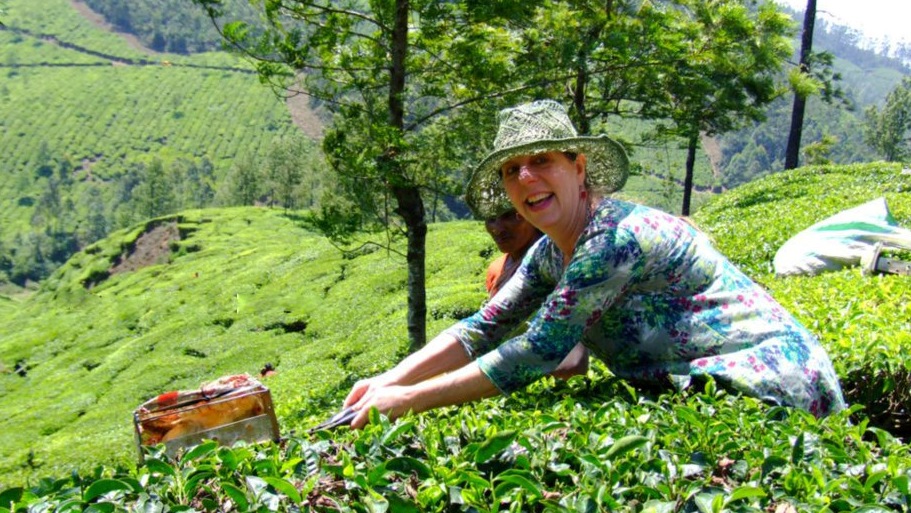
Munnar, Gem of Kerala

Photo credits : Ramesh Kidangoor

Photo credits: Ramesh Kidangoor

Munnar is famous for its tea plantations, rolling hills, sparkling waterfalls, and sprawling estates, a combination of features which makes it a popular tourist destination. Visitors to Munnar can not only enjoy Kerala’s natural beauty but also learn about and participate in the area’s culture and economy. As attested in these photographs, Munnar has been one of Kerala’s hotspots for tea production, with tea plantations scattered throughout the rolling mountain ranges. Continue reading

Doka Coffee In-Depth: o, Una Tarde de Café

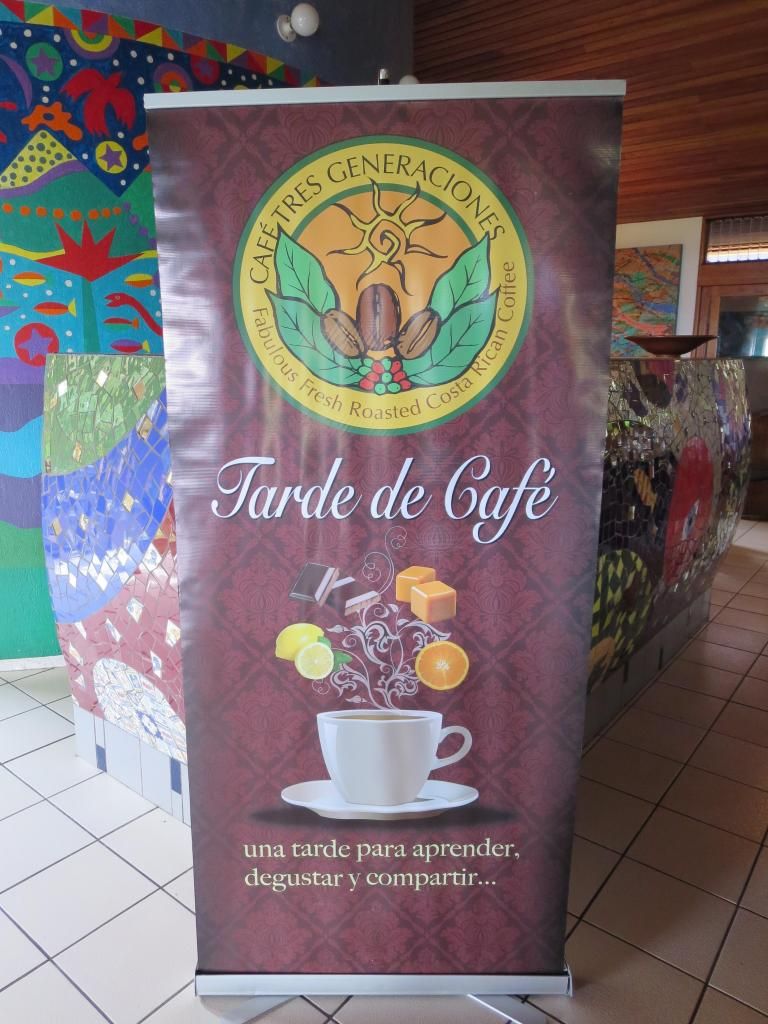
Tarde de Café con Doka Estate (An Afternoon of Coffee with Doka)

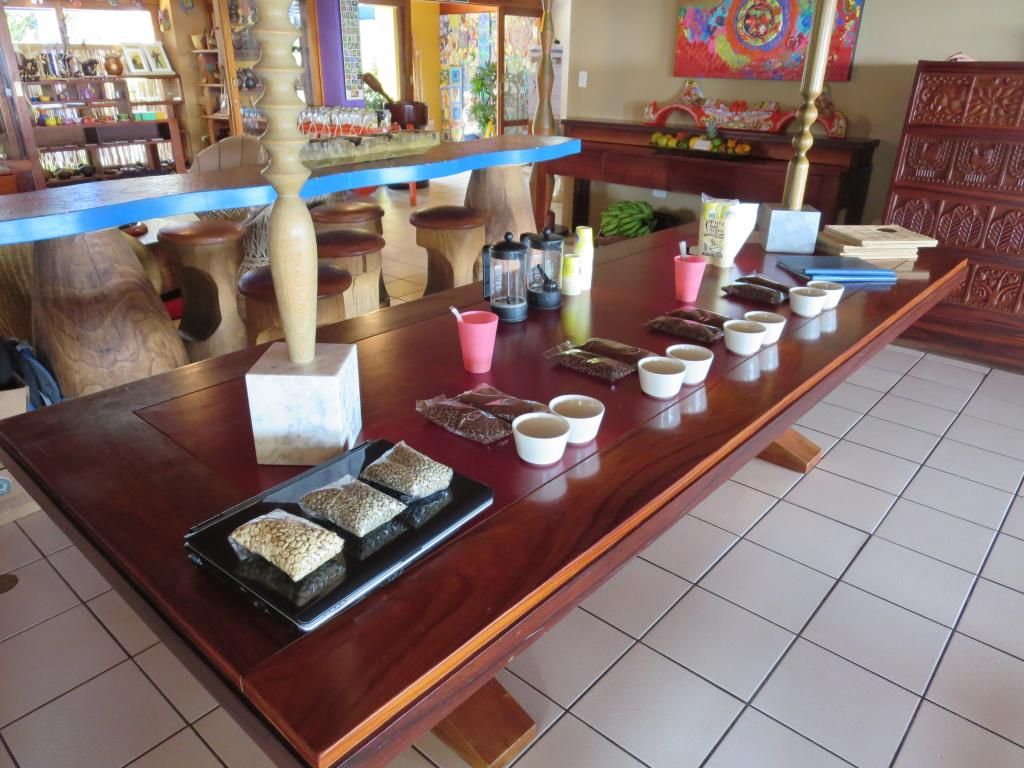
As mentioned in a recent post, Xandari was joined last week by one of Doka Estate’s coffee experts, Natalia Vargas, who gave a presentation on the estate’s process of growing, harvesting, and preparing coffee. The presentation also involved a coffee-tasting session so that we could see… er… taste the fruits of Doka’s hard work. This latter part of the presentation is what I’ll be mostly focusing on in this post. I don’t want to give too much away, in case I spoil the fun of visiting the Doka Estate for yourself when you’re next staying at Xandari, but seeing as it was a very informative and enjoyable a presentation (at least for a coffee lover), and that Xandari should soon be in a position to capitalize on the knowledge in its own coffee endeavors (most recent post here), I thought I’d spill just a few of the beans here, no pun intended.

Coffee table set-up

Natalia first walked us through the actual growing, selection, and harvesting process. All the beans at Doka originate from plants alread Continue reading

A Sophie’s Choice Moment For Two Species, One Environment, And No Solomon In Sight

Damian Mulinix — Chinook Observer. A small portion of the cormorant colony as seen from a bird blind.

Damian Mulinix — Chinook Observer. A small portion of the cormorant colony as seen from a bird blind.

You can read about this in a major media outlet, but try another approach for this story. Local journalism is alive and well, and covering complex, important topics through the local lens:

A plan to kill 16,000 double-crested cormorants on East Sand Island has some residents on the North Coast scratching their heads. Although still in the proposal phase, the plan drew many to an open house in Astoria last week to ask questions of the federal agencies involved. “I can’t believe in this day and age we can’t come up with an alternative solution to killing things,” said Tommy Huntington of Cannon Beach. Continue reading