Nilgiri Railway – Ooty

Photo credits : Ramesh Kidangoor

Photo credits: Ramesh Kidangoor

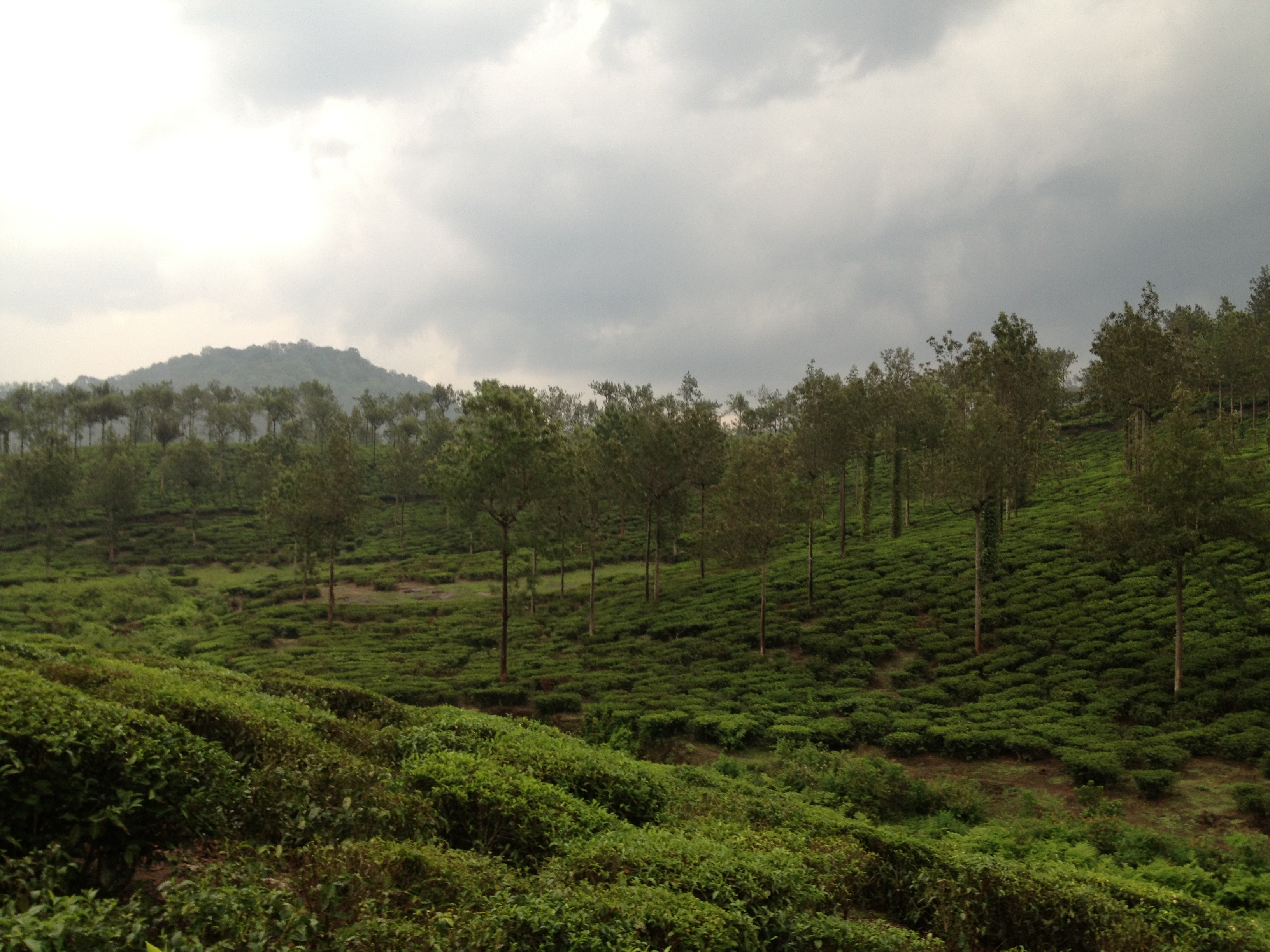
The Nilgiri Mountain Railway was built by the British in 1908. The railway line lies between the hill ranges of Mettupalayam and Ooty, with a 46km-long track that passes over 26 viaducts and through 16 tunnels, as well as tall girder bridges. This mountain rail is particularly picturesque because of the rocky surroundings and forested hills. Continue reading

Humanity’s Diet Makes A Difference, Historically As Well As Futuristically

On the timescale of evolutionary history, paleo enthusiasts note, agriculture is a fad. Credit Illustration by Mike Ellis.

On the timescale of evolutionary history, paleo enthusiasts note, agriculture is a fad. Credit Illustration by Mike Ellis.

Since the early days of this blog we have been hungry consumers of environmental long form journalism, of which Elizabeth Kolbert’s New Yorker chronicles are best-in-category. They are also, frankly, almost always depressing.

Nonetheless, they put humanity into its natural context. This not-at-all-depressing chronicle demonstrates the value of that contextualization well:

The first day I put my family on a Paleolithic diet, I made my kids fried eggs and sausage for breakfast. If they were still hungry, I told them, they could help themselves to more sausage, but they were not allowed to grab a slice of bread, or toast an English muffin, or pour themselves a bowl of cereal.

Continue reading

Peaberry Coffee

Mostly standard coffee beans (some Peaberry beans may have snuck in!)

A friend from the Doka Estate (on Doka see our most recent post on coffee) visited Xandari yesterday to tell us more about the process of growing and preparing coffee from seedling to cup. We’ll go into what we learned in more detail in another post, but for now I wanted to share something interesting I learned about different types of coffee–specifically about the type of coffee called “Peaberry” (or caracoli). Continue reading

The Yamfly Butterfly

Photo credit : Jose K

Photo credit: Jose K

Yamfly butterflies are found across India and are commonly seen in the Western Ghats. They are especially numerous during the monsoon season in damp forest patches. This species has reddish orange bordered with black on the upper sides of the wings and a lighter yellow on the bottom. At the back of the wing, Continue reading

Musical And Photographic Patrimony

This slideshow requires JavaScript.

We are always moved by exhibitions that intersect our interest in cultural and historical patrimony, as in the case of this event at the Foley Gallery (which comes to our attention thanks to the New Yorker‘s coverage of the arts):

Lisa Elmaleh first heard Appalachian folk music in 2010, and “it stirred something in my soul,” she told me. Since then, she has followed folk musicians from Ohio to Georgia, capturing them with her nineteen-forties Century Universal 8 x 10 camera and the hundred-and-fifty-year-old tintype process. Continue reading

Yes, We Can

Andrew Scrivani for The New York Times

Andrew Scrivani for The New York Times

Food trials at 51 are a permanent condition, thankfully, because we are on the constant search for ever-better vegetarian meals.  This definitely qualifies:

A GOOD APPETITE

The Ultimate Veggie Burger

It’s difficult to make a veggie burger with great flavor and a firm, succulent texture. This is how you do it.

If You Happen To Be In Florence, Alabama (USA)

Robert Rausch for The New York Times. Tom Hendrix at the Florence, Ala., memorial he built for his great-great grandmother, Te-lah-nay, a Yuchi Indian.

Robert Rausch for The New York Times. Tom Hendrix at the Florence, Ala., memorial he built for his great-great grandmother, Te-lah-nay, a Yuchi Indian.

Thanks to the New York Times for this coverage of a moving tribute to one man’s lineage and his peoples’ heritage:

Off Alabama’s Beaten Path, Tribute to a Native American’s Journey Home

Tom Hendrix has built a mile-long stone wall to memorialize his Native American great-great grandmother, who was displaced during the Trail of Tears.

Elephant Blessings

Photo Credits :Ramesh Kidangoor

Photo Credits: Ramesh Kidangoor

In Hinduism, the elephant represents one of the most important Gods: Lord Ganesh. Many Hindu temples in south India have elephants stationed outside the main door to give blessing to visitors. For a long time, elephants have been part of life in Kerala. People here consider this animal a harbinger of good fortune, a remover of obstacles and an inseparable part of religious and economic life. Continue reading

Ken Brown, Come to Kerala!

This slideshow requires JavaScript.

The colorful ebb and flow of  daily life is evident in our Spice Harbour neighborhood of Mattanchery. We keep wondering what odd-abilia Ken Brown would find waiting for him here!

(all photos ©Ken Brown)

The Gender Politics Of The Vegan Diet

Mixed martial arts fighter Cornell Ward (from left), chef Daniel Strong, triathlete Dominic Thompson, lifestyle blogger Joshua Katcher and competitive bodybuilder Giacomo Marchese at a vegan barbecue in Brooklyn, N.Y. Courtesy of James Koroni

Mixed martial arts fighter Cornell Ward (from left), chef Daniel Strong, triathlete Dominic Thompson, lifestyle blogger Joshua Katcher and competitive bodybuilder Giacomo Marchese at a vegan barbecue in Brooklyn, N.Y. Courtesy of James Koroni

Thanks to National Public Radio (USA) for this article and accompanying podcast on the masculinity of men denying themselves animal protein:

For These Vegans, Masculinity Means Protecting The Planet

by 

…Thompson grew up in a rough Chicago housing project. He was the kind of kid who would rush in to save stray cats or dogs if he saw people picking on them.

“[There’s] nothing more cowardly to me than taking advantage of something that’s defenseless,” he says.

Today, Thompson is the kind of adult who checks clothing labels to make sure he never buys leather, wool or products tested on animals. “To me, compassion is the new cool,” he says.

Continue reading

Notes from the Garden: A Harvest for Everyone

10491215_10201551076698566_8417073961388965292_n (1)

Green beans at Cardamom County

When we see an abundant harvest overflowing from a wheelbarrow, maybe it’s primal, but I think there is a sense of never going hungry. There is a sense of the aliveness of freshly picked food.

Remember how we used to share our food? Remember the connection to food we had before it came from chain grocery stores? I think something in us does. Or something in us wants to remember.

By simply putting out our hand, the food passes into our possession, but it’s a different kind of possession than picking up something in a supermarket and putting it in a cart. A possession isn’t really yours, which happened without the exchange of money. I think that the natural givingness of the land makes us feel like it is not really ours and that it is for everyone, meant to be shared. When I harvest, I remember this gift. I like sharing it with other people.


Since I have been here as an intern, I haven’t done all that much field work. This is probably the first day I’ve been able to help just by providing extra hands. I felt like it was a way to connect with the people I am working with as language barrier has stopped us. I appreciate the togetherness that can be felt by simply harvesting something together. They are teaching me Malayalam words and using the English words they know.

Continue reading

Bird Behavior at Xandari

Over the past several weeks, I’ve had the fortune of being able to find birds sitting relatively still and have filmed them doing their stuff. All of the species in the video below are quite common here at Xandari, but I hope to eventually be able to share footage of even more rare and exciting birds that James and I sometimes see!

For more bird videos that I’ve taken in the past, you can  Continue reading

Monsoon Kerala

Photo credits : Ramesh Kidangoor

Photo credits: Ramesh Kidangoor

With its long monsoon season, Kerala is one of the rainiest states in India. Starting from June to August, many visitors flock to Kerala during Monsoon when the climate is cool, the nature is lush green, the atmosphere is dust free, and the streams and waterfalls of the high ranges are flowing with water. There is also the long traditional belief that the rainy monsoon season is the best time for Ayurveda treatments. Continue reading

The Fate of Coffee . . . at Xandari!

A coffee leaf (Arabica sp.)

If I hadn’t put the ellipses and “Xandari” in the title, this post would have been a lot more mundane, because the fate of (most) coffee beans isn’t particularly interesting from an existential standpoint. Or, on second thought, maybe it is very interesting? Now that I think about it, different answers might betray different philosophical commitments. For example, what would be a better answer to the question of coffee’s fate: “roasting, grinding, and filling someone’s stomach” or “waking somebody up”? The previous answer is a mechanical life-history of matter composing the coffee-bean, while the latter places coffee in a meaningful context of life, where “coffee” isn’t a chemical sequence, but rather a beverage people consume for the flavor and its beneficial effects–“coffee” as most people besides chemists perhaps think of it, that is. Anyways, this post really isn’t about philosophy, even if the title has me (and perhaps you) waxing contemplative over how we make sense of things.

What this post is really about is the fate of wild coffee plants around Xandari Resort. You’ve already seen how Seth and I have been planting coffee in a bid to bring back the bean around Xandari (see Seth’s most recent post here, from which you can bounce all the way back to the first ones) and learned about the history of coffee at Xandari (here). When Xandari first began to be converted from a fertile, shade-grown coffee plantation Continue reading

Common Emigrant Butterfly

Photo credits : Faisal

Photo credits: Faisal

Butterflies are ecologically important due to the role they play in the food chain of a forest ecosystem. They also greatly affect biodiversity, since most butterflies are pollinators of flowering plants. India’s Western Ghats play home to many species of butterfly.

The Common Emigrant Butterfly is Continue reading