
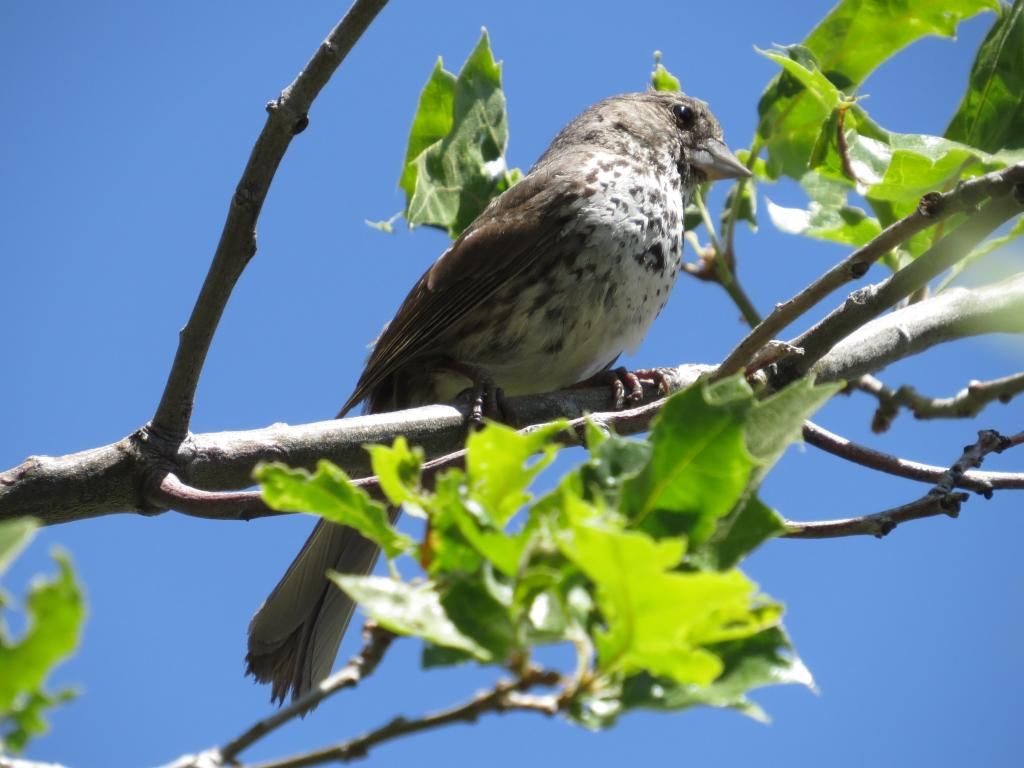
Photo credit: Angela Wranic
Tacacori, Costa Rica
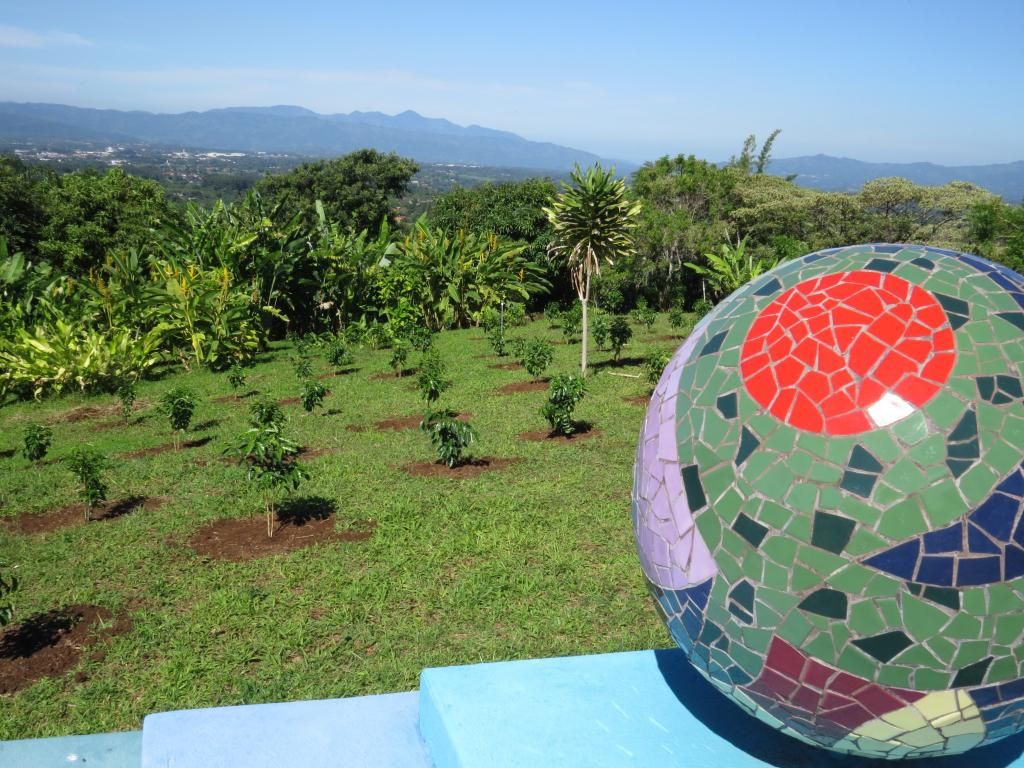
Photo credit: Angela Wranic
Tacacori, Costa Rica
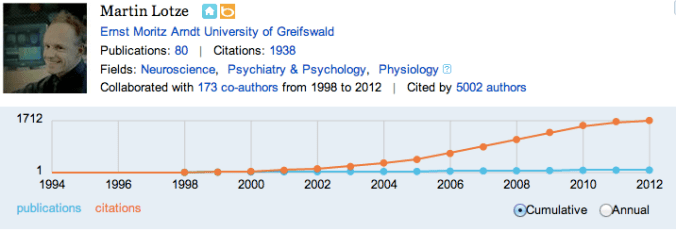
The graph above tells a story about what happens when an author-researcher writes compellingly about scientifically rigorous findings. Citations build. In this particular case, some of those citations are of research about the brain’s inner workings during the process of writing. Carl Zimmer’s attention to the work of Martin Lotze, in the Science section of the New York Times, is as scintillating as Zimmer gets:
…A novelist scrawling away in a notebook in seclusion may not seem to have much in common with an NBA player doing a reverse layup on a basketball court before a screaming crowd. But if you could peer inside their heads, you might see some striking similarities in how their brains were churning. Continue reading
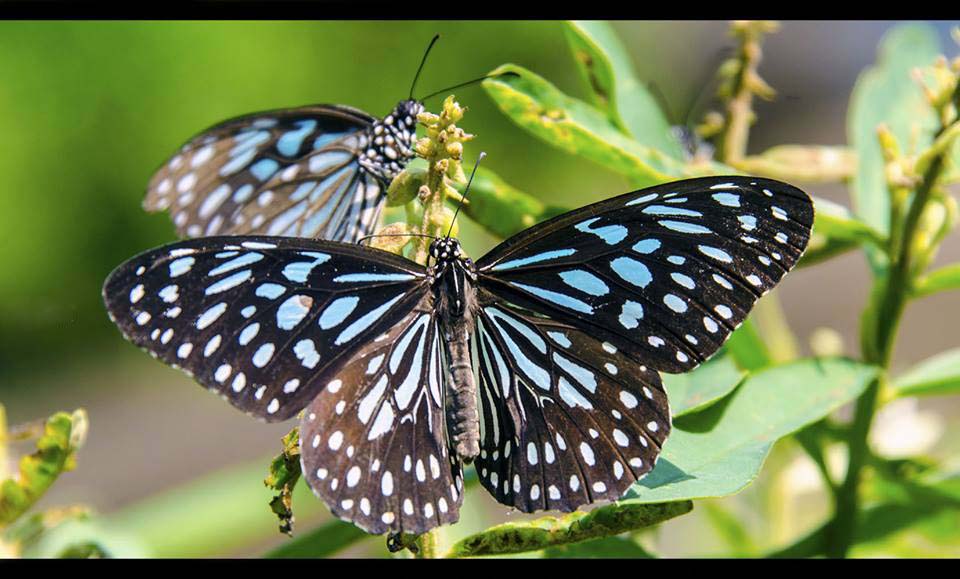
Photo credits: Sherfin
The Dark Blue Tiger (Tirumala septentrionis) is a butterfly that can be found across peninsular India at elevations up to 2000 meters. This butterfly prefers forested tracts, where they can be seen congregating in large numbers around pools of water and flowering trees. Continue reading
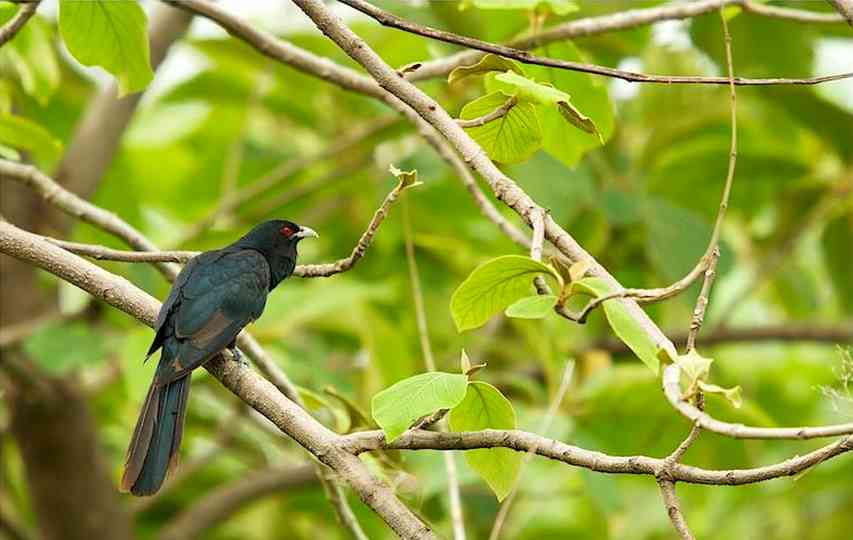
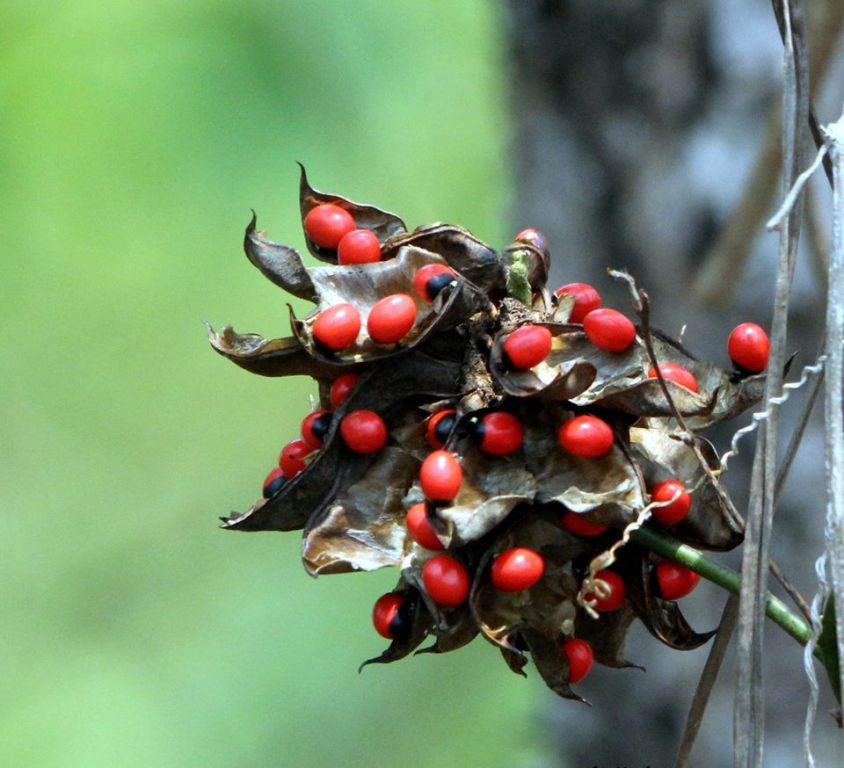
Photo credits: Shymon
Indian Licorice (Abrus precatorius) is a native of India and the tropical and sub-tropical areas of the Western Ghats. Despite its name, Indian Licorice is not closely related to the licorice (Glycyrrhiza glabra) that lends its flavor to candies, beverages, and other foods. The seeds are bright red and black in color and highly poisonous. Continue reading
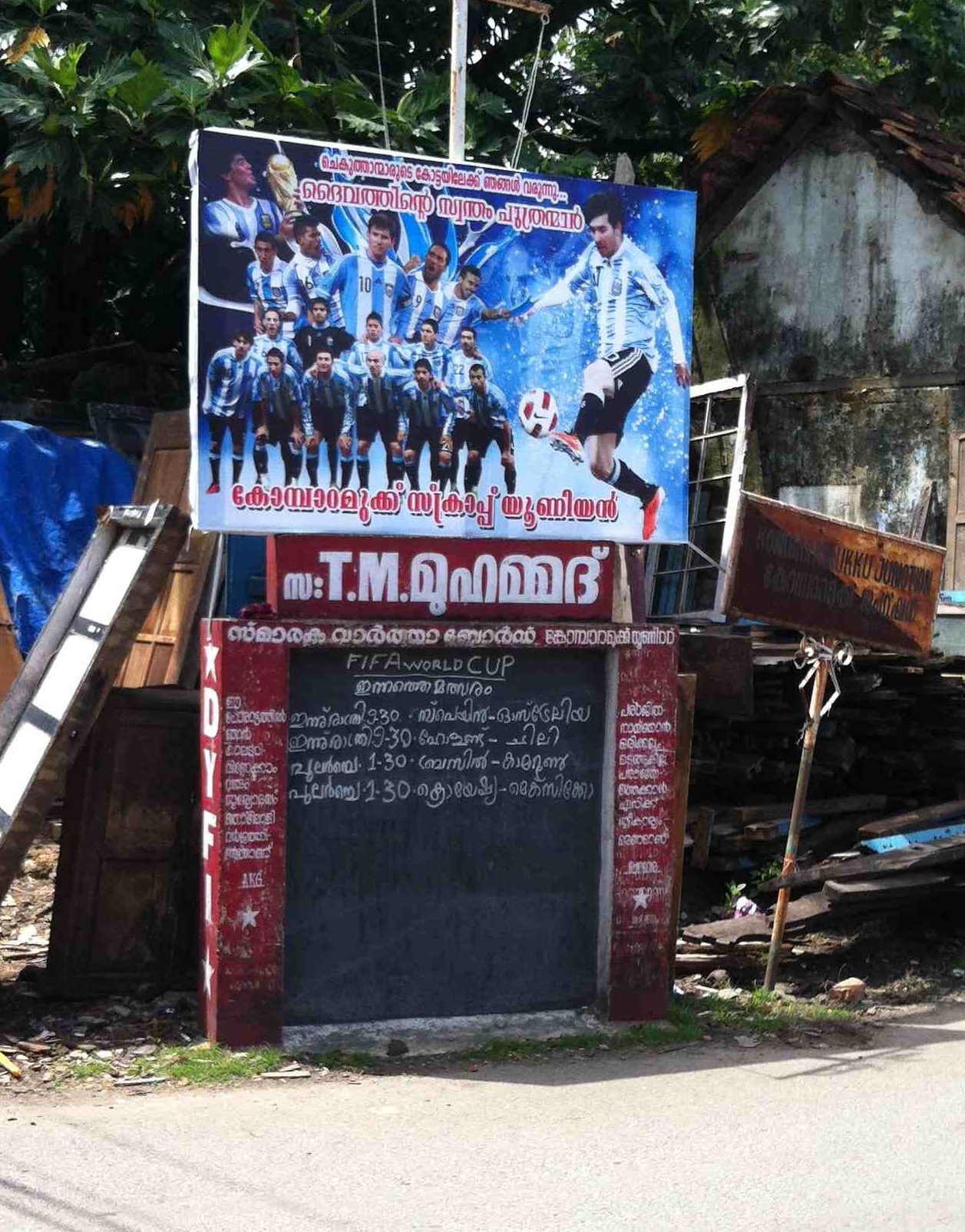
Kombara Mukku Junction, Mattanchery

Carbon dioxide emissions like those from coal-fired power plants should be taxed to spur energy innovation. Credit Luke Sharrett for The New York Times
Denial and obfuscation about climate change have been well documented strategies of those who would promote current enrichment and consumption over future well being. And even non-deniers have been hard-pressed to do anything substantial to counter the deniers. It tough economic times, anything goes, it seems. We need more heroic behavior from influential business leaders.
Henry M. Paulson, chairman of the Paulson Institute at the University of Chicago, former secretary of the Treasury of the United States, former chairman of Goldman Sachs, and notably a long-time member of good standing and service to the political party stacked with politicians and business leaders who deny the reality of climate change, has this to (heroically dare to) say in the Opinion section of this week’s Sunday New York Times:
The Coming Climate Crash
Lessons for Climate Change in the 2008 Recession
THERE is a time for weighing evidence and a time for acting. And if there’s one thing I’ve learned throughout my work in finance, government and conservation, it is to act before problems become too big to manage.
For too many years, we failed to rein in the excesses building up in the nation’s financial markets. When the credit bubble burst in 2008, the damage was devastating. Millions suffered. Many still do. Continue reading
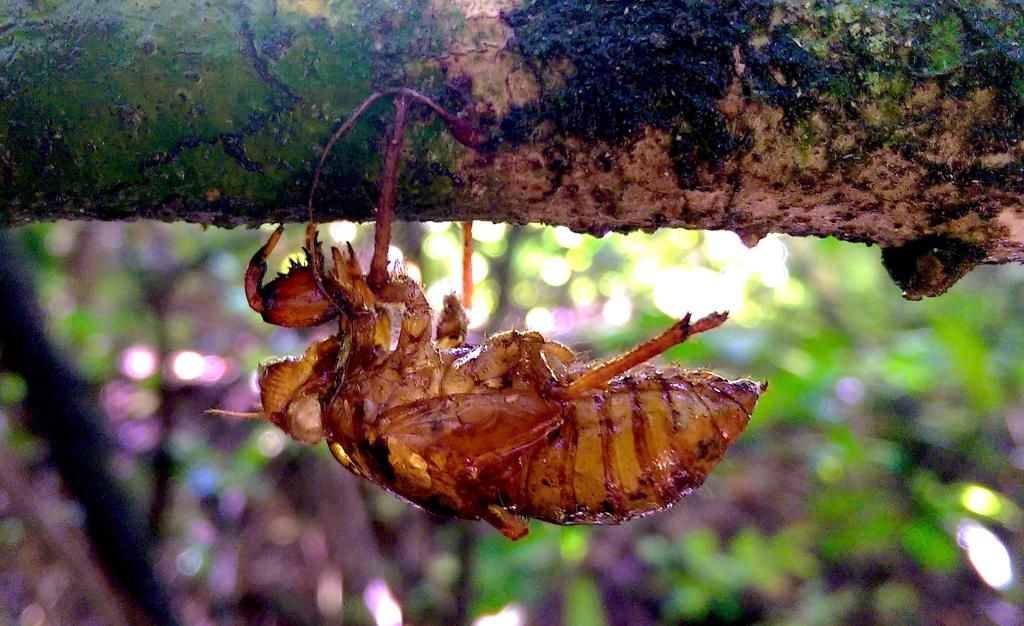
Cicada exuviae (i.e., molted exoskeleton)
After finding the molted exoskeleton of the cicada above while wandering Xandari’s forest paths, I decided to do a little digging on the bug. The cicada is a common, but amazing, species of insect. A “true bug” (Hemipteran), the cicada is easily recognized by its Continue reading

Disruption is a theory of change founded on panic, anxiety, and shaky evidence. Illustration by Brian Stauffer.
In an interview published on Friday, at the very end there is a sentence that caught our attention:
…I could list all kinds of problems that we still need to resolve, because a theory is developed in a process, not an event. [Disruption] has never happened in the hotel industry, for example…
It jumped from the page at us because “disruption” is such a powerful concept in current business strategy thinking, and because Raxa Collective develops and manages hotels; we have every reason to be concerned about disruption (of the normal variety, of course, but especially the strategic variety).
On whether disruption has never happened in the hotel industry: “chain” formation a century ago disrupted the millenia-old universal business model of owner-operated lodging; more recently, online travel agencies have altered the fortunes of the hotel industry sufficiently to force transformation of how hotels distribute their product; and at the same time the internet has enabled segments of the hotel industry that were previously dependent on travel agencies for survival to distribute their product independently of intermediaries, which seems disruptive.
Over the weekend our attention turned from that sentence above to what spurred it. The interview refers to an article from the current issue of the New Yorker magazine that we have now read in entirety. A historical analysis of one of the driving forces of today’s entrepreneurial culture makes clear how a paradigm can take hold without anyone questioning its underpinnings. When a prominent history professor challenges the fundamental premises of a prominent business school professor (and virtually the entire business world following that professor’s prescriptions) with language and imagery this rich, fireworks were a foregone conclusion:
 The prevailing etymology of the word ‘cocktail’, according to the Oxford English Dictionary, is of equestrian origin: any horse that was not a thorough-bred, or whose tail was cut short because it was serving as a hunter or stage-horse, could be described as a cocktail or a cocktailed horse. Eventually gaining a negative connotation, it probably was used to describe any sort of adulterated alcohol in the form of a mixed drink. Nowadays, we even use it for harmful or otherwise potent amalgams of substances, such as cocktails of drugs or Molotov cocktails.
Most of us, when we hear the phrase “Bourbon coffee,” likely think of Continue reading

We hope it is both bark and bite (that the idea catches and results in young entrepreneurs getting the support they need in an an otherwise very old school economic culture that would definitely benefit from more startups) and will track it; but for now, fyi: Continue reading

Photo credits : Jithin Vijay
The Koorkencherry Pooyam festival is celebrated in the Sri Maheswara Temple, situated in the Thrissur district of Kerala. One of the main attractions of the Pooyam is Kavadiyattom. Kavadiyattoms are divided into two types, Pookavadi and Ambalakavadi. The performing groups start these ritual dances in the morning of the festival. Continue reading

Raccoon paw tracks (front)
An extremely strong aguacero (downpour) here at Xandari swelled the river that runs through the property’s grounds yesterday. Still having tracks on our mind from the last post, Seth and I headed down this morning to see if the fresh, silty clay deposited by the high waters had trapped any interesting “autographs.” Continue reading


Thanks to Atlantic‘s website for this post on a topic (or topics, if ice cream is counted separately from our ongoing discussion of the meaning and importance of natural food) of interest to many of our readers:
Last month, Vermont became the first state to require that all foods that are entirely or partially produced with genetically modified ingredients be labeled as such. This month, a coalition of food industry groups, including the Snack Food Association and the Grocery Manufacturers Association, filed a lawsuit, saying that the measure is arbitrary and impedes interstate commerce. Continue reading
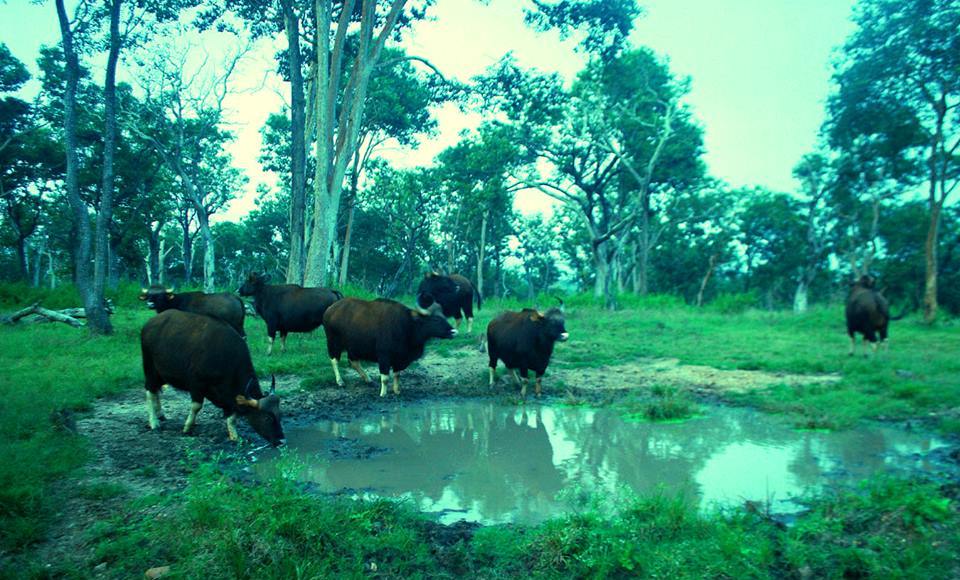
Photo credits: Unni P
Mudumalai National Park is situated in the state of Tamil Nadu. One of the first wildlife sanctuaries established in India, the terrain consists of low hills, valleys, and flat lands with a few swampy areas scattered about. Continue reading
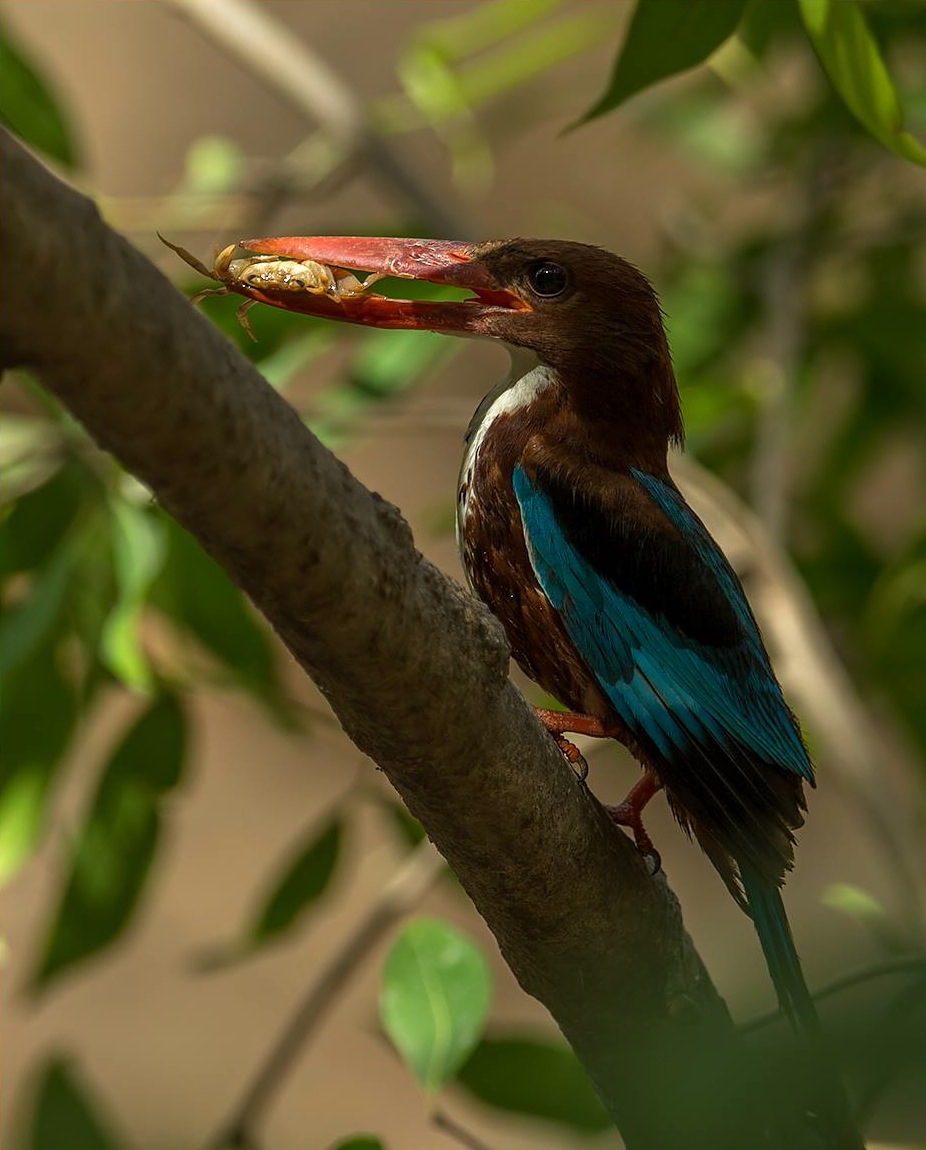
Ranthambhore Tiger Reserve, Rajasthan
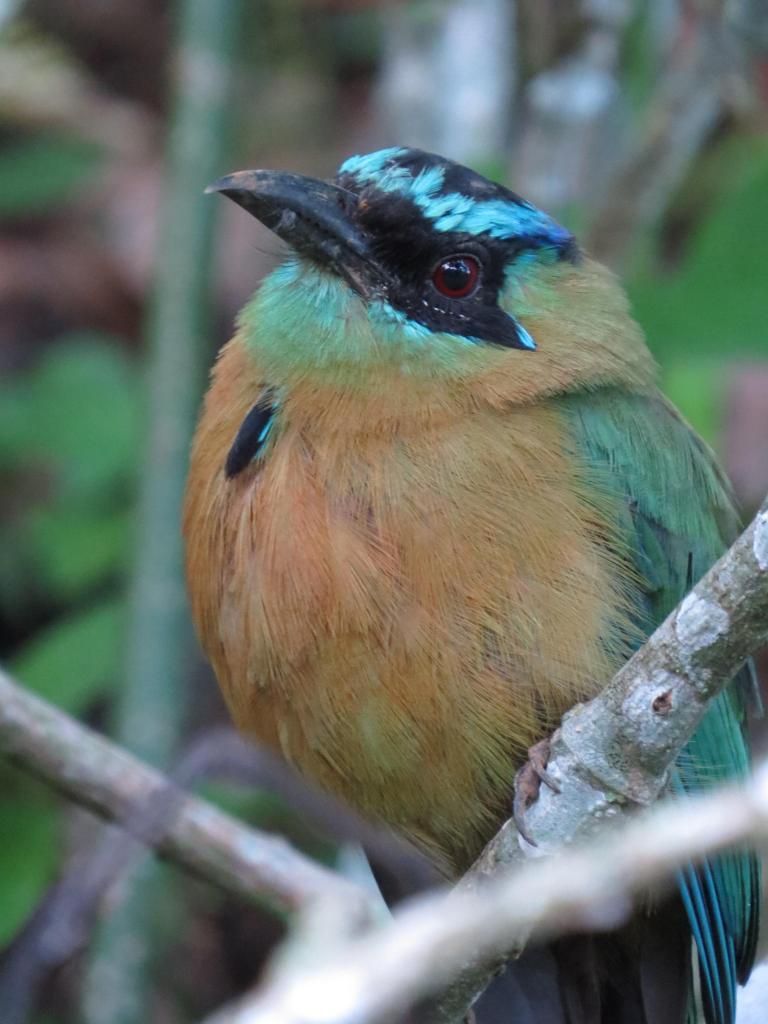
Blue-crowned Motmot at Xandari
Trending on the web nowadays is the tagline “throwback Thursday,” or #tbt, used to recall old photos or experiences with an interesting or humorous sense of nostalgia. As James and I spend most early mornings going out around Xandari to explore the trails and document the avifauna we can find, I am reminded of similar excursions I made with my friend and fellow Tomás de Berlanga English teacher Mari, in Mindo, Ecuador.
About two years ago on the dot, Mari and I saw an amazing group of birds in one of Costa Rica’s great competitors in terms of birding hotspots. As you can see from my first post about manakins, two years ago I did not consider myself a birder — now, as James and I add our observations around Xandari to eBird every day, my opinion may have changed slightly Continue reading

 Organikos