Bats, Rice And Coexistence

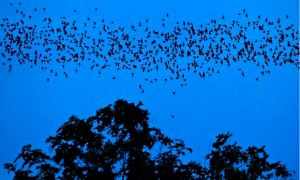
Scientists believe wrinkle-lipped bats could prevent annual paddy losses of nearly 2,900 tons, enough to feed 26,000 people for a year. Photograph: Barbara Walton/EPA

Scientists believe wrinkle-lipped bats could prevent annual paddy losses of nearly 2,900 tons, enough to feed 26,000 people for a year. Photograph: Barbara Walton/EPA

Good news out of Thailand for both bats and rice and also for the concept of mutually beneficial coexistence:

Bats that prey on a major rice pest in Thailand could save paddy harvests worth millions of dollars and help contribute to better food security, claim scientists in a paper published in Biological Conservation.

Continue reading

Pesaha Appam – Maundy Appam

Photo Credit : Renjith

Photo Credit: Renjith

Pesaha Appam is a traditional food made by Kerala Christians only during Maundy Thursday, the Thursday of holy week. The eldest  member of the family blesses and cuts the Appam and distributes it to the rest of the family members. Continue reading

Going Deep Into Caves

Atanasio, a cliff-face opening in the Sierra de Juárez mountains of Oaxaca, Mexico. The mountains are home to the Chevé system, some eighty-five hundred feet deep—potentially the deepest cave in the world.

Atanasio, a cliff-face opening in the Sierra de Juárez mountains of Oaxaca, Mexico. The mountains are home to the Chevé system, some eighty-five hundred feet deep—potentially the deepest cave in the world.

The writer who brought you the inside scoop on wild things gone wild, brings you a journey deep into the earth:

On his thirteenth day underground, when he’d come to the edge of the known world and was preparing to pass beyond it, Marcin Gala placed a call to the surface. He’d travelled more than three miles through the earth by then, over stalagmites and boulder fields, cave-ins and vaulting galleries. He’d spidered down waterfalls, inched along crumbling ledges, and bellied through tunnels so tight that his back touched the roof with every breath. Now he stood at the shore of a small, dark pool under a dome of sulfurous flowstone. He felt the weight of the mountain above him—a mile of solid rock—and wondered if he’d ever find his way back again. It was his last chance to hear his wife and daughter’s voices before the cave swallowed him up. Continue reading

Costa Rica And India, Friends In And Friends Of Democracy

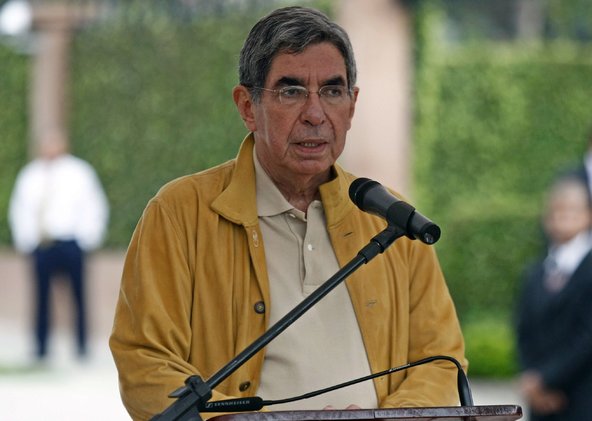
14-oscar-arias-indiaink-tmagArticle

Jeffrey Arguedas/European Pressphoto Agency

I was rushing through an airport recently, in transit between one workplace and another, when the man in the picture above walked past me and our eyes connected; we both stopped.  We were not in his country or mine. There was no reason for him to remember who I was, but I had good reason to greet him with “Mr President, you are looking well.” The man has not seemed to age a day since I first met him nearly 20 years ago.

To my astonishment, he recognized me and reminded me that our last meeting was in his office in Costa Rica with a group of conservation-oriented investors interested in that little country’s commitments to its national park system. Oscar Arias played an important role, as President nearly three decades ago, and then again as President in the last decade, innovating a more sustainable future for the national park system, and these investors were interested to hear his views.

Lest anyone misinterpret this as an exercise in name-dropping, my point in mentioning this is very much the opposite. Costa Rica, to use a great metaphor from an otherwise not great sport, “punches above its weight class” in conservation, in health indicators, in education, and even in happiness.

This explains its success in attracting foreign direct investment, and makes all the more remarkable that a Nobel laureate who has twice been president of Costa Rica is approachable and friendly, generous with his time. It is the Costa Rican way, without regard to status. He has time to say hello to a random gringo in an airport. He has time to come to India to say hello to the 15o million new voters (added to the hundreds of millions of experienced voters) engaged in the current exercise of the world’s largest democracy: Continue reading

Pottan Theyyam

Photo credits : Jayaraj

Photo credits: Jayaraj

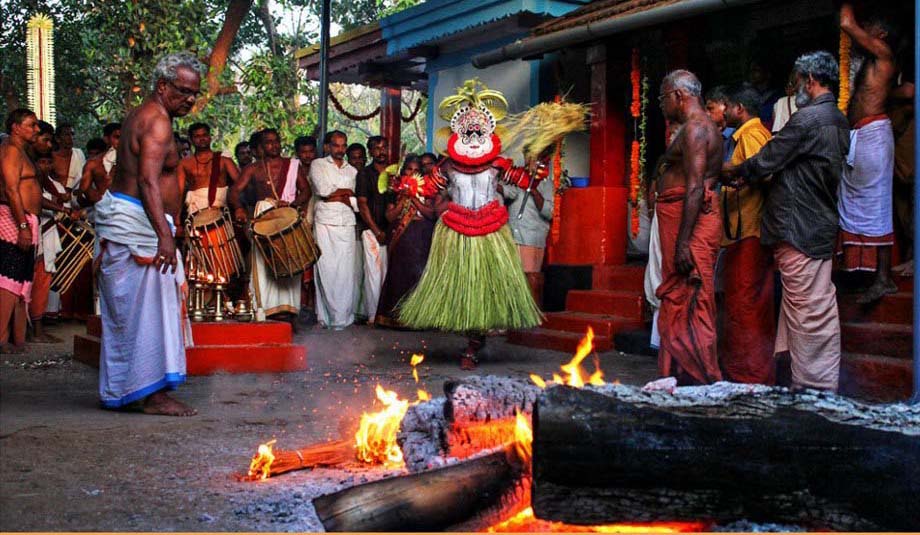
Pottan Theyyam is a colorful ritualistic dance that forms an integral part of the cultural scene in North Kerala. Dressed in ribbons of tender coconut leaves, with his face hidden behind a mask, the Theyyam dances in a frenzied spell, throwing himself on burning red hot embers and walking on fire without getting burnt. Continue reading

51-Spiced Vegetarian Lunch With View

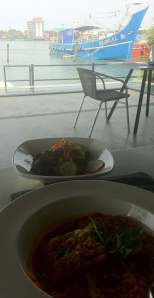
Seasonal vegetables wrapped in chickpea crepe

51-spiced vegetables, wrapped in chickpea crepe, with summer tomato coulis

It is good to sit by the water at lunchtime, on occasion, and read while tasting something new (thanks, kitchen!). Here, an incidental passage from a book review that fit yesterday’s midday meal at 51:

…When my grandmother taught me to make banana pancakes, which we did every Wednesday night through much of my childhood, she would counsel “Hold the bowl” as I stirred, which became, in our letters to each other, code for “I love you.” At the beginning of Nigel Slater’s memoir “Toast: The Story of a Boy’s Hunger,” the author puts it this way: “It is impossible not to love someone who makes toast for you.”

Surely none of this was on my mind on April 5, 2013, when I purchased “Vegetarian Cooking for Everyone,” by Deborah Madison. I had, exactly a month previously, met a swell fellow, who happened to be vegetarian… Continue reading

Indian Laburnum


Photo Credits : Jithin

Photo Credits: Jithin

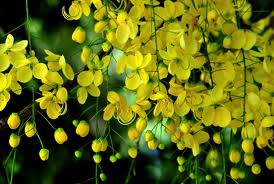
Commonly known as the Golden Shower tree, the flowers of the Indian Laburnum are an integral part of Vishu, the planting festival of Kerala. This delicate flower graces the ritual arrangements in homes all over Kerala. Continue reading

Memories of Vishu


Vishu

When we were kids, we used to wait with great anticipation for Vishu– which falls around the 14th of April each year. Actually it depends on the Malayalam  Calendar, and this year it falls on the 15th. Most Keralaites, especially the older generation, go by the Malayalam calendar for birthdays or any other auspicious occasion.

Vishu is a happy festival, filled with lights, fireworks and bursting crackers as part of the celebration. Other elements of Vishu include the buying of new clothes for the occasion, the tradition of giving money called Vishukaineettam and the culinary treat, the Vishu feast or Sadya.

The most important event in Vishu is the Vishukkani, which means “the first thing seen on the day of Vishu after waking up”. Continue reading

Long-Form Science Writer On Vacation In One Of Our Favorite Places

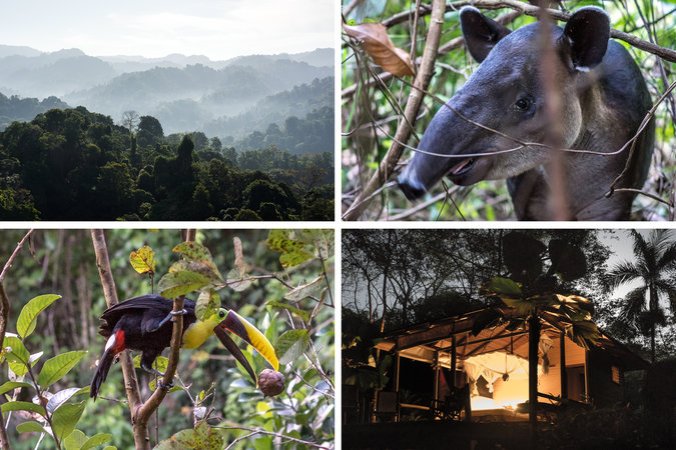
Clockwise from top left: Rain forest in Corcovado National Park; a tapir in the park; a cabin at Bosque del Cabo Rainforest Lodge; spying on a toucan at the lodge. Credit Scott Matthews for The New York Times

Clockwise from top left: Rain forest in Corcovado National Park; a tapir in the park; a cabin at Bosque del Cabo Rainforest Lodge; spying on a toucan at the lodge. Credit Scott Matthews for The New York Times

As might be guessed from many of the sources linked to here, several of us are fans of long-form narrative and some enough so that we listen to a podcast dedicated to interviewing long-form journalists. We love well-crafted descriptive wording. Our friends in Costa Rica generally, and the Osa Peninsula especially, must be delighted to have Amy Harmon‘s long-form knowhow working in their favor in this week’s Travel section of the New York Times.

BdCShirtBy almost unbelievable coincidence, while wearing the shirt to the left (selfie by yours truly, dear reader) I was listening to a podcast interview with Amy Harmon  at the moment this article–what first caught my eye was the title about travel to Costa Rica–came onto my screen. Then, seeing it was by Amy Harmon I had to read it immediately for another reason. We have a large collection of posts dedicated to science writers and their craft, but none yet dedicated to her work (this post is the first step of correcting that negligence). Below, excerpts of the description of the experience she had at Bosque del Cabo, a property where many of our guests who stay at Xandari also visit, and vice versa:

…Our first stop, Bosque del Cabo, was a 40-minute ride by taxi from Puerto Jiménez, the biggest town on the peninsula with a population of 1,780. I had chosen one of the two cabins at Bosque just steps from the rain forest, at the edge of a large clearing planted with native trees and plants. A half-mile away from the main lodge area, these “garden cabinas” are reached by a trail through the forest that crosses high above a river over a suspension bridge… Continue reading

Palm Sunday

Photo credits : Ramesh Kidangoor

Photo credits: Ramesh Kidangoor

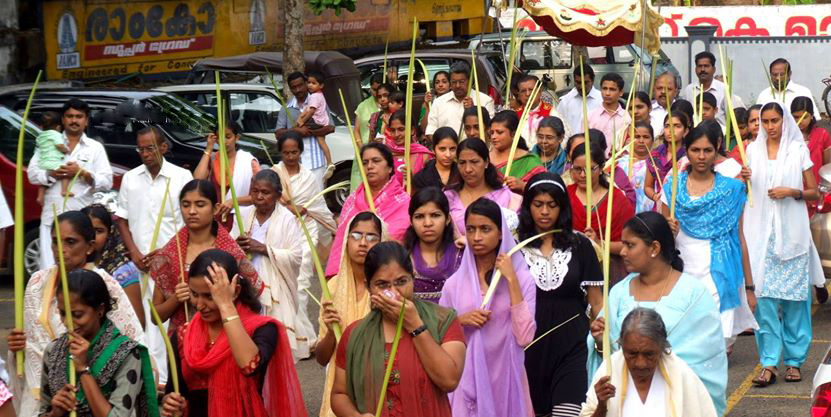
In Kerala, Palm Sunday is called Hosanna Njayar. Celebrated by Christians the world over on the Sunday before Easter, which fell on April 13th, in 2014. Churchs have special services and ceremonial processions attended by hundreds of believers carrying tender palm leaves to be blessed by the priests. Continue reading

Chefs Do The Most Surprising Things, At 51 In Kerala’s Historic Mattanchery Neighborhood, And Elsewhere

Photograph by Brian Ach/Getty

Photograph by Brian Ach/Getty

The kitchen team at 51 has gone from concept and recipe development, to food trials, to opening and ongoing operations, to continued taste tests, rather nonstop for months. They have risen to the challenge–Malabar cuisine showing off its Eastern Mediterranean multicultural influences–and surprised our palates pleasurably. But now a quick break with a fun story, for the team at 51.

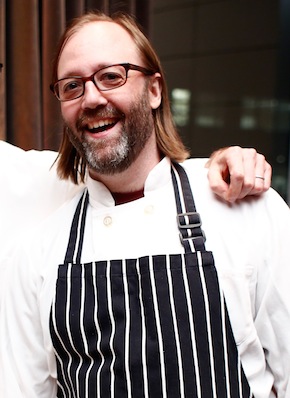
Everyone loves a well-planned and meticulously executed surprise when the outcome is a big smile. Why not chefs, too? Chef stories are on our radar lately and this one, if it is to be believed in all details, has a surprise within a surprise in that these culinary artists who have all “made it” still deem to sleep in modest accommodation in the interest of pulling off the party of a lifetime, in secret, for someone they care about:

For forty-eight hours this week, some of the world’s most acclaimed chefs, who hold twenty Michelin stars and myriad awards between them, were living in hiding in New York City. The twenty non-New Yorkers were sequestered together deep in Williamsburg, in dingy rental apartments with thin mattresses on wooden slats, horrible lighting, and half-eaten bags of Doritos strewn about. Continue reading

Collaborative Shorts From Brown

We have been watching those folks at Brown University since the early days of this blog, and more recently too. They are a community we never tire of learning more about, and from. In the five years since they first started offering simple but imaginative explanations for complex phenomena (many, but not all, oceanographically topical), we have almost come to expect a six minute short on how to save the world’s high seas from over-fishing collapse. Not likely, but we appreciate their efforts with each new short, most recently from about six weeks ago.

The New York Times, one of our many regular sources for excellent science writing, paid attention to this project late last year. We look forward to more. Background on, and credits for, the shorts:

Continue reading

Pathiramanal Island – Alappuzha, Kerala

Photo credits : Surus

Photo credits: Surus

Pathiramanal is a small island located in the backwaters of Alappuzha District, about 2 kilometers from the Muhumma boat jetty. Many rare varieties of migratory birds from different parts of the country come here to nest, adding to the scenic beauty of its location on Lake Vembanad. Continue reading

Know Your High Seas, EEZs, And 1-2-3s

EEZs are shown in green and high seas in blue. EEZs comprise 42% of the planet’s oceans.

EEZs are shown in green and high seas in blue. EEZs comprise 42% of the planet’s oceans.

We are in awe of the scientists who help us understand this topic we write on and link to from time to time. The metrics required to understand overfishing in any meaningful way cannot be simple. But, a marker for a fishing zones we had not even known existed–the EEZ–is a good place to start counting:

The ocean is a big place, but not all seas are created equal. While 58% of the seas are classified as “high seas,” and open to access from all nations, there are over 150 exclusive economic zones (EEZs), which are the sole domain of the countries that operate them. EEZs comprise the remaining 42% of the ocean. The patchwork quilt of economic interests that blanket the ocean pose a problem for the fish who live there and the fisheries that exploit those fish. Continue reading

Time Zone Adjustments For Sleep


It is a drag. Just saying the two words that are the inspiration for this app below is a drag. So instead we will say it more soothingly, discussing the need for adjustments for sleep based on crossing time zones. This is definitely of interest to many of the travelers who make their way to properties we manage. Raxa Collective remains firmly rooted in Kerala, India–a long haul flight from most places–while expanding our project reach into Western Africa and Central America, which makes us susceptible to the attraction of this app brought to our attention by National Public Radio (USA):

Jet lag is nobody’s idea of fun. A bunch of mathematicians say they can make the adjustment less painful with a smartphone app that calculates the swiftest way to adjust.

Users plug in the time zone they’re traveling to, and the app will do the calculations before spitting out a schedule specifying when the user should stay in bright light, low light or be in the dark, says Olivia Walch, a graduate student at the University of Michigan who designed the app.

“The conventional wisdom is for every hour you’re shifting, it’s about a day of adjustment,” Walch says. So Washington, D.C., travelers going to Hong Kong — a 12-hour time difference — could take up to 12 days to adjust. The app can reduce that time to roughly four or five days, the inventors say. Continue reading

Bekal Fort – Kasaragod, Kerala

Photo credits : Sijo

Photo credits: Sijo

Bekal Fort is situated in the Kasaragod district in the north of Kerala. One of the largest and most well-preserved forts in the state, Bekel is spread over 40 acres. The fort was built by Sivappa Naik of the Ikkari dynasty in 1650. The west side of the fort offers a magnificent view of the sea and the beach. Continue reading

If You Happen To Be In London

ANDREAS GURSKY. EARLY LANDSCAPES     SPRÜTH MAGERS LONDON   APRIL 15 – JUNE 21 2014

Andreas Gursky Alba, 1989, 87 x 108 7/8 x 2 3/8 inches Copyright: Andreas Gursky / DACS 2014  Courtesy Sprüth Magers Berlin London

Andreas Gursky Alba, 1989, 87 x 108 7/8 x 2 3/8 inches Copyright: Andreas Gursky / DACS 2014 Courtesy Sprüth Magers Berlin London

Thnaks to Phaidon for bringing this exhibition to our attention:

…No one else has captured the queasy beauty of the modern world quite as well as this 59-year-old German. Yet, while his best-known images feel as if they faithfully capture contemporary life, it’s perhaps a little dispiriting to hear that Gursky admits to digitally manipulating some of his photographs. Continue reading