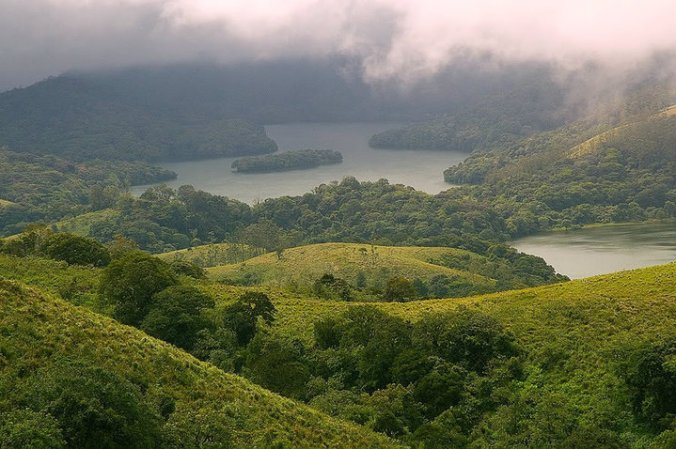
Taste Of Kerala – Star Gooseberry

Photo credits : Renjith Rajan

Photo credits: Renjith Rajan

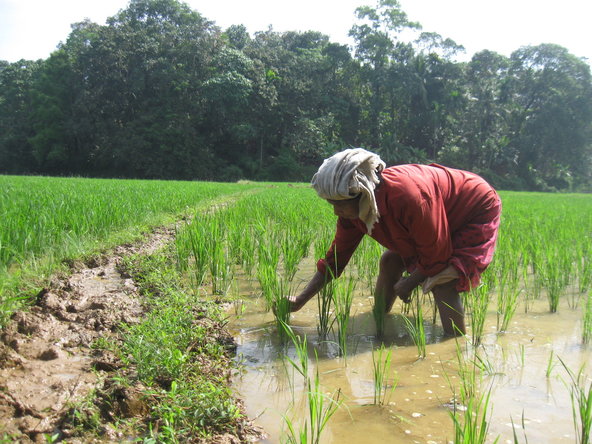
Star Gooseberry is native to the Malay Islands and Madagascar. The small deciduous tree can grow up to 25-30 feet height. Abundantly found in Kerala for its acidic fruits that are mainly used for pickling and for the preparation of preserves. Although it also makes excellent jam, star  gooseberries are also used in traditional medicines.

Calling On Solomon In A Birds-Versus-Science Conundrum

A family of Osprey are seen outside the NASA Kennedy Space Center Vehicle Assembly Building in Cape Canaveral, Florida in this file photo taken May 13, 2010. CREDIT: REUTERS, BILL INGALLS, NASA/HANDOUT/FILES

A family of Osprey are seen outside the NASA Kennedy Space Center Vehicle Assembly Building in Cape Canaveral, Florida in this file photo taken May 13, 2010. CREDIT: REUTERS, BILL INGALLS, NASA

Anyone who has been following Raxa Collective’s blog for more than a day is probably aware that we pay close attention to birds.  We do this because many of the places where we operate conservation-focused lodging are also exceptionally biodiverse bird habitats. Most of the travelers who visit our properties are at least interested in birds, and many are serious bird-watchers. But we also pay attention to birds for the same reason we pay attention to science in general: they are an indicator of the health of our planet and we want to both pay attention to the indicators and understand them better. Science matters. So, in general, we are NASA fans.  But the story here makes us wonder what Solomon’s wisdom might advise:

Florida’s plan to build a commercial space launch complex in a federal wildlife refuge surrounding the Kennedy Space Center drew sharp words from environmentalists and strong support from business boosters during the project’s first public hearing on Tuesday.

Advocates say the proposed spaceport is needed to retain and expand Florida’s aerospace industry, which lost about 8,000 NASA and civilian jobs after the shutdown of the space shuttle program in 2011.

Opponents of the plan to carve out about 200 acres from the 140,000-acre (57,000-hectare) Merritt Island National Wildlife Refuge cite concerns over protecting the refuge’s water, seashore, plants and wildlife, which include 18 federally listed endangered species. Continue reading

Kerala Butterflies – Blue Admiral

Photo credits : Aparna P

Photo credits: Aparna P

The Blue Admiral butterfly, Kaniska canace, is a colourful butterfly commonly found in the hills of  Southern India up to 2500m above sea level. Usually solitary, this butterfly is blackish blue with shining silvery blue bands across the outer edge of the wings. These butterflies fly close to ground, preferring to be near water, forest openings and paths.

Grid Growth Gazing

(Thinkstock) Is there anywhere left on Earth where it’s impossible to access the internet? There are a few places, but you have to go out of your way to find them, discovers Rachel Nuwer.

(Thinkstock) Is there anywhere left on Earth where it’s impossible to access the internet? There are a few places, but you have to go out of your way to find them, discovers Rachel Nuwer.

As much as we encourage travelers to join us off grid in remote locations, to disconnect and engage in authentic experiences of communities and ecosystems not like home, nonetheless we depend on the grid for our ability to connect with those very same travelers. We are paying increasing attention to the evolution of connectedness, and this report by the BBC is of interest:

It can be easy to forget what life was like before the internet. For many, not a day goes by without checking email, browsing online or consulting Google. Some 1.3 billion people alive today are young enough never to have experienced anything else. Yet has the network of networks underpinning all this activity actually reached every part of the globe?

Various reasons still stop people accessing the internet where they live, of course. There’s censorship, for starters. “We don’t get much traffic from North Korea,” says John Graham-Cumming of CloudFlare, a content delivery network – the equivalent of a regional parcel distribution centre, but for web traffic. “Likewise, early in the Syrian civil war they cut off internet access and we saw a drop in traffic coming from those Syrian connections.” Continue reading

Yoga In Perspective

San Antonio Museum of Art

San Antonio Museum of Art. ‘Yogini’; sandstone statue, Kannauj, Uttar Pradesh, first half of the eleventh century. William Dalrymple writes that ‘in ancient India yoginis were understood to be the terrifying female embodiments of yogic powers who could travel through the sky and be summoned up by devotees who dared to attempt harnessing their powers.’

William Dalrymple, in the New York Review of Books, provides a summary of four books that should be considered essential reading to understand yoga in its proper historical context. The last few paragraphs are among the best:

…Yogis seem to have gone particularly out of control during the eighteenth-century anarchy between the fall of the Mughals and the rise of the British. This is a subject explored by William Pinch in his brilliant 2006 study of the militant yogis of the period, Warrior Ascetics and Indian Empires.

European travelers of the period frequently describe yogis who are “skilled cut-throats” and professional killers. “Some of them carry a stick with a ring of iron at the base,” wrote Ludovico di Varthema of Bologna in 1508. “Others carry certain iron diskes which cut all round like razors, and they throw these with a sling when they wish to injure any person.” A century later the French jewel merchant Jean Baptiste Tavernier was describing large bodies of holy men on the march, “well armed, the majority with bows and arrows, some with muskets, and the remainder with short pikes.” By the Maratha wars of the early nineteenth century, the Anglo-Indian mercenary James Skinner was fighting alongside “10 thousand Gossains called Naggas with Rockets, and about 150 pieces of cannon.” Continue reading

Black Box Exploration

It has been a while since we linked over to a Radio Lab podcast, but this one is a good comeback story (click the black box to go to the podcast):

This hour, we examine three very different kinds of black boxes—those peculiar spaces where it’s clear what’s going in, we know what’s coming out, but what happens in-between is a mystery. From the darkest parts of metamorphosis, to a sixty year-old secret among magicians, to the nature of consciousness itself, we confront the stubborn gaps in our understanding.

Kerala Church Festival – St.Mary’s Church, Kuravilangad

Photo credits : Ramesh Kidangoor

Photo credits: Ramesh Kidangoor

Church festivals mark a special form of festivity among the Christians of Kerala. Called Perunal, these celebrations add verve and flavor to local communities. St. Mary’s Church in Kuravilangad is an ancient church believed to have been built over thousand years ago, which celebrates the famous kappal festival (vessel procession) every year in February. Continue reading

A Scientist, On Play

Another keeper on the topic of play, from another of the Baffler’s notable contributors:

Rationalists tend to frown upon group activities that seem to serve no evident biological or political purpose, like the drumming and masking so often indulged in by protest movements like Occupy Wall Street. Or, for a more historically venerable example, consider the reaction of European conquerors and missionaries to the shocking spectacles they encountered during the “age of exploration.” Almost everywhere they went—from Africa to the Western plains of America, from Polynesia to the Indian subcontinent—Europeans came across native peoples engaged in ecstatic rituals involving dancing, drumming, body-painting, masks, costumes, and feasting. Failing to notice the parallels between these exuberant native rituals and the traditional carnivals of Europe, missionaries tended to explain them as outbreaks of demonic possession, or as proof that the natives were not human at all, only “savages.” Continue reading

Citizen Science Democratizing Research

New technology is dramatically increasing the role of non-scientists in providing key data for researchers. In an interview with Yale Environment 360, Caren Cooper of the Cornell Lab of Ornithology talks about the tremendous benefits — and potential pitfalls — of the expanding realm of citizen science.

Most of our ornithological attention these days is on the bird count just getting under way, but citizen science is never far from our minds, so thanks to Yale 360 for this article that combines both interests:

When biologist Caren Cooper carries out her avian studies, she’s aided by thousands of assistants, none of whom are paid for their work. That’s because Cooper, a research associate at the Cornell Lab of Ornithology, relies on the help of so-called citizen scientists, volunteers from across the country who contribute data to her research projects. These lay people provide information that enables her and other scientists to study bird life in ways that would otherwise be impossible.

But, as Cooper notes in an interview with Yale Environment 360contributor Diane Toomey, the uses of citizen science now go way beyond events like the National Audubon Society’s Christmas Bird Count. Continue reading

One Birthday, Two Remarkable Men

lead

Birthdays do not really matter. But ideas do. And when big ones come along, we celebrate the men and women who shared them in various ways. One way, pedestrian as it may seem, is remembering them on their birthday. Artists and musicians, likewise. We had not remembered, when we posted this yesterday, of this coincidence, but the Gopnik essay mentioned below (we now recall) is worth reading and we thank the Atlantic‘s website for reminding us via this blog post by Alexis Madrigal:

February 12 was a big day in 1809. Abraham Lincoln was born in a wild Kentucky; Charles Darwin was born in a refined Shrewsbury, Shropshire. One man held together the Union. The other developed a theory that resonates through the sciences and beyond to this day. While it’s often difficult to unspool the impacts that individuals have on the world, it seems fair to say that these two minds did something consequential on this rock.

And in a 2009 essay, writer Adam Gopnik tried to get at the shared method of their influence. Continue reading

Organic Farming At Cardamom County

Organic Farming

Organic Farming

At Cardamom County we believe in providing guests with the best experience possible, and an eco-friendly one at that. We not only provide this during their stay with things like rich flora on property and solar water heaters, but also through our food: with fresh eggs from our farms and a variety of greens for the most crisp and refreshing salads. Here are a few pictures of the farm. Soon, this fresh produce will be used in many of our upcoming properties. Continue reading

When In Doubt, Musical Theater

Greek vocal icon Marinella, center, sings "Children of Greece," a song once sung to Greek soldiers as Italian and German forces invaded the country. As they endure hard times today, Greeks are turning to theater that shows triumphs over adversity in the last century.

Greek vocal icon Marinella, center, sings “Children of Greece,” a song once sung to Greek soldiers as Italian and German forces invaded the country. As they endure hard times today, Greeks are turning to theater that shows triumphs over adversity in the last century.

Thanks to National Public Radio for this story from Athens, where several Raxa Collective members have family and friends who attest to the tough times there. The story is interesting because it is counterintuititve to us, with no offense to those who appreciate musicals, that this form of theater has proven so popular at such a time as this. It is not what we might have first thought up as an antidote for tough times, but who are we to argue with effective salves:

It’s a full house at the 2,000-seat Badminton Theater in Athens. On stage is a musical about the singer Sofia Vembo, whose warm contralto voice comforted Greeks during World War II.

The song that is bringing the audience, mostly Greeks in their 60s and 70s, to tears and applause is called “Paida Tis Ellados, Paidia,” or “Children of Greece.” Sofia Vembo sang it to Greek soldiers as Italian and German forces invaded the country.

On this evening, it’s sung by 75-year-old Marinella, the platinum-haired icon of modern Greek music. She’s joined by a young cast in 1940s dresses and military garb.

In the audience, a young, green-eyed dermatologist named Fiori Kousta is passionately singing along.

“This song gives me hope,” she says, “because it reminds me that Greeks have been through much worse than what we’re going through today. Continue reading

If You Happen To Be In New York

This slideshow requires JavaScript.

Thanks to the New Yorker‘s website for keeping us posted on the first show of a new curator at MOMA, in a medium of expression we care about for various reasons both aesthetic and technical:

In this week’s issue of the magazine, Vince Aletti talks to Quentin BajacMOMA’s new chief curator of photography, about “A World of Its Own: Photographic Practices in the Studio,” his first show for the museum:

“I’m a bit tired of the predictable history from the daguerreotype to the digital print,” says the Paris-born Bajac, who comes to MOMA from stints at the Musée d’Orsay and the Centre Pompidou, where he was the head of the photography department from 2007 to 2013. Continue reading

205 Years Ago On This Date

The London Review: Volume 14. John Telford Benjamin Aquila Barber. January 1, 1860. J.A. Sharp – Publisher

He has plenty of detractors, and while those detractors are less likely to read anything on these pages we still reach out with a thought: Charles Darwin’s birthday is an important one, to the degree any birthday is important after someone is no longer among us.  A day to remember someone who lived what can only be called a good, important life.  Below we link to a quotation that Seth found, as archival researchers and modern folk are likely to do, in a journal reviewing On the Origin of Species early in 1860:

Hitherto we have said nothing of the aim of this book. It is an attempt to prove that all existing plants and animals have not been created in their present sharply-defined specific forms, but have been gradually changed in the course of millions of millions of generations, under the operation of a law of unlimited variation. ‘Probably all the organic beings that have ever lived on this earth have  Continue reading