A Scientist, On Play

Another keeper on the topic of play, from another of the Baffler’s notable contributors:

Rationalists tend to frown upon group activities that seem to serve no evident biological or political purpose, like the drumming and masking so often indulged in by protest movements like Occupy Wall Street. Or, for a more historically venerable example, consider the reaction of European conquerors and missionaries to the shocking spectacles they encountered during the “age of exploration.” Almost everywhere they went—from Africa to the Western plains of America, from Polynesia to the Indian subcontinent—Europeans came across native peoples engaged in ecstatic rituals involving dancing, drumming, body-painting, masks, costumes, and feasting. Failing to notice the parallels between these exuberant native rituals and the traditional carnivals of Europe, missionaries tended to explain them as outbreaks of demonic possession, or as proof that the natives were not human at all, only “savages.” Continue reading
Citizen Science Democratizing Research

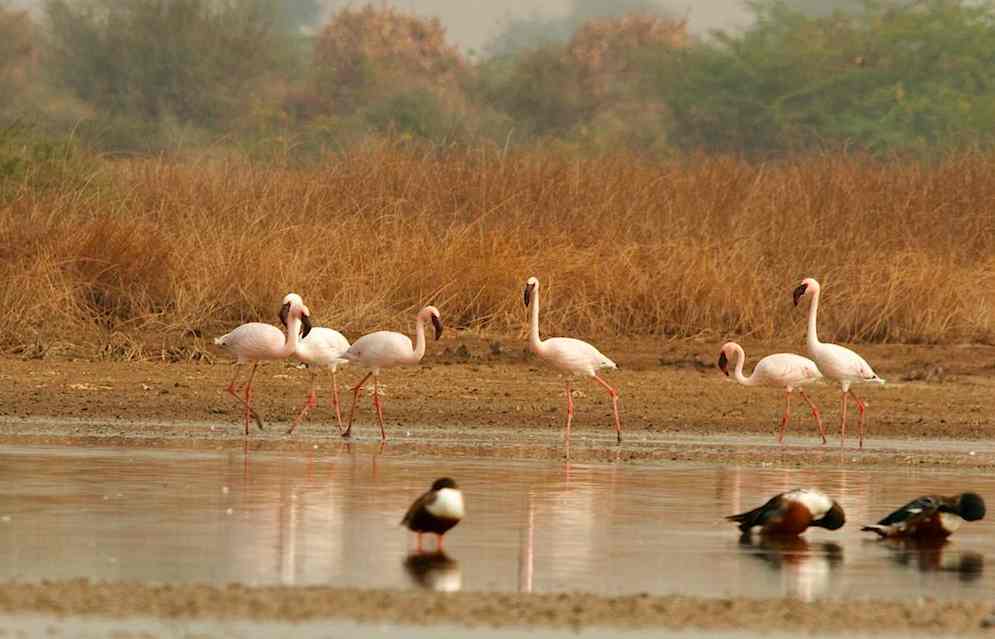
New technology is dramatically increasing the role of non-scientists in providing key data for researchers. In an interview with Yale Environment 360, Caren Cooper of the Cornell Lab of Ornithology talks about the tremendous benefits — and potential pitfalls — of the expanding realm of citizen science.

Most of our ornithological attention these days is on the bird count just getting under way, but citizen science is never far from our minds, so thanks to Yale 360 for this article that combines both interests:

When biologist Caren Cooper carries out her avian studies, she’s aided by thousands of assistants, none of whom are paid for their work. That’s because Cooper, a research associate at the Cornell Lab of Ornithology, relies on the help of so-called citizen scientists, volunteers from across the country who contribute data to her research projects. These lay people provide information that enables her and other scientists to study bird life in ways that would otherwise be impossible.

But, as Cooper notes in an interview with Yale Environment 360contributor Diane Toomey, the uses of citizen science now go way beyond events like the National Audubon Society’s Christmas Bird Count. Continue reading

One Birthday, Two Remarkable Men

lead

Birthdays do not really matter. But ideas do. And when big ones come along, we celebrate the men and women who shared them in various ways. One way, pedestrian as it may seem, is remembering them on their birthday. Artists and musicians, likewise. We had not remembered, when we posted this yesterday, of this coincidence, but the Gopnik essay mentioned below (we now recall) is worth reading and we thank the Atlantic‘s website for reminding us via this blog post by Alexis Madrigal:

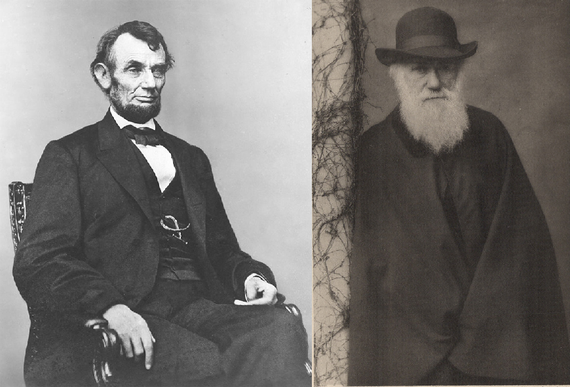
February 12 was a big day in 1809. Abraham Lincoln was born in a wild Kentucky; Charles Darwin was born in a refined Shrewsbury, Shropshire. One man held together the Union. The other developed a theory that resonates through the sciences and beyond to this day. While it’s often difficult to unspool the impacts that individuals have on the world, it seems fair to say that these two minds did something consequential on this rock.

And in a 2009 essay, writer Adam Gopnik tried to get at the shared method of their influence. Continue reading

Organic Farming At Cardamom County

Organic Farming

Organic Farming

At Cardamom County we believe in providing guests with the best experience possible, and an eco-friendly one at that. We not only provide this during their stay with things like rich flora on property and solar water heaters, but also through our food: with fresh eggs from our farms and a variety of greens for the most crisp and refreshing salads. Here are a few pictures of the farm. Soon, this fresh produce will be used in many of our upcoming properties. Continue reading

When In Doubt, Musical Theater

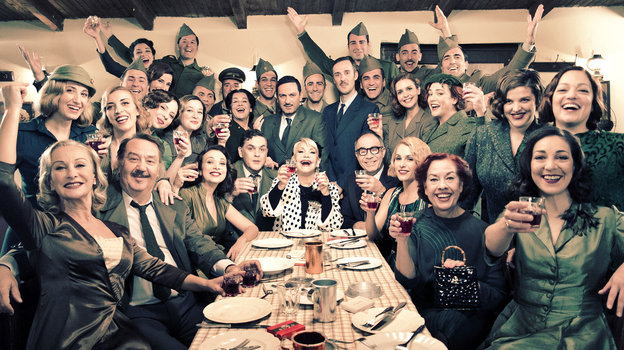
Greek vocal icon Marinella, center, sings "Children of Greece," a song once sung to Greek soldiers as Italian and German forces invaded the country. As they endure hard times today, Greeks are turning to theater that shows triumphs over adversity in the last century.

Greek vocal icon Marinella, center, sings “Children of Greece,” a song once sung to Greek soldiers as Italian and German forces invaded the country. As they endure hard times today, Greeks are turning to theater that shows triumphs over adversity in the last century.

Thanks to National Public Radio for this story from Athens, where several Raxa Collective members have family and friends who attest to the tough times there. The story is interesting because it is counterintuititve to us, with no offense to those who appreciate musicals, that this form of theater has proven so popular at such a time as this. It is not what we might have first thought up as an antidote for tough times, but who are we to argue with effective salves:

It’s a full house at the 2,000-seat Badminton Theater in Athens. On stage is a musical about the singer Sofia Vembo, whose warm contralto voice comforted Greeks during World War II.

The song that is bringing the audience, mostly Greeks in their 60s and 70s, to tears and applause is called “Paida Tis Ellados, Paidia,” or “Children of Greece.” Sofia Vembo sang it to Greek soldiers as Italian and German forces invaded the country.

On this evening, it’s sung by 75-year-old Marinella, the platinum-haired icon of modern Greek music. She’s joined by a young cast in 1940s dresses and military garb.

In the audience, a young, green-eyed dermatologist named Fiori Kousta is passionately singing along.

“This song gives me hope,” she says, “because it reminds me that Greeks have been through much worse than what we’re going through today. Continue reading

If You Happen To Be In New York

This slideshow requires JavaScript.

Thanks to the New Yorker‘s website for keeping us posted on the first show of a new curator at MOMA, in a medium of expression we care about for various reasons both aesthetic and technical:

In this week’s issue of the magazine, Vince Aletti talks to Quentin BajacMOMA’s new chief curator of photography, about “A World of Its Own: Photographic Practices in the Studio,” his first show for the museum:

“I’m a bit tired of the predictable history from the daguerreotype to the digital print,” says the Paris-born Bajac, who comes to MOMA from stints at the Musée d’Orsay and the Centre Pompidou, where he was the head of the photography department from 2007 to 2013. Continue reading

205 Years Ago On This Date

The London Review: Volume 14. John Telford Benjamin Aquila Barber. January 1, 1860. J.A. Sharp – Publisher

He has plenty of detractors, and while those detractors are less likely to read anything on these pages we still reach out with a thought: Charles Darwin’s birthday is an important one, to the degree any birthday is important after someone is no longer among us.  A day to remember someone who lived what can only be called a good, important life.  Below we link to a quotation that Seth found, as archival researchers and modern folk are likely to do, in a journal reviewing On the Origin of Species early in 1860:

Hitherto we have said nothing of the aim of this book. It is an attempt to prove that all existing plants and animals have not been created in their present sharply-defined specific forms, but have been gradually changed in the course of millions of millions of generations, under the operation of a law of unlimited variation. ‘Probably all the organic beings that have ever lived on this earth have  Continue reading

Delias Eucharis

Common Jezebel

Common Jezebel; Photo Credits: Aparna

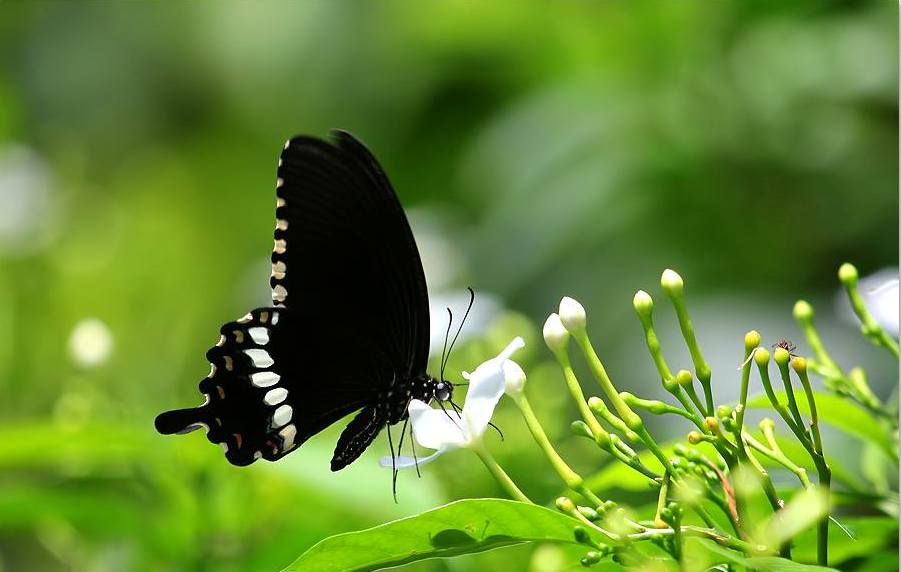
Delias eucharis, also known as Common Jezebel, is a colorful butterfly with yellow background color on its under-hindwings intersected by black veins and red spots fanning outwards at wings’ edge. Continue reading

Thaipooyam – Temple Festival

Photo credits : Sastha Prakash

Photo credits: Sastha Prakash

Thaipooyam is a colorful “kavadiyattom” festival. It is a vigorous dance that starts in the morning, when a small group of people richly decorated with wooded arches and other materials take to the streets to celebrate.

Walking City, For Design

For our design-oriented readers/viewers, a worthy eight minutes from the folks at Universal Everything:

Referencing the utopian visions of 1960’s architecture practice Archigram, Walking City is a slowly evolving video sculpture. The language of materials and patterns seen in radical architecture transform as the nomadic city walks endlessly, adapting to the environments she encounters. Continue reading

Kadalundi Bird Sanctuary

Photo credits : MN Shaji

Photo credits: MN Shaji

Located near Kozhikode, Kadalundi Bird Sanctuary spreads over a cluster of islands in a scenic area surrounded by hillocks where the Kadalundi River flows into the Arabian Sea. Continue reading

Taste Of Kerala – Pickles

Photo credits : Renjith

Photo credits: Renjith

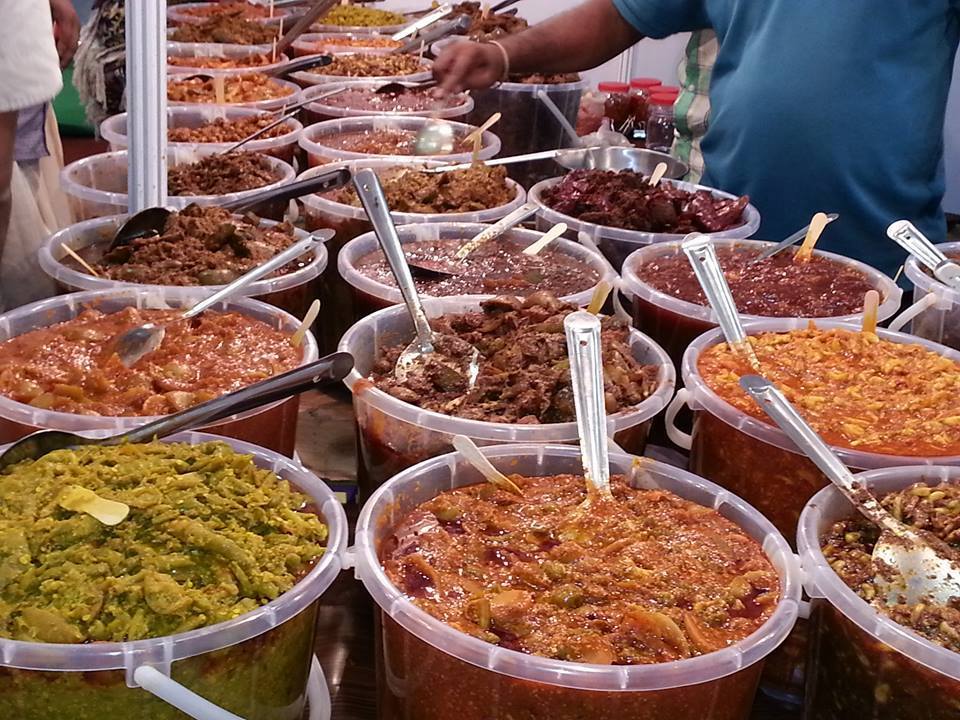
Pickles are a traditional condiment served with Indian meals. Called achaar in Kerala, they are an important part of a traditional sadya meal, always served next to the salt on the upper lefthand corner of the banana leaf. Continue reading

If You Happen To Be In Boston (Tea Party)

This slideshow requires JavaScript.

For many people “The Boston Tea Party” refers to an historical event that formed the tipping point for the American Revolution. But two centuries later (give or take) the name relates to a completely different, but no less iconic, moment in time. In the late 1960’s and early 70’s the #53 Berkeley Street Boston Tea Party was a legendary live-music venue featuring musicians from local bands to the Blues, Rock and Pop icons of day.

Music wasn’t the only dimension to a Boston Tea Party experience. Filmmaker Ken Brown cut his “creative teeth” as part of the team creating the venue’s light shows and visual effects.

We actually have one of the coveted DVDs of this work, but those not lucky enough to have one or to have been in Boston 40 years ago have the opportunity to make up for it now …

On Sunday at 7 p.m. at [Boston’s] Institute of Contemporary Art, Brown will screen “Psychedelic Cinema,” a 55-minute compilation of his Tea Party work, and answer questions afterward. The silent film will be accompanied by a live performance by Ken Winokur of Alloy Orchestra, Beth Custer of Club Foot Orchestra, and Jonathan LaMaster of Cul de Sac. Brown’s Tea Party work screened at the Coolidge Corner Theater in 2008, one of only a handful of public showings. We spoke by phone this week. Continue reading