Really, Syngenta?

Hayes has devoted the past fifteen years to studying atrazine, a widely used herbicide made by Syngenta. The company’s notes reveal that it struggled to make sense of him, and plotted ways to discredit him. Photograph by Dan Winters.

It has been many months since we last read something that a company did that made us think–Really?–in this manner that we have on several earlier occasions. We are sparing in these kinds of posts because we still believe most companies, most of the time, want to do the right thing.  But when they clearly do not, they must be called out.

This post is a reminder to all of us to support public funding of science and private funding of journalism–subscribe to the New Yorker! Thanks to Rachel Aviv’s reporting, we see the fire behind the smoke, and it is not good fire. Two paragraphs of her story are shared here, but spend the 30-60 minutes digesting the whole story on the New Yorker‘s website, where thankfully it is not behind the subscription wall, and be sure to share it widely:

…Three years earlier, Syngenta, one of the largest agribusinesses in the world, had asked Hayes to conduct experiments on the herbicide atrazine, which is applied to more than half the corn in the United States. Hayes was thirty-one, and he had already published twenty papers on the endocrinology of amphibians. Continue reading

“Change the Mascot”

The United States National Football Leage (NFL) and it’s Hunky Dory Saucery Thing (which is beyond my scope of imagination) have never held any interest for me. The sport doesn’t elicit any reaction other than sympathy for the players’ bodies, although my disinterest bears  no grudge against those who enjoy a game, whether from within the dynamic minefield of titanic collisions or from the comfort of their own home’s sofa, or anything in between. In fact, I know so little of the culture, statistics, and geopolitical implications of the sport that before last week I couldn’t have named three teams off the top of my head. Today, I unsuspectingly watched this:


Continue reading

Beaches of Kerala – Fort Kochi

Photo credits : Ramesh Kidangoor

Photo credits: Ramesh Kidangoor

Bordered on the east by the towering Western Ghats and interspersed with the magical backwaters for much of its length, Kerala’s coast has attracted people through the ages. In ages past it was traders, asylum seekers and empire builders; now it is haven for beach buffs and tourists. Continue reading

Flavours of Kerala

Photo credits : Shaji MN

Photo credits: Shaji MN

Kerala offers an amazing diversity of dishes for every meal and every occasion. Food is an important indicator of a region’s history, and with a rich and vibrant ancient culture greatly influenced by civilizations from almost every corner of the globe down the ages, Kerala is indeed the proverbial melting pot. Continue reading

Science Writers’ Craft

At the aggregating blog Medium, a few tips from a great science writer, with a reiteration of what some non-science writers say about effective writing, where they do it, their routines, etc.:

If you want to get a handle on what’s happening at the frontier of biology, Carl Zimmer is your man. He’s the author of numerous books, including Evolution: The Triumph of an Idea, writes a regular column on science for the New York Times, and his award-winning blog, The Loom, is part of National Geographic’s Phenomena collective.

We asked him how he writes.

What’s the one thing you’ve learned over time that you wish you knew when you started out?

I wish someone told me I shouldn’t be making ships in a bottle. To write about anything well, you have to do a lot of research. Even just trying to work out the chronology of a few years of one person’s life can take hours of interviews. If you’re writing about a scientific debate, you may have to trace it back 100 years through papers and books. To understand how someone sequenced 400,000 year old DNA, you may need to become excruciatingly well acquainted with the latest DNA sequencing technology. Continue reading

Animal, Insect, Vegetable Altruism

It’s been said that there’s an imbalanced focus on ornithology within our site, but we can also claim to have a slightly skewed preference for sloths as well. Whether it’s their permanently gentle grin or their slow, methodical movements we’re not sure, but we know we’re not the only ones who find them fascinating.

Sloths are found in both rainforest and dry tropical forest ecosystems but the biodiversity of their habitat is nothing compared to what they carry around with them in their arboreal lives. A team of biologists from the University of Wisconsin led Jonathan N. Pauli and M. Zachariah Peery has recently tackled a 35-year-old mystery about sloth behavior.

The sloth is not so much an animal as a walking ecosystem. This tightly fitting assemblage consists of a) the sloth, b) a species of moth that lives nowhere but in the sloth’s fleece and c) a dedicated species of algae that grows in special channels in the sloth’s grooved hairs. Groom a three-toed sloth and more than a hundred moths may fly out. When the sloth grooms itself, its fingers move so slowly that the moths have no difficulty keeping ahead of them.

Every week or so, the sloth descends from its favorite tree to defecate. It digs a hole, covers the dung with leaves and, if it’s lucky, climbs back up its tree. The sloth is highly vulnerable on the ground and an easy prey for jaguars in the forest and for coyotes and feral dogs in the chocolate-producing cacao tree plantations that it has learned to colonize. Half of all sloth deaths occur on the ground. The other serious hazard in its life is an aerial predator, the harpy eagle.

Why then does the sloth take such a risk every week? Researchers who first drew attention to this puzzle in 1978 suggested that the sloth was seeking to fertilize its favorite tree. Meanwhile, the algae that gave the sloth’s coat a greenish hue were assumed to provide camouflage.

Writing last week in Proceedings of the Royal Society B, the Wisconsin researchers assembled all these pieces in a different way. They started by trying to understand what would compel the sloth to brave the dangers of a weekly visit to ground zero. Continue reading

Dictionary As Map To Identity

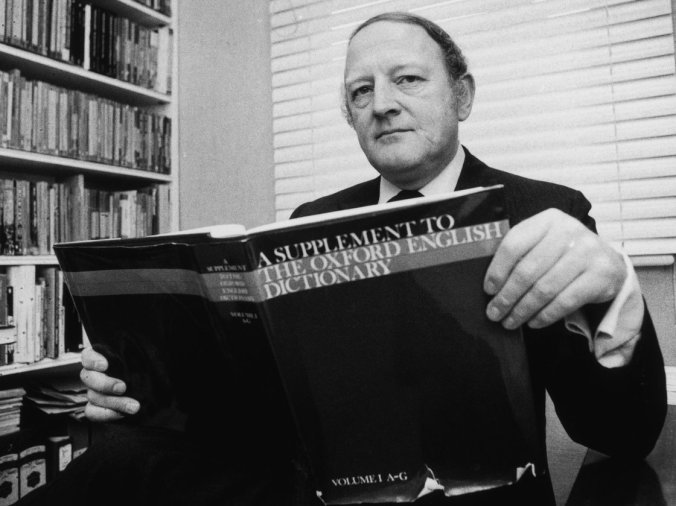
English writer and broadcaster Robert Robinson holding the first volume of A Supplement To The Oxford English Dictionary in 1977. Evening Standard/Hulton Archive/Getty Images

We love dictionaries, but apart from the Scrabble usage, we do not always know why. Thanks to Alva Noe for these clues (click the image above to go to the story on NPR’s Cosmos & Culture website):

Among the clutter and furniture of our intellectual lives, there are dictionaries. Although they have probably disappeared from the bookshelves of most college students, they haven’t disappeared. They’ve migrated online.

I thought of this while reading an article in The New York Times on the truly Herculean labors going on at the offices of the Oxford English Dictionary, where a team of scholars are busy producing the OED’s third edition. They started in 1994 and now anticipate finishing in 2037. It’s going to be a long book, if it ever comes out in book form. The second edition, published in 1989, was nearly 22,000 pages. (As reported in The New York Times.) Continue reading

Traditional Architecture Of Kerala

Photo credits : Renjith

Photo credits: Renjith

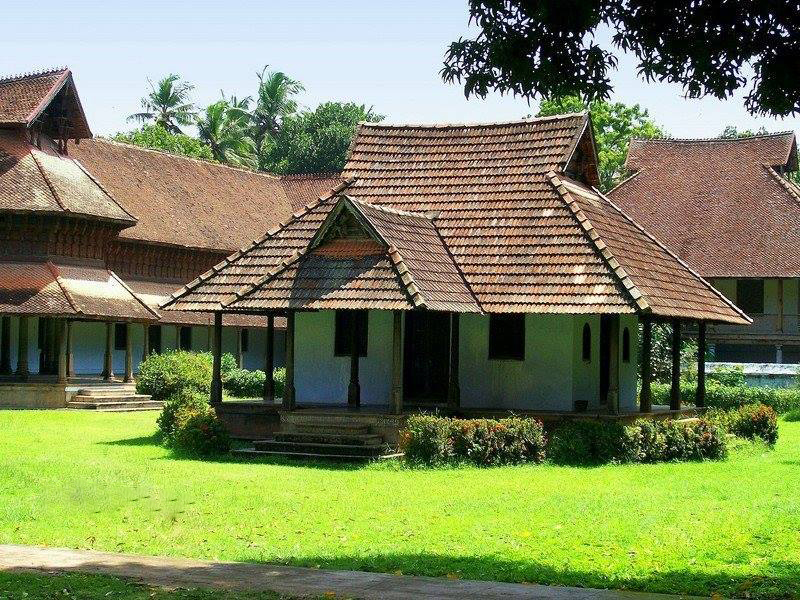
Kerala has a rich legacy of architectural excellence. The ancient buildings, temples and palaces reflect the styles of sculpture and wood work adopted by artisans from ancient times. Traditionally the architecture of the state has been of a humble scale, an ensemble of simplicity and elegance tailored to suit Kerala’s climate and culture. Continue reading

Good Arcs Make Good Stories

Thanks to Maria Popova for sharing Kurt Vonnegut’s brief lesson on the basics of story-telling, a reminder to all of us that shaping the lines of the telling is key to the story-listener’s hearing of it.  As Seth shapes the story of Iceland’s role, and travelers’ story-telling roles, in the early precursor to modern nature tourism, the rest of us contributors to this site likewise note our own task in telling our stories effectively. In a written version on the same topic, Vonnegut put it this way:

…Now, I don’t mean to intimidate you, but after being a chemist as an undergraduate at Cornell, after the war I went to the University of Chicago and studied anthropology, and eventually I took a masters degree in that field. Saul Bellow was in that same department, and neither one of us ever made a field trip. Continue reading

Qualities of the 19th Century British Traveller in Iceland: Part 2

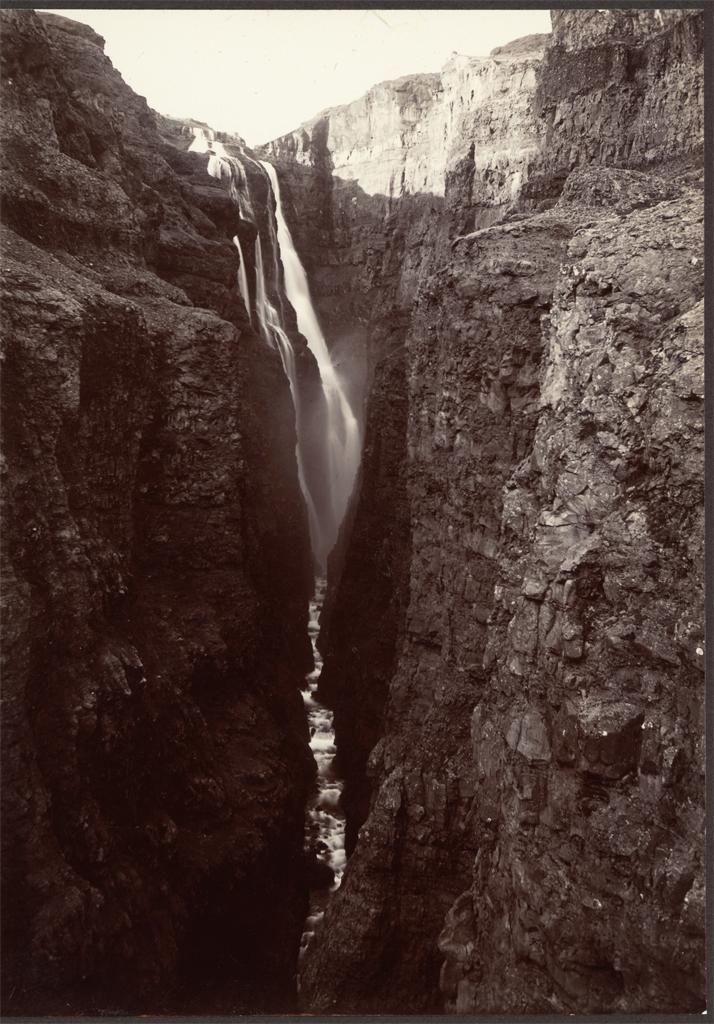
Glymur, Hvalfjörður, 1200-1500 feet deep.

In addition to being the first outsider to see several attractions in Iceland, Baring-Gould was also well known for his translations of the sagas he so admired. Anglo-Icelandic scholar Andrew Wawn believes Baring-Gould to have written “the first Iceland travel book to show any real awareness of manuscripts of sagas and eddic poems.” Thus, Baring-Gould’s actions set him apart once more as one of the discerning travellers discussed in Part 1 of this section. But does he engage in snobbish attempts to actively disparage tourists in addition to distinguishing himself as one who often strays from the beaten path? At one point he states that “Certainly a tourist who runs to the Geysirs and back to Reykjavík gets no true idea of Icelandic scenery,” and at the beginning of his book, when he arrives in Reykjavík, he satirically laments the presence of crinolines (i.e. petticoats) fashionable back home in one of the Danish stores. Neither of these examples is particularly harsh. When it comes to anthropogenic environmental degradation, however, he becomes more critical. It is instructive to quote Baring-Gould extensively here on the scene of a boiling hot spring whose conduit is obstructed by stones:  Continue reading

A Non-Holi Technicolor Moment In Delhi

Max Bearak. Amitabh Kumar painting a wall in Shahpur Jat, one of South Delhi’s urban villages

Max Bearak. Amitabh Kumar painting a wall in Shahpur Jat, one of South Delhi’s urban villages

Normally we have thought of vivid color in conjunction with India’s amazing holy days, especially those called Holi. Thanks to India Ink for this story about the street art going up, up north in India’s capital city:

Street Art Festival Brings Color to the Walls of Delhi’s Urban Villages

By Max Bearak

NEW DELHI — While looking out from a balcony in one of Delhi’s many urban villages – former villages that were swallowed up by the ever-expanding capital — more often than not, one is confronted by a boring, gray wall – the bare side of another building. Continue reading

St. Mary’s Forane Church, Pullincunnu- Alleppey

Photo credits : Ramesh Kidangoor

Photo credits: Ramesh Kidangoor

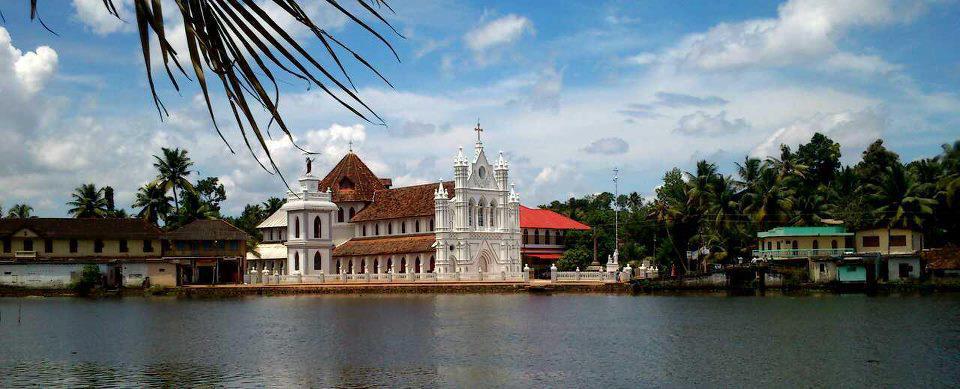
St. Mary’s Forane Church is one of the oldest Christian Churches in India. This church is situated at Pullincunnu on the bank of Pampa River. The village is part of the Kerala Backwaters, a network of lakes, wetlands, and canals. Pulincunno is notable for the annual Rajiv Gandhi Trophy boat race. Continue reading

Making The Best Of A Surprise, Geothermal Energy Moves Forward In Iceland

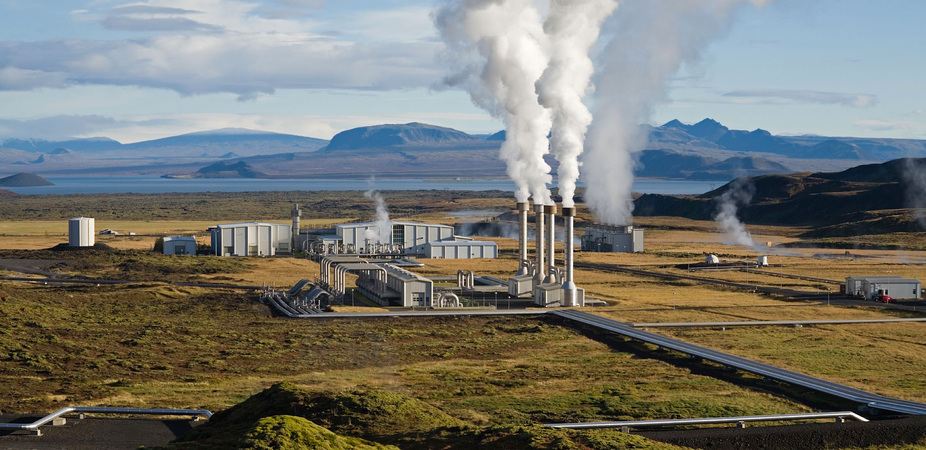
Getting into hot water - one of Iceland’s geothermal power plants. Gretar Ívarsson

Getting into hot water – one of Iceland’s geothermal power plants. Gretar Ívarsson

Frankly, we are more attuned at this moment to the historical vantage point, with this series reminding us of the earth’s untamed appearance via Iceland in centuries prior; but mindful of the future, of the need to find suitable energy solutions, and generally of our interest in scientific discovery the following article catches our attention:

Can enormous heat deep in the earth be harnessed to provide energy for us on the surface? A promising report from a geothermal borehole project that accidentally struck magma – the same fiery, molten rock that spews from volcanoes – suggests it could.

The Icelandic Deep Drilling Project, IDDP, has been drilling shafts up to 5km deep in an attempt to harness the heat in the volcanic bedrock far below the surface of Iceland. Continue reading

Qualities of the 19th Century British Traveller in Iceland: Part 1

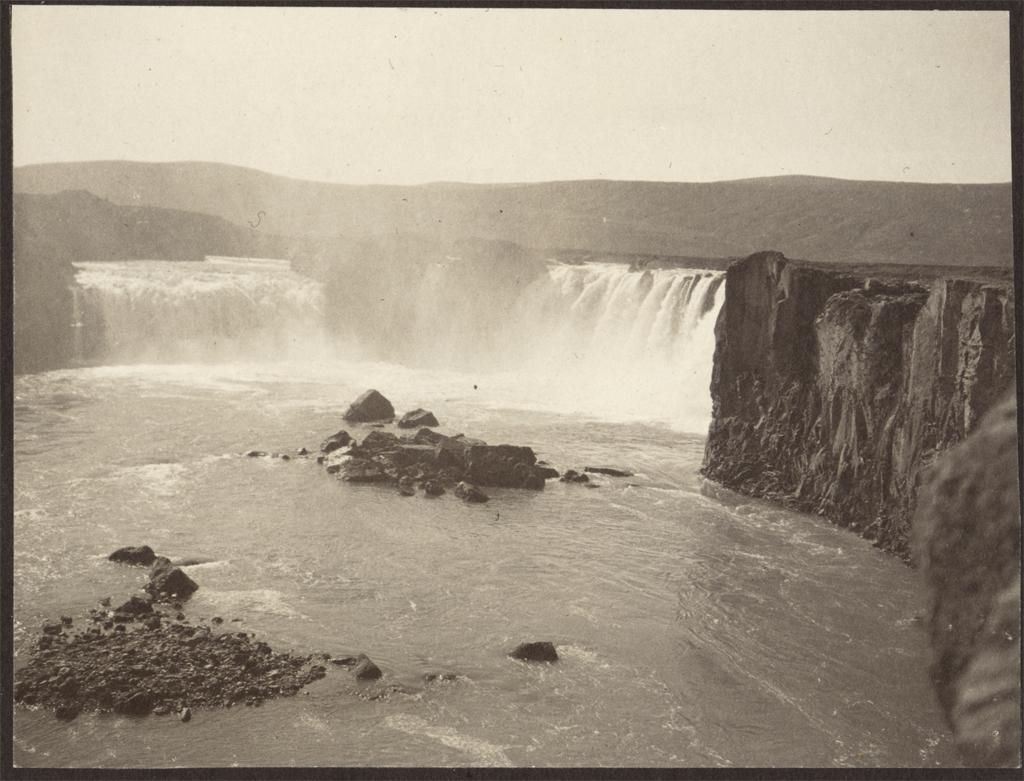
Goðafoss. Gelatin silver print by Henry A. Perkins, courtesy of Cornell University Library’s Fiske Icelandic Collection, Department of Rare & Manuscript Collections.

For my previous post on part of my drafted chapter, click here.

Historian John Pemble, in his book on Victorians and Edwardians travelling in the Mediterranean, has written that “the claim to be a ‘traveller’, as opposed to a ‘tourist’ or an ‘excursionist,’ was in most cases only a special kind of snobbery … [implying] revulsion from the British masses.” This claim is in fact up for debate. On the one hand, a certain author on Iceland might lampoon so-called tourists for behavior that he engages in himself with seemingly no distinction other than his privileged background. On the other hand, Continue reading

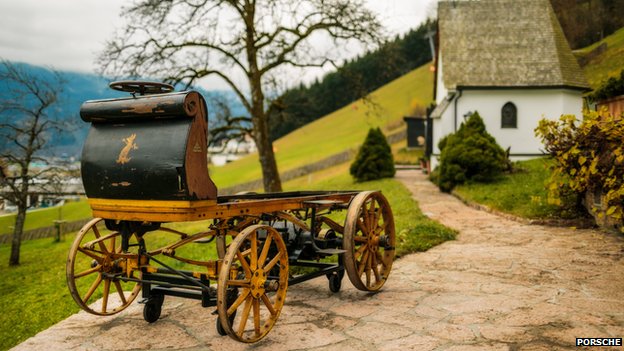
First Porsche, First Green Automobile?

This is the first Porsche-designed vehicle, which had been stored in an Austrian garage since 1902

This is the first Porsche-designed vehicle, which had been stored in an Austrian garage since 1902

We are decidedly not the go-to source for information about automobiles, though from time to time we have been known to point out the innovations related to green tech and cars. Thanks to the BBC for their coverage of this intriguing conservation story we might file under cultural heritage, or alternative energy vehicles, or both:

Luxury automaker Porsche has revealed the first car designed by its founder was electric, in a show at its museum in Stuttgart-Zuffenhausen, Germany.

Ferdinand Porsche’s design was dubbed the Egger-Lohner electric vehicle C.2 Phaeton model, or the P1 for short. Continue reading

Gujarat Street Photographer, Pranlal Patel

Thanks to India Ink for bringing his work to our attention:

A Pioneer of Street Photography Leaves Behind Strong Images of Indian Women

By Zahir Janmohamed

AHMEDABAD, Gujarat — A little over five weeks before his first exhibition in the United States,  Continue reading