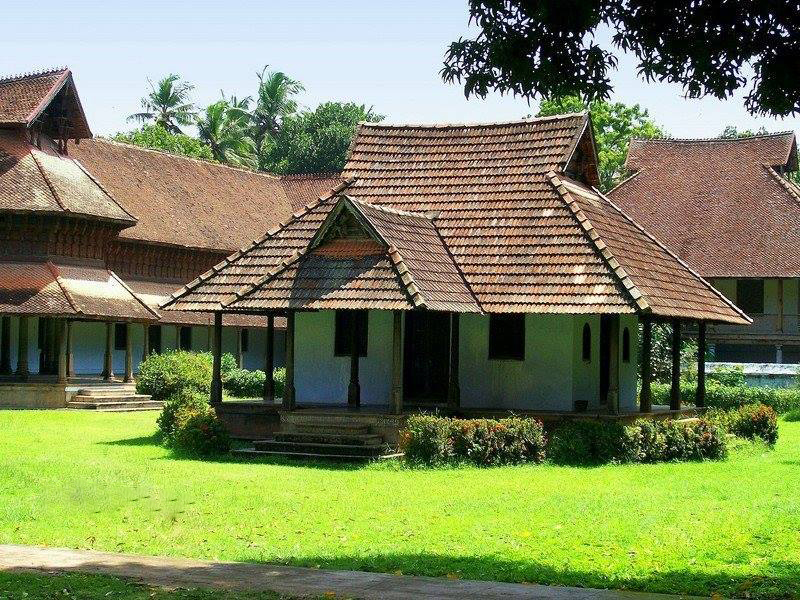
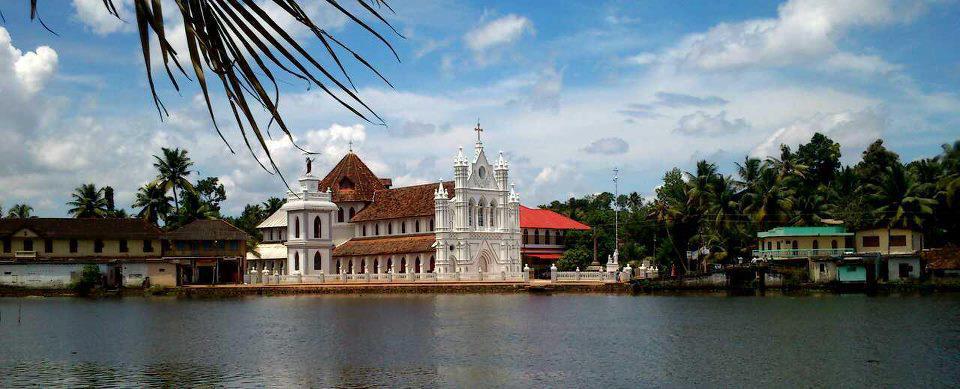
The temples of Kerala offer various artistic and cultural events during festival time. During these periods, previously limited space become public as people gather to celebrate together, making carpets of natural materials, which we have described before. Continue reading
Disrupting Education’s Status Quo
Harvard Business Review offers this interview with the founder of Khan Academy, a non-profit educational initiative that has been succeeding the way many dot-com businesses succeed–the difference being that all the benefits accrue to students and their educational attainment around the world. Bravo, Mr. Khan:
…In the traditional academic model, you’re passive. You sit in a chair, and the teacher tries to project knowledge at you; some of it sticks, some of it doesn’t. That’s not an effective way to learn. Worse, it creates a mind-set of “you need to teach me,” so when you’re on your own, you think, “I can’t learn.” Anyone in any industry will tell you there’s new stuff to learn every week these days. So you have to say, “What information and people do I have at my disposal? What questions do I need to ask? How do I gauge whether I’ve really understood it?” Khan Academy is designed to give students that agency. If you want to get more tangible, I would say learn how to program a computer, more about the law, and definitely statistics… Continue reading
Bird of the Day: Semi-palmated Plover (Churchill, Canada)
Beauty of Kerala – Aranmula Boat Race
The Aranmula boat race is held during the harvest festival of Onam, on the Pamba River near the Sree Parthasarathy Temple at Aranmula. The head of the boat is usually fantastically decorated with golden lace, a flag, and chains of flowers; often the boats have an ornamental umbrella towards the centre of the vessel. Continue reading
Fantastic Flying Foxes
The phrase “flying fox” in our experience has been used to describe the huge bats that can be found around Cardamom County in Thekkady, feasting on fruit and insects. In the video above, however, we learned that even common ground-dwelling foxes can reach stunning heights — in their pursuit of rodents living underneath deep layers of snow!
$350,000 Conversation Piece

A protest outside the Dallas Convention Centre against the auction of a black rhino hunting permit. Photograph: Tony Gutierrez/AP
This coverage in the Guardian provides an answer to the lingering question of how much good the killing of an endangered animal can do, but does not answer the fundamental question raised by this endeavor:
A permit to hunt an endangered African black rhino sold for $350,000 at a Dallas auction held to raise money for conservation efforts but criticised by wildlife advocates.
Steve Wagner, a spokesman for the Dallas Safari Club, which sponsored the closed-door event Saturday night, confirmed the sale of the permit for a hunt in the African nation of Namibia. He declined to name the buyer. Continue reading
Criss-Crossed Stripes
This photo of a tiger cub with its mother was taken at Tadoba Tiger Reserve. Composition is an art and it takes time, patience and perseverance to collect your thoughts and compose the image you’ve visualised.
There are guidelines for composition, but as the name implies, they are just guidelines to be aware of. In this photo I composed an image where the mother’s face isn’t seen, and the legs and majority of the tigers’ bodies are cropped out of the frame…but still, I feel this image has a strong visual impact. Continue reading
Conversation, Language Navigation, Identity
If more conversation is the goal, and as we have indicated we should put everything we have on the table regardless of how difficult the topic, then we should not add too many caveats. But after listening to this young man, we are tempted to create some rules for the game:
Phuc Tran grew up caught between two languages with opposing cultural perspectives: the indicative reality of Vietnamese and the power to image endless possibilities with English. In this personal talk, Tran explains how both shaped his identity. Continue reading
Magyar’s Image-Making
One of the more interesting profiles of a photographer that we have seen in quite some time is located somewhere we had not seen until today. This excerpt is near the end, but we highly recommend the whole thing:
…A COUPLE OF MORNINGS after our first encounter, I arrange to meet Magyar at Alexanderplatz, one of Berlin’s busiest subway stations, for a demonstration of the Stainless project. I arrive at the height of rush hour, and wait for ten minutes at one end of the crowded platform before he appears. His long hair spills over his black parka, which is matched by black work boots, black jeans, and a black daypack. Continue reading
Bird of the Day: Large Grey Babbler
Bandipur National Park – Karnataka, India
Bandipur National Park is one of the most famous wildlife national parks in South India, and is part of the Nilgiri Biosphere Reserve. Covering an area of 880 sq km, it was once one of the private wildlife reserves of the Mysore Maharaja. Today, Bandipur National Park is a protected zone for over 100 species of mammals, Continue reading
The Cornell Lab Of Ornithology’s Student Innovators, Dreamers, and Leaders
After you watch the video above you might recognize some faces from the Cornell expedition to Borneo that we featured about a month ago, and be introduced to the faces of other friends that I made in ornithology class several years ago and have kept up with through soccer, squash, and biology classes we’ve taken together. Continue reading
Bees, Close Up, Thanks To Important Research, USA Taxpayers And Some Very Talented Photographers
Bees are important. You knew that. We did not need to tell you. But how many bee species are there in the world? Give it your best guess before reading further. And how different do those species look, one from another? We had no idea. We first encountered these images here so credit where due (we had recently started to wonder) for where we learned about these amazing photographs and the story behind them:
Sam Droege is head of the US Geological Survey Bee Inventory and Monitoring Laboratory in Maryland, and for the past seven years he and his team have been photographing bees and other insects to create online reference catalogues to help researchers identify the thousands of species across North America. Here is a selection of their work.
Then we did a search to learn more and found that they have been broadcast far and wide for some time. Jordan G. Teicher, who writes about photography for Slate’s Behold blog, had what we thought was the best presentation of these so we chose the photo above from his post:
The photos of native bees and wasps taken at the U.S. Geological Survey Bee Inventory and Monitoring Lab are used for scientific purposes, but they are created with an eye for artistry.
“I tell the interns and techs that when they are taking these pictures, they are artists,” lab chief Sam Droege said via email. “We have powwows over the pictures after they are taken to discuss lighting, positioning, and the perennial problems of bad bee hair and dirty specimens.” Continue reading
Good Fences Make Good Neighbors, It Has Been Said

The odd web-like structure that has captivated scientists. Photograph by Jeff Cremer, Solent News/Rex Features via AP
One of the myriad arguments in favor of wilderness conservation is that we do not know what we are losing when wild places are lost to development. Case in point with this story and image via National Geographic newswatch service:
Six months ago, visitors to the Peruvian Amazon discovered a mysterious picket fence structure nicknamed Silkhenge. Despite watching the structure for several days, naturalists at the Tambopata Research Center couldn’t figure out what type of animal (or fungus) was building it.
When scientist Troy Alexander first announced his find, all he had to show for his discovery was a series of intriguing photographs. He had no idea what Amazonian critter could have created the circular hideaway with a spoke-like outer wall. Continue reading
Bird of the Day: Masked Flowerpiercer (Yanacocha Reserve, Ecuador)
The Guidebook and the Beaten Track (Part 1)

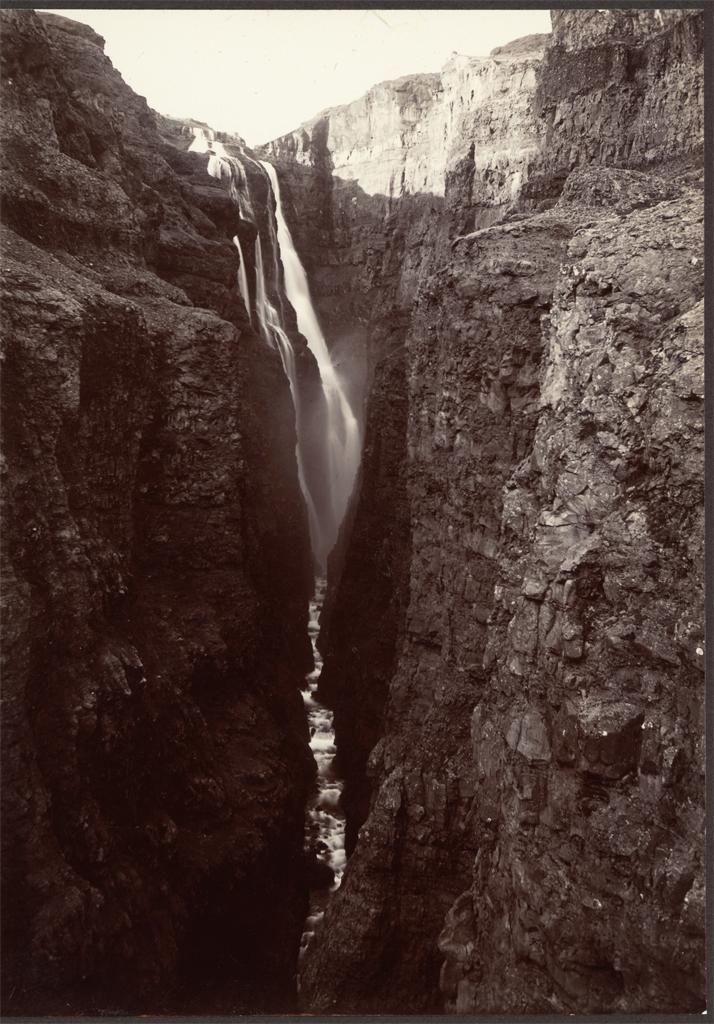
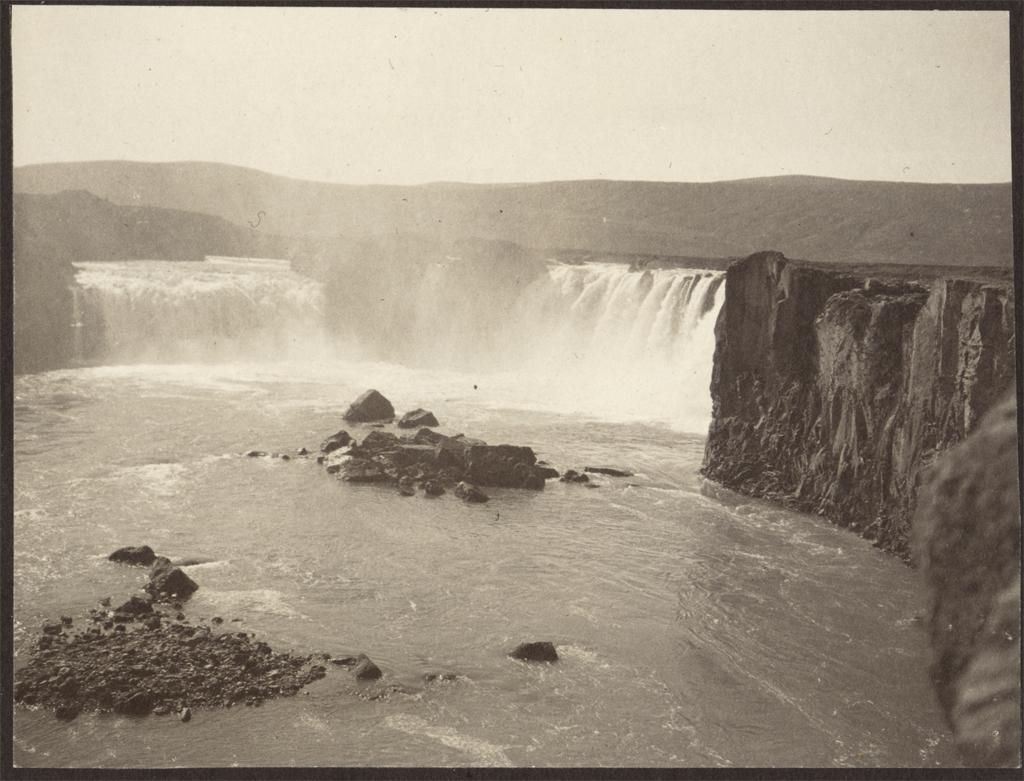
Basalt pavement, Kirkjubær (Síða). Collodion print by Frederick Howell ca. 1900, courtesy of the Fiske Icelandic Collection in the Department of Rare & Manuscript Collections, Cornell University Library.
It’s now been almost exactly a month since I finished my first draft of a thesis chapter, and shared the introduction to it here on Raxa Collective. My goal was to spend part of my academic break as a comfortable vacation without thinking of Iceland and instead focus on enjoying my time in India with family, and apart from the niggling worries that pop up when I’m trying to fall asleep every now and then, I’ve succeeded. But school starts up again in less than two weeks, so it’s about time to rev up the Iceland think-engine again, and a good way to do that is by sharing some more of the draft as it stands so far. What follows is a section of the “Cockneys in Iceland” chapter with the same title as this post, de-annotated, slightly altered, and divided into two parts for readability. Continue reading
Mumbai Makeover

Courtesy of GVK. The check-in hall at the integrated Terminal T2 of the Chhatrapati Shivaji International Airport in Mumbai, Maharashtra.
At least one non-Indian contributor to Raxa Collective remembers the Mumbai airport circa 1993, and many of our guests recall that old airport with something less than affection, so this news via India Ink is most welcome:
For anyone who has traveled through the shiny airport hubs of Asia like Hong Kong and Singapore, flying into Chhatrapati Shivaji International Airport in Mumbai can deliver quite a shock. Continue reading
Sri Krishna Temple – Ambalappuzha, Kerala
The Sri Krishna Temple of Ambalappuzha is situated about 12 km south of Alleppey. Dedicated to Lord Sri Krishna, the temple architecture is a mixture of Keralan and Dravidian styles. Continue reading
Mastering Environmental Science

Freshman Adarsh Jayakumar, ranked No. 2 among 18-year-old U.S. chess players, talks about his love of chess and his life at Cornell. Jayakumar is an environmental science major in the College of Arts and Sciences.
In this 2.5 minute video (click the image above) a young man explains a remarkable decision: to forgo the professional opportunity he seems clearly well suited for in favor of another path which, as yet, he knows little about. As much as we appreciate chess, which he has mastered better than most players his own age, we appreciate his sense of adventure, and his decision to pursue mastery of environmental science instead of pursuing the more obvious path.
Bird of the Day: Pied Butcherbird

Darwin, Australia