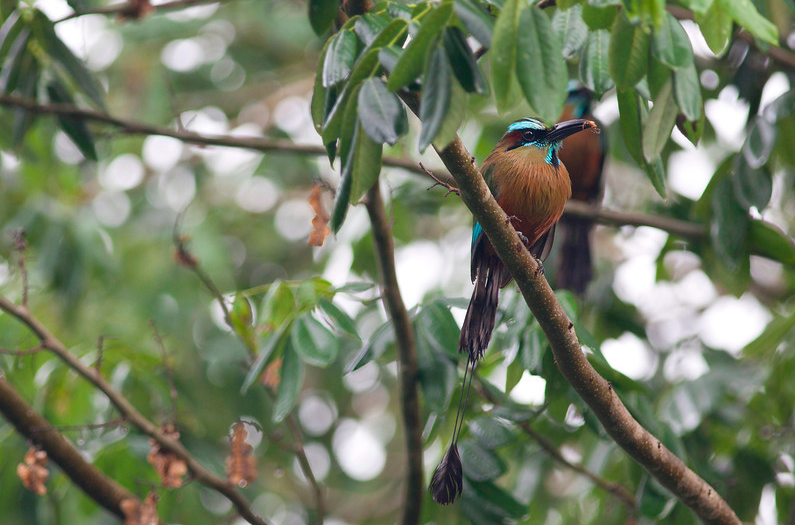
Ek Balam, Mexico
Ek Balam, Mexico

Photo credits:Ramesh Kidngoor
Periyar Lake comprises about 26 square kilometers within the Periyar Tiger Reserve, a sanctuary for wildlife next to Cardamom County. Periyar River, which flows from Periyar Lake, is not only the lifeline of the Periyar Tiger Reserve, but also of central Kerala. It originates in the Sivagiri peaks in the Western Ghats, 1830 meters above sea level, across the border into the neighboring state of Tamil Nadu. Continue reading
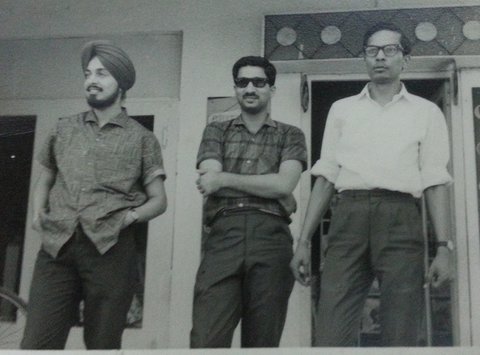
Courtesy of K.D. Singh. K.D. Singh, left, and Kuldeep Shankar, right, owners of “The Steakhouse,” with their mutual friend Anil Arora at the store in New Delhi in the 1960s.
Thanks to India Ink for this article on the evolution and sometimes radical change in food shopping and consumption patterns in India. For those of us from foreign countries working, interning, volunteering with, or visiting as guests of Raxa Collective in India, this news can be put in perspective only relative to the time since 2010, when excellent ice cream became available in Kerala on a regular basis; then, excellent gelato; and more recently otherworldly staples such as good olive oil have found their way onto the shelves of certain grocers.
That may matter to some of us non-Indians more than to our Indian colleagues and friends. Suppliers to our lodging properties continue to supply the high quality domestic inputs we need to produce top quality south Indian cuisine–no change sought on that front until now, as we prepare to open 51, our new restaurant in Mattanchery which will highlight some of the eastern Mediterranean influences on Malabar cuisine, more on which another time. For now, just a shout out of this story:
These days, it’s easy to find once-exotic foods like spaghetti and Parmesan cheese at grocery stores in India. Continue reading
Next to my Celebrate Urban Birds student work-desk at the Lab of Ornithology, team members of the inquiry-based science program called BirdSleuth are always busy developing new curriculum plans in avian education for K-12 students and instructors to learn more about birds and the local environment through citizen science and discovery driven by curiosity.

Photo © Shailee Shah / Lab of Ornithology
Originally called “Classroom BirdWatch,” the program provides training, kits, and other resources to encourage investigation and data collection among youth. Although it started in 2004 under a National Science Foundation grant in the US, about five years ago Continue reading

“It’s on the left,” he says. “No, it’s southeast of here,” she says. iStockphoto
If we are going to engage in more conversation in 2014 and beyond, we all would do well to do so with as much perspective as possible, wherever we are. This reporting on scientific findings about bilingualism is particularly interesting for those of us in India, where most of our colleagues speak a minimum of two but often three or four distinct languages:
Lera Boroditsky once did a simple experiment: She asked people to close their eyes and point southeast. A room of distinguished professors in the U.S. pointed in almost every possible direction, whereas 5-year-old Australian aboriginal girls always got it right.
She says the difference lies in language. Boroditsky, an associate professor of cognitive science at the University of California, San Diego, says the Australian aboriginal language doesn’t use words like left or right. It uses compass points, so they say things like “that girl to the east of you is my sister.” Continue reading
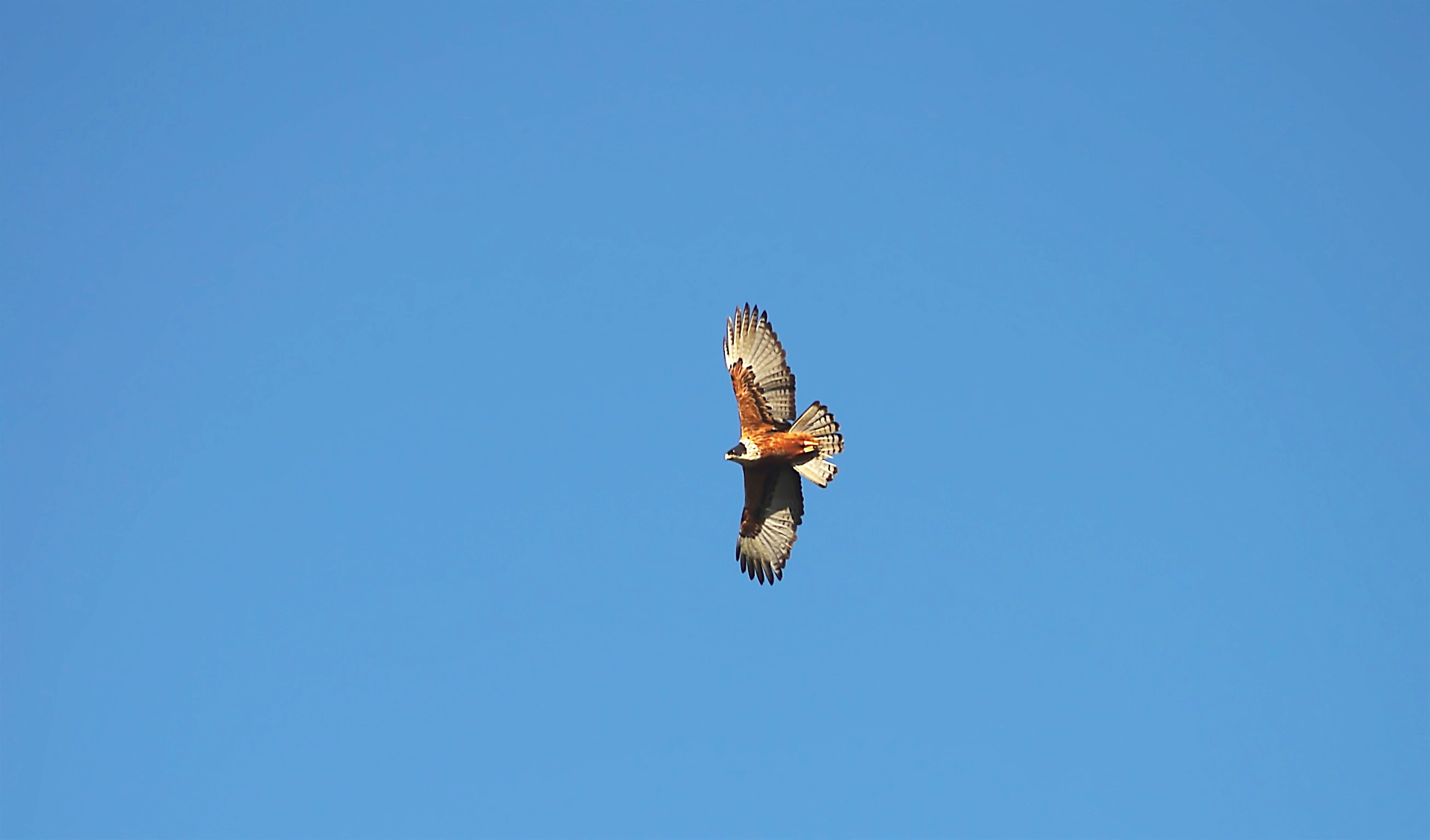
Bandipur forest, Karnataka
 When I was asked to be the “face of RAXA Collective” during the Christmas/New Year’s Eve celebrations at Cardamom County, my impulsive nature overtook any kind of rational thinking and I said “yes”. I didn’t stop to think for a minute if I could do a decent job or not. But once I’d already made a commitment, I realized that I shouldn’t think too much of it and decided to go with the flow. So when the day dawned, I was my usual self, but honestly, quite anxious.
There were about 120 guests and to keep the crowd occupied is one thing, and entertained is another. Continue reading

Well over a year ago there was an interview podcast that several of us at Raxa Collective listened to, discussed, and determined to write about, but none of us did. The idea was lost for nearly 15 months. Then, all of a sudden, in the first post today the word conversation appeared in a manner that reminded us of the Fresh Air interview with Sherry Turkle headlined:
In Constant Digital Contact, We Feel ‘Alone Together’
October 17, 2012
The book was reviewed in the New York Times three years ago this month, and together with the interview we just remembered, is still very much worth the while:
As soon as Sherry Turkle arrived at the studio for her Fresh Air interview, she realized she’d forgotten her phone. “I realized I’d left it behind, and I felt a moment of Oh my god … and I felt it kind of in the pit of my stomach,” she tells Terry Gross. That feeling of emotional dependence on digital devices is the focus of Turkle’s research. Her book, Alone Together, explores how new technology is changing the way we communicate with one another. Continue reading

Photo credits: Ramesh Kidangoor
Kavadi Aatam is a religious dance offered to Lord Muruga during a pilgrimage, made mainly by men, which originated in Tamil Nadu. It is a colorful (as you can see in the photos) ritual dance widely prevalent in the Subramanya Temples in Kerala and Tamil Nadu during the festival season. The Kavadi, which are set on top of the dancers, can reach 10-15 feet high, and when the dancers twist and spin in a row it creates a quite beautiful effect.
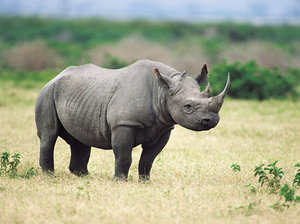
Tom Brakefield/Getty Images
To Save The Black Rhino, Hunting Club Bids On Killing One
by NPR STAFF
December 29, 2013
Hunters of wild ducks have been extremely important contributors to, and activists for, wetlands preservation in the USA. Does that mean hunting is good for conservation? National Public Radio in the USA covered a story a few days ago that, as a headline cast hunting in a grotesque light, but listening to the participants there was a whole new perspective. Raxa Collective has no plans to add hunting to the list of activities it offers travelers, but we are obliged to participate in the conversation:
Fewer than 5,000 black rhinos are thought to exist in the wild, and in an effort to preserve the species, the Dallas Safari Club is offering a chance to kill one.
The Texas-based hunting organization is auctioning off a permit to hunt a rhinoceros in Nambia. It’s a fundraiser intended to help save the larger population. Continue reading
 His autobiography has been in print since 2007, but Longform helped bring that book back to our attention by bringing Gay Talese on stage at New York University recently, to talk about his life writing for Esquire in the 1960s and for The New Yorker today. He tells his story during the onstage interview as only a master story-teller can. It is about listening; crafting; working: building a community of sources and fellow-writers:
“I want to know how people did what they did. And I want to know how that compares with how I did what I did. That’s my whole life. It’s not really a life. It’s a life of inquiry. It’s a life of … knocking on a door, walking a few steps or a great distance to pursue a story. That’s all it is: a life of boundless curiosity in which you indulge yourself and never miss an opportunity to talk to someone at length.” Continue reading

Photo credits: M N Shaji
New Year’s Eve is a time of new beginnings.We believe in celebrating with all our guests all the achievements and learning of the previous year along with the joy of stepping into a new year with new expectations and beliefs and hope for new opportunities. We welcome our guests in the traditional Indian way with a small performance followed by aarthi and tikka and blessings from an elephant who represents the elephant headed god Ganesha, the god of beginnings. Continue reading
We have been paying a lot of attention to Iceland in the last year, and we do not expect that to change very soon. At least not until May of this year. But we will always consider the two poles of the planet worthy of our time and investigation. There is an excellent exhibition website separate from the museum’s website pages about this exhibit whose last month has just begun:
September 26 2013 – February 2 2014
Louisiana’s major, multi-faceted autumn exhibition explores a wonderful, fragile, frightening and powerful world. ARCTIC is a story about dreams, destiny, adventure and beauty. It is a tale of fear, fascination, desire, downfall, and survival in spite of everything. A quest for a location, real and imagined, that through the centuries has stirred up strong drives and emotions, fascinating and attracting artists, scientists, writers and adventurers alike. Continue reading

Dandeli Wildlife Sanctuary, Karnataka
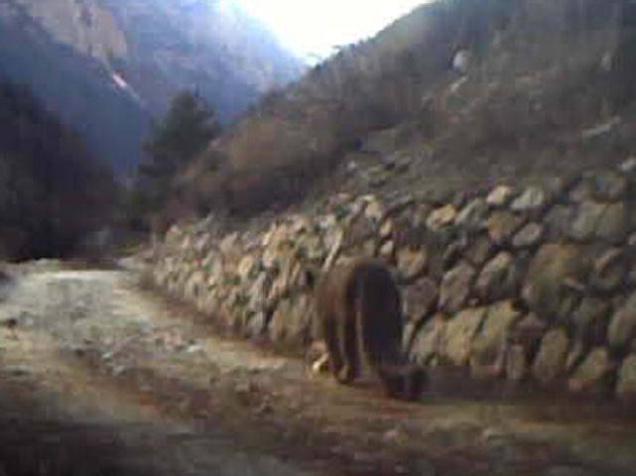
The shot of a snow leopard captured by one of the six cameras installed at Gangotri National Park, Uttarakhand, on Monday. Photo: Virender Singh Negi
We have one last 2013 story about cats caught in camera traps, and intend to continue in 2014 highlighting camera traps as scientific tools in the interest of conservation, not only cats, but all types of creatures great and greater as well as small and smaller. Thanks to the Hindu‘s reporting on this good news out of one of India’s protected natural areas in the north:
Officials of the Gangotri National Park have a reason to rejoice — the camera trap set up at the Gangotri-Gaumukh road has captured video and still images of a male and female snow leopard, confirming for the first time the existence of these cats there. Continue reading
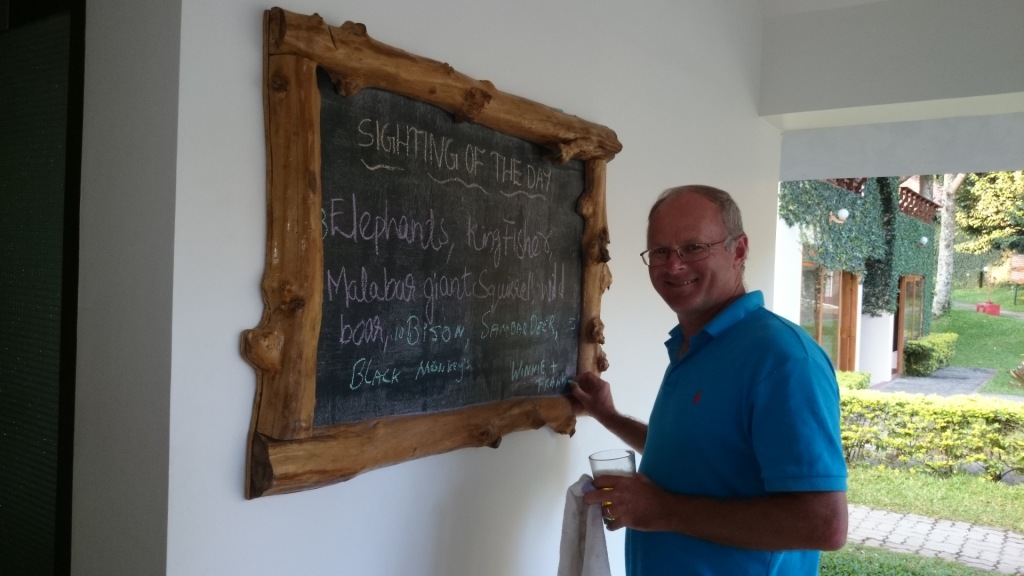
Sightings of the Day
Five years ago we started the “Sighting of the Day” board at Cardamom County with the goal of asking guests to share their experience inside the Periyar Tiger Reserve with us. Today this board has grown to much more than just a list, Continue reading
Atul Loke for The New York Times. Rahoul Mehra and his wife, Glennis Matthews Mehra, started Saf Labs, a biotechnology trading company in Mumbai.
India Ink closes out 2013 with a story near and dear to the hearts of all entrepreneurs in India at this moment, and Raxa Collective appreciates the coverage (even if we are not exactly an American-style start-up, we can relate):
American-Style Start-Ups Take Root in India
In a nation with a reputation as a tough place to do business, American tech entrepreneurs are importing the Silicon Valley mind-set. Continue reading

Los Cedros Reserve, Ecuador

In his new book about the passenger pigeon, the naturalist Joel Greenberg sets out to answer a puzzling question: How could the bird go from a population of billions to zero in less than fifty years? Painting by Walton Ford.
No sooner had we completed our reading of this article in the last issue of 2013 when the New Yorker‘s first issue of 2014 arrived with a practically unbelievable account of the history of passenger pigeons, which we know many of our readers will appreciate this link to (note to the man behind the illustration: Walton Ford, the welcome mat is still out for you in Kerala, and we extend it to welcome you in Costa Rica now as well; plenty of interesting creatures in either place to captivate your fertile imagination):
Imagine that tomorrow morning you woke up and discovered that the familiar rock pigeon—scientifically known as Columba livia, popularly known as the rat with wings—had disappeared. It was gone not simply from your window ledge but from Piazza San Marco, Trafalgar Square, the Gateway of India arch, and every park, sidewalk, telephone wire, and rooftop in between. Would you grieve for the loss of a familiar creature, or rip out the spikes on your air-conditioner and celebrate? Perhaps your reaction would depend on the cause of the extinction. If the birds had been carried off in a mass avian rapture, or a pigeon-specific flu, you might let them pass without guilt, but if they had been hunted to death by humans you might feel honor-bound to genetically engineer them back to life. Continue reading
 Organikos