The Great Carbon Divide

While the wealthiest 1% tend to live climate-insulated lives, their emissions are responsible for immense suffering. Illustration: Guardian Design

Jonathan Watts, whose work we have been linking to for some years now, is the global environment editor for the Guardian, and this may be his most revealing story yet.

Even if you are not in the 1%, if you are not in the bottom 66% the implications for all of us on the wealthier side of the divide are challenging:

Richest 1% account for more carbon emissions than poorest 66%, report says

‘Polluter elite’ are plundering the planet to point of destruction, says Oxfam after comprehensive study of climate inequality

The richest 1% of humanity is responsible for more carbon emissions than the poorest 66%, with dire consequences for vulnerable communities and global efforts to tackle the climate emergency, a report says. Continue reading

Prioritizing Carbon Capture Versus Emissions Reduction

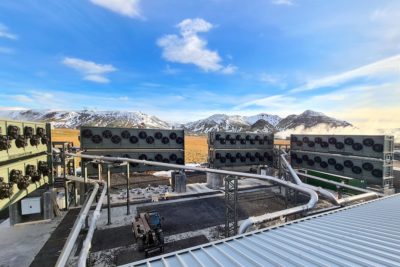
A carbon capture plant near Reykjavik, Iceland.

A carbon capture plant near Reykjavik, Iceland. CLIMEWORKS

Since we first heard of it we have been enthusiastic about the upside potential of this technology, but until now had not considered the tradeoffs:

Climate Plans That Rely Too Much on Carbon Removal Could Breach International Law

Countries that rely too heavily on carbon removal in their climate plans could violate international law, warns a new paper. Continue reading

Letters To The Secretary

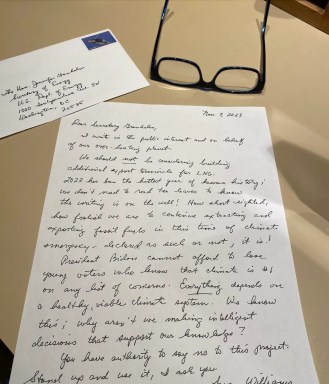
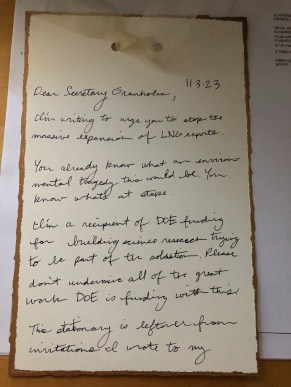
We have appreciated this newsletter since it started, and every issue since. This week it brings these handwritten letters to our attention:

…Oh, and who’s the other group of climate voters the president needs to worry about? That would be older people, like those of us at Third Act—we codgers have been organizing mass protests all year. And while we may not be TikTok savvy, we have another weapon: pen and stationery. In the last week Third Actors have unleashed thousands of letters on DOE headquarters—which may not sound quite as sexy as petitions from the Internet, but they have their own impact, since officials know that if you’re willing to do more than click you’re probably an effective and motivated adversary.

So consider [image above left]

Or [image to the right]

What I’m trying to say is, the Department of Energy has a real problem—an increasingly aware and activated posse of youngsters and oldsters. And a solution: announce CP2 is going nowhere, and that no other project will be approved, or even considered, until there’s been an exhaustive rewrite of the criteria taking into account the latest science and economics. It’s not hard. Continue reading

Climate Scientist Wields Words Well

Carl Recine/Reuters

Kate Marvel is a climate scientist at the environmental nonprofit Project Drawdown, and was a lead author on the Fifth National Climate Assessment. She has well-informed opinions and as we have noted before, she knows how to express them clearly:

I’m a Climate Scientist. I’m Not Screaming Into the Void Anymore.

Two and a half years ago, when I was asked to help write the most authoritative report on climate change in the United States, I hesitated. Did we really need another warning of the dire consequences of climate change in this country? Continue reading

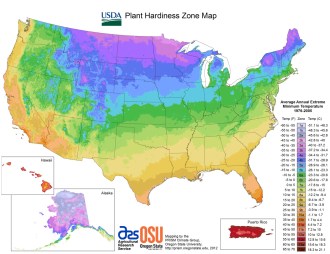
Newly Revised For Planting Plans

Source: U.S. Department of Agriculture

The topics of what to plant, when to plant, where to plant are constantly with us in Costa Rica.  Thanks to Julia Simon at National Public Radio (USA) for this note on gardeners in the USA using an online resource to rethink their planting plans:

‘It feels like I’m not crazy.’ Gardeners aren’t surprised as USDA updates key map

A newly updated government map has many of the nation’s gardeners rushing online, Googling what new plants they can grow in their mostly warming regions. Continue reading
Carl Safina, Ecologist & Author, Interviewed

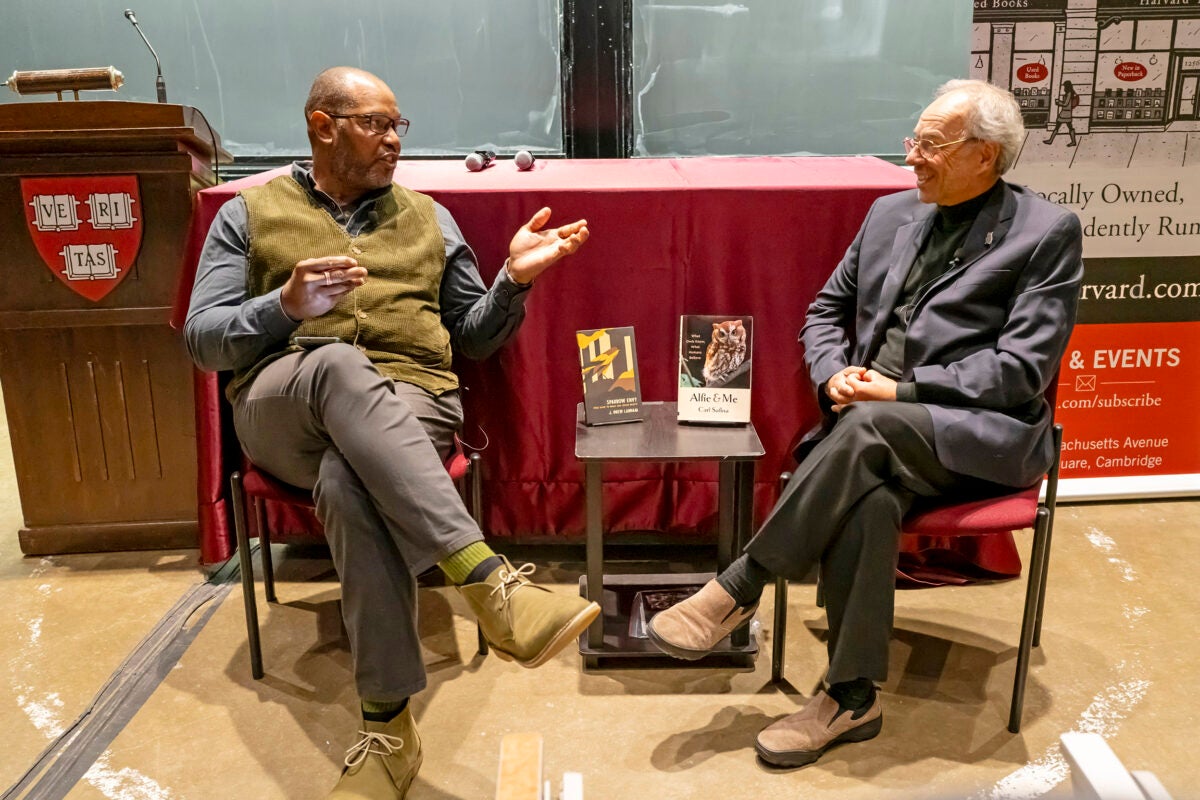
Joseph Drew Lanham and Carl Safina.

Joseph Drew Lanham (left) interviews fellow ecologist Carl Safina during a recent Harvard talk about Safina’s book “Alfie and Me: What Owls Know, What Humans Believe.” Jon Chase/Harvard Staff Photographer

We have linked to the work of Carl Safina only twice before (the second time just a photo credit) but now realize what we have been missing. Our thanks to Alvin Powell,
Harvard Gazette staff writer:

Screech owl wisdom

It took an ailing screech owl to teach a scientist the value of up-close-and-personal study.

Alfie and Me: What Owls Know, What Humans Believe by Carl Safina ...In a talk Monday at the Science Center, Carl Safina, an ecologist at Stony Brook University and author of several books about humanity’s relationship with nature, recalled that the chick was found on a friend’s lawn as the pandemic was tightening its grip on the world. In the picture Safina received, the bird looked beyond saving.“How did it die?” he asked.

“It was just a downy little, dying thing,” Safina, whose most recent book is “Alfie and Me: What Owls Know, What Humans Believe,” said in his Harvard talk, which was sponsored by the FAS Division of ScienceHarvard Library, and the Harvard Book Store and included questions from Clemson University ecologist Joseph Drew Lanham. Continue reading
Photosynthesis Mimicry Out Of Cambridge

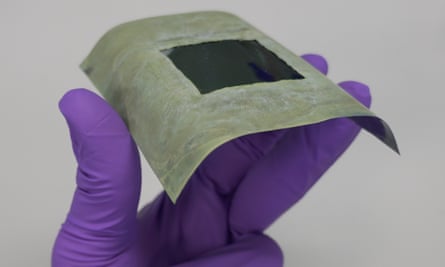
Researchers from the University of Cambridge designed ultra-thin, flexible devices, which take their inspiration from photosynthesis – the process by which plants convert sunlight into food.

Researchers from the University of Cambridge designed ultra-thin, flexible devices, which take their inspiration from photosynthesis – the process by which plants convert sunlight and CO2 into food. Photograph: Virgil Andrei

Photsynthesis comes in handy on this planet. This invention leverages the natural process into a technology to tackle a large scale challenge. We can only hope that it is not too little, too late:

Floating factories of artificial leaves could make green fuel for jets and ships

Cambridge University scientists develop a device to ‘defossilise’ the economy using sunlight, water and carbon dioxide

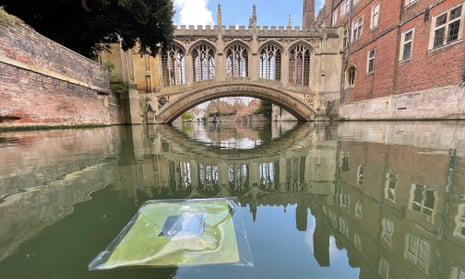
The artificial leaves were tested on the River Cam in and around Cambridge including sites such as the Bridge of Sighs.

The artificial leaves were tested on the River Cam in and around Cambridge including sites such as the Bridge of Sighs. Photograph: Virgil Andrei

Automated floating factories that manufacture green versions of petrol or diesel could soon be in operation thanks to pioneering work at the University of Cambridge. The revolutionary system would produce a net-zero fuel that would burn without creating fossil-derived emissions of carbon dioxide, say researchers. Continue reading

Dominica’s Whale Sanctuary

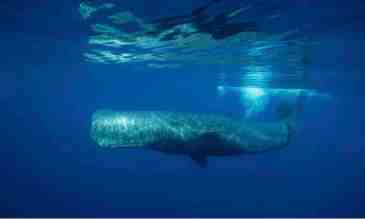
Fewer than 500 sperm whales are estimated to live in the waters surrounding Dominica. Photograph: By Wildestanimal/Getty Images

This island is already known for sperm whales. Protecting their habitat strengthens Dominica’s reputation as the conservation leader in the region:

Dominica creates world’s first marine protected area for sperm whales

Nearly 300 sq miles of water on west of Caribbean island to be designated as a reserve for endangered animals

The tiny Caribbean island of Dominica is creating the world’s first marine protected area for one of Earth’s largest animals: the endangered sperm whale. Continue reading

Invasive Pythons Are Winning, Get Your Game On

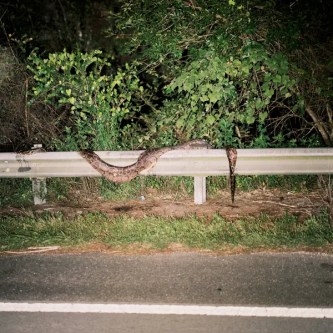
A Burmese python that was hit by a car. Zack Wittman for The New York Times

Nearly 12 years to the day since the first spectacular article we read on invasive species, we still watch for these stories. When it is invasive-hunting season, we take notice when new initiatives are announced:

Her Livelihood? Hunting Pythons in the Dead of Night.

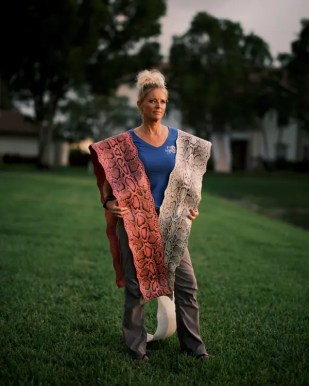
Amy Siewe teaches people how to find and euthanize invasive Burmese pythons, which have been so successful at adapting to Florida that they appear here to stay.

On a clothing rack in Ms. Siewe’s living room are a dozen of skins, dyed deep hues by a tannery that helps her make python-leather products, including Apple Watch bands. Zack Wittman for The New York Times

An unexpected chill can fall over the Florida Everglades late at night. Stars speckle the sky. Frogs croak and croak, their mating calls echoing in the air.

It is all peace and wonder until you remember why you are out at this hour, on the flatbed of a pickup truck outfitted with spotlights, trying to find invasive creatures lurking in the shadows.

A python hunt might evoke images of hunters trudging through swamps and wresting reptiles out of the mud. In reality, it involves cruising the lonely roads that traverse the Everglades in S.U.V.s, hoping for a glimpse of a giant snake. It is strange work, straining on the eyes, brutal on the sleep schedule. Continue reading

More Energy Use Annually Dwarfs Gains From Renewables

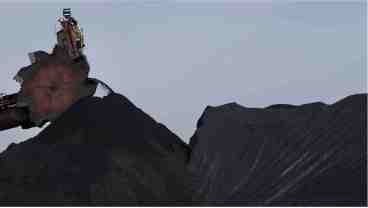
Ty Wright / Bloomberg / Getty

The facts about our progress combatting environmental crises are complex. Sometimes we sense hope and other times not so much. Zoë Schlanger, writing in the Atlantic, runs some numbers on mitigation from renewables:

One Huge Contradiction Is Undoing Our Best Climate Efforts

The math isn’t adding up.

You’d be forgiven for thinking that the fight against climate change is finally going well. Continue reading