Opposite the badminton field, which part of the year serves as cow pasture, is a wall with these hand-painted signs announcing the December dates for the tournament that these players have been practicing for–singles, doubles, juniors, seniors, etc.. Raxa Collective is proud sponsor of this tournament. Live webcam coverage (maybe) so stay tuned.
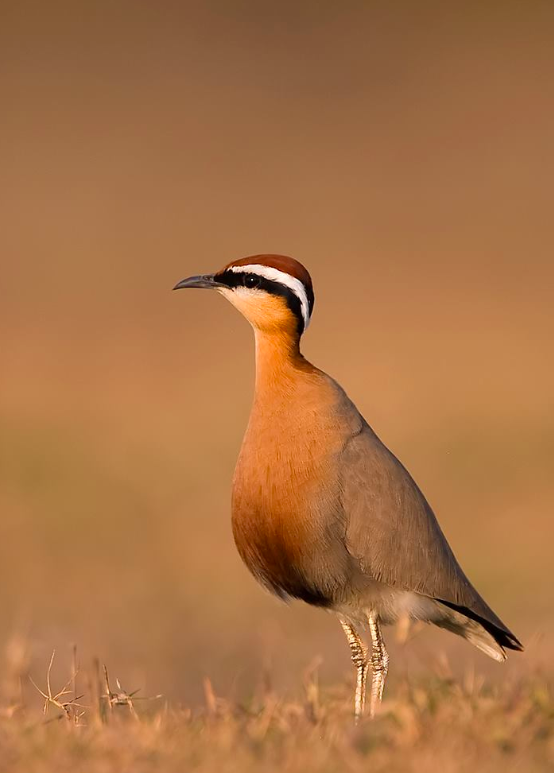
Bird of the Day: Greater Flamingo
Tiger Census In Kerala Is Well Under Way
Today’s Hindu newspaper reports that:
The eight-day phase-one of the all India tiger estimation 2013-2014 by 2,088 field staff began in the forests of the State on Monday.
The estimation, at the initiative of the National Tiger Conservation Authority (NTCA), is a countrywide exercise conducted every four years to assess the status of wild tigers, co-predators, prey species, and their habitat. Continue reading
Dance and Textiles – A Connection
It was mandatory in my family culture that young girls learn dance and music, the traditional dances like Bharathnatyam, Mohiniyattam and Kathakali, as well as Carnatic music. And I was inducted into a well known school of art to learn them.
The theory part included learning about the various dance formats, stories, and most importantly the costume. Continue reading
Tough Times’ Temptations
This was never a good idea for Spain. When we first read the horrifying news that Madrid was not only willing, but desperately vying, to become home to a megacasino and all the dark arts that accompany such a beast, we did not have the heart to share those reports. The ick factor hung like a cloud imagining it. In the last week, news broke that the whole deal had fallen through; here is a recap of the story’s perfect ending, from the New Yorker‘s website:
The puns practically wrote themselves, last week, when headlines announced that the billionaire casino magnate Sheldon Adelson had folded on a years-long bet to build a mega-casino in Spain. Dubbed EuroVegas, it was supposed to be Adelson’s foothold on the Continent: a thirty-billion-dollar venture, replete with twelve hotels, nine theatres, six casinos, and three golf courses.
A year earlier, Adelson had chosen Madrid as the sunny, temperate hub for his European incursion. He’s had a captive audience ever since. Presiding over a wobbly economy and an unemployment rate of around twenty-five per cent, the Spanish government was desperate for any large-scale investment, let alone one as immense as Adelson’s. The project’s gaudy name provoked derision, even revulsion, in some quarters in Spain. Continue reading
Jacaranda Trees, Munnar
The Jacaranda is a deciduous tree native to South America that can grow up to 20 meters high with magnificent snaking branches. These trees are planted as an aesthetic addition within the tea plantations of Munnar for their beautiful and long-lasting blue flowers. Continue reading
Bird of the Day: Lesser Yellow-headed Vulture
The Ocean Never Sleeps
It’s no secret that icecaps are losing mass due to increased global warming; and one of the world’s safeguards against carbon emissions, the ocean, is working overtime trying to sequester anthropogenic gases. The ocean as a carbon sink has been well known for quite some time, although recently it seems as though it has been on the back-burner for many governments, organizations, corporations, businesses, etc.
Massachusetts, A Relevant Kerala Benchmark

David Foster, director of the Harvard Forest, speaking at a news conference to announce the launch of a new Harvard Forest Study on future scenarios for the Massachusetts Landscape, looking as forests as infrastructure. Rose Lincoln/Harvard Staff Photographer
An article in the Harvard Gazette illustrates one kind of collaboration we hope to see more of in our home state of Kerala, India. The state of Massachusetts, USA is fortunate to be home to Harvard University and a wealth of resources–financial, yes, but more importantly ideational–that Harvard generates. Kerala has its own wealth of resources, and we hope to see here more collaboration between the public and private sectors, as well as academic institutions, such as we see in this article:
For the last two years, researchers, nonprofit representatives, and state officials have put their heads together to figure out how to maintain Massachusetts’ status as one of the nation’s most densely populated yet most heavily forested states.
Massachusetts’ forests expanded for 150 years as people abandoned farms for urban life and reached a high-water mark in the 1970s, when they covered nearly 70 percent of the state. In the face of expanding development, however, forest cover has since declined, down to 60 percent, with further declines likely.
The result of the collaboration is a report by the Harvard Forest and the Smithsonian Institution. It lays out four possible futures for the state’s forests and highlights one, called “forests as infrastructure,” that would dramatically increase both logging and land conservation, while also encouraging clustered development to minimize forest loss. Continue reading
Urban Owlets
Recently I had meetings at the Tata Management Training Center in Pune. It’s an amazing place, almost like a national park in the heart of the city. Fortunately, I had my camera bag with me, so I went walking around with my 17-55mm and 70-200mm lenses. Unfortunately, I didn’t have the Sigma 150-500mm nor was I carrying an extender. So 200mm was going to be my max zoom.
While I was walking around, hearing various bird calls and taking aim at some kites that were hovering above, I was told about some resident owls. I went looking for them and was fortunate to spot one of them almost immediately. This Spotted Owlet stared at me for a while and finding no interest (or threat) in me, closed its eyes and looked away. Continue reading
Mahadeva Temple, Ettumanoor – Kerala
The Ettumanoor Mahadeva temple is one of the most revered temples of Hindu worship in Kerala. Built in the 16th century, the presiding deity is Lord Shiva; it is believed that the Pandavas and the sage Vyasa established this shrine. This traditional Kerala style temple has a conical roof above the main shrine which is copper plated — exquisite wooden carvings of scenes from the Ramayana and Krishna Leela are depicted within. The temple is also rich in mural paintings depicting various Hindu myths and lore. Continue reading
Panoramic Viewpoints

Fred F. Scherer, left, and James Perry Wilson, center, paint the background for the American Bison/Pronghorn antelope diorama in 1942.

Visitors to the American Museum of Natural History look at a diorama for which Scherer painted the background decades prior.
Growing up in and around New York I spent many happy hours at the American Museum of Natural History. In addition to it being the depository of many anthropological, archeological and paleontological wonders, it also successfully brings the outside inside for many city dwellers. One of the ways they effectively did this was through museum dioramas. In the age that preceded high-quality large format photography the dioramas required skilled mural painters to help bring the taxidermic animals “to life”. Continue reading
Bird of the Day: Chestnut-headed Bee-eater
Extraterrestrial Citizen Science
Robert Krulwich riffs on (or off) this book in a recent post on Krulwich Wonders titled:
What’s That Clinging To The Towering Wall And Why Doesn’t It Fall Off?
In the spirit of citizen science, of which Krulwich is a master promoter, it makes sense to share this post of his on the same day that we posted about citizen science related to creatures that fly, and creatures that swim. These ones climb, but not on earth as we know it. While calling them extraterrestrials is not quite accurate, you will get the point:
Maybe you’ve seen this, (it’s gotten around), but I’m still gobsmacked. Totally amazed. We’re in northern Italy looking at the face of the Cingino Dam, and here and there on the vertical stone wall, you’ll see a few dark specks. Continue reading
Borneo, Birds And The Field Method Of Learning Science
More than one contributor to this site has been a fan of the Cornell Laboratory of Ornithology for several decades. During graduate school, for example, when Sapsucker Woods provided more than just a walk in the woods. The Lab’s fan base is global, for good reason, both among casual bird lovers and more serious bird watchers. The Lab became the focus of professional interest to several of us when we began managing lodges in the rain forests of Central America, and we discovered what we had not known while at Cornell: it has the largest collection of field recordings of bird songs in the world. Guests at our lodges were awed by this resource when it was pointed out to them. The images above reflect more recent appreciation we have for the Lab. Continue reading
Blackbuck Photo Op
Exposure is a complex area of photography, but in situations like these where the habitat is open it is a bit easy to use the standard “sunny f16 rule”. Continue reading
Radical Interpretation Of Plants’ Secret Lives
When he goes out on a limb he invites others to join him, and like any journalist worth his salt he keeps pushing further out onto the limb. The venues in which he publishes deserve credit for having faith in readers willing to get out onto that limb:
In 1973, a book claiming that plants were sentient beings that feel emotions, prefer classical music to rock and roll, and can respond to the unspoken thoughts of humans hundreds of miles away landed on the New YorkTimes best-seller list for nonfiction. “The Secret Life of Plants,” by Peter Tompkins and Christopher Bird, presented a beguiling mashup Continue reading
Kanyakumari – Cape Comorin
Kanyakumari, or Cape Comorin, is the southernmost tip of the Indian subcontinent. The mighty Arabian Sea and the Bay of Bengal merge into the Indian Ocean here. Kanyakumari is famous for its glorious sunrise and sunsets due to being nearly surrounded by water. The unique location offers the possibility of seeing the moon rise and sunset simultaneously. Continue reading
Bird of the Day: Double-toothed Kite
Geology And The Natural History Of The Environment’s Future
Here is the second installment in a series on natural/environmental history from the perspective of what is referred to here as human impact and the geology of the future. The author requires you to work, but it is important work, worthy of the effort to focus the lens of history for the sake of our decisions about the future:
The Geological Society of London, known to its members as the Geol Soc (pronounced “gee-ahl sock”), was founded in 1807, over dinner in a Covent Garden tavern. Geology was at that point a brand-new science, a circumstance reflected in the society’s goals, which were to stimulate “zeal” for the discipline and to induce participants “to adopt one nomenclature.” There followed long, often spirited debates on matters such as where to fix the borders of the Devonian period. “Though I don’t much care for geology,” one visitor to the society’s early meetings noted, “I do like to see the fellows fight.” Continue reading