Education, Social Entrepreneurship, And The Next Wave Of Innovation

Entrepreneur Offers India’s Aboriginal Children Opportunity to Attend School

From the transcript of a segment on a PBS (USA public television) program some months back (click above to go to the video) that gets us thinking about our outreach programs in south India:

FRED DE SAM LAZARO: Here, education begins with meeting the most basic needs on an industrial scale and free of charge to the students.

ACHYUTA SAMANTA: Now they’re going for lunch.

FRED DE SAM LAZARO: How many students?

ACHYUTA SAMANTA: It is approximately now 8,000-plus are going for lunch. Continue reading

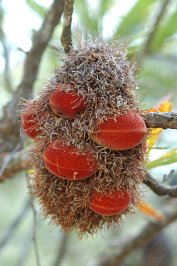
Red Bead Tree Seed – Adenanthera pavonina

Adenanthera pavonina seeds

Adenanthera pavonina seeds

Red bead seeds have been a symbol of love for centuries. Asian goldsmiths use these bright red seeds for making jewelry as well as a standard for weighting precious metals and diamonds. Continue reading

Farm Fresh From Ghana

Accra Green Market Photo Courtesy of The Guardian

Accra Green Market
Photo Courtesy of The Guardian

Recently Ghana had its first ever farmer’s market in its capital of Accra, featuring locally grown, sustainable, and organic produce. This is a big step for the organic farmers in the area to expose their products to the local people. According to an article in The Guardian,

The only space we (the farmers) usually get to market our products are at the bazaars of international schools, where we sell to a lot of expats, but we need more markets like this – the best feedback we have had for our products is from Ghanaians.

Continue reading

A Hero’s Welcome On Familiar Ground

Stephanie Mitchell/Harvard Staff Photographer. “My goal is to bring at least some of you out of retirement and into a life of climate-change activism,” said Bill McKibben, who delivered the annual Robert C. Cobb Sr. Memorial Lecture, sponsored by the Harvard Institute for Learning in Retirement.

This article, about one of the activists we have favored in past posts more than once, is worth a spark to the imagination about the power that could be unleashed if he has captured the attention of his fellow alumni:

If you Google “Bill,” the first hit you get is the phrase “Bill me later.” It’s an accidental tribute to the writer-turned-activist whom everyone calls by his first name: Bill McKibben ’82, who spoke at Harvard Tuesday.

McKibben’s message for years has been that oil-based economies shelve the issue of the environmental costs of fossil fuels. When it comes to the natural systems that support humanity — clean air, fresh water, and pristine seas — the message from developing countries has been: Bill me later.

Well, the bill is due, McKibben said, and it may be too late to pay. Seas are rising, temperatures climbing, storms intensifying, and floods and droughts worsening because of fossil fuel emissions, a statement with a 95 percent chance of certainty, according to the Intergovernmental Panel on Climate Change, up from 66 percent in 2001. Continue reading

Blackbucks Back

The blackbuck was made the flagship species on the IIT-M campus. Photo: K.V. Srinivasan. The Hindu

We commend the work of IIT-M, and thank the Hindu for its occasional coverage of conservation’s small but important victories:

…R.J. Ranjit Daniels of Chennai-based CareEarth, a biodiversity research organisation, said during 2006 there were reports of dwindling blackbuck population on the IIT-M campus. At that time, the population was recorded to be 12. Following this, the IIT authorities entrusted the work of documenting the biodiversity on the premises to CareEarth.

A team of trained biologists was roped in for the work and it identified the precise number of blackbucks, both male and female. The team also mapped the critical blackbuck habitat on the premises. Continue reading

Gavi – Thekkady

Visitors can enjoy the pleasure of boating in Gavi lake through row boats.

Visitors can enjoy the pleasure of boating in Gavi lake even during monsoon weather

Gavi is one place in the world where with every turn visitors have an encounter with nature. It boasts unadulterated views of tropical forest, hills, valleys, cascading waterfalls, sprawling grasslands and cardamom plantations. Continue reading

Hermes Circa 1983

Blacksmithing and Greek language, two ambitions placed in my path by the trickster god of transitions, two ambitions that strengthened my arms and tongue and confidence that looking backward was not my future, were both important deviations. There had been no plan or map but both of these deviations helped ensure that my path would not be too straight or narrow. A couple years later I was preparing for another deviation. On September 23, 1983 I would get on an airplane and make another pilgrimage to Vourthonia. Continue reading

Journey to the Center of the Earth, Via Iceland

Snæfellsjökull, Iceland. Photo © Mariusz Kluzniak

When I explain my honors thesis subject to those who ask about it, not a few of them ask if I plan on looking at Jules Verne’s classic science fiction novel, since the volcanic entrance to the cavernous depths of the world in his story is ‘Snäfell,’ in western Iceland. For some , Journey to the Center of the Earth might be their only popular source of information on the country, since it is perceived as so remote, and, in many American minds at least, the Nordic countries can all get mixed up in a Scandinavian mélange of fjörds and vikings and skyr.

Snæfellsjökull, Iceland. Photo © Manny on BiteMyTrip.com

To Verne’s credit, therefore, he has put Iceland on the map for many people over the past century and a half (his book was first published in France in 1864, and was translated by 1871). To his discredit, however, he never visited Iceland himself, and instead relied primarily on two French works on Iceland written about scientific expeditions made there in the late 1830s. Continue reading

Anachamayam – Elephant Decorations

Photo credits : Dileep

Photo credits: Dileep

In Kerala during temple festivals, elephants are decorated with gold caparisons (Nettippattom), bells and necklaces. People mounted on the elephants hold ornamental umbrellas (Muttukuda) up high, swaying white tufts (Venchamaram) and peacock feathers fans (Alavattam). Continue reading

Uthrattathi Vallamkali – Aranmula

Photo credits : Ramesh Kidangoor

Photo credits: Ramesh Kidangoor

The world famous Aranmula boat race will be held this year on September 20th. The uthrattathi Vallamkali sees 26 boats participating in the two days of festivities. The festivities involve the oarsmen singing traditional boat songs and wearing white Mundu and turbans. The boats are decorated with golden lace at the head of the boat and a flag and ornamental umbrellas in the center. Continue reading

Photography, History, Destiny

There is more than one photography-history-literary continuum buff out there for whom this link-post is intended. One is our erstwhile contributor of great photographic compositions and written reflections on his own photographs; as Milo heads west, he heads toward history. His family history, at minimum. His Inman predecessors first headed west centuries back when Kansas was the great frontier. But this guy is always looking forward while his brother puts some perspective on it all, taking a closer look through the rearview mirror.

Milo follows in the footsteps of several generations of painters, photographers and printmakers in his family who all headed west.  One of them, in San Francisco now, has even shown an affinity for Civil War era photography of the type reflected on in this article on the Atlantic‘s website, so we shout this one out to Milo, Seth and Paul in particular:

Let’s play a short, highly contrived game, called called “Smile or Grimace?”

Here’s Major General Samuel P. Heintzelman, an officer of the Federal Army, photographed during the war:

Library of Congress

Library of Congress

Continue reading

Poet, Publisher, Arboreal Millionaire

Dennis Publishing staff planting native broadleaf saplings for The Heart of England Forest project that has planted one million trees, Warwickshire. Photograph: The Heart of England Fores

Dennis Publishing staff planting native broadleaf saplings for The Heart of England Forest project that has planted one million trees, Warwickshire. Photograph: The Heart of England Fores

We like, therefore we link:

A scheme by one of Britain’s most successful entrepreneurs to reforest the heart of England planted its millionth tree.

Poet and publisher Felix Dennis said he was proud to have planted the first 10% of his ambitious vision. “I’m hoping that long after I’m dead that the charity I founded will one day be the proud possessor of 25,000 acres of woodland planted with 10 million native broadleafed trees, completely open to the public,” he said. Continue reading

An Early Great, Revealed


This slideshow requires JavaScript.

At first glance, it might seem to be a group of photos from the box of one of those street vendors in Paris. Not so, as Luc Sante points out in the New York Review of Books:

Charles Marville is best known for his government commission to photograph the neighborhoods of Paris slated for demolition during Baron Haussmann’s reconfiguration of the city between 1853 and 1870. In fact, that is virtually all he has been known for, a matter the authors of Charles Marville: Photographer of Paris are eager to rectify. Continue reading

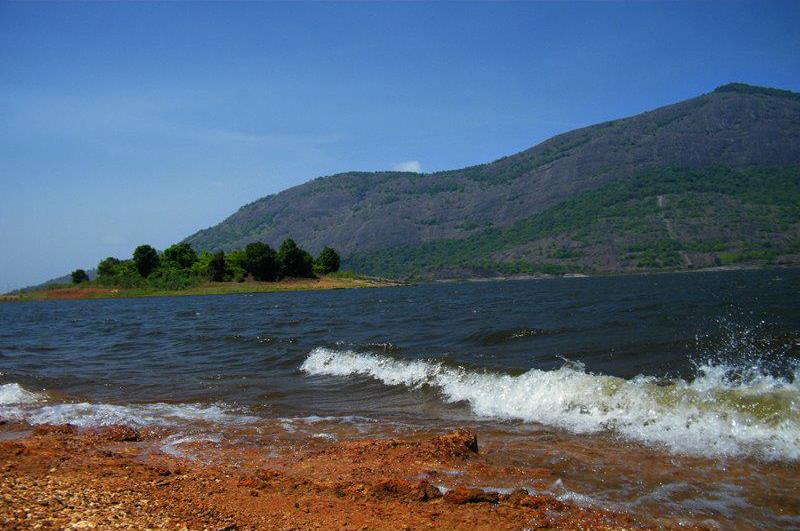
Malampuzha Dam – Kerala

Malampuzha Dam

Malampuzha Dam

The biggest irrigation reservoir in Kerala, Malampuzha Dam, is located in the Palakkad district. Beautiful gardens, an amusement park and a rock garden surround the lake, made even more picturesque with the Western Ghats as the background.

Continue reading

Franzen’s Dilemma

Photo by Kaveh Kazemi/Getty Images

Photo by Kaveh Kazemi/Getty Images

It is going to be our generation’s contribution to the colloquial cliche; equivalent to Catch 22.  Maria Bustillos makes the best case, in the fewest and least heavy words. for a great writer to change his mind. She is compelling. But he is an activist for a good cause, so we must be in his corner, even if it is just wiping the sweat:

Jonathan Franzen has a real gift for getting people into a tizzy. This time, the fracas was occasioned by a September 13th essay he wrote for the Guardian (“What’s Wrong With the Modern World”) excoriating our “media-saturated, technology-crazed, apocalypse-haunted historical moment” and lauding the early-twentieth-century Viennese satirist Karl Kraus, whose essays Franzen reveres, as a prophet for our own times. Though the essay’s specific criticisms are so familiar as to be unremarkable—he writes that Salman Rushdie “ought to have known better” than to “succumb” to Twitter, and rages against Amazon’s depredations of the book trade and the various hegemonies of Apple—in the few days since its publication, the author has been accused of irrelevance and cane-shaking, his sex life and his digestion have been impugned, and Rushdie told him to “enjoy [his] ivory tower”; he’s been called “an old windbag,” “a whingeing miseryguts,” and a “Chardonnay bore,” and has been generally dragged through the digital mud. Continue reading