Music From And Between Other Worlds

tumblr_mr9rgx8ipO1qd9dz2o1_500

Photo via last.fm. Mr. Ondar was a superstar in Tuva. He’s often known for his prominent role in the 1999 documentary “Genghis Blues” about throat singing. He collaborated with Frank Zappa, Willie Nelson, Bela Fleck, among many others.

Whenever you first heard his music, you can probably remember who introduced you, or where you were. It does not sound like any other natural sound, musical or otherwise.  Sometimes it does not sound natural. The interview we link to below is the finest he ever gave (that we know of) because Ralph Leighton lucidly and intelligently explains his own experience working with and producing an album for Mr. Ondar, whose music will live on:

The technique known as throat singing is an ancient style still practiced in Tuva, a small republic between Siberia and Mongolia’s Gobi desert. Traditionally, it was practiced by herders.

In 1995, Kongar-Ol Ondar won a U.N.-sponsored international festival of throat stinging, and was honored by his nation with the title People’s Throat Singer of Tuva. He performed around the world and collaborated with Ry CooderThe Chieftains, Mickey Hart, Willie Nelson, Randy Scruggs and others. He was also featured in the 1999 film Genghis Blues... Continue reading

Hoysaleswara Temple – Karkataka

Photo credits : Ramesh Kidangoor

Photo credits: Ramesh Kidangoor

Hoysaleswara temple was built during 12th and 13th century Hoysala Empire by King Vishnuvardhana. Dedicated to Lord Shiva, the ground-plan of the temple is the characteristic star shape common to all the Hoysala temples. Hoysaleswara is actually formed by two temples joined by a common veranda. The temple of the north is known as the Shantaleshwara temple and is named after the beloved Queen Shantala Devi. Continue reading

India’s Road Culture, Changing In Kerala

Young Indians aim to knock ‘honking’ off the roads

Young Indians aim to knock ‘honking’ off the roads

We missed this when it was first published, but better late than never for news like this:

The city branch of Young Indians (Yi), the youth wing of the Confederation of Indian Industry (CII), organised a silent march against noise pollution here in connection with the World Environment Day on Tuesday.

Twenty people, including school students and professionals, started their march from Greater Cochin Development Authority (GCDA) building in Kadavanthra.

They carried placards and banners displaying slogans like ‘Think Before Honking’ and ‘Reduce Noise Pollution’. Continue reading

Farmer’s Market

Photo credits Ramesh Kidangoor

Photo credits: Ramesh Kidangoor

India is primarily an agricultural country and agriculture plays an important role in the economy. Many times the small scale farmers and middle class customers are exploited by the middlemen. In order to eliminate this problem,  farmers have introduced a new concept called a “Farmer’s Market“. These markets offer customers fresh vegetables and fruits directly from the farmers at a reasonable price. Continue reading

A 2-Minute Primer On Why Solar Will Succeed

Screen Shot 2013-08-20 at 6.44.54 AM

Thanks to the Atlantic‘s website team of science writers (click the image above to go to the video), we never tire of getting a better understanding of why:

Solar is not like other energy sources. Continue reading

New Tourist-On-Arrival Visas For India

The Hindu

Photo credit: The Hindu. Thiruvananthapuram Airport along with the Cochin International Airport joined six other elite airports in the country to issue T-VoA

Thanks to the Hindu (click the image above to go to the source) for publicizing this new information about India’s ever-easier visa procedures. Decades ago, when it was downright Kafka-esque to obtain a visa, no one predicted that by 2013 efficiency would be a relevant word in a sentence about obtaining a visa.  But, to the credit of India, it is so. While not quite Hemingway lean, the prose is simplified, especially if you are from one of these countries:

Kerala on Wednesday became the gateway to India for holidaymakers from 11 countries who can get tourist visa on arrival (T-VoA).

Continue reading

Chingam

Photo credits : Ramesh Kidangoor

Photo credits : Ramesh Kidangoor

Chingam is the first month of the Malayalam calendar.  New Year’s Day 1189, or Chingam 1st,  fell on August 17, 2013  and marks the beginning of Chingamasam.  This auspicious day is welcomed by people of Kerala with special poojas and prayers.  In the early morning Hindus  in large numbers visit their nearby temples. The Onam festival is celebrated in this month. Continue reading

Cricket Is Critical

Kuni Takahashi for The New York Times. Juhu beach in Mumbai, India.

Kuni Takahashi for The New York Times. Juhu beach in Mumbai, India.

The abundant wildlife and traditional culture of India, especially Kerala and its neighboring states in the south, are our most common interests, both on this blog and within the lodging properties we develop and operate. Salim’s brief, daily posts are a mainstay of these interests. Selveraj’s frequent posts capture, in a single snapshot, the uniquely south Indian on-the-road experience.

What we offer less of, for good reason, is an attempt to capture “India” in small snapshots. The quotation marks denote that India is the name of a country, yes, but that it is realistically more the name of an idea; an ideal; any attempt to capture that in a single view or experience is futile because of the complex, diverse and dynamic components.

Continue reading

The Internet and Citizen Science

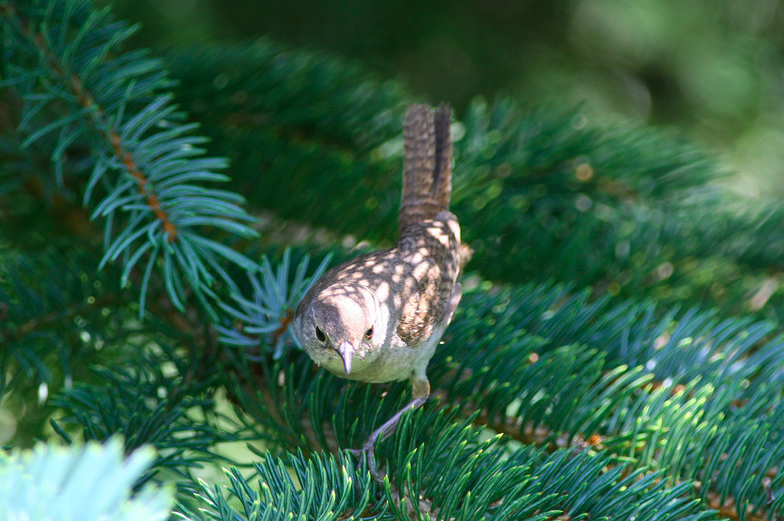
Eurasian Nuthatch by Pieter Colpaert on ProjectNoah.org

For the past two years I’ve been working at one of the Cornell Lab of Ornithology’s citizen science projects, Celebrate Urban Birds, which largely relies on the Internet to disseminate information about birds and urban habitat, to reach new audiences, and to receive the daily data that participants provide by uploading their observations directly onto the CUBs website.

The CUBs science model involves thousands of 10-minute bird observations around North America, and many of them come to the Lab of Ornithology on pen and paper data forms that then have to be scanned in, so internet observations are preferred. Another citizen science project based out of Cornell that I’ve highlighted before, the Lost Ladybug Project, isn’t based on data forms, but on photographs of ladybugs found across the US, focusing in particular on the nine- and two-spotted ladybug. As I  mentioned in my brief post on the Lost Ladybug Project, one of the goals outlined in their National Science Foundation Project Summary is to create “one of the largest, most accurate, accessible biological databases ever developed.”  Continue reading

Aihole Durga Temple – Karnataka

Photo credits : Ramesh Kidangoor

Photo credits: Ramesh Kidangoor

Located in the Bagalkot district of Karnataka Aihole (pronounced: eye-HO-lee) served as the capital of the Chalukyan Dynasty from the 4th to the 6th century A.D. The Durga temple was built between the 7th and 8th century during a rich architectural era. Continue reading

Velankanni Matha Church, Pattumala

Pattumala is a picturesque place with an unending expanse of lush green tea plantations along the Thekkady-Kottayam Route near to Vandi Periyar. The main attraction of the area is the Velankanni Matha Church, a structure built in granite that has become a famous pilgrimage spot. Continue reading

Sharing My Summer Travels

“The world is a book and those who do not travel read only one page.” -St. Augustine.

Over this past summer, I’ve had the extraordinary opportunity of traveling around the United States and abroad to see some various national parks. Traveling abroad–and especially, traveling to areas of natural beauty carved out by Earth–always serve as a humble reminder of how little we’ve seen and how important global conservation efforts are. I’d like to think that my summer’s travels to China and Hawaii have opened a little bit more of that book, and it’s with great pleasure that I share some of the pictures from the trip.

Continue reading

Live from the Hive

Did you ever wonder what it is like to be a Honeybee? Now you can see for yourself with the new live Honeybee cam above. Brought to you by the same people who brought you the famous Bear cam, this live feed offers a variety of camera views of a Honeybee hive recovering from a hive collapse. Continue reading

Citizen Science in Belize: Part 2/2 – If You Can’t Beat’em, Eat’em

Photo by Alexander Vasenin

Lionfish sushi – Photo © World Lionfish Hunters Association (click on photo to visit their website)

In Part 1 of this post I talked about the lionfish invasion that is threatening coral reef and other marine ecosystems throughout the Caribbean, Gulf of Mexico, and Southern Atlantic Seaboard of the United States.  Scientists, environmental groups and governments that are studying the problem have all come to the conclusion that it is probably impossible to eradicate lionfish in the Atlantic – they are here to stay. Continue reading