Maasai Mara National Reserve
Maasai Mara National Reserve

Relentless and Loper Bright have been brought before the Supreme Court with the same all-but-explicit goal: to make it more difficult for the federal government to protect the public. Photograph by Jemal Countess / UPI /Shutterstock
Courts with politically appointed jurists can tilt to an extreme, as we see now at the highest level in the USA’s judicial system. Even as the environment needs more protection, the infrastructure for providing it is being dismantled (thanks as always to Elizabeth Kolbert):
The Supreme Court Looks Set to Deliver Another Blow to the Environment
Two upcoming cases take aim at the government’s power to regulate.
Last week, the United States Supreme Court agreed to hear a case that’s nominally about herring. Arguments will be heard this winter, in tandem with a case that the Court had agreed to hear earlier, that one also ostensibly about herring. In both cases, though, the Justices have much bigger fish to fry: what’s really at issue is the fate of federal regulation. The stakes are enormously high, and, given the Court’s predilections, the outcome seems likely to undermine still further the government’s ability to function. Continue reading

Live Oak Road, Crockett County, TX

United Airlines wants to zero out its greenhouse gas emissions by 2050, but without using conventional carbon offsets. Nicolas Economou/NurPhoto via Getty Images
If airlines can quantify what it would cost to become carbon neutral within a relevant timeframe, it implies that we know by how much they are currently fudging their investment model. If it is going to require an investment of X number of dollars over Y number of years to achieve carbon neutrality then they should invest, and price their flights accordingly. Then we will all know the real cost of flying, including the environmental cost. Thanks to Umair Irfan (long time since we last saw his work) and to Vox for this:
Emirates demonstrated a Boeing 777 flight fueled with SAF earlier this year. Giuseppe Cacace/AFP via Getty Images
Airlines say they’ve found a route to climate-friendly flying
Cleaner, faster, cheaper — the aviation industry’s plan to decarbonize air travel, explained.
If you’ve caught an ad for an airline lately on TV, a podcast, or the entertainment display on your flight, you’ve probably heard the company brag about what it wants to do about climate change.
Major airlines like American, Delta, Southwest, and United have all set targets of achieving net-zero greenhouse gas emissions by 2050. They’re using a suite of tactics including buying more fuel-efficient aircraft, electrifying their ground vehicles, and increasing the efficiency of their operations. They’re also testing the winds on battery- and hydrogen-powered planes, as well as some radically different aircraft designs. Continue reading
Periyar Tiger Reserve, Kerala

Pet owners can reduce the carbon footprint of their furry loved ones without affecting their health, experts say. Photograph: Getty Images
Pets have featured in exactly one prior post in our pages. Now, thanks to Dwayne Grant and the Guardian, we see there is a topic related to pets quite relevant to our interests:
Throw a dog a bean: how to reduce the carbon footprint of your pets
Thinking about what your dog or cat eats and the products you buy for them can lessen the impact they have on the planet
Did you hear the one about the luxury aviation CEO who claims pets cause as much carbon pollution as private jets? Continue reading

Nairobi National Park, Kenya

Prime Minister Rishi Sunak announcing last month that the U.K. will delay the phaseout of gasoline and diesel cars. JUSTIN TALLIS / POOL VIA AP
When leadership is most needed, the special relationship between the UK and the USA should count for something, but so far no sign of the USA pressing back on the UK’s awful reversal on their already tepid recent leadership on climate. We knew that leadershsip was lacking in the UK. The Orwell-worthy podium messaging in the photo to the left says all you need to know about efforts to obfuscate, but read Fred Pearce‘s account in Yale e360 anyway:
Demonstrators in Edinburgh protest the government’s recent approval of drilling in the Rosebank North Sea oil field. PRESS ASSOCIATION VIA AP IMAGES
Why Is Britain Retreating from Global Leadership on Climate Action?
While Britain has long been a leader in cutting emissions, Prime Minister Rishi Sunak is now implementing a stunning reversal of climate-friendly policies, with new plans to “max out” oil production. Business leaders have joined environmentalists in condemning the moves.
In 1988, British Prime Minister Margaret Thatcher became the first world leader to take a stand on fighting climate change. Continue reading
Maasai Mara National Reserve

Once a golf course, now a solar farm supplying tens of thousands of homes in Japan
If you know a bit about Japan’s love of golf, the photo above says alot about leadership there in moving away from fossil fuels in the direction of alternative energy. But it is too little too late compared to what is happening elsewhere. Thanks as always to Bill McKibben for his newsletter:
Energy from Heaven
and not from Hell/Exxon.
Amid the torrent of hideous news last week, one item might have skipped your notice: Exxon announced the acquisition—its biggest since picking up Mobil a quarter century ago—of one of the largest fracking operators in the world. As the AP reported, “including debt, Exxon is committing about $64.5 billion to the acquisition, leaving no doubt of the Texas energy company’s commitment to fossil fuels.” In fact, it’s the declaration of conviction that they think they have enough political juice to keep us hooked on oil and gas for a few more decades, even in the face of the highest temperatures in 125,000 years. Continue reading

Legon Botanical Gardens, Accra, Ghana

Ms. Elman collects butterfly eggs from milkweed plants growing wild along New York City’s highways. Karine Aigner
Some of the best stories are about people who go the extra mile for others:
To Save Monarch Butterflies, They Had to Silence the Lawn Mowers
An unlikely group of New Yorkers is winning small victories in the battle to protect butterfly habitats.
The small white dot under a milkweed plant is a monarch butterfly egg. Karine Aigner
The Long Island Expressway is not generally a place people linger, unless they’re stuck in traffic.
But during the summer, Robyn Elman can often be found walking alone near the highway’s shoulder, inspecting scraggly patches of overgrown milkweed. The plant is the only source of nutrition for monarch caterpillars before they transform into butterflies. Continue reading
Seewinkel National Park, Austria

A fossil fuel-free ammonia plant at the Kenya Nut Company, near Nairobi. TALUS RENEWABLES
Alternative fertilizer has been something of an environmental holy grail, and this technology looks to be large step in the right direction. Have a look at the two companies mentioned in this Yale e360 news short:
Farm in Kenya First to Produce Fossil-Free Fertilizer On Site
The Kenya Nut Company, near Nairobi, will be the first farm in the world to produce fertilizer, on site, that’s free of fossil fuels.
A small fertilizer plant, built by U.S. startup Talus Renewables, will use solar power to strip hydrogen from water. Continue reading

Maasai Mara National Reserve
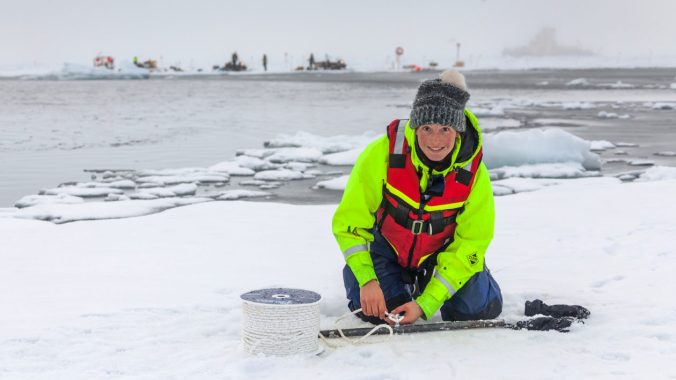
Helen Czerski on a 2018 ocean research expedition to the North Pole. MARIO HOPPMANN
We non-scientists have learned much from the scientists who study climate change, and surprises keep coming, this one from physicist Helen Czerski:
The Pacific Ocean, as seen from space. NASA
The Planet’s Big Blue Machine: Why the Ocean Engine Matters
The ocean is an enormous engine, turning heat energy into motion, says physicist Helen Czerski. But human activity is threatening that machine — depriving the seas of oxygen, increasing stratification, and potentially changing the currents that influence global weather.
Photographs of Earth taken by astronauts in space more than half a century ago revealed a blue planet dominated by oceans and billowing with clouds. Continue reading

Nairobi National Park, Kenya
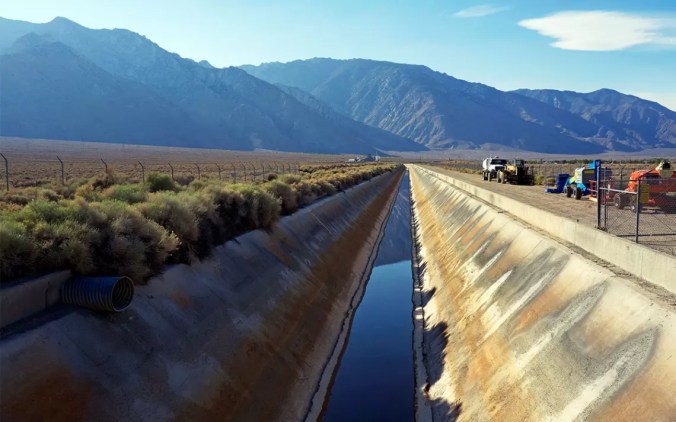
The Los Angeles Aqueduct. | Photo by Brian Melley/AP
California water has been covered in earlier posts, and it keeps getting more important. Once again, with abundance comes responsibility:
Dear Los Angeles: You’re Drinking Indigenous Water
How LA can localize its water supply and finally do right by the Owens Valley Paiute tribes
In August 2023, a tropical storm bore down upon Southern California for the first time in 84 years. As Hilary’s northward-rolling blanket of rain touched off mudslides from Hollywood to the San Bernardino Mountains, thigh-deep water floated vehicles in the streets of Cathedral City. To the east, 120 miles of Highway 395 were closed due to flooding and rock slides, pinching off the route between the city of Los Angeles and the once-green valley 300 miles away from which it has, for over a century, sourced fresh water. Continue reading
The Nature Conservancy’s Love Creek Preserve, Bandera County, TX

Beka will hand-deliver a letter to the Cargill-MacMillian dynasty in Minneapolis on Thursday, calling on the billionaire owners of America’s biggest private company to stop destroying the Amazon rainforest and its people. Photograph: Thalia Juarez/The Guardian
Cargill has appeared a few times in our pages over the years, not always showing poor stewardship. But today, we have to ask whether they really are trying as diligently as possible to do the right thing. We applaud Beka and her community for this letter, and hope the recipients respond with the sense of responsibility that comes with their wealth:
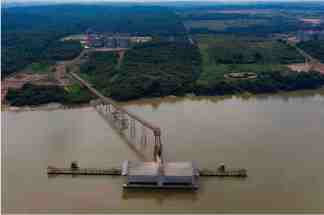
A Cargill transshipment port for soy and corn projects on the Tapajos River in Itaituba, Para state, Brazil, in 2019. Photograph: Léo Corrêa/AP
Beka Saw Munduruku , 21, traveled 4,000 miles to deliver letter and confront family behind Cargill empire over what she says amounts to a litany of broken promises
A 21-year-old Indigenous activist from a remote Amazonian village will hand deliver a letter to the Cargill-MacMillan dynasty in Minneapolis on Thursday, calling on the billionaire owners of the US’s biggest private company to stop destroying the Amazon rainforest and its people. Continue reading




 Organikos