Other Winged Wonders

Birds are the most common feature on this site, for reasons we cannot possibly explain in the prelude to a post about another type of flying creature. Butterflies are certainly underrepresented here, and with this post we will begin to correct that. Four of Raxa Collective’s contributors, and many others who have visited Costa Rica, first learned of butterfly farming due to the good graces of Joris Brinckerhoff and Maria Sabido and that is just one of the reasons to smile thanks to Robert Krulwich’s recent post:

I’ve got a friend, Destin, who has a YouTube channel called Smarter Every Day, where he pokes around with his camera to get extremely intimate looks at small miracles in nature. In this one, about the secret life of baby butterflies, he learns that when it comes time for the caterpillar to turn itself into a butterfly, it doesn’t spin a lot of silk and build itself a shelter (a pupa). I thought that what caterpillars do. But no … take a look at what actually happens. Continue reading →

Europeans And Indians, The Early Days

Screen Shot 2013-07-21 at 12.19.40 PM

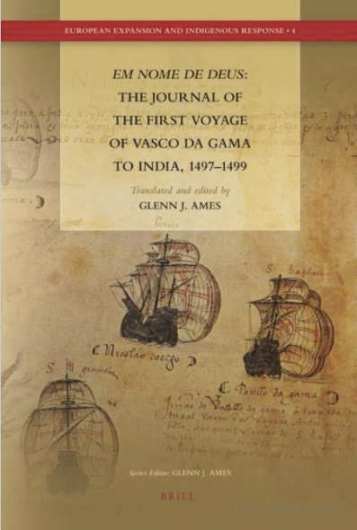
In several past posts about historically interesting interactions between Europeans and Indians, the New World variation on that story was invoked to make a point, mainly with an eye toward environmental history. Today’s Hindu has an article that draws on the history contained in the journal to the left about (Old World) Vasco de Gama’s first experience in (Older World) India, specifically the Malabar Coast and what is now the state of Kerala. Click the image to go to the source of the book, and here to go to the Hindu article:

The hero of the first Portugese contact on Indian shores is a degradado, or Portugese convict and exile, not Vasco da Gama.

One of the greatest navigators from the Age of Discoveries, da Gama, appointed by Dom Manuel, King of Portugal, for his “energy and high spirits” refused to take the initiative to go ashore on the morning of May 21, 1498. Instead, da Gama chose to wait in the depths of his ship, Sao Gabriel, while the convict Joao Nunes stepped out into the monsoon showers off the western coast of Kozhikode to meet, much to his amazement, a pair of multi-lingual Tunisian merchants. Continue reading →

Stuff, Change, And Examining Broke

View the video by clicking the image above, again brought to you on Cornell University’s website:

The United States isn’t broke; we’re the richest country on the planet and a country in which the richest among us are doing exceptionally well. But the truth is, our economy is broken, producing more pollution, greenhouse gasses and garbage than any other country. Continue reading →

Entrepreneurial Conservation Embraced By A Great Designer

TonyFadellToday’s New York Times’ regular feature called The Boss provides one man’s self-described transition from the pinnacle of consumer tech design, which he helped establish, to a greener entrepreneurial form of the same:

After years of work at Apple, designing iPods and iPhones, the founder of Nest Labs now makes a self-programming thermostat that enables homeowners to save energy. Continue reading →

National Geographic Over the Years

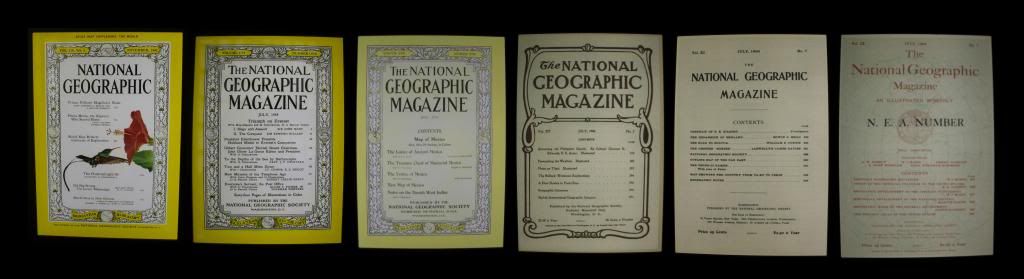
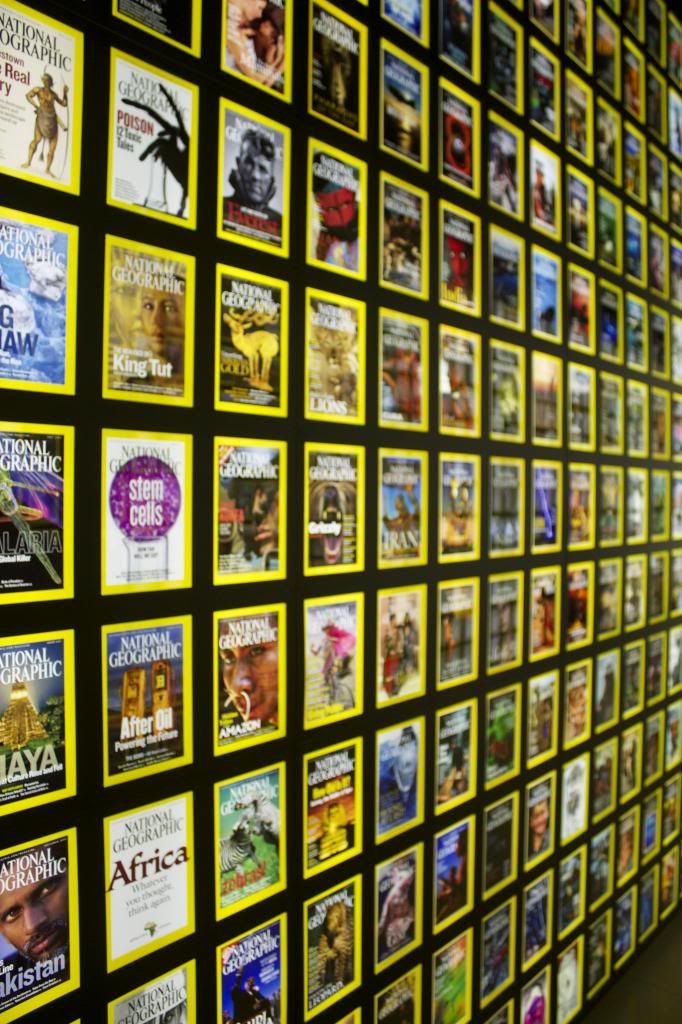
NatGeo’s magazine covers over the years, stitched together from individual photos I took at the National Geographic Museum in Washington, D.C.

As National Geographic celebrates its 125th year of journalism, it is interesting to see how small things, like the magazine covers and the information they conveyed, have changed. In the photo above, the November, 1960 issue (far left) was priced at $1.00; the July, 1954 issue (second from left) at 65¢; and from then backwards each magazine was a whopping 25¢. Today’s magazines don’t disclose their individual price, but a yearly subscription at $15 is not too shabby considering it was $8/yr in 1960, up from $6.50 in 1954.

The July, 1954 issue’s first featured article is titled, “Triumph on Everest,” and the last, “Everyone’s Servant, the Post Office”; July, 1898 (far right in the photo above), on the other hand, saw “American Geographic Education” and “The Geologic Atlas of the United States” as the first and last articles.

Continue reading →

If You Happen To Want To Live in Felpham, West Sussex

This slideshow requires JavaScript.

We are not brokers, but in the spirit of entrepreneurial conservation, and a price tag so seemingly reasonable, we are obliged to bring this to your attention:

Guide Price Of £650,000 Continue reading →

Citron Daylily

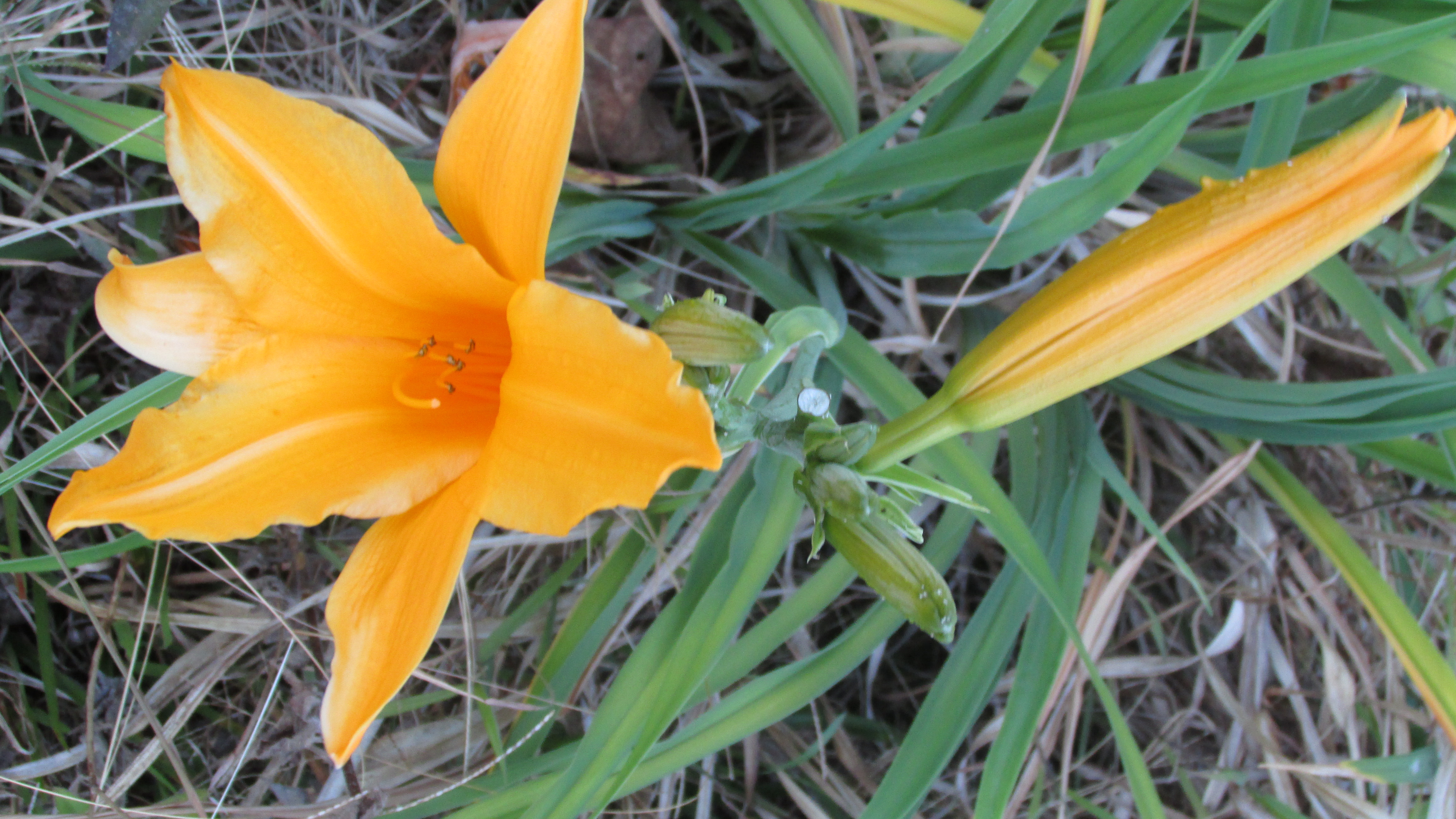
Citron daylily

Citron daylily

Daylilies are considered to be extremely straightforward to grow, even for the most inexperienced gardener. The fragrant lemon-yellow flowers of this species are ideal for night owls, as the small flowers do not open until late afternoon and bloom through the night. Continue reading →

Like Water Into Wine

By now everyone knows that availability of potable water is among the most important challenges facing this and coming generations. Thanks to the USA-based tax and donor-funded National Public Radio for bringing this to our attention:

…A more common technology for removing salt and other impurities from water is known as reverse osmosis, which uses lots of energy to produce the extremely high pressure required to force raw water through a semi-permeable membrane. You can see a diagram of how it works here. Continue reading →

Hampi Bazaar – Karnataka

Photo credits :Ramesh Kidangoor

Photo credits :Ramesh Kidangoor

Hampi is one of the most frequently visited tourist sites in Karnataka state and India’s most prominent Heritage sites. This village in Northern Karnataka is the former capital of the Vijayanagar Empire. Continue reading →

Fruit, Every Day, Everywhere


We appreciate the reminder provided by one of the Atlantic’s many talented writers, about a topic we have had more than passing interest in for the last couple years. Our own previous mention of this film, and the phenomenon make this article no less interesting:

There are more than a thousand banana species in the world, but you’ve probably only ever tasted one. The Cavendish banana is the one we know and love. It’s the one the international banana economy is based on–the only species that’s exported from one country to another, anywhere in the world. But its extinction is coming… Continue reading →

Alaska, Brown Bear And Salmon Via Camera Trap

This slideshow requires JavaScript.

We had already come to the conclusion that camera traps are valuable for the sake of conservation. Thanks to the Guardian‘s coverage of these bears and the camera trap provided by a generous foundation to a worthy recipient:

Caught on camera trap: brown bears feast on salmon – in pictures

Explore.org has launched a summer salmon bearcam to stream live video from Brooks river in Alaska’s Katmai national park. Organisers hope for the first time to record the entire salmon run, from the frenzied dash upstream in July through to the autumn months

Collaborative Poaching-Patrol

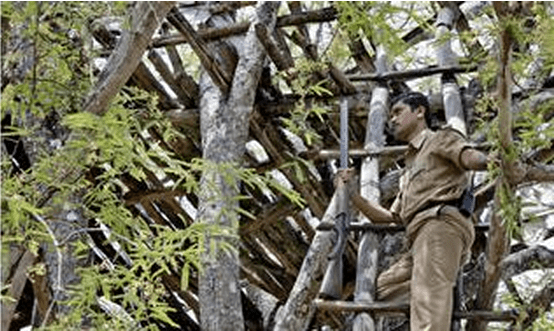
The Hindu— File Photo

We’ve written about the importance of forest stewards before, primarily because in many cases they straddle the roles of guard and guide within the territories they protect. But many of those protected areas in India are suffering from severe shortages of qualified field staff, putting enormous areas of land, not to mention the wildlife that call it home, at risk.

But the Karnataka Eco-Tourism Development Board is initiating an innovative plan to train volunteers to be forest naturalists who will assist the forestry department a minimum of two weeks per year in their anti-poaching activities.

In order to create this pool of trained volunteers, the Karnataka Eco-Tourism Development Board is offering, for the first time in the country, three- and four-day Naturalist and Volunteer Training. The board is offering the training programme in association with Jungle Lodges and Resorts Ltd. Continue reading →

Dietary Geography Lessons

[image]

Continuing the conversation about diet with experts (click the image for the source), who are asked what single change they would recommend:

Jeffrey Flier: With Caveats, Consider a ‘Mediterranean Diet’

This is a tough question to answer, for many reasons. Here are three:

1) Diet is extremely complex. Continue reading →