Thekkady sits right next to the frontier between Kerala and Tamil Nadu. But once you cross the Western Ghats it’s like setting foot in a whole other country. The alphabet is different, the language is not malayalam but tamil. And the temperature is much hotter than in the hill stations, thus flora and fauna are radically different too. I mean it’s quite a shock, I’ve never felt this otherness when crossing a border in Europe. Tamil Nadu counts 72 million souls and tamil has been used for 3800 years so naturally the country has a distinct identity. Continue reading
“Nature, Red In Tooth and Claw”
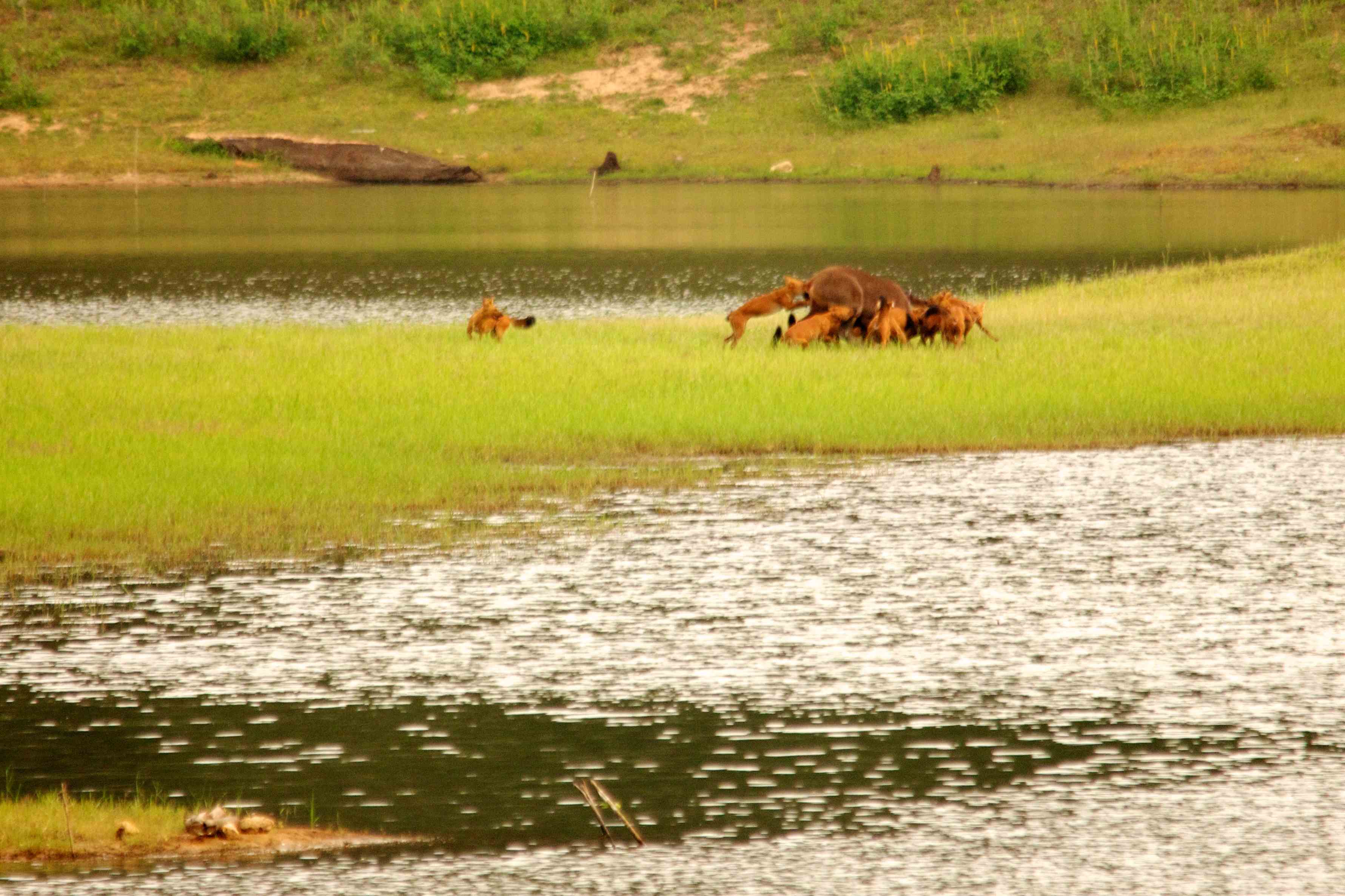
Photo credit: Srinivasa Addepalli
One of the things I love most about the Periyar Tiger Reserve is the knowledge that it’s a vibrant ecosystem whose 900+ square kilometers supports a small but healthy population of tigers. For many people actually seeing a tiger is their primary goal when trekking in PTR. I would be lying if I said that I wouldn’t care to see one, but it would be just as much a lie to say that’s all I care about. The forests and grasslands that form the habitat for the many animals that the tigers prey on astounds me each time I’m there, and tigers aren’t the only predators who make PTR their home. Leopards, sloth bear, wild cats and Indian dhole (wild dog) hunt sambar deer, Indian gaur, wild boar, porcupine, and even the majestic elephant — all part of the natural food chain and the drama of the hunt is played out daily in the Periyar Tiger Reserve. Continue reading
Keshava Temple- Belur, Karnataka

Photo credits: Dileep Kumar
Keshava Temple of Belur is aptly referred to as the “Jewelry Box” of Hoysala architecture, such is the ornamentation and detail of the sculpted pieces. The Mohini Pillar in the Navaranga Mandapa is one of the finest specimens of the Hoysala pillar order. The pillar is placed vertically on a sixteen pointed star plan decorated with a narrow band of filigree work. Continue reading
Indonesia’s Tipping Point
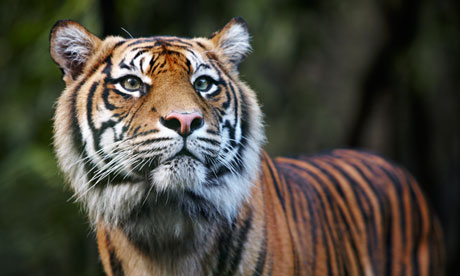
Photograph: Allan Baxter/Getty Images. A Sumatran tiger, one of thousands of species threatened by palm oil plantations and paper and timber businesses.
A recent headline in the Guardian‘s Environment section was titled:
Indonesia’s tropical forests set to benefit from further clearing ban
Susilo Bambang Yudhoyono expected to sign extended deal to help restore habitat of tigers and orangutans
This was bound to get our attention, especially after a series of articles in recent months showing that this could go in either direction, not only for Indonesia but any number of countries in the region. Indonesia is a developing country whose fulcrum might allow market forces to push (or pull?) it to ecological dystopia, or toward some more sane ecological outcome.
Bird of the Day: Dark-eyed Junco

Tompkins County, NY
Solitary togetherness : a walk into Periyar Tiger Reserve


Traveling in a pack, or you might say a group, is not something I do on holidays. I’m a lone wolf kind of traveler. See what I mean? Then I took the opportunity to escort a group coming to Cardamom County for a bird photography workshop into Periyar Tiger Reserve, and all my preconceptions disappeared. Although my companions came from all parts of India to take wildlife pictures and I arrived on day 1 with just an iphone, I quickly felt like I belonged. Continue reading
Crowdsourcing A Design Solution

After our renovation of the reception area at Cardamom County last year, we decided to leave the largest wall–a spectacular, privileged space for art–completely white until we found exactly the right piece. Given the property’s location in the hills where the best cardamom in the world grows, we formed a vision for a piece of art that would abstract cardamom in some beautiful way. We spoke to the director of the government’s cardamom research laboratory, thinking they might have some molecular images of cardamom (more on which after the jump) but they did not. And so we dropped that idea, but we are still looking. And that is how we happened upon the image above, and the description of this and others by the same artist on a Japanese design website:
Using his background in computer graphics and illustration, media artist Makoto Murayama creates technical, scientific blueprints of flowers that look like they belong in a manual for semiconductors. In fact, his work has just been selected as part of thesolaé art gallery project, an initiative to bring art into the offices of Tokyo Electron, one of Japan’s largest semiconductor companies. Continue reading
Tipu Sulthan’s Summer Palace, Mysore
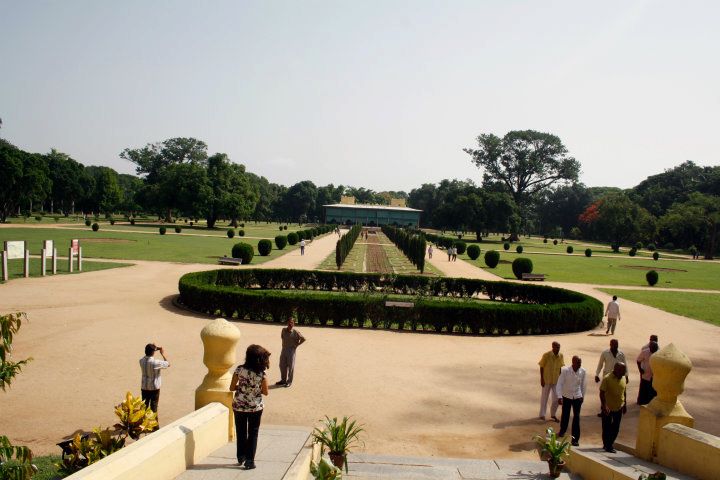
Photo Credits: Dileep Kumar
Known as the “Tiger of Mysore”, Tipu Sulthan was the ruler of the Mysore Kingdom from 1782 to 1799. The construction of the summer residence was started by his father Hyder Ali. Built with French rosewood and adorned with pillars, this beautiful palace is surrounded by ornamental trees and a beautiful garden.
Continue reading
Bird of the Day: Chocó Toucans
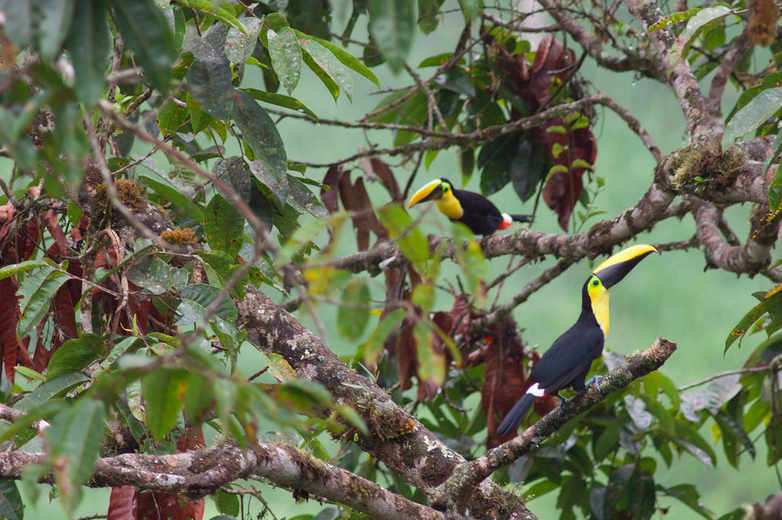
Los Cedros Reserve, Ecuador
Agraharam – Brahmin Homes

Photo Credits: Ramesh Kidangoor
Brahmin homes are called agraharam. They are made up of 50 to 100 dwellings housed in a single compound that are so closely packed that, in most cases, two homes have a single wall as separation. The Brahmin mix of Tamil and Kerala culture is evident in every aspect of their lives, ranging from language, behavior, architecture and culinary skills. Continue reading
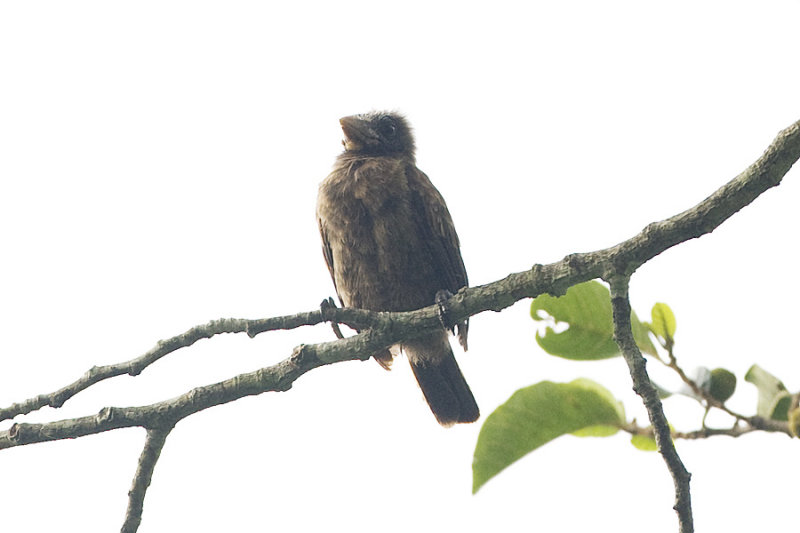
Bird of the Day: Naked-faced Barbet (Mole National Park, Ghana)
Beauty of Jordan: Wadi Araban Sunset
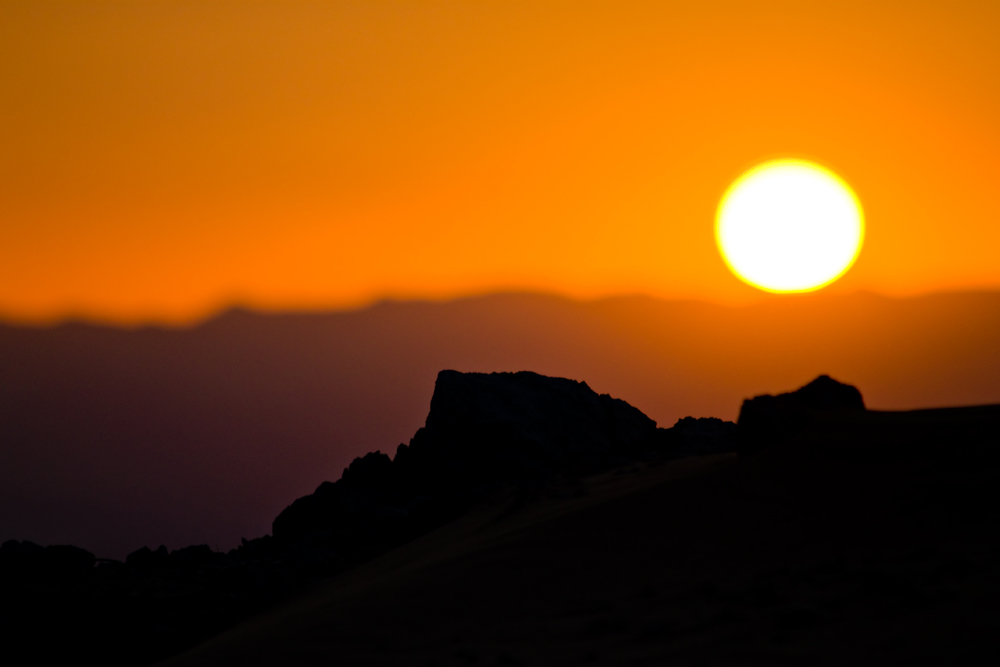
Wadi Araba is a section of the Jordan Rift Valley – one which separates a stretch of Israel and Jordan (Wadi means valley – Araba means dry and desolate). The day these photographs were taken I found myself facing the sun descending over Israel while my Bedouin companions alternated between relaxing and preparing an exceptional meal baked in a cut steel drum buried in the fine sand of the dune we stood upon. Continue reading
Kuthira Malika, Trivandrum

Photo credits: Ramesh Kidangoor
The Kuthira Malika is a beautiful Kerala style, two story, 80 room palace with open verandas. Built by the Maharaja Swathi Thirunal in 1844, the name Kuthira Malika, which means Horse Palace, was chosen based on the many wooden horse figures carved along the entire length of the exterior lintel of the upper floors. The Palace has now been converted into a museum that houses very interesting and rare artifacts and paintings belonging to the previous Travancore Kings. Continue reading
World Building Through Media
Every day for the past three years or so we have posted a few personal accounts, links to news stories, sometimes told through video, etc. all in the interest of highlighting collaborative, community-based contributions to conservation. We reach far and wide for inspiration, and some daily features are there not as a direct statement about conservation but about the world we see around us. So when we see a story about world building though media, and a name like 5D Institute, it catches our attention. According to their website, the future of narrative media is a form of world building, and an important contribution to it can be found here:
5D Institute is a cutting edge USC non-profit Organized Research Unit dedicated to the dissemination, education, and appreciation of the future of narrative media through World Building. World Building is the interdisciplinary process of building worlds that evolve into containers for the new narrative resolutions. World Building is the intersection of creativity and technology for students in academia and industry who need to understand now how to thrive in the media jungle of the future. World Building works beyond the edges of known media to express the full arc of our creative role in making new narrative worlds. Continue reading
Bird of the Day: Common Flameback Woodpecker
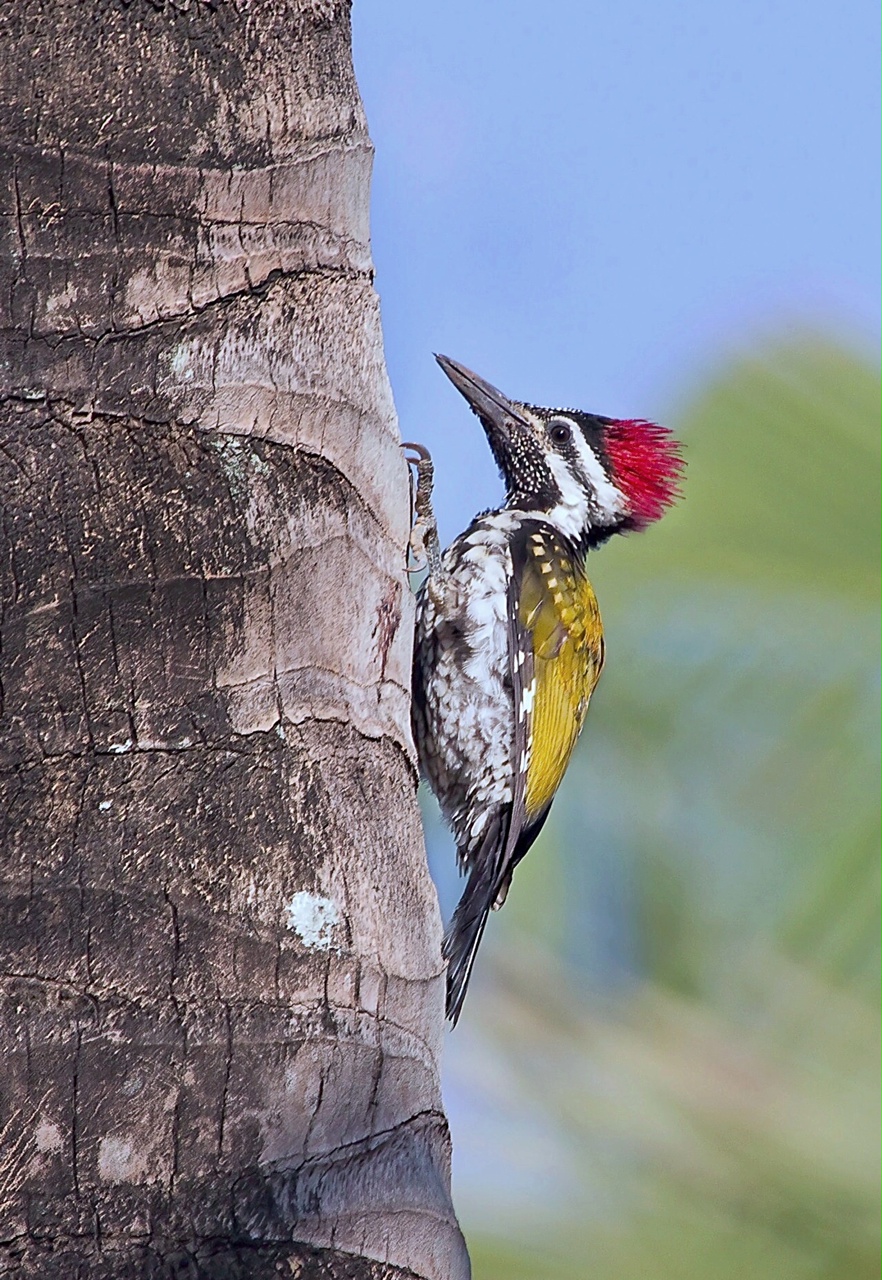
Outskirts of Bangalore, Karnataka
Ayurveda in Kerala: getting back in shape


Ayurveda, India’s traditional medicine is a major presence in healthcare in Kerala. My colleague Lissi has ten years of experience practicing ayurvedic massage. She started her training at an ayurvedic hospital before enrolling at an ayurvedic institute. There, she pursued her apprenticeship while practicing at the hospital. Continue reading
In the mood for flowers : floral arrangement Raxa Collective-style
To make a beautiful “uruli”, a traditional Kerala bowl filled with water and flowers, you need a keen eye. Picking the right flowers, drying them if it rained, placing them artfully, it is a craft. Continue reading
CUBs Focal Species Close-up: Barn Swallows
The Barn Swallow’s nesting and habitat preferences have made it the most abundant and widely distributed swallow species in the world. The species adapted to using human structures as nest-bases from their previous preference of nesting in caves (although a single population on California’s Channel Islands still chooses to nest in its ancestral cave-grounds), and today you can find Barn Swallows nesting nearly anywhere in the US, even ranging as far afield as southern Alaska.
Since they nest on man-made structures so often (hence their common name, as well as their species name rustica in the genus Hirundo), they make for a great focal species for Celebrate Urban Birds given that their habitat of choice can coincide with rural, suburban, and urban landscapes that include buildings, open areas, and water, especially bodies of which provide a source of mud. As you can see in the photos above and below, mud is the main building material for their nests, as it is for Cliff Swallows, a few of which are featured in these slideshows! Barn Swallows are also frequent subjects of the Funky Nests in Funky Places challenge at Celebrate Urban Birds.
Entomological Wonders

The New Yorker’s website has a post by Michael Lemonick describing a natural wonder than most people would not likely rate as highly as, say, an aurora borealis. But if you happen to be in the USA during the coming months, prepare for a natural shock and awe:
…The chirp of a single Magicicada septendecim, a type of cicada, is hardly noticeable. The simultaneous chirping of a million of them—a very rough estimate of how many insects will populate each infested acre—is not quite deafening, but it’s certainly overwhelming. The sound, a shrill, relentless whine, has been likened to the screech of a jet engine. Continue reading
Collaboration At High Altitude

Percy Fernandez for The New York Times. Norbu Sherpa on the Khumbu Glacier near the Everest base camp in Nepal.
Mountain-climbing is often perceived as a solo, even lone wolf style pursuit of adventure. The higher the climb, the more collaboration is required for success. Over at India Ink, Malavika Vyawahare shares her conversation with one of Mt Everest’s great guides:
NEW DELHI—Norbu Sherpa, 32, has been working as a climbing guide in the high mountains of Nepal, over 6,000 meters (19,685 feet) for more than a decade. He has been a member of seven expeditions to Everest, the highest peak in the world, at 8,848 meters (29,029 feet), and reached the summit five times. Norbu, who was educated in Darjeeling, is currently part of a National Cadet Corps Everest team from India.
 Organikos