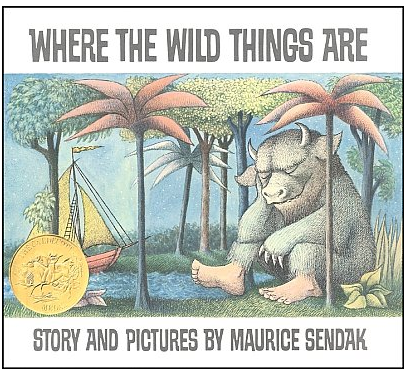
Happy 75th Anniversary Caldecott!

I’ve always loved books, and in many contexts those with fine illustrations are all the more powerful. That’s why I’m so grateful for the American Library Association’s Caldecott Medal for honoring the most distinguished American picture books.

The beloved titles are timeless – many are the same books that were read to me as I child, which I in turn read to my own children. I am confident this pattern will continue.

Listen to the story about this year’s winners here…

Industrialized Biofuels Part 2: Brazil’s Production

This post continues my discussion of biofuels from Part 1.

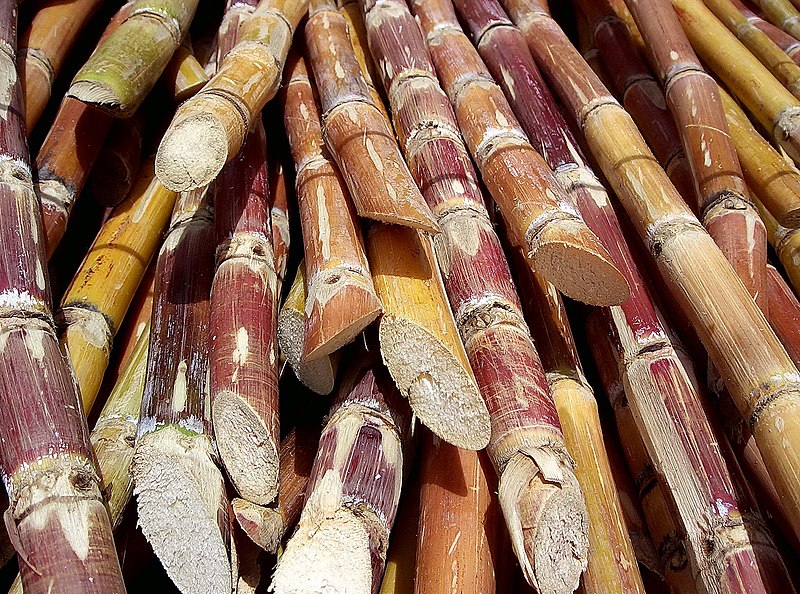
Brazil contains many of the world’s biodiversity hotspots, as well as one of the most important CO­2-sinks in the form of rainforests. As the second largest sugarcane grower in the world, Brazil’s biofuel production relies heavily on sugarcane ethanol, which has one of the highest savings in GHG emissions compared to fossil fuels. However, increasing sugarcane production is not sustainable in the long-term if one of Brazil’s goals is to curtail GHG emissions, since growing more sugarcane means cutting down more rainforest. Instead, second- and third-generation (advanced) biofuels should be considered viable options for replacing sugarcane, or at least strongly supplementing it.

Continue reading →

One Man Brand

TataEntp

We sometimes think we see his family name in too many places in India–it is impossible to go through a day without seeing the name stamped everywhere you look: on tea bags, tea cups and tea spoons; telephones on up to tipper lorries; enough!  But when attached to this man, we are always delighted to see the name one more time. Click the image above to go to the video, which runs for just under one hour.

Star-Led Little Critters

Further on the the various compasses we navigate by:

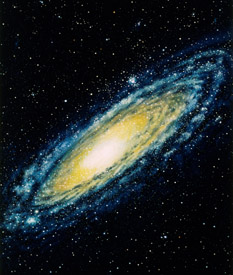
Look up at the sky on a clear, moonless night, and you can make out the broad, hazy band of the Milky Way. For the longest time, observers were unsure what the milkiness was. Celestial clouds? Tiny stars? The “fiery exhalation” of large, sublunar stars, as Aristotle proposed? In 1610, using a telescope (a recent invention), Galileo revealed that the haze is made up of individual, barely visible stars; they are faint only because they are so distant. So continued the hard process of putting us in our proper cosmic place—an orientation that only gets more disorienting with each new scientific discovery. Continue reading →

Power To The People, Dairy By Dairy

Prometheanchillerprototype

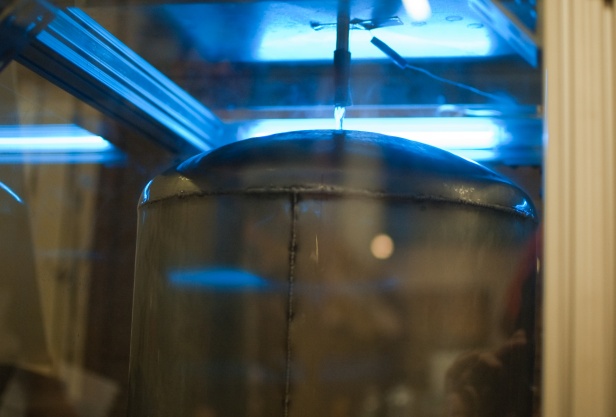
  This photo shows a prototype of Promethean Power’s thermal storage. Inside the tank is a phase-change material that rapidly chills milk when it’s poured over the surface. Credit: Martin LaMonica

The MIT Technology Review provides a readable explanation of new technology, made even more readable due to the application of that technology:

Novel Energy Storage to Chill Milk in Rural India

After a few technology U-turns, startup Promethean Power moves ahead with thermal battery to overcome unstable grid at Indian dairies. Continue reading →

Gravity and Grace

Arsenale installation from the Venice Biennale

Arsenale installation from the 2007 Venice Biennale

During a recent visit to the Nelson-Atkins Museum of Art in Kansas City I was struck by a 3-dimensional piece that combines the opulence of a Gustav Klimt painting and the earthy elegance of Ghanian Kente cloth. The comparison isn’t as bizarre as it might appear when it’s understood that its creator is the Ghanian artist El Anatsui. Over a decade ago the sculptor found a bag of thousands of colorful aluminum screw tops discarded by a local distillery. The artist began by cutting and folding the bottle tops into flat pieces then used copper wire to stitch them together, creating patterns inspired by his country’s iconic cloth. Continue reading →

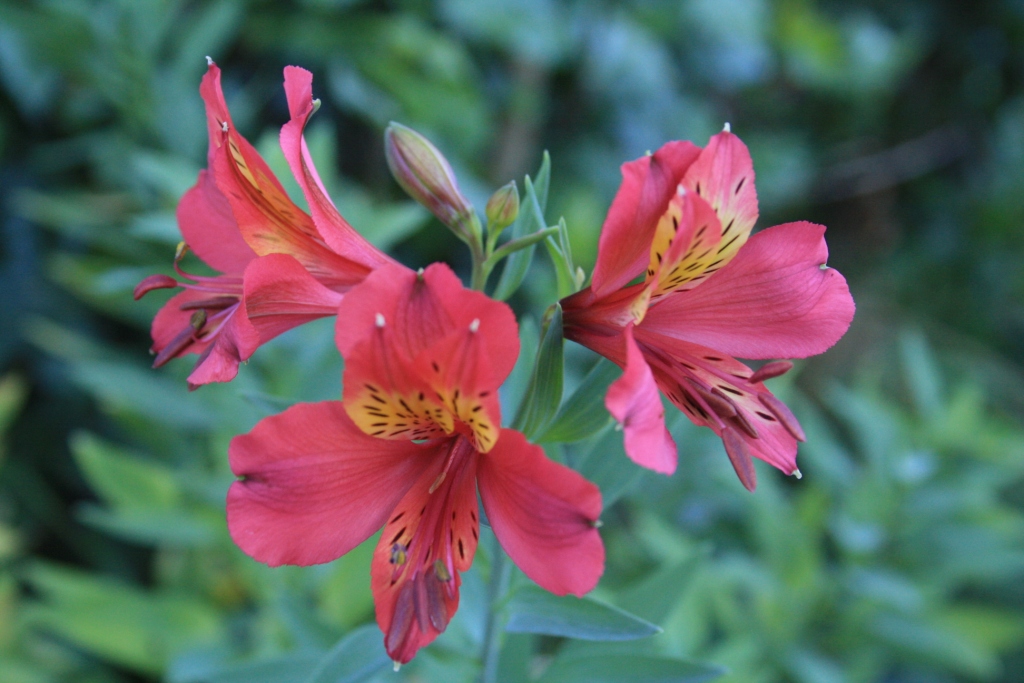
Alstroemeria – Peruvian Lily

Although native to South America, the Peruvian Lily now grows widely in India’s Western Ghats above 1500 meters. This member of the lily family blooms in a wide range of colors including yellow, orange, pink, red, lavender, purple, cream and white. Continue reading →

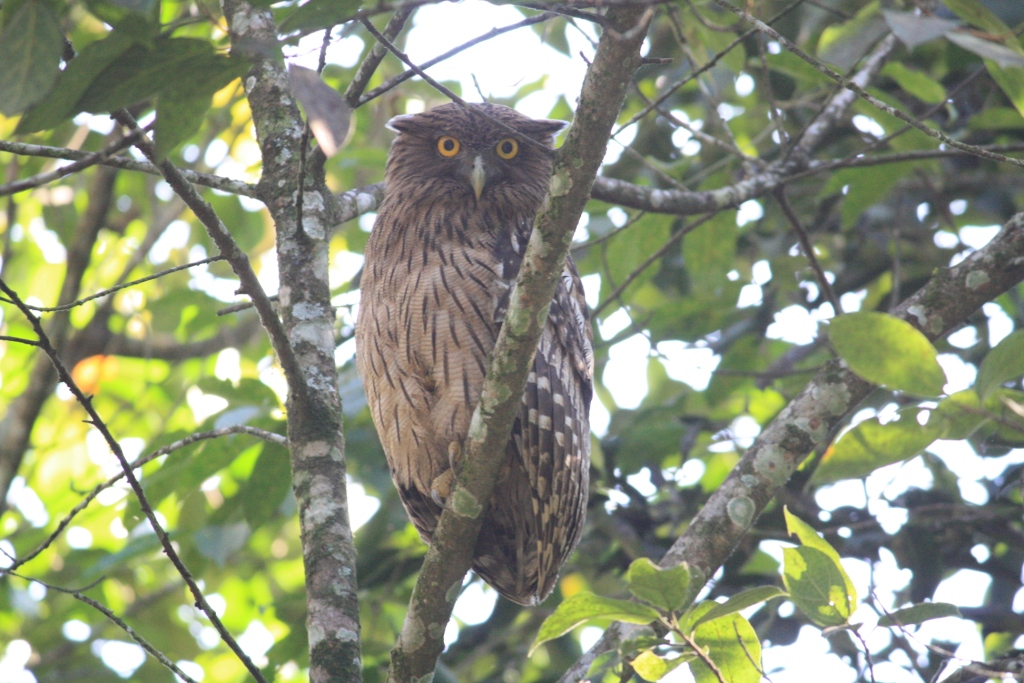
Wild Periyar- Brown Fish Owl (Ketupa zeylonensis)

Periyar’s diverse forest types and ecosystems- moist deciduous and evergreen forests, shallow banks and wet lands – attract more than 360 species of bird life. The Brown Fish Owl chooses habitats near the ponds, streams and lakes of Periyar. Continue reading →

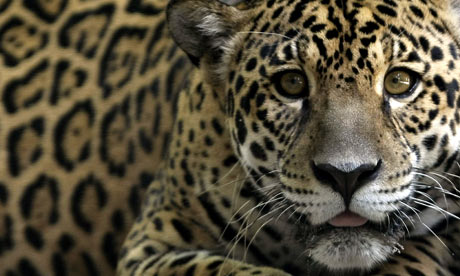
Guyana’s Jaguars

Jaguars once roamed widely from the south-western United States to Argentina, but have lost nearly half of their natural territory and have disappeared altogether from some countries. Photograph: Mauricio Lima/AFP/Getty Images

Jaguars once roamed widely from the south-western United States to Argentina, but have lost nearly half of their natural territory and have disappeared altogether from some countries. Photograph: Mauricio Lima/AFP/Getty Images

Bravo to Panthera for its achievements in the couple of years since we first learned about it in this 60 Minutes segment.  And thanks to the Guardian‘s ongoing coverage of such important topics:

The lushly forested nation of Guyana on Thursday joined a regional pact to protect jaguars, the elusive spotted cat that is the biggest land predator in the Americas but has become vulnerable as expanded agriculture and mining carves away at their fragmented habitat. Continue reading →

Fishtail Palm -Toddy Palm

The Fishtail Palm is an attractive flowering plant with fishtail shaped leaves that grows in the tropical rain forest from India to Burma. In Kerala the tree is tapped for the local kallu (toddy) and the leaves are also a favorite fodder for elephants. Continue reading →

Traveling From Carmania Toward Carsanity

car-lane

In a story first run in the Wall Street Journal, and picked up by this fantastic cleantech news aggregator, surprising news about the pace of decrease in demand for the automobile in Europe:

Increased environmental awareness does encourage some people to drive less, and travel by foot, bicycle, or public transit more often.

In 2007, 16 million cars were registered in the European Union, however, that many registrations is unlikely to happen again, and may instead drop down to 11 million registrations, which is equivalent to that of 1993 before the number of registrations stabilizes.

Read the whole story here.

Sweet Potato Tango

Ted Aljibe/AFP/Getty Images

Ted Aljibe/AFP/Getty Images

It wouldn’t be the first time that we’ve written about the “Columbian Exchange” on this site. So many of the foods now considered synonymous with “Old World” or “Asian” cuisines are actually endemic to the Americas, and according to NPR’s The Salt “anthropologists think that a few foods made the 5,000-mile trek across the Pacific Ocean long before Columbus landed in the New World.”

Sweet potatoes originated in Central and South America. But archaeologists have found prehistoric remnants of sweet potato in Polynesia from about A.D. 1000 to A.D. 1100, according to radiocarbon dating. They’ve hypothesized that those ancient samples came from the western coast of South America. Among the clues: One Polynesian word for sweet potato — “kuumala” — resembles “kumara,” or “cumal,” the words for the vegetable in Quechua, a language spoken by Andean natives.

But until now, there was little genetic proof for this theory of how the tater traveled. Continue reading →

Uniquely No Direction Home

k9660

Those of us living nomadic lives, moving from one set of responsibilities (or lack thereof) to another set in a different context, are often living by a compass we cannot quite figure out. A frequent first greeting in India, upon seeing someone who is clearly not from India, tends to be a variation on the question of where were you born. “Where do you stay?” (i.e. where is your residence at this moment) is the follow up to wondering where you are from.  “Where are you going?” is rarely of concern.  It seems understood by all that there may be no return to the place of birth, or the place where you stayed before, or other familiar places.

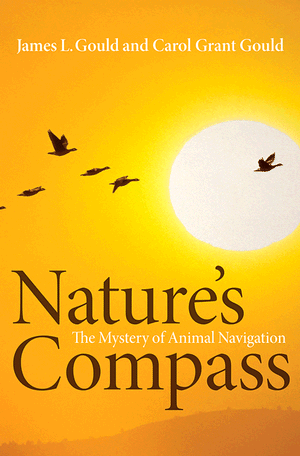
A new book surveys the animal kingdom for some remarkable examples of other creatures’ compasses. What about that cat that found its way 200 miles from an unknown location to the place where it normally lived? A review of the book in The Times Literary Supplement begins:

Curlews wing 6,000 miles, non-stop, along invisible bird-flying lanes in the sky as they travel from the South Pacific to Alaska. Spiny lobster crawl, one after the other, antennae to tail, for 30 miles along the ocean floor. Idaho salmon travel 900 miles and ascend 7,000 feet in elevation as they seek – and find – the tiny creek in which they hatched. Continue reading →
Punctilious Wordplay

_65455118_pun_rogerquimbly

Wordplay sometimes distracts or diverts attention, on purpose, for the sake of levity.  Other times, such as punning in headlines, the opposite occurs and attention is drawn to something that might otherwise have been ignored or missed. The history of the pun is not as ignoble as an English major might have thought according to this story in the BBC Magazine (click the image above to go to the story):

…”Arrant puns” were the subject of attacks by the likes of Joseph Addison, 18th Century London’s pre-eminent literary tastemaker.  He decried them as debased witticisms and exulted that they had been “banished out of the learned world”. Continue reading →