Integrated Pest Management (IPM)

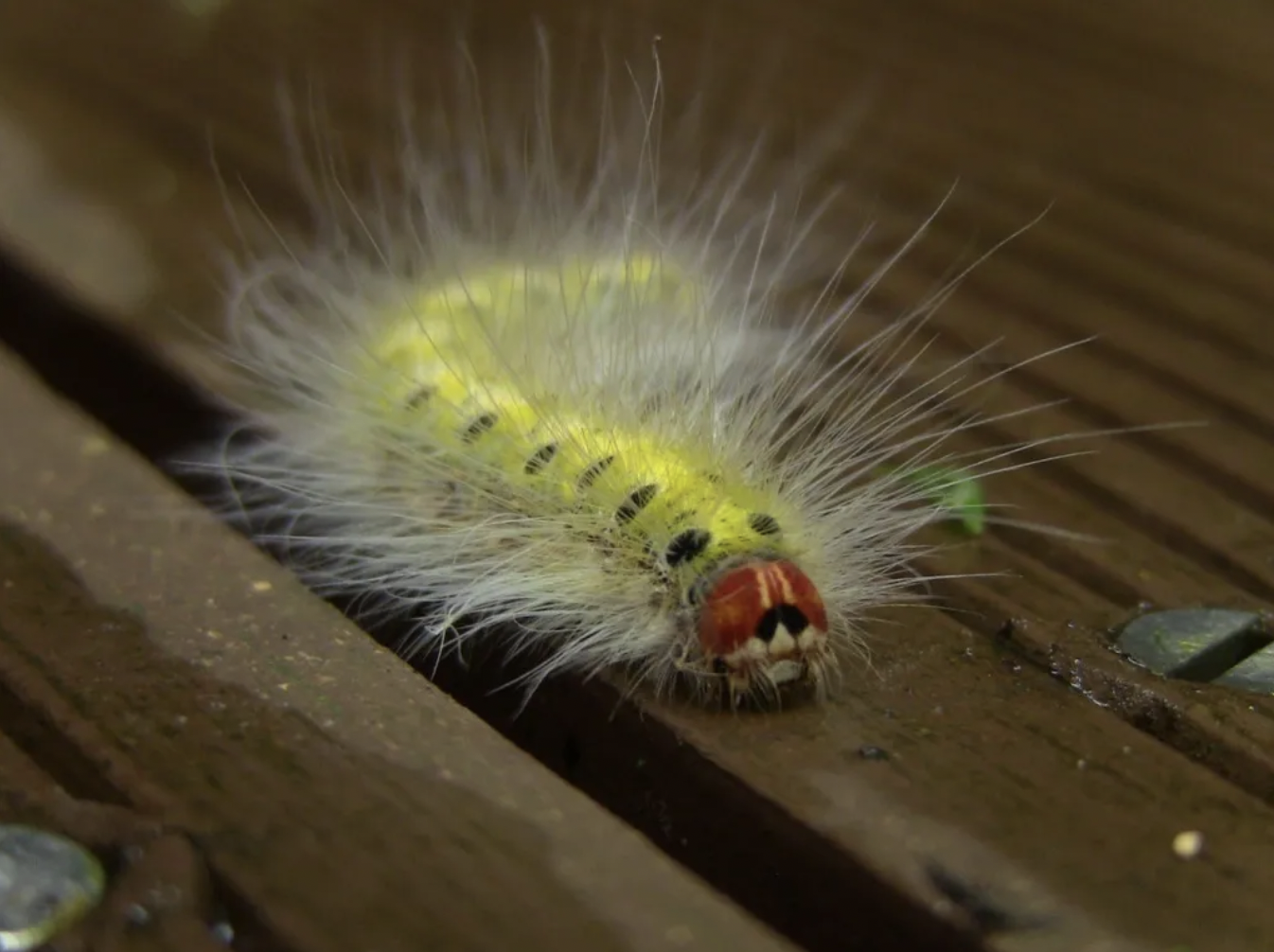
Photo by Milo Inman, India

During my last post I mentioned this agricultural strategy in passing, and I’m actually fairly surprised that the topic hasn’t come up anywhere on the blog before. After all, IPM is an increasingly effective and interdisciplinary way to curb economic losses in crops around the world, and one that often attempts to reduce reliance on environmentally unfriendly chemicals like pesticides.

Completely eliminating an agricultural pest is not the ultimate goal of IPM. In fact, due to ecological intricacies and the risks of removing certain species from an ecosystem, merely lowering the number of pests to numbers that do not cause significant economic damage is more advisable. Achieving this reduction in pest populations “requires an understanding of the ecology of the cropping system, including that of the pests, their natural enemies, and the surrounding environment,” according to Professor Anthony Shelton of the Entomology Department at Cornell University. For example, knowing that a certain pest caterpillar species has certain predator species, a farmer might introduce some of the natural predators into his crop to prey on the harmful caterpillars. If the farmer also physically removes the caterpillars by hand and the pest population dwindles to zero, the natural predators might turn to a beneficial insect, like a pollinator, or even attack the crop itself. This is a very vague and hypothetical example but one that reflects the need to understand causes and effects in an ecosystem if one is planning to employ IPM effectively.

Continue reading

Angelic Scream

British Sea Shepherd volunteer Natalie Fox. Photograph: Sea Shepherd

British Sea Shepherd volunteer Natalie Fox. Photograph: Sea Shepherd

Her leader has many admirers among our ranks, but without Natalie and others screaming for justice, the whales would not survive the fury of the fleet from Japan:

One of Natalie Fox’s most cherished memories is of kayaking just off the coast of America Continue reading

They Flew In From The Garden Of Eden

These earlier video and book posts about birds of paradise, as documented by the research and photography team from the Cornell Lab of Ornithology and National Geographic, were poignant partly because we have several contributors who work at the Lab.  But mainly because those birds are unbelievable.  So we of course cannot deny Mr. Attenborough his own spotlight with the same.

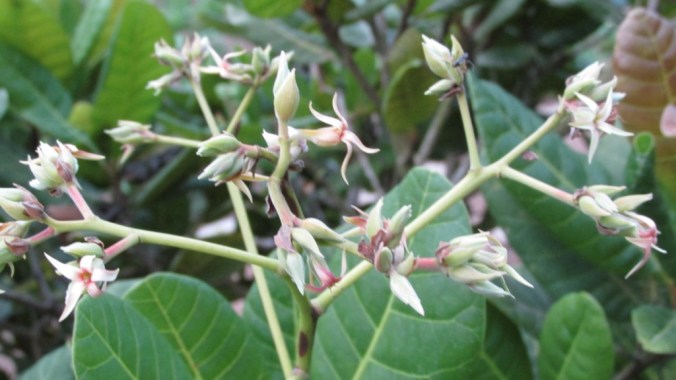
Cashew Tree (Anacardium occidentale)

Cashew is an evergreen tree growing in the tropical and sub-tropical regions of the world. Although it is native to the Americas, it is now naturalized in much of Asia and in Kerala the Kollam district is famous for the best quality Cashew Nuts. Continue reading

Bog

Photo credit: BU Dining Services

Earlier this week I wrote about an entirely different sort of swamp. This brief post is about a topic much more in tune with the holiday season: cranberries. Grown in bogs with layers of peat, sand, gravel, and clay, cranberries are native to North American wetlands (our readers across the pond will probably know the European variety of the fruit as lingonberries). In the United States they are primarily grown in Massachusetts, New Jersey, Oregon, Washington, and Wisconsin (ordered alphabetically, not by output). Something not many people may know is that these cranberry bogs are cyclically flooded with vast amounts of water every season; some might worry over the constant waste of this precious liquid in areas of major cranberry production, or the contamination of water tables with pesticides and fertilizers common to agricultural use.

But I am about to tell you about some of the advantages cranberry-growers have over other industrial agriculturalists in terms of their water utilization. Why will I share this with you? Well, cranberry sauce features prevalently in the traditions of recent holidays, namely Thanksgiving and Christmas (and was thus probably consumed in an overwhelming majority of American households at least once in the past 60 days), plus my grandparents swear by cranberry juice, but I also recently found out that cranberries–and the water they are flooded with for harvesting–make for excellent art, or sport. What I never would have guessed is that Red Bull would be the one to show me this; just watch the video below:

Continue reading

Wild Periyar – Wild Honey

Periyar Tiger Reserve is a unique habitat where nearly 2000 different species of flowering plants exist, including 515 found nowhere else. Butterflies and other uncounted insects live and maintain this wilderness as a natural wonderland. Continue reading

5 Reasons I See India’s Potential to Produce A Stararchitect

Stararchitect” conjures up a cloud of thoughts (Star architecture. Star power. Architecture as a symbol. The North Star for architectural design. Brand. Design. Fame. Architecture prowess. Household name.), but above all, I think of The Pritzker Prize. I feel like the weather channel for  announcing the next “big thing” in architecture is The Pritzker Prize. The weather channel is telling you “you better keep this in mind ’cause you’ll need that umbrella!” The Pritzker Prize is telling you “you better keep this name in mind ’cause you’ll need that knowledge to understand the state of the world you live in.”

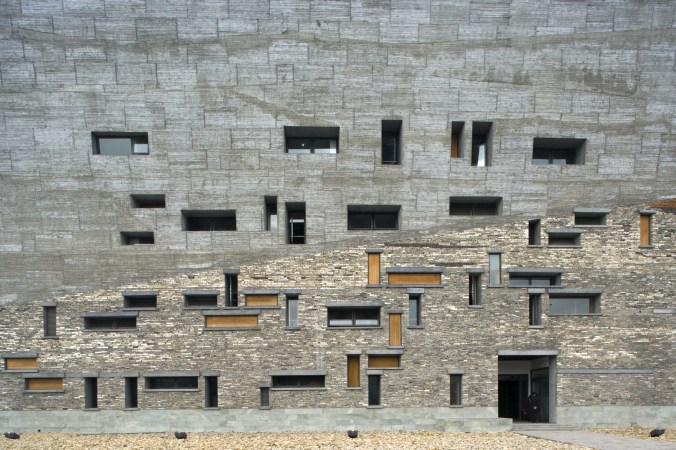
Ningbo History Museum by architect Wang Shu

Ningbo History Museum by architect Wang Shu

2012’s Pritzker Prize Laureate was Wang Shu, a Chinese architect famed for his re-use of building rubble in his designs. Expansive facades feature roof tiles and bricks from the demolished village that previously existed on that very site. The Pritzker Prize choice of Wang Shu tells us:

1.) Sustainability is important. The reappropriated construction refuse reminds us of the Three Four Rs: Refuse, Reduce, Reuse, and Recycle. It also reminds us that sustaining heritage and history is important.

2.) China is a powerful country with a powerful new identity. This is the first time a Chinese architect has been named. The closest the Pritzker has ever gone to a Chinese architect before was when I.M. Pei was recognized as a Chinese-American architect.

Detail of reused rubble in the facade of the Ningbo History Museum by architect Wang Shu

Detail of reused rubble in the facade of the Ningbo History Museum by architect Wang Shu

It’s rare to see a non-western architect. So I thought, has there been an Indian Pritzker Prize winner before?

The answer is no. (But I wouldn’t be surprised if Indian architecte Charles Correa is a nominee soon!)

While it may still be a long time before we see an Indian Pritzker Prize winner, I feel that India has the potential will definitely produce a stararchitect in the future. Here are 5 reasons why I see India’s potential to produce a starachitect.

Champalimaud Centre for the Unknown in Lisbon, Portugal by Charles Correa Architects, photographed by José Campos of arqf architectural photography

Champalimaud Centre for the Unknown in Lisbon, Portugal by Charles Correa Architects, photographed by José Campos of arqf architectural photography

5 Reasons I See India’s Potential to Produce A Stararchitect
Continue reading

Cassia – Cinnamomum tamala

Cassia is a moderate sized evergreen tree widely growing in the evergreen and semi-evergreen forests of Western Ghats. One of the  popular spices commonly used in the Indian diet, Cassia is generally considered inferior to Cinnamon, but is often used as its substitute. Continue reading

Bike, Paper, Scissors

Although not quite in the category of “Don’t Try This At Home”, it looks like this bicycle animation is much more than the sum of its laser cut parts. Artist Katy Beveridge writes that the action must be filmed to animate as it isn’t visible with the naked eye.

The final results certainly impress!

See Sophie, Support Story

Forest ranger Klaus Echle tells us about befriending a wild female fox in Germany’s Black Forest. The fox wasn’t shy, and allowed him to follow her around and take astonishingly close-up photographs.

Love of a good story is the backstory of our site.  The backstory to that backstory–from before the time of Seth’s decade-old camping experience in Nicaragua, is one I have started telling here and there and intend to continue telling in the coming weeks of the new year.  Reading and listening to accomplished authors on the topic of writing can be inspiring or daunting to the would-be story-teller with more modest telling skills.  But tell we will, if only because practice makes perfect, and in the process we will also point out as many good stories as we can find.

Yesterday guests of Raxa Collective in Kerala, visiting from the USA, shared with Amie and me their enthusiasm for a radio show and podcast called The Story.  We found it.  We loved the first story we listened to, which brought to mind my own recent wild young animal experience.  Find The Story, and Sophie’s story, by clicking the image above.

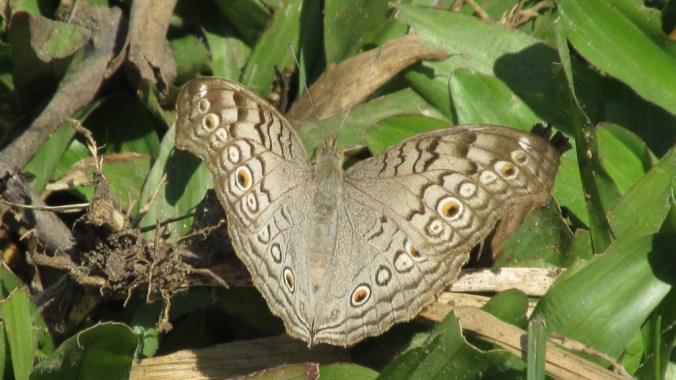
Grey Pansy Butterfly- Junonia atlites

The impressive diversity of more than 150 butterfly species in Periyar underscores the crucial relationship between plants and animals. The Grey Pansy butterfly are one of the larger varieties found commonly in the reserve, usually near riversides and open grasslands. Continue reading

Writers Write, But How?

eugenides-writer-233Hemingway was, characteristically, brief and to the point about writing: eternity, or its absence, compels. Others recommend where, or with whom, as they comment on the craft of writing. But the best, according to Eugenides, in simultaneous commendation of and recommendation to this group of writers, keep Papa’s black and white truth ever in perspective:

…To follow literary fashion, to write for money, to censor your true feelings and thoughts or adopt ideas because they’re popular requires a writer to suppress the very promptings that got him or her writing in the first place. When you started writing, in high school or college, it wasn’t out of a wish to be published, or to be successful, or even to win a lovely award like the one you’re receiving tonight. It was in response to the wondrousness and humiliation of being alive. Remember? Continue reading

Chile’s Zones Of Sacrifice

Thanks again to Oceana for countering mendacity as it impacts oceans, especially among politicians made fabulously wealthy from extraction businesses, who dare redefine the otherwise honorable word, sacrifice.  Thanks also for their educational contributions on the value of seamounts and ongoing efforts to get this law passed.