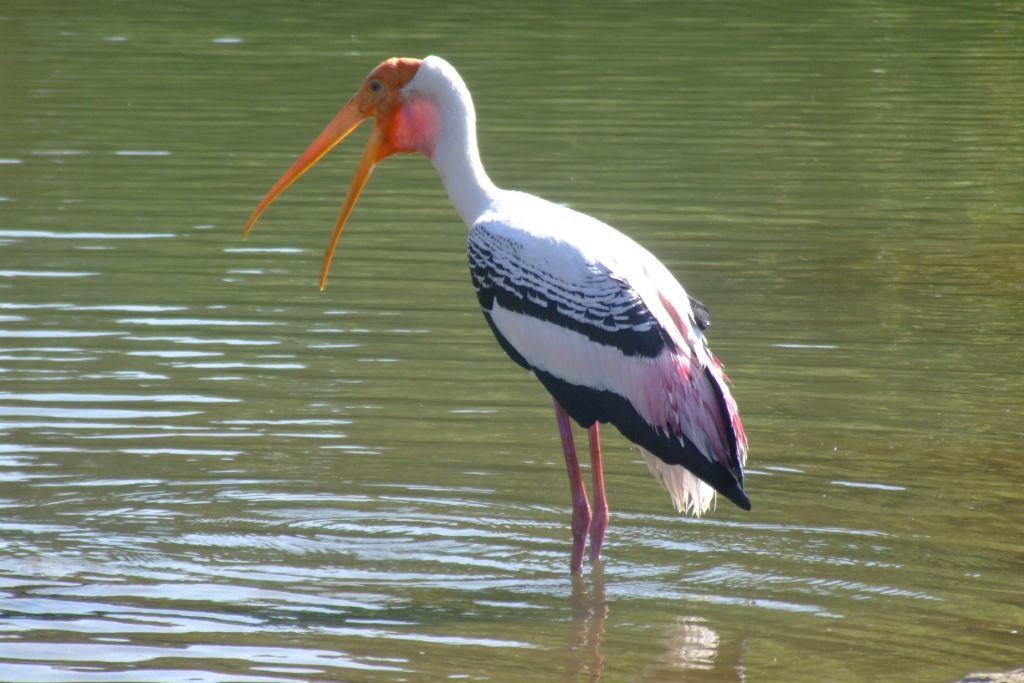
Mycteria leucocephala; Photo credit: Ramesh Kidangoor
Mysore, Karnataka
Mycteria leucocephala; Photo credit: Ramesh Kidangoor
Mysore, Karnataka

Photograph by Michiko Nakao accompanying “The Discreet Charm Of Ambient Music” from the New Yorker website’s Culture Desk
Raxa Collective, an affiliation of conservation-oriented enterprises employing 180+ people serving 25,000+ travelers each year, looks from some angles like it is in the resort business. It is. But it also is not. Among its several founders there was much discussion at the outset along the lines of: does the world really need another of those?
Not really. So it is not a resort business any more than it is a conservation NGO (which it is also not, but from some angles it might look like one), a learning laboratory (which it is and is not) or a distribution channel for ornithologically-inclined photographers (ditto).
If there were to be a book called Resort Confidential it would be an insider’s view of all that should change in the resort industry globally. We would hope to write a seminal chapter in that book. We would not want to write the whole book. We love company.
One inspiration is Brian Eno. A reminder of this is in Joshua Rothman’s review of Eno’s pioneering role in the evolution of, and his most recent contribution to, ambient music. Excerpting that review, it could be said that we hope to accomplish with our activities at Raxa Collective what “Lux” accomplishes musically:
…Ambient music isn’t like pop music. It doesn’t want the spotlight, or to conscript your body and mind. Instead, it aims to transform and divide your attention in more subtle ways…At the ideal, low volume, you’re aware of the music. But you’re equally aware of the way that it frames the other sounds you’re hearing and making: the traffic in the street, your own breathing, the keys on the keyboard, the creaks in the floorboards, the rustle of your clothes when you move. You’re also more in touch with the small inflections in your own moods. Each key change, and each new instrument, with its new timbre, is an opportunity to measure the difference between the feeling of the music and your state of mind. “Lux” is fascinating as music. But it also makes the world more fascinating. It’s a catalyst for consciousness and self-awareness…
Loving company, we invite you to sample.
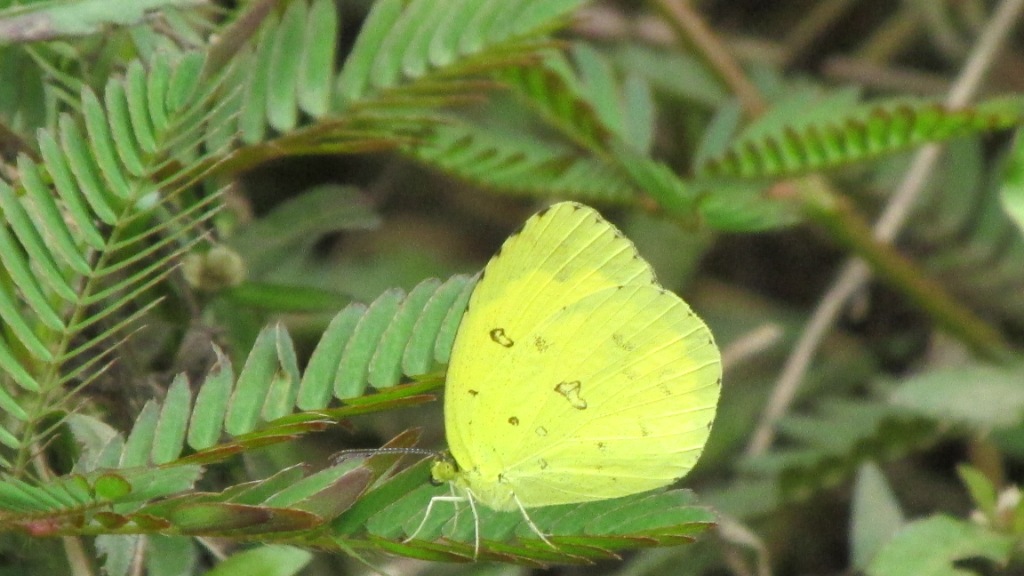
The Common Grass Yellow butterfly is one of the most common and abundant butterflies in India recognizable by its bright lemon yellow wings with black bordering on the upper side and brown markings on the lower side. The females are larger than males. These butterflies are found flying close to the ground along grassy patches.Cassia fistula, Cassia lora, Albizzia, Cassia alata, Cassia sothera and Cassia mimosoides are the favorite food plants for this species.

Click above for the video and related article from CBC News. Click here for the original source of the open letter reprinted below:
OTTAWA, ONTARIO–(Marketwire – Nov. 6, 2012) –
We, the undersigned, are independent scientists with expertise in marine biology and marine mammals in Atlantic Canada.
We have reviewed the Senate Fisheries Committee report ‘The Sustainable Management of Grey Seal Populations: A path toward the recovery of cod and other groundfish stocks’.
We call upon the Minister of Fisheries and Oceans to reject the recommendation to cull grey seals in Atlantic Canada. Continue reading

Lalbagh Botonical Gardens, Bangalore

Small segment of a German farming village showing how pervasive solar panels are throughout the country. Credit: Osha Gray Davidson, InsideClimate News
From InsideClimate News (click the image to the right to go to the full story:
I’ve come to learn about what a majority of Germans believe is their future—and perhaps our own. There is no better place to begin this adventure than the Reichstag, rebuilt from near ruins in 1999 and now both a symbol and an example of the revolutionary movement known as the Energiewende. Continue reading

Ghats Road, Idukki District
 Whether merely traveling or settling down to start new lives, American emigrants to the Western frontier held certain beliefs about the “salubrity,” or health, of the land and how it could affect their own wellbeing. Such is the subject material of Conevery Valenčius’ book The Health of the Country, which explores the realm of eighteenth-century settlers as they struggled to cope with new and changing environments—primarily in Missouri and Arkansas.
Like Ann Greene in her book about horses that I reviewed last week, Valenčius does not discuss environmental degradation or change on a scale anywhere close to some other authors I’ll refer to in future posts (partly due to the limited temporal scope of the work but also given the text’s narrower subject of “medical geography”), but both The Health of the Country and Horses at Work share the distinction of being a creative sort of environmental history that readily utilizes some of this new field’s best characteristics: use of interdisciplinary evidence and modes of analysis, reconstruction of past landscapes through culture (e.g. myth, law, perception) and science, and concentration on the two-way discourse between man and nature.
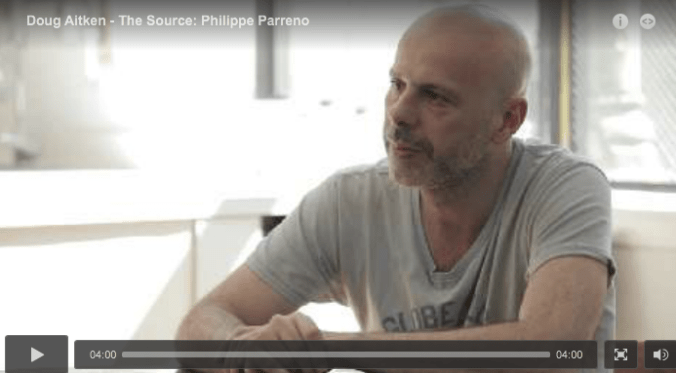 Artists of many varieties stay mum about their craft and intent, perhaps for reasons best captured in these words. Whether you are interested in the arts or not, the individual pieces in this video installation provide a unique view into the process of creativity–a subject any of us can make use of, or simply appreciate. Click the image above for the video.
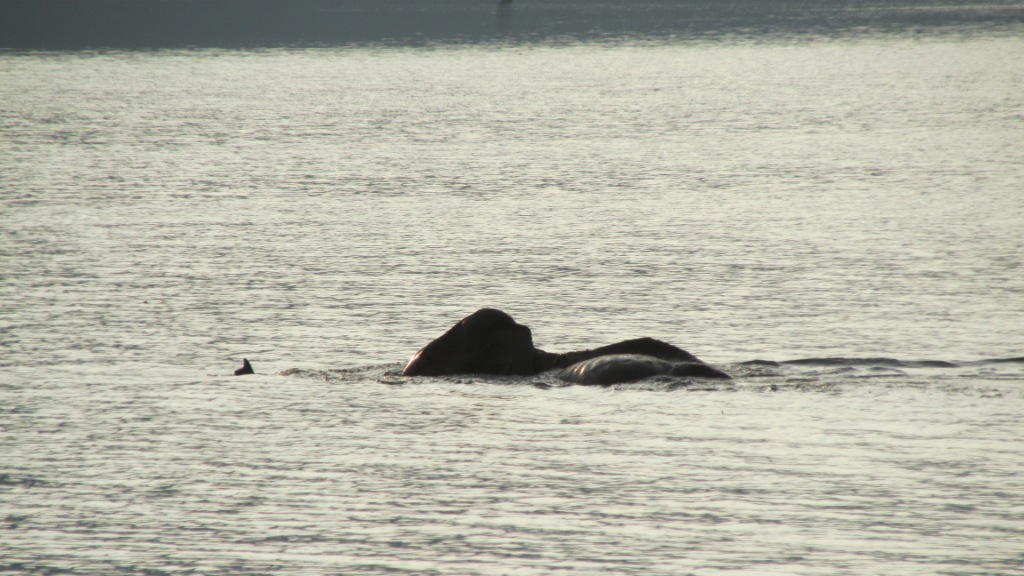
Although the Periyar dam reservoir had cut off the traditional migratory paths of elephants way back in 1899, four years after construction of the dam had started the world’s largest land animals had learned how to overcome the watery impediment. Entire herds, calves in tow, now routinely swim across the reservoir, presenting lucky visitors with one of Periyar’s more unforgettable and thrilling spectacles.
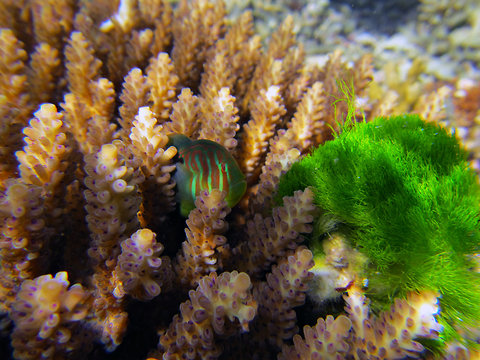
Danielle Dixson/Georgia Tech. Gobidon histrio, a goby fish species, protects coral from the menacing seaweed Chlorodesmis fastigiata.
Click the image to go to the story at Green Blog:
In the waters surrounding the Fiji Islands, the coral reef has vigilant defenders. Researchers have discovered that when alerted by chemical signals transmitted by corals, two resident species of the goby fish will swing into action and limit a growth of seaweed that contributes to the bleaching of precious reefs.
The gobies, inch-long gemlike creatures, report to the affected areas of the corals and nibble the aberrant seaweed back into place, making it look “like somebody went out there with little hedge trimmers,” said Mark Hay, a marine ecologist at Georgia Tech. Continue reading
 We pay homage from time to time to the forefathers of our own interest in the more modern entrepreneurial conservation. Here is a lesser known, but no less important, figure in that pantheon. Click the image to the left to go to the full story:
Ask a room full of conservation biologists who they like more, Darwin or Wallace, and Alfred Russel Wallace will win every time. While Darwin is respected, Wallace is revered. More than 800 new species have been named for Wallace, and for Darwin, around 120.
Thursday, Nov. 7, marked the 99th anniversary of Wallace’s death and started the countdown to 100th-anniversary celebrations in Britain, Mexico and Malaysia. Continue reading

Sambar Deer is one of the dominant deer species in the Periyar Tiger Reserve and an important food source for the three sympatric large carnivores – Tigris, Leopard and Dhole (wild dogs).

We find the simplicity–analyze the evidence; note the danger; take action–compelling. A sister organization here in India takes a similar approach. Click the banner above to add your dot-connecting to the collective action:
We’re connecting the dots between extreme weather and climate change.
Stay up to date with rapid-response campaigns by signing up at 350.org, submit your local stories to the Connect the Dots Tumblr, and find out if there’s a local 350 group in your area.
Commercials can occasionally be worth the viewing. Some of us have been viewing this ad for decades now, and still coming back to it for inspiration. No high minded intent on the ad above–just good clean fun.

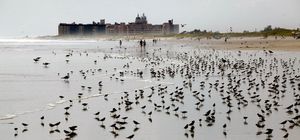
We have learned plenty of new things about birds in the wake of recent storm news, and today yet more from one of our favorite science writers. Click the image to go to her story in the New York Times:
…biologists studying the hurricane’s aftermath say there is remarkably little evidence that birds, or any other countable, charismatic fauna for that matter, have suffered the sort of mass casualties seen in environmental disasters like the BP oil spill of 2010, when thousands of oil-slicked seabirds washed ashore, unable to fly, feed or stay warm. “With an oil spill, the mortality is way more direct and evident,” said Andrew Farnsworth, a scientist at the Cornell Lab of Ornithology. Continue reading

Photo Credit: Janna Crafts; Fort Kochi
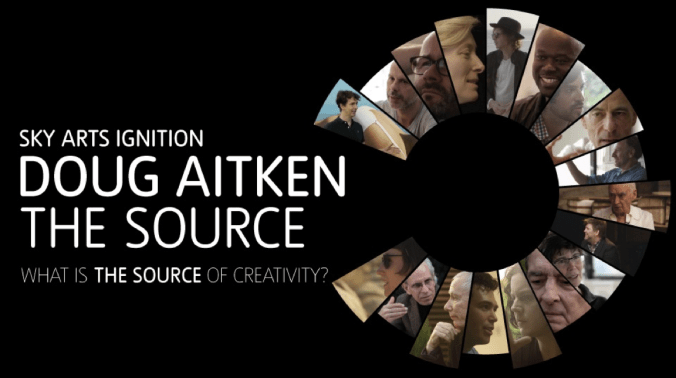
Click the image above for more information on the exhibition. In case you cannot make it there in person, click the link below to see Doug Aitken’s films:
Tate Liverpool: Exhibition 15 September 2012 – 13 January 2013. Films from Doug Aitken – The Source will be published in the Channel each week… Continue reading

These trees are very common in the moist deciduous forest of the Periyar Tiger Reserve, widely growing up to 850 meters in South Indian forests. These trees bloom from August to December with flowers that are white in colour and turn to red as they fruit.

