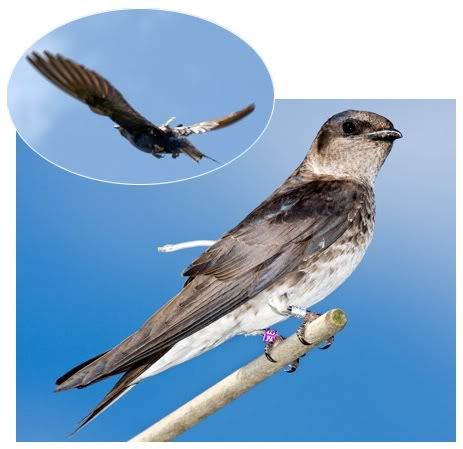
A banded adult purple martin wearing a light logger geolocator. Source: Patrick Kramer and Tim Morton, ScienceMag.
In the time it takes each of us to drink a cup of coffee, acres of tropical forest are cut down. Over the past thirty years, more than half the traditional coffee farms in Latin America have been converted to a newer growing method for higher production. Since the 1960s dozens of migratory bird species from northeastern United States have experienced long-term chronic declines in population size, with few signs of leveling off.
All these events are connected. Deforestation is occurring around the world faster than ever for plenty of reasons, but one of the most widespread and impactful ones is agriculture, and sun coffee (that is, coffee not grown under shade but in huge fields with pesticide, herbicide, and fertilizer assistance) is becoming more common to increase yields in the very same countries where North American migratory birds stay for their winters. But more about sun coffee and its negative ecological impacts later.