Socially Mediated Discovery

This Green Lacewing is an entirely new species, discovered in a set of Flickr photos. (Photo: Species ID/Guek)

Click the banner above for a link to a publication we have just come across that looks quite interesting. Click the photo above for the source of the discovery explained in this story (quoted below).  There are still plenty of flora and fauna that have not been identified.  One of the hopes of nature conservation is to get further down the path to identifying and understanding all our co-habitants on this planet. It should come as no surprise that social media and photographers like Hock Ping Guek play a critical role in this race against time:

The lacewing Guek had photographed in May 2011 was quite distinctive. Beneath long antenna sat its bulbous, iridescent eyes in front of a turquoise thorax supported by six translucent legs. Continue reading

Blue Mormon Butterfly

Blue Mormon Butterflies are commonly found in and around forest paths, streams, lake sides and forest patches of the Western Ghats. Female butterflies are usually larger. These butterflies are endemic to the Western Ghats and Sri Lanka. They can be found flocking around nectar rich blossoms such as Ixora and pagoda flowers

Continue reading

Note To Maggie

August 14, 2012

Dear Maggie,

We got so busy that we neglected to notice your work and its wonderful home until just now.  I may have heard someone say boingboing before, but I did not know what it meant.  Now I have one data point to help me understand it.  It looks in spirit and even in content much akin to our own style and interests on this site.

If work brings you to India, or any of the other locations where you see contributors on this site, please let us know.

Regards from Kerala,

Crist

p.s. we like your other site too. Continue reading

Mind Your Food’s Aquifer

Click the map for the brief review of what looks to be an important paper published in the current issue of Nature (which requires subscription for the entire article so this review in the Science section of the New York Times is important for non-subscribers).  For some, the constant reminders are tedious.  We appreciate them nonetheless because it is so much easier to forget, ignore, pretend otherwise that water is an infinite resource.  Not only is it finite, but solving this puzzle may be the next most important thing for mankind to get right:

The study underlines a problem that scientists have already pinpointed: that the demand for groundwater in several major agricultural regions of the world is unsustainable. Continue reading

The Final Bird Club Meeting

Screen Shot 2020-08-14 at 11.03.31 AM

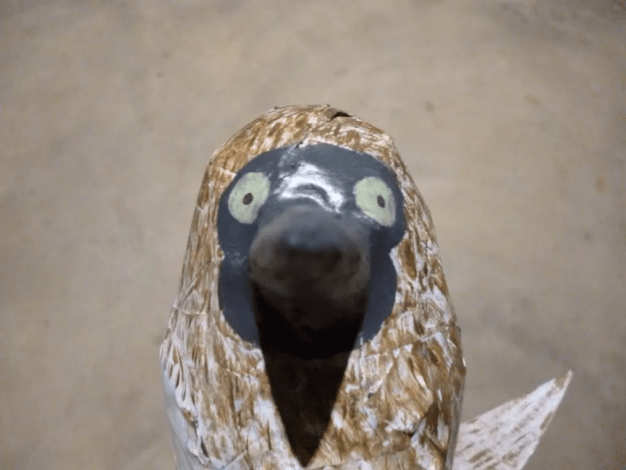
Last Wednesday was the final day the Union Educativa Modelo Tomás de Berlanga Bird Club would be gathering under my supervision. In the end, I was never able to get the papier-mâché project off the ground for most of the kids – two students did end up making penguins, but forgot to bring them to this last day to attach body parts and spray the final product with a protective varnish, and my hosts’ son painted a bird I made (looks like a male frigatebird). The photo above is of the Blue-footed Booby I made for my host family.

Continue reading

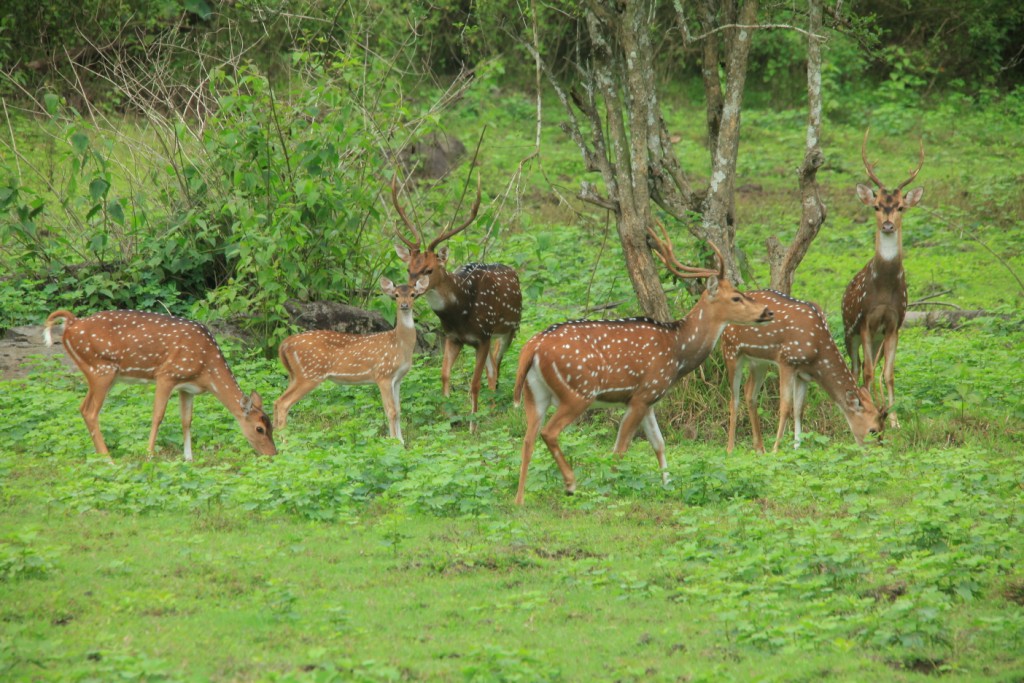
Spotted Deer (Axis axis)

Spotted Deer are commonly found in the dense deciduous semi-evergreen forest and open grass lands of India, mostly seen in large herds. Their life span is about 20-30years. They are the most common deer family in India with a habit across the entire country except in the northern region. As they are the favorite prey of leopards and tigers spotted deers are very nervous animals and are always on the look out for any approaching danger. Continue reading

Are Cormorants Evil?

Funny to see this headline at the same time as Martin’s photo just published; not to mention previous posts of Cormorants from time to time.

With a nickname like Black Death (click the headline for the full story), it seems some think of these amazing birds in quite strong, negative terms; they sound evil.  Are they? Of course not.  Just providing a little friendly competition to those with rod and reel:

Known to anglers as the Black Death, the cormorant is a killing machine that can swim two minutes underwater and diving 80ft. In China, fishermen hunt with trained cormorants, but in Europe the protected species is a hated rival, blamed for emptying rivers of fish.

Anglers have been petitioning the government to do something about the birds for more than a decade. But a perception that cormorant numbers are now out of control has resulted in a clamour for unprecedented action.

Nepalese Agricultural Technology

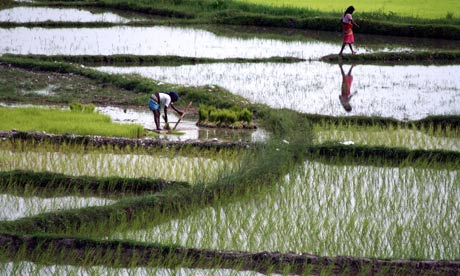
Women work at a paddy field at the village of Bamundangi, eastern Nepal. Photograph: Dipendu Dutta/AFP/Getty

Click the image above for the story about how life is changing in Nepal’s paddy:

Most of Nepal‘s agriculture is undertaken by women, but research tailored to their needs is lacking. “We need new technologies that can reduce the drudgery for them,” said Devendra Gauchan, agricultural economist and chief of the socioeconomics and agri-research policy division at the Nepal Agricultural Research Council (Narc). Continue reading

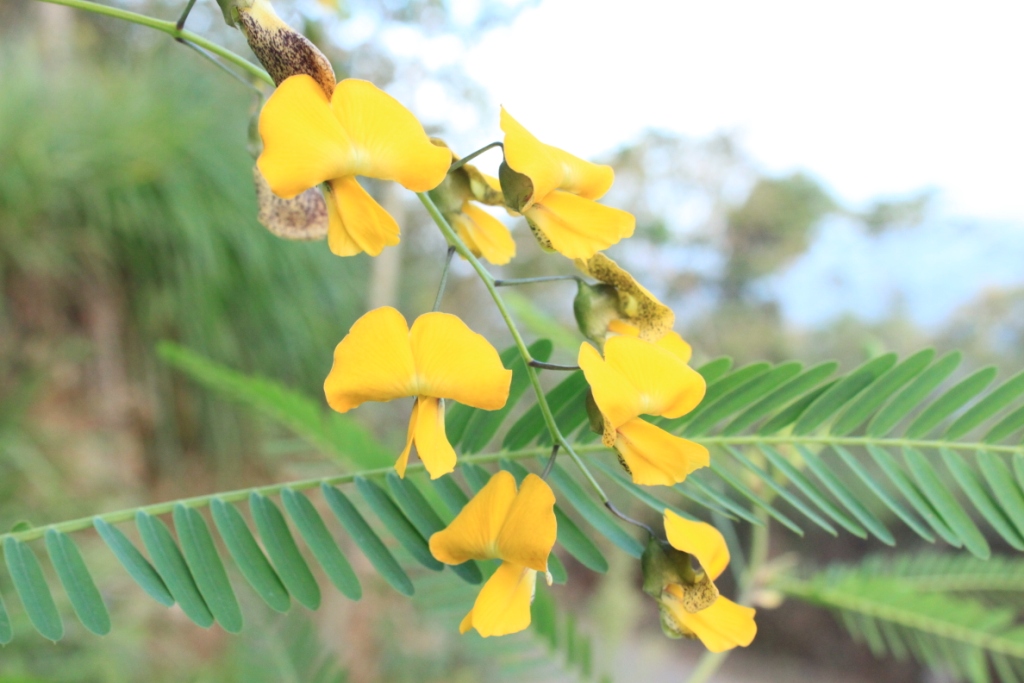
Sensitive Smithia (Smithia Sensitiva)

Sensitive Smithia is a low growing shrub found in and around the Western Ghats up to 1200 meters above sea level. It is flourishes along the roads as the monsoon trails off. The leaves are slightly sensitive to the touch, hence the name. The plant is enjoyed in multiple ways; bees feed off the the nectar of the flowers and people cook and eat the leaves and shoots as well as using other parts for Ayurvedic medicine.

Continue reading

Water Recycling 101

Given these acute demands for water and constraints on current — and likely future — availability, Grant said, “the real alternative, the really only alternative, is to improve what’s called water productivity, which is essentially the amount of value services that are achieved with a given unit of water.”

Click the headline for this accessible explanation of a very complicated challenge.

Thoughtful Rejoinder

Not surprisingly, The Guardian provides a second opinion on a critically important topic:

The new discourse about “natural capital” is seen by some as another step towards the degradation of the biosphere. George Monbiot wrote in such terms this week.

He argued:  “Rarely will the money to be made by protecting nature match the money to be made by destroying it. Nature offers low rates of return by comparison to other investments. If we allow the discussion to shift from values to value – from love to greed – we cede the natural world to the forces wrecking it.”But to paint such a one-sided picture is a dangerous game.

Turk’s Turban (Clerodendrum Indicum)

Turk’s Turban is a tall shrub with long, narrow, pointed, oleander-like leaves that grows wild throughout India along roadsides, cultivated areas and near human dwellings. Caterpillars of the common silverline butterfly and Death’s Head Hawkmoth feed on these plants. The roots and leaves are used in Ayurveda medicines. Continue reading

Communitarian Is As Communitarian Does

Thanks to one of most thoughtful, witty writers at The Atlantic or any other similar publication, a glimpse of an unsung hero who has community and collaboration written all over his accomplishments (toward the end of the linked item, click further onward to a profile of this amazing fellow from a few years back):

The profile also reminded me what a thoroughly decent and public-spirited guy Tim Berners-Lee is. Sometimes people who do great things turn out to be jerks, but he definitely isn’t such a case. One other thing Tim Berners-Lee isn’t is fabulously wealthy–and finding out why he hadn’t taken the road to riches (and that he almost had) was for me one of the more interesting outcomes of this reporting project.

This Guitar Sounds Better

Thanks to the Dot Earth story above (click the headline to go to the story) we learned not only more on the ongoing story of Gibson’s  illegal sourcing of endangered wood species from developing countries for its guitars, but learned about this other company.  Mr. Taylor talks straight, without being preachy, about the challenge of sourcing good wood for great guitars:

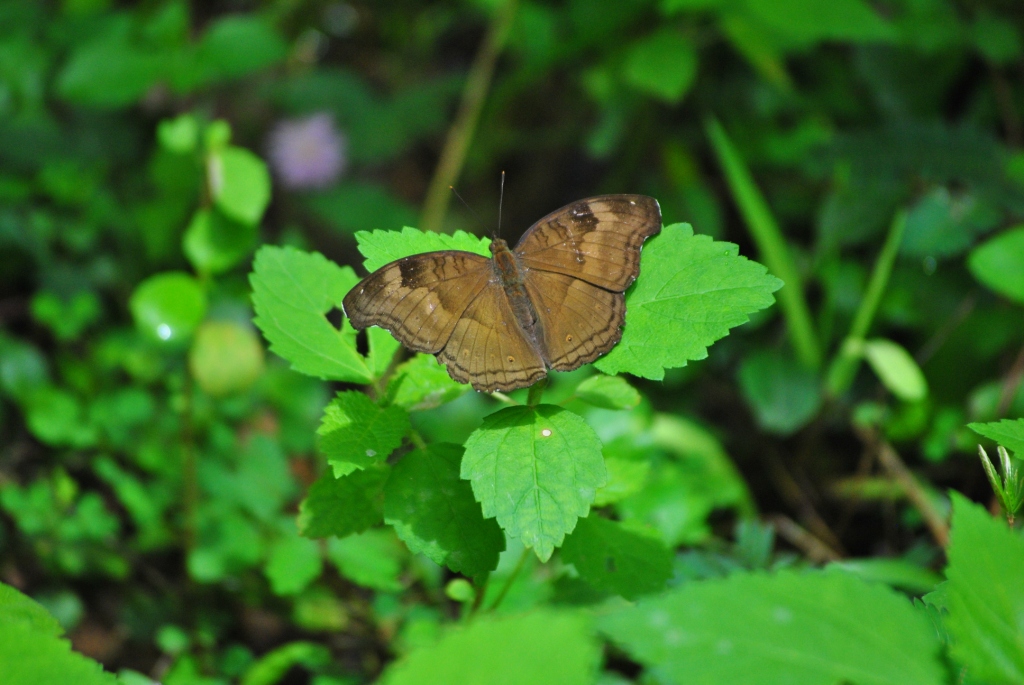
Chocolate Pansy (Junonia Iphita)

Chocolate Pansy butterflies are common in nature reserves as well as urban areas. These butterflies have the habit of opening their wings wide to sunbathe while resting. The wings of this butterfly are chocolate in colour with small eyes spots on their lower side.

Continue reading

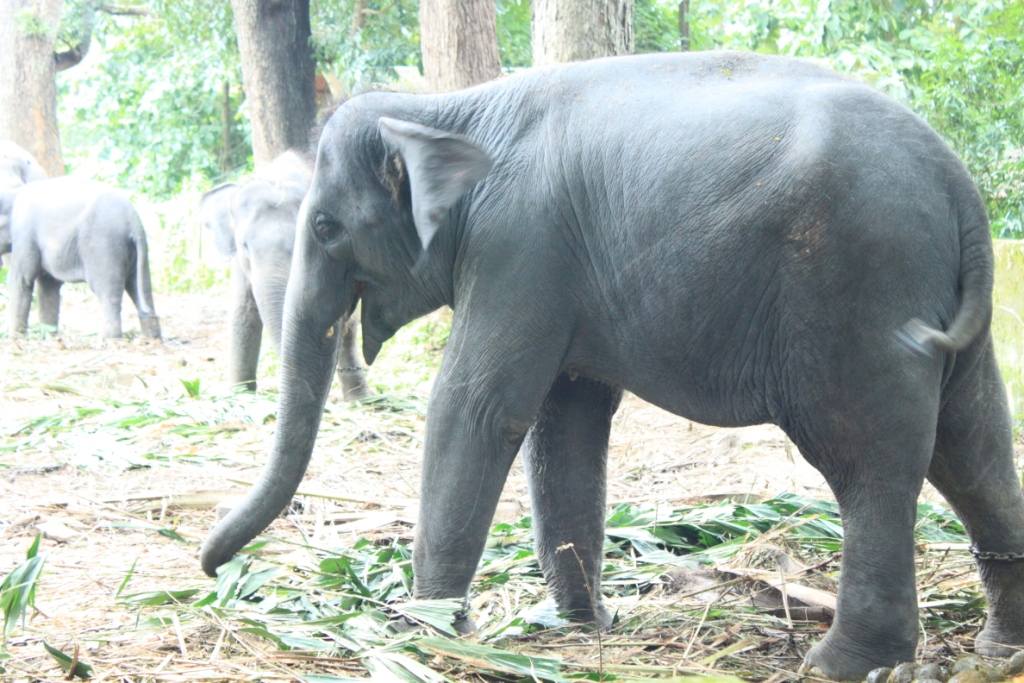
Kodanad Elephant Training Centre

Kodanad, one of the largest elephant training centres  in South India, is located 40 km from Cochin in the high ranges near the southern bank of the Periyar River.  In the past elephants where captured from the adjoining forest and trained there. The capture of wild elephants was banned in 1977 so now the center is used for only for training.  The pachyderms receive training for participation in temple festivals, one of their primary works in the region.

Continue reading