 The images after the jump are from here and first came to our attention in the Guardian story (click the headline image to the left), which follows a recent interest we have taken in these mercilessly misunderstood and under appreciated wild creatures. Seth’s recent post begins a new vein in our conversation about marine conservation (for
that wait for 2/2 in that series).
Black – Eyed Susan Vine (Thunbergia Alata)

The Black Eyed Susan vine is native to tropical countries and naturalized in India. The twiner is often seen among hedges as well as on the ground. The leaf paste of this plant is used in traditional medicine. It is commonly grown in gardens, plains and hills.
Bird of the Day: Rufous-collared Sparrow

Cordillera Central, Dominican Republic
A Perfect Sendoff and a Nostalgic Farewell
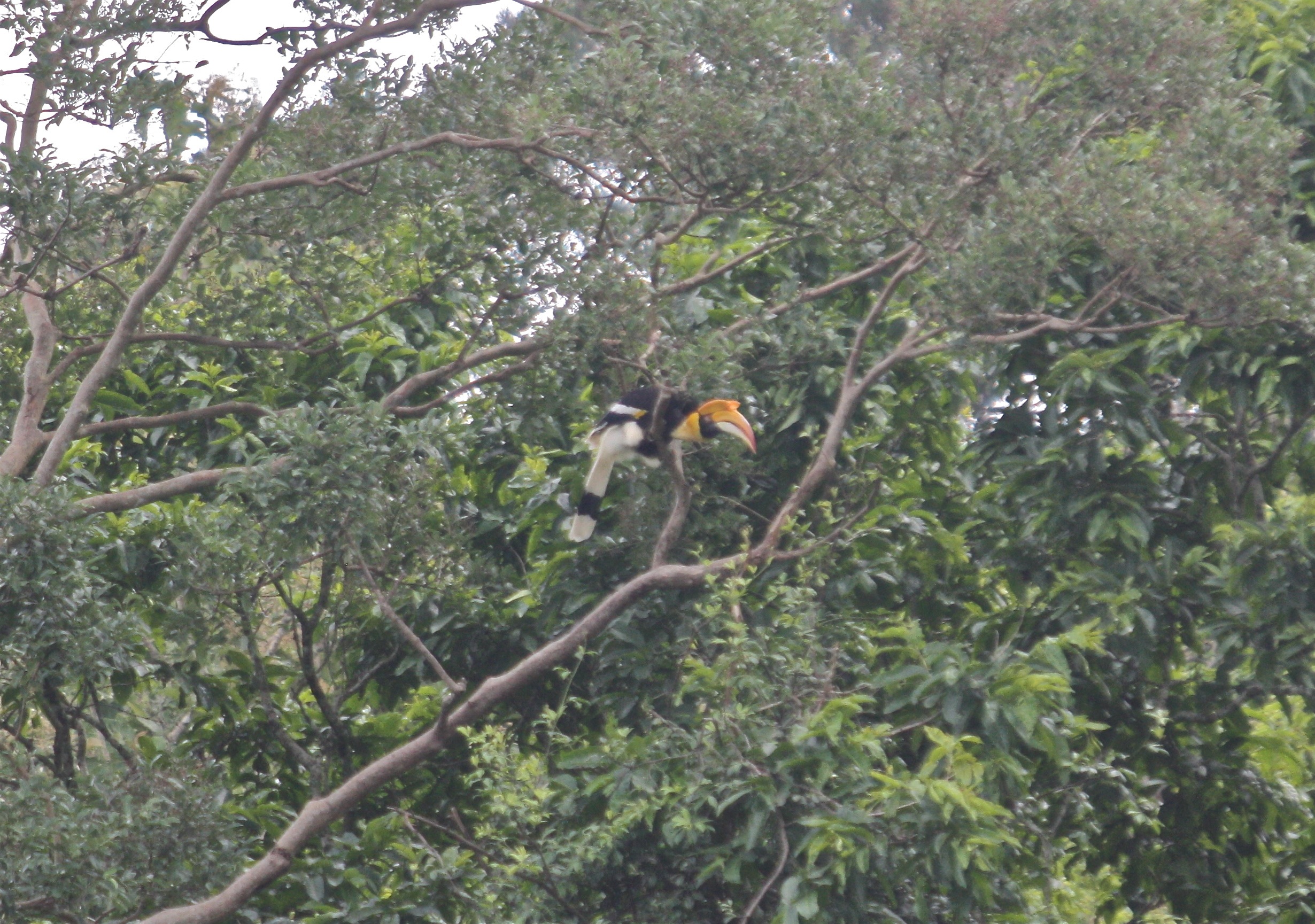
It is amazing how fast ten weeks can go by. I remember sitting in the library at Cardamom County writing about my first day of birding here; I remember how excited I was to see barbets, minivets, and leafbirds from the parking lot. Now, ten weeks later with about a dozen activities completed and many birding expeditions into the Periyar Tiger Reserve under my belt, I’m suddenly looking back on fond memories. My first excursion into Periyar was a Bamboo Rafting trip along Periyar Lake. To be honest, I was a little overwhelmed in this strange new place with its checklist of over 300 unfamiliar birds. As is always the case with Periyar, the excursion was a blast, and that trend continued with the Border Hike, the Nature Walk, the Tiger Trail, the Green Walk, and indeed with every trip into the Reserve.
Thank You, North Carolina

Of course, thanks to the individuals who made the direct effort to make this project possible. Click the image above to see the visuals they produced, and click here to see those individuals. But North Carolina’s citizens, whose taxes make the University’s operations possible, deserve our thanks too:
Our 2012 Fellows present a Powering a Nation special report, “100 Gallons.”
“100 Gallons” explores how our most critical resource goes far beyond traditional power. More than fossil fuels, commerce or industry, water powers life. Continue reading
Rock Balsam (Impatiens Acaulis)

Rock Balsam is native to Peninsular India. It grows widely in the Western Ghats, occurring in small or large clusters in the hills up to 800 – 2400 meters on wet rock faces. The lavender flowers are showy and stand out daintily from the rounded heart-shaped leaves.
Bird of the Day: Eurasian Hoopoe
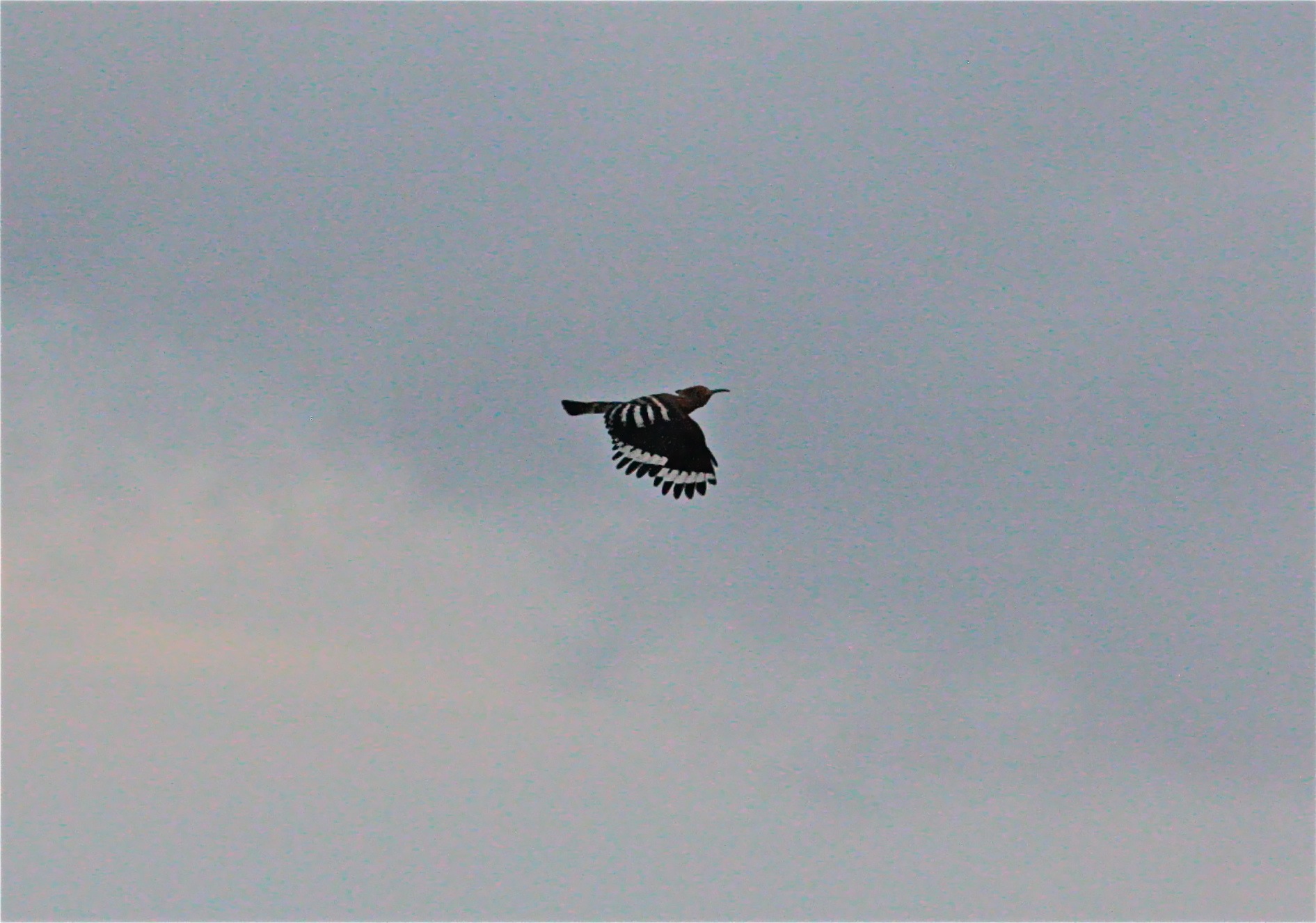
Tamil Nadu, India
Bird of the Day: Red-tailed Hawk
with a rat – Brook Run Park, GA
Connecting Over Competition
Guest Author: Siobhan Powers
I’ve been staying in the beautiful backwaters of Kerala for the past few days, which has put me at ease as I always feel more comfortable by the water. Jonathon and I took some time out of our workday to take a walk and get a feel of the area, including all it has to offer, both culturally and agriculturally. We interrupted the construction of a stone wall surrounding a rice paddy field and watched a young boy catch fish in a stream at the side of the narrow road. In the heat of the Indian sun’s rays, we contemplated buying ice cream, but, on our return, settled on the universal refreshing thirst-quencher that is an ice-cold cola.
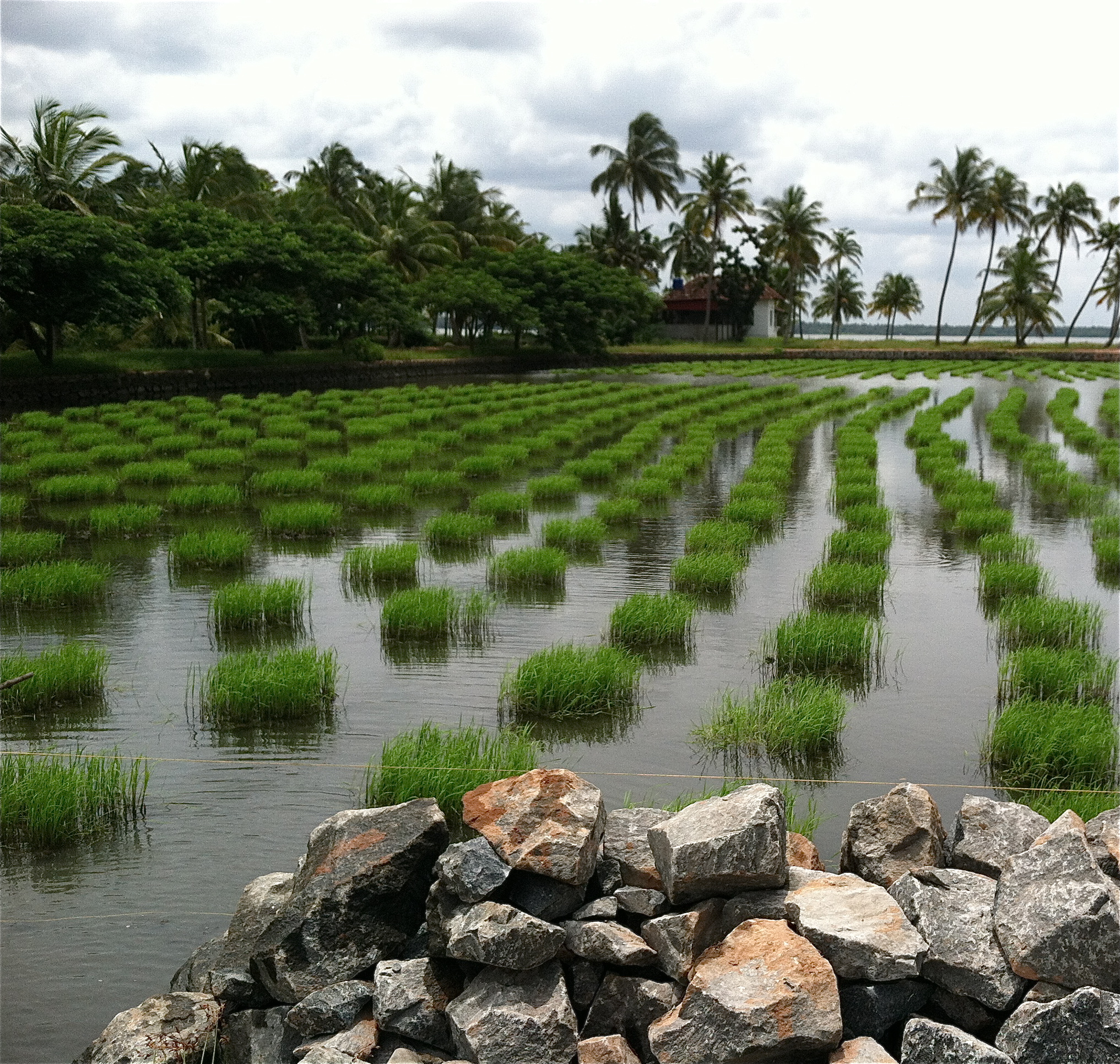
Rice paddy in Panangad
50 Years Onward, Progress Via Anthropology
Anyone born in the USA between 1930 and 1970 would recognize the two CBS journalists in this brief documentary. Some born elsewhere in that period might recognize them as well. Probably few outside small towns in Central New York and Central Peru would recognize the name of the professor featured here.
So That Men Are Free McGraw-Hill Films (1963) Reporter: Charles Kuralt Presenter: Walter CronkiteI’m Walter Cronkite. We take you to one of the remote areas of the world to the high Andes of Peru. CBS News correspondent, Charles Kuralt reporting…The seeds came here in the head of an anthropologist, a man usually the observer, not the creator of change. Dr. Allan Holmberg of Cornell University…
Kovalam Beach

Kovalam lies 16 kms south of Thiruvananthapuram, Kerala’s Capital. Three crescent shaped beaches surrounded by rocky outcroppings form the main attraction of this coastal resort. The coast is backed by steeply rising headlands covered in verdant coconut palms, especially the southernmost Lighthouse Beach. The green hinterlands provide a refreshing backdrop to the white sandy beaches, offering privacy and seclusion.
Meaningful News
Click the Guardian banner to go to the welcome news’ story told in the slide show pictures below it:

Bird of the Day: Black-Crowned Night Heron (Palm Springs, CA)

Wadi Feynan’s Copper Mines: Part I (History)
Wadi Feynan was one of the first 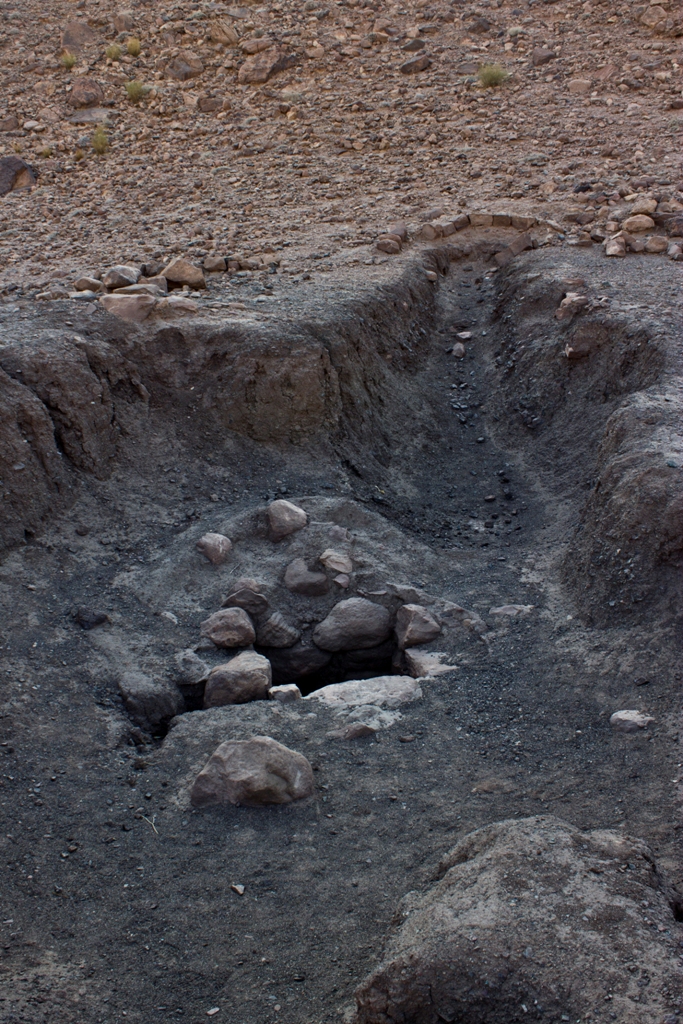 places in the world where copper was mined and smelted by humans, which when
paired with one of the first Neolithic settlements in the world, makes Feynan an extremely important area in terms of prehistoric human development. Few places in the world can boast this sort of historical wealth – and visitors to Feynan can journey into the past with or without a guide. From the first bit of ore extracted to the collapse of the Roman Empire to the 20th century, copper mining has been a major aspect of human settlement in these valleys. Innumerable shafts have been opened, collapsed, reopened, and abandoned using a wide range of methods and technologies. Today, guests at Feynan Ecolodge have the chance to venture into the past by walking or biking to these historic sites nestled in the rocky foothills of the Dana Biosphere Reserve – and learn about their historical significance. Continue reading
How Big Is A Billion?
Community, collaboration and conservation are the categorical things–ideas, actions, examples–that we most like to talk about on this site and point to with links elsewhere. Still, perhaps half of the posts here would be hard pressed to fit into those categories in any literal sense. This little item below, for example. Two guys talking about cultural differences in mathematical expression. Go figure.
Pineapple (Ananas Comosus)

Pineapple is one of the most popular fruits worldwide and it’s widely cultivated throughout Kerala. The flesh and juice of this fruit are used in various of the state’s cuisines. During season it’s not uncommon to see them by the truckload on road sides.
Street Level Perspective

Thanks to Mr. Krulwich for the investigative wonderland his sciencey (and artsy) blog is. Click the banner for a great series of photos and explanation for the wonders.
Bird of the Day: Zumbador Esmeralda

Cordillera Central, Dominican Republic
Crowdsourcing Wildlife Sightings
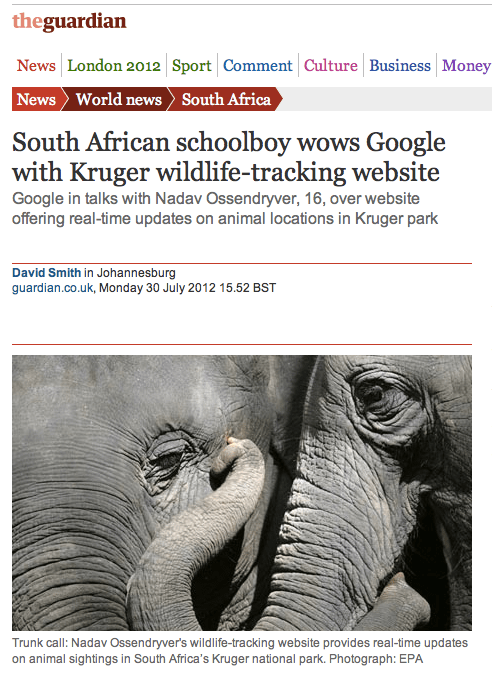
Yesterday’s Guardian had this interesting story of a young fellow’s innovation (click the image above to go to the full account):
In the decadent days when Theodore Roosevelt and British royals led African hunting expeditions, they had to rely on local trackers, patience and luck in their quest to bag “the big five”. Continue reading
My First Scuba Dives in Galápagos (1/2)
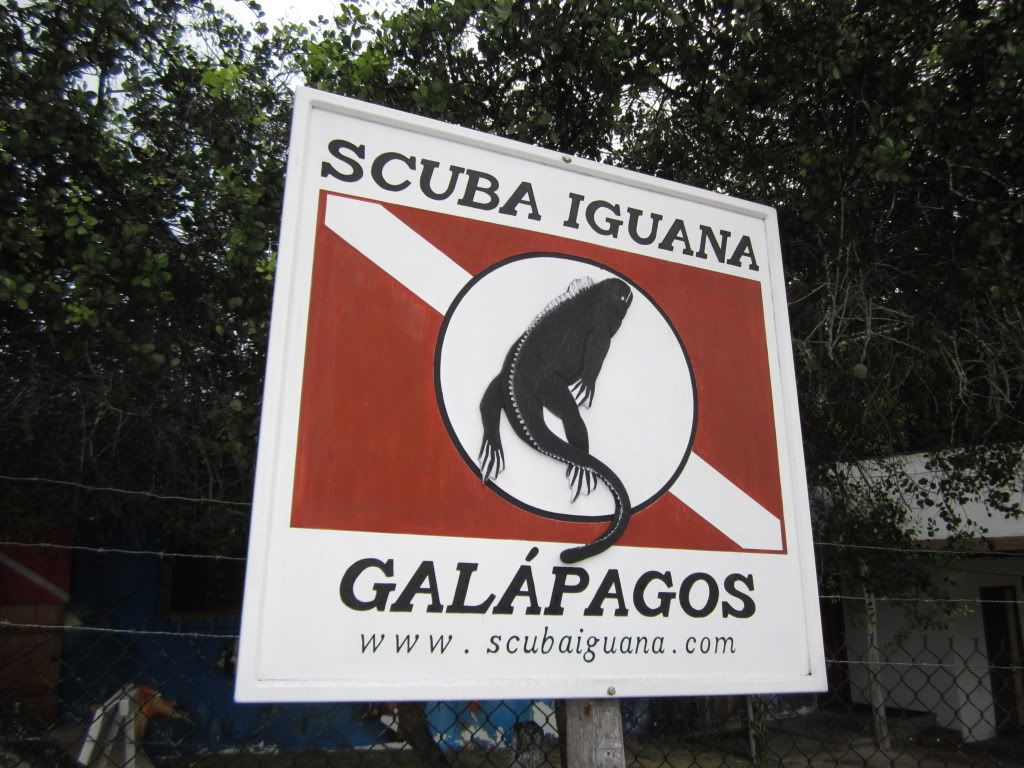
Last week, I had my first, second, third, and fourth dives since I got my CMAS diving certification in 2007 in Croatia. I saw two of the weirdest organisms I’ve ever encountered in the flesh (to be named in the next post), and was also able to fulfill one of my longtime wishes: to be underwater with any aquatic mammal!
I leave for a camping trip on the island of Isabela today, so for now my two brief and scheduled posts will be limited to a couple photos and the video that will be in each! All images and videos were taken by Quike Morán, my Scuba Iguana guide.
 Organikos