“There is no better designer than nature.”

Color is quite possibly the most strategic tool a designer can use to breathe life into a concept.

And it comes as no surprise to the RCDT that used effectively and responsibly, color can transform an existing space more powerfully than any other single alteration. But it is important to realize that color does not exist as an object in itself; rather color is the relationship between light and an object, producing a condition that is unique and inherent to a specific material. As pure white light from the sun reaches a material’s surface, various light frequencies are either absorbed or reflected causing our visual perception to interpret the surface as a certain color. Thus color is actually a very scientific narrative between light, a surface, and our eyes.

This post could delve very deeply into the science of color and those factors that cause us to perceive what we do, but the scenery of India is far too inspiring to diminish it to wavelengths. Instead I dedicate this post to the basic and simple application of color, what it is, and why it is one of the things that makes India one of the most beautiful places on our earth. Continue reading


Trip to Gavi

Gavi is quite different from the section of Periyar near the Thekkady gate.  All guests should take advantage of Cardamom County’s outbound excursion to Gavi in order to fully appreciate the unique beauty of wild Periyar.  The scenery and the animals are incredible, and this full-day trek is an experience you will cherish always.

Continue reading

Measure For Measure

Sustainable development has been in an experimental, invent it as we go state for about two decades.  The good news is that the model has been experimented with.  The less good news is that the progress of those experiments is outpaced by less sustainable development.  Nonetheless, half glass full, it is heartening to see a bit of progress in a developed economy, especially in tough economic times.  Measurement: what a concept!

Measures of ‘capital’ will show how much natural resource – such as fish – is left, rather than just how much is being used. Photograph: Cathal Mcnaughton/PA

Click the image above to go to the story:

The state of England’s natural world and the sustainability of its society and the economy is due be published on Tuesday, tracking everything from bees, butterflies and birds to long-term unemployment, social mobility in adulthood, and knowledge and skills.

Dahlia

The dahlia is a tropical plant widely cultivated in the Western Ghats of India. In Kerala, as in locations around the world, the plant is popular for its beautiful flowers. This decorative flower is found in gardens and farms of the high ranges, creating a kaleidoscope of colours, sizes and shapes.

Continue reading

Poothan-Thira Kali

Kerala offers a veritable array of the performing arts, most of them springing from folk tradition. Though often related to religious rituals and mythological stories, they are also very much the language of the  people. Dramatic costumes, vibrant colours, throbbing music; watching a folk dance is an unforgettable experience. Poothan-Thira Kali is one of the popular ritualistic dances of North Kerala. Continue reading

A Different Protected Status

Holstein cows that graze on the tidal flats of the Wadden Sea provide beef with a distinctive flavour, say farmers. Photograph: Angus Taylor/Alamy

Picking up on the thread that Tim started most recently, then Crist responded to and Martin further commented on, and placing all that within the larger context of our interest in conservation, here is a novel twist on protected status for an animal from today’s Guardian (click the image above to go to the story):

The meat from wading sea cows that graze on Denmark‘s west coast has been given protected geographical food name status by the EU – the same status enjoyed by champagne and parmesan cheese.

The protection covers the meat from the Holstein cattle raised in the marshes of the Wadden (wading) sea in southwestern Jutland.

“It gives us a good stamp on a good product that we have,” said Andreas Andreasen, who represents an association of local farmers.

“We sought this approval so that it could be known more widely.”

The beef is said to gain a distinct flavour from the tidal flats’ salt content, in a grazing tradition that goes back 1,000 years.

“Chefs have told us there is a distinct difference in the meat’s taste from other cows – a more powerful taste,” said Andreasen.

According to the Danish ministry of food, blind taste tests of the Wadden Sea beef proved the meat was juicier, more tender and more fragrant than conventional beef.

Across Waters to the Mississippi River Adventure

Guest Author: Rania Mirabueno

Image

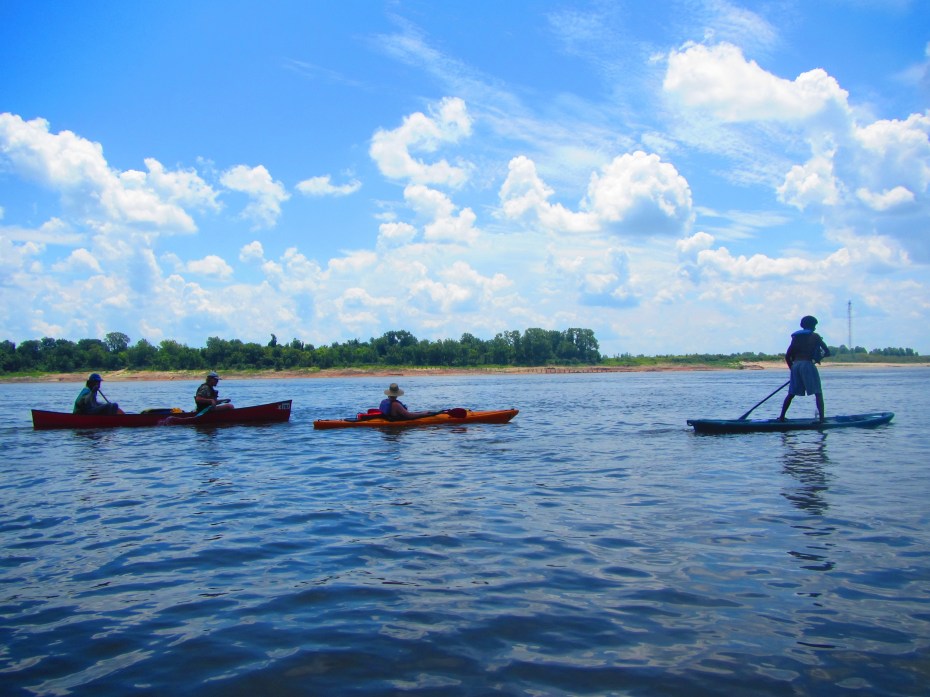
Adventurers canoeing 2320 miles of the Mississippi River.

As I recall my beautiful houseboat experience in the backwaters of Kerala with River Escapes, I cannot help but think across waters to four adventurers, who are embarking on a journey with two canoes and 2320 miles of rafting across 10 US states on the Mississippi River. Continue reading

Tea Factory Tour

If you spend time in India, you are sure to have four or maybe five cups of tea a day.  A former British colony, India has absorbed many British customs, and tea drinking is certainly one of them.  As you drive throughout Kerala, you are bound to see numerous tea plantations on the beautiful hillsides, and Cardamom County offers you the opportunity to tour one of these plantations as well as its factory.  Take the tour and learn how the cup of tea you just enjoyed at All Spice Restaurant ended up in front of you.

Continue reading

Engineering a Conversation

Guest Author: Siobhan Powers

My roomie Chi-Chi recently blogged about miscommunication between clients and architects so I thought it may be timely to bring to light some of my own recent difficulties in conversation and work development. I could not even begin to blog about engineer-non-engineer relations as that would take all day and there’s no point-we’re nerds to the core, I’ve realized and thus, misunderstood. Recently, however, I’ve found not just confusion between myself and non-engineers, but also with my fellow engineers-my people!

I have had few moments of serious language barriers during my time in India. Most people speak at least a little English, and if not there are pictures and hand gestures that can get points across. Shopping and dining is easy enough. Camping with strangers? You’ll find something to talk about (reference my other blog post– shout-out to Chief and Wise Eyes!). Engineering conversations, however, are not like this-there are no commonalities across language boundaries that can be pointed at and then nodded about, but instead there are abstract concepts like energy and science (gasp!).

Gijo and I talking over some data in the engineering office.

Continue reading

A Tolkienesque Adventure

This Wednesday, I planned on walking from the school to Puerto Ayora on el camino viejo, or the “old path” that people used to walk before the asphalt road was created and cars became common. I had been told a few weeks before that the National Park recently cleared the trail and that it would be a great place to take kids to see quite a few species of finch and plenty of other birds. Last week I’d found the end of the trail on the upper edge of Puerto Ayora, and I thought I knew where to start from Tomás de Berlanga downhill.

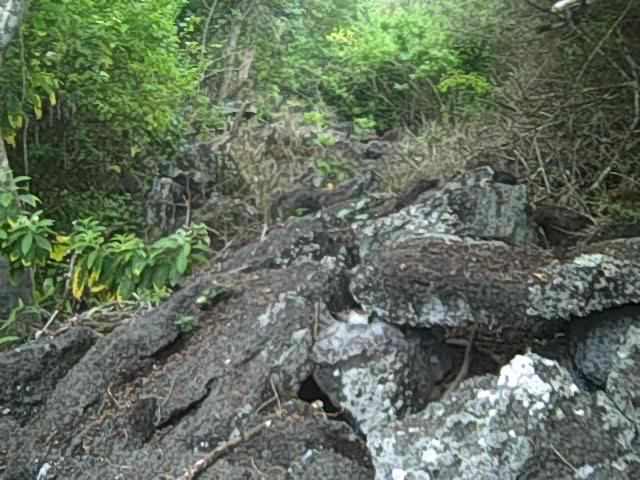
I left the school at 10:45AM after covering 3rd graders for two hours between exams (we read eight or nine stories and then they played on their own) with my backpack full of food, snorkeling gear, and papier-mâché materials for my planned afternoon of lunch, the beach, and Bird Club. The path, which was about two meters wide of mostly cleared earth, weeds, and lots of lava rock, had the occasional green and white wooden poles the Park uses to demarcate National Park territory, and was always bordered on the left side by a barbed wire fence. Sometimes I passed farmland on the left, other times forest similar to that on the dense right side. Passion fruit often littered the path, and a couple times I passed orange trees, so I ended up never even considering the snacks in my backpack.

Continue reading

Golden Rule Loops

the fourth instalment of the “valtari mystery film experiment” is by icelandic directors arni & kinski. their video for rembihnútur focuses on meditation:

the much needed changes in the world will happen through changes within each and every one of us. we all want and need love. this film is a celebration of sigur rós’s music and the benefit it is having in the elevation of consciousness that is happening with humankind. people are finding strength in love, care, and respect for themselves, each other, and the world we live in.

more information is here

Idukki Dam Reservoir

The Idukki Dam stands between the two mountains Kuravanmala and Kurathimla,839 metres high and 925 metres high respectively. The dam is situated near the Cheruthoni Barrage, with the Kulamavu Dam to its west. These three together extend between rocky hills to form the largest reservoir in Kerala. Idukki District is known for its dam and also for being Kerala’s forest district with an astonishing 50 percent of its total area under green cover. Idukki Dam is the world’s second and Asia’s first arch dam. This reservoir and the famous Idukki Wildlife Sanctuary are located 50 kms from the Periyar Tiger Reserve. Continue reading

Community Self-Help

Click the image above for the full story describing scientific investigation into a phenomenon that might be called an inverted Golden Rule:

…“Self-compassion is treating yourself with the same kindness and care you’d treat a friend,” says Kristin Neff, a professor of psychology at the University of Texas at Austin and the leading researcher in the growing field of self-compassion…

…A recent study at the University of California, Berkeley, suggests an even more surprising way to heighten self-compassion: acting compassionately toward others…

…“There was a unique benefit to giving support—the benefit wasn’t just from feeling connected or realizing that others had problems, too,” explains Breines, a doctoral candidate in psychology and the study’s lead author. During tough times, people naturally tend to focus on themselves and find it difficult to support others, she says. “But actually, as many people intuitively discover, taking the opportunity to support other people can make you feel better about what you’re going through.”…

Tree of Life

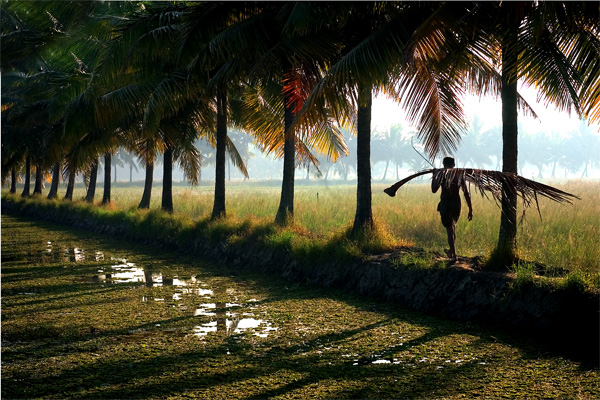
Kerala is one of the leading producers of coconut in the world, producing thirteen billion nuts per annum. Not only is the tree an iconic fixture of the Kerala landscape dotted with green palms and their swaying fronds but this tree is an integral part of the state economy.  Numerous products and by-products are derived from all parts of the tree, providing food, shelter and fuel, as well as the raw material for various local crafts. Not surprisingly, in Malayalmam this multi-faceted tree is known as kalpakavriksham or the “Tree of Life”.

Continue reading

113 Hemingway

Screen shot from my subscriber’s access to old New Yorker articles–the text is cut off at the bottom of the image but you can still savor the journalistic description in the sampling.

Lillian Ross, today among the last living chroniclers, along with A. E. Hotchner, of Hemingway in living technicolor, wrote this profile of him when he was a 50-year old superstar and she was a 24-year old who had been a New Yorker staff writer since she was 19.  How’s that?

Who cares how?  I care that.  And thank her for it on this, his 113th birthday.  She has always had a distinctively invisible presence in her writing, which makes Hemingway pop on her page.  Of course he never popped. He banged. Exploded.  Her profile makes a trip to your local public library worthwhile to find a 62-year old hard copy of the magazine.

Or, if the library near you is no longer, subscribe to the magazine and gain access to all content in past issues.  I care that she, and Hotchner, and others, have shared small sketches not designed to titillate as gossip, but yes to amuse.  As in amuse-bouche.  Small tastes for those who aspire to greatness and are not embarrassed from time to time to wonder how the great think, how they feel, what they do:

Gathering to the Bird Club

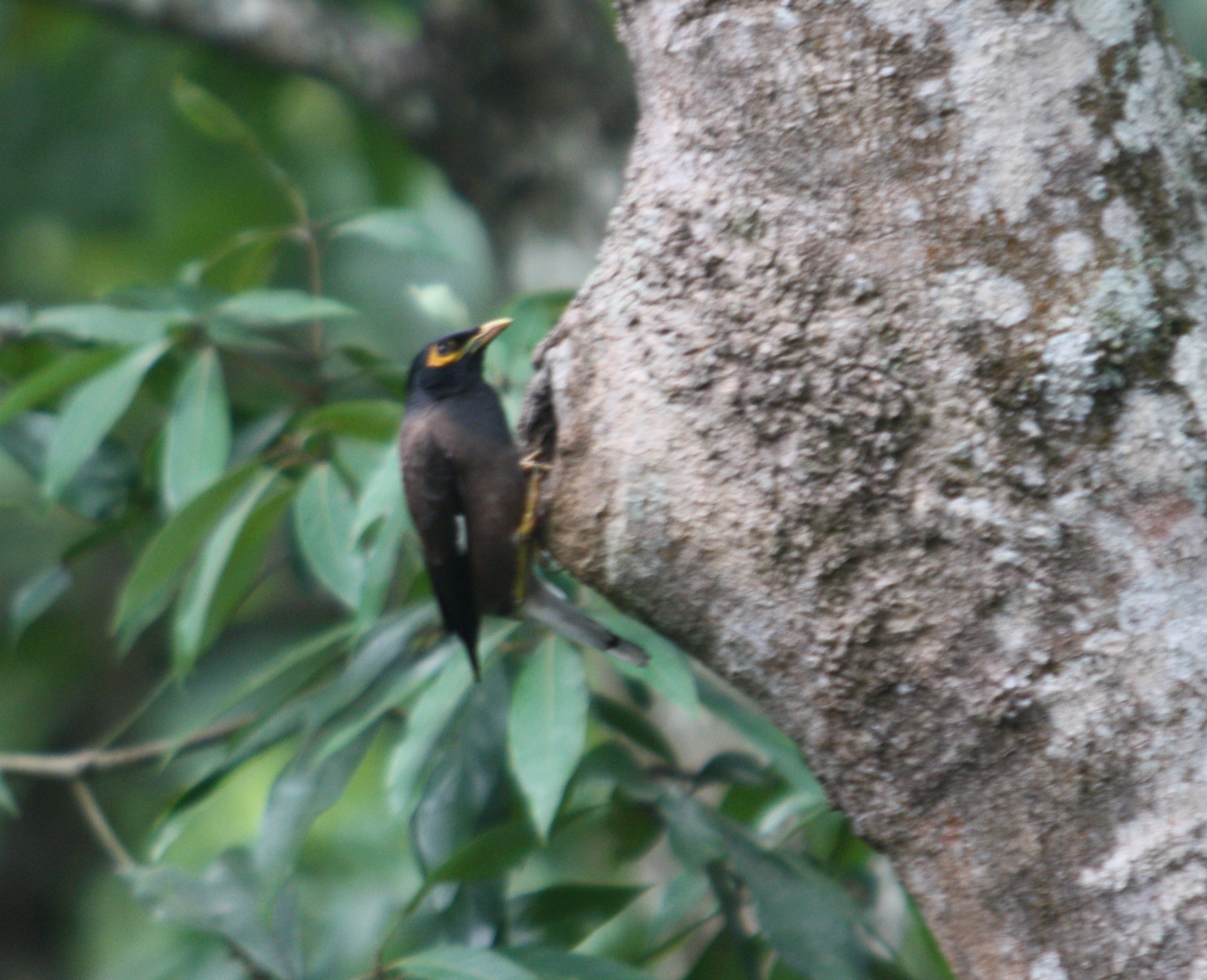
Last week’s Bird Club sessions saw eight, nine, and one participant(s) in the Wednesday 2th-4th grade group, Thursday 5-6th grade group, and Friday 7th-12th grade group, respectively. My goal had been to start a papier-mâché project, but after forty-five minutes the youngest group was eager to walk through town, so we left the balloons to dry and reviewed the usual crowd at the Fisherman’s Wharf with the addition of a Great Blue Heron and an Elliot’s Storm Petrel. Since some of the eight kids hadn’t come to the first week, it was still a pretty good day, except that most of the students didn’t take their balloons home with them. This week, only three students arrived on Wednesday (it is final examination week), so we made papier-mâché again and this time everyone took their birds home to dry for next week’s wing and beak addition, and perhaps even painting.

Given the younger students’ response to the papier-mâché, I came to the Thursday group last week prepared to put the issue to a vote. Quite a few kids came half an hour late, so we ended up walking to Tortuga Bay, a 45-minute trip through the Park on a path surrounded by cacti and trees that always yields Galápagos Flycatchers, Galápagos Mockingbirds, and a couple species of finch. When we reached the shore a small group of Ruddy Turnstones flew away, and after a couple minutes we had to turn back towards Puerto Ayora. This Thursday, almost the same group of nine students made their balloons and drew their wing-plans on cereal boxes.

Continue reading