Periyar Tiger Reserve, Kerala
Periyar Tiger Reserve, Kerala
 I am known among friends, colleagues and family for being a slave to hyperbole. I like to think I am master, but it always gets the better of me. When I love something you will have no doubt about it; and the inverse is true. I will use the strongest words to convey my admiration or displeasure, or whatever. Guilty as charged. Here goes: in just under 40 minutes of listening to the author of this book speak in an interview, I am compelled to say that I have never heard a better interview in my life. It is not merely the superb vocabulary he uses to describe how he became a chef; it is not merely the amazing story line; it is the man’s values, which drip from every word he utters. Click the image to the left to go to the podcast of that interview:
“Being born in Ethiopia, where there was a lack of food, and then really cooking with my grandmother Helga in Sweden. And my grandmother Helga was a cook’s cook.”
Helga’s roasted chicken, pan-fried herring and black bread captivated Samuelsson, who spent many afternoons watching and helping his grandmother cook.
“We were jarring, pickling, there was always a bowl of chicken soup ready to be served, there was always sausage ready to be made,” he says. “She was incessant all year round with cooking. … It was really in those rituals that my love for food was built.”

It is not every day that a publication comes out of left field into your life and illuminates something so interesting and important. Take a look at this article in the Columbia Journalism Review. The issues are huge. The characters are a mix of the usual suspects and the unusual innovators:
Jonah Peretti was 29 and had already earned a reputation as something of a wise guy. He had been a technology teacher at a New Orleans private school when he was admitted to a graduate program at MIT. His plan was to study ways networks might foster communication among teachers, but got sidetracked midway through his master’s thesis. In 2000, Nike was inviting customers to create footwear with personalized wording. The company had been criticized widely for selling sneakers made by desperately poor people in impoverished countries. Peretti, tall, skinny and bespectacled, submitted his request: He wanted his sneakers emblazoned with the word SWEATSHOP. Nike declined. At which point, Peretti did a clever thing: he e-mailed.

Jamaican blue spike is a tropical plant, naturalized in India and Srilanka. These plants are common in the Western Ghats of India, growing widely along stream banks and road sides as well as cultivated gardens. The flowers bloom year round, making them an attractive food source for butterflies, moths and other pollinators.

Hey guys,
All of us photobugs and travel-junkies have struggled with the age-old question: which lens should I bring on my River Escapes backwaters adventure or my Roman holiday or my trip to the moon?
As a casual photographer, I’m not crazy about specs. I don’t get the numbers and technical terms! JUST TELL IT TO ME STRAIGHT! I know there are people out there who are like me, so Ben, Milo, and I will make it as easy as possible to understand which lens YOU need to bring on your next vacation! We’d also love to know what YOU brought on your last vacation!
See which of description fits you best:
ALRIGHT, I’M READY!! NOW SHOW ME THE 5 LENSES I SHOULD BRING ON MY NEXT VACATION!!!
When art meets sustainable development, watch out. Rather, watch. Olafur Eliasson’s new work, a solar-powered lamp that he and Frederik Ottesen designed and developed, will be distributed throughout the developing world:
Explaining why he had developed a social project, the Berlin-based Danish artist said: “Art is always interested in society in all kinds of abstract ways, though this has a very explicit social component. The art world sometimes lives in a closed-off world of art institutions, but I still think there’s a lot of work to show that art can deal with social issues very directly.”

Poinsettia flowers are a very common ornamental plant naturalized in the Western Ghats of India. These flowers are popularly used during the Christmas season to decorate churches and homes. In Kerala, it is cultivated for this use.
Periyar Tiger Reserve, Kerala
Not many people would mistake us for a bank advertising medium. But today, full disclosure, we feel willing to play that role. Just because the music is nice, the scene is well thought out in a family-friendly, music-as-inspiration kind of spirit. As banks go in today’s world, this one has the right idea: it is the community that really matters; and we love the collaboration. That town square seems well conserved, doesn’t it?

Stephen McGee for The New York Times The founder of Eden Foods, Michael J. Potter, among the organic stock at the Eden headquarters in Clinton, Mich.
Click on the image above to go to the story in The New York Times, which continues that paper’s journalistic investigation of the evolution of organic farming and its byproducts:
Michael J. Potter is one of the last little big men left in organic food.

Athirappally Waterfalls is one of the Kerala’s famous picnic spots. Fed by the Chalakkudy River, this 80-85 feet high wonder is situated in the forest area of the Sholayar ranges. During the monsoon season the falls are a thundering wall of water. Many people visit this refreshing site to unwind with its sound and spray.

Periyar Tiger Reserve, Kerala
Lisel Ashlock
After coming across the Emerson item, and linking it to my own experience as a lapsed researcher, now entrepreneur, I went back and looked at some of the posts Seth wrote while taking coursework last autumn. The courses were remarkable for their relevance to what we do at La Paz Group: Environmental History; Environmental Archaeology; Ecology and the Environment; and Environmental Governance. The history course, in particular, had a syllabus that I appreciated for acquainting or re-acquainting me with some of the roots of thought underlying my chosen occupation (whatever that is).
Now a few days later I have discovered that on today’s date in 1817 Henry David Thoreau was born. A little more digging, and I see he serialized some of his writings in a magazine that still publishes today. He apparantly wanted his ideas spread as far and wide as technology would enable. Surprisingly modern for a man who embodies “back to nature” more than most. Would he have blogged in today’s world?
No need to speculate on silly questions: his writing speaks for itself. On June 1, 1858 he published his first of three tracts in The Atlantic Monthly. It is a lovely meditation on the true nature of pine trees, poetic insight, and moose meat, among other things nineteenth-century. Four years later to the day the same magazine posthumously (he had just died weeks earlier) published his second tract, called Walking, which has about as fine a statement as I can find anywhere: Continue reading
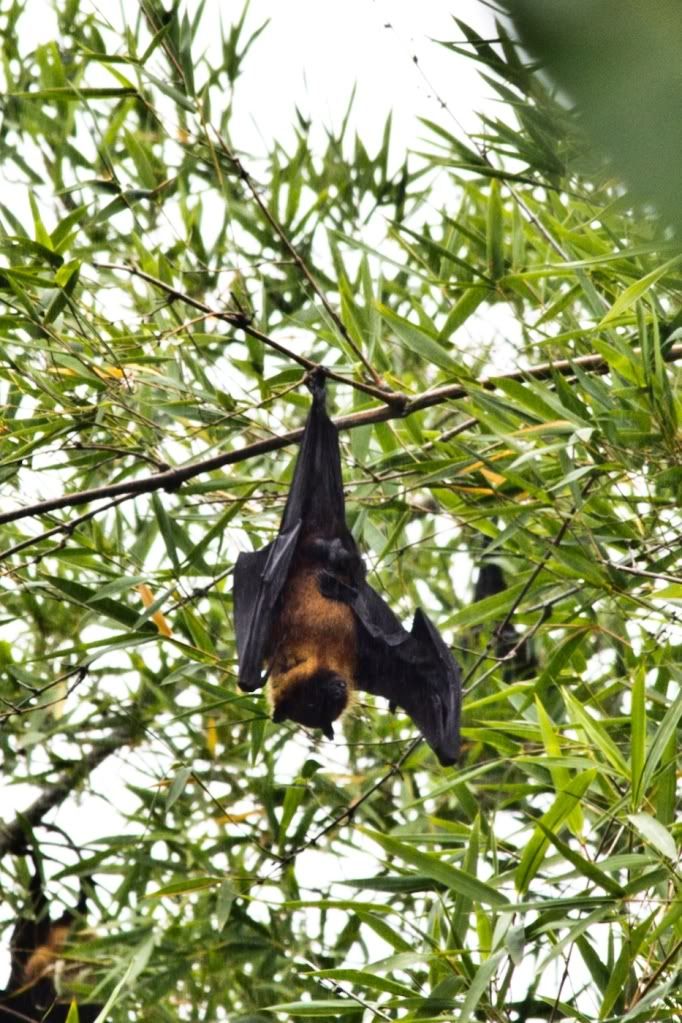
Last year, Sung wrote about the bats in the bamboo stands next to Cardamom County. I’ve always been aware of their presence, but I always lacked the equipment to get a closer look, and even more prominently lacked the equipment to photograph them. This year, my arsenal remains limited, but I have one more telephoto lens than I did previously. From the restaurant’s roof on a sunny day, I’m less than 20 meters away from well-lit subjects. On a windy sunny day, the subjects are generally stirring, as mentioned by Sung – the ideal time to photograph them.  Continue reading

Periyar Tiger Reserve, Kerala
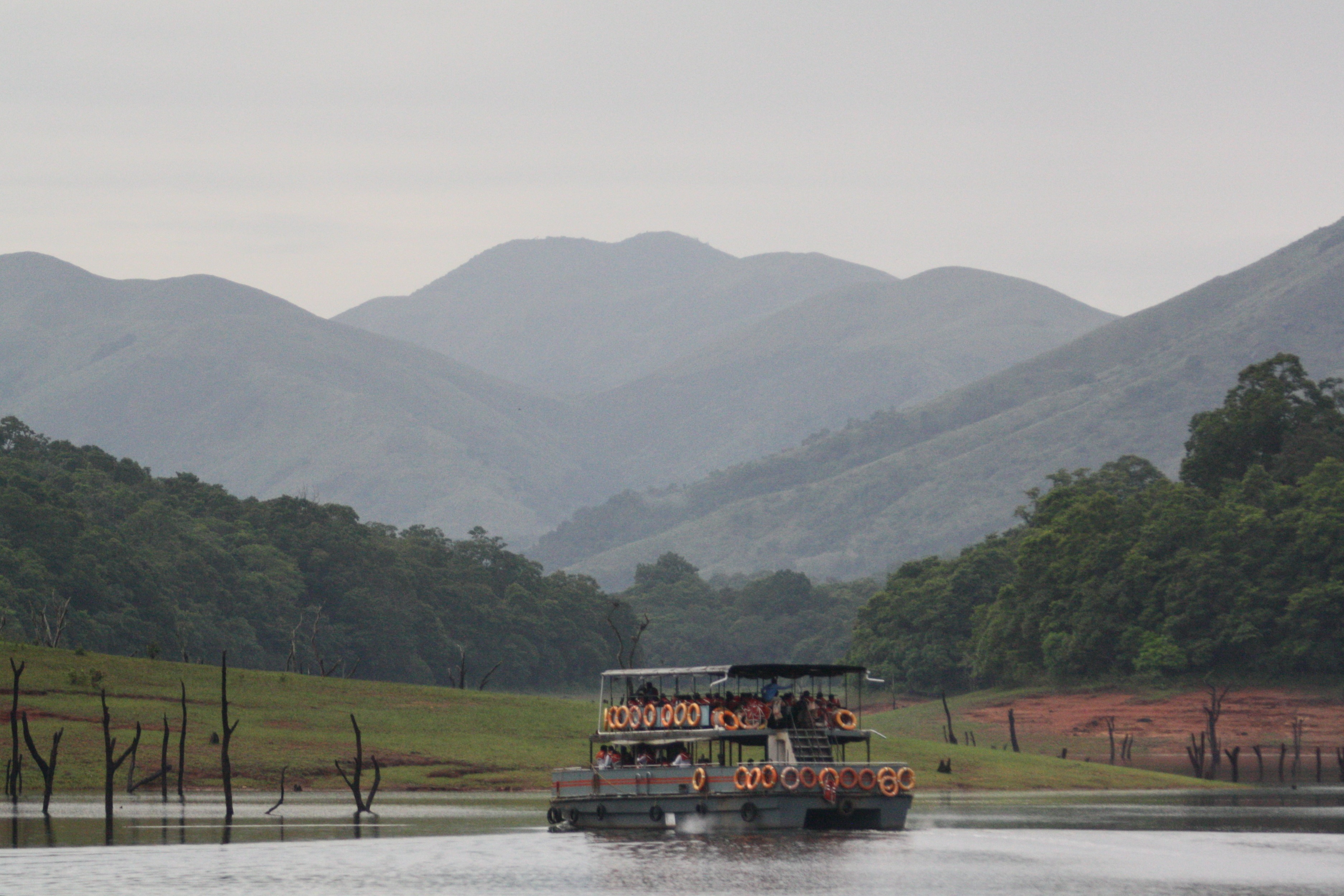
The Periyar Tiger Reserve’s most popular activity, the Boating Trip around Periyar Lake, gives guests a relaxing yet incredibly rewarding view of one of the most beautiful locations on earth. The wildlife is unbelievable, the scenery is spectacular, and the opportunities for photographing these wonders are plentiful.
“At the end of the world,” the photographer Brigitte Grignet writes, “lies one of the most remote and undisturbed areas of Patagonia.” This sparsely populated region in southern Chile, called Aysén, is also one of the most endangered, threatened by plans to dam two of the region’s rivers in order to send hydro power north along thousands of miles of power lines.
Reading about and seeing the images of Aysen above brings back fresh memories of the two years prior to our move to India. In October 2009 I was invited by the local community of Aysen to represent their commercial interest in wilderness conservation at a forum sponsored by Hydro Aysen. I had been working in Patagonia since early 2008 and established relationships that led to their entrusting this task to me. I did not let them down. Continue reading
For the past two weeks I’ve been planning my bird-related extracurricular activity at Tomás de Berlanga, the school where I’m on my fourth full week of volunteering English substitute teaching for grades 1, 2, and 7-12 (1st and 2nd graders are taught English as a class, and the older students are classified based on skill level—I taught Intermediate for a week and Advanced for two weeks).
I decided on a weekly 2-hour (4-6PM) meeting of what we’d call the “Club de Aves,” the Bird Club, and I sent a small paper invitation and permission sheet home with students of 2nd grade and up. About 50 students brought back responses allowing them to participate, and a dozen or so slips denying permission because the student was otherwise engaged after school (Santa Cruz has a great cycling team that is quite competitive on a national level). Given this unexpectedly high number, I had to supplement my planned Thursday and Friday groups with a Wednesday one: about twenty 2nd, 3rd and 4th graders for Wednesday; thirteen 5th and 6th graders for Thursday; and eighteen 7th-12th graders for Friday.
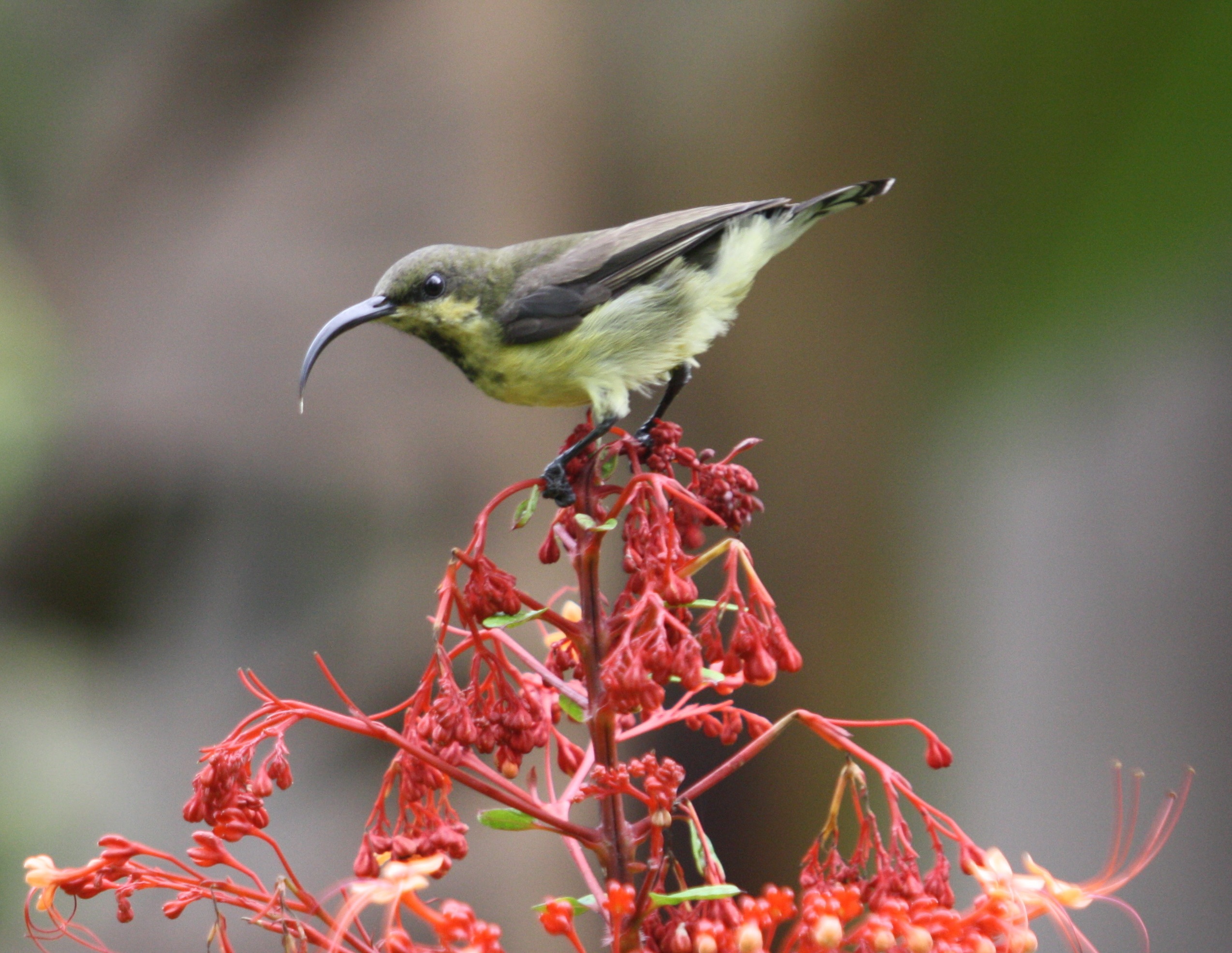
Periyar Tiger Reserve, Kerala
 Organikos