the fourth instalment of the “valtari mystery film experiment” is by icelandic directors arni & kinski. their video for rembihnútur focuses on meditation:
the much needed changes in the world will happen through changes within each and every one of us. we all want and need love. this film is a celebration of sigur rós’s music and the benefit it is having in the elevation of consciousness that is happening with humankind. people are finding strength in love, care, and respect for themselves, each other, and the world we live in.
more information is here
Idukki Dam Reservoir

The Idukki Dam stands between the two mountains Kuravanmala and Kurathimla,839 metres high and 925 metres high respectively. The dam is situated near the Cheruthoni Barrage, with the Kulamavu Dam to its west. These three together extend between rocky hills to form the largest reservoir in Kerala. Idukki District is known for its dam and also for being Kerala’s forest district with an astonishing 50 percent of its total area under green cover. Idukki Dam is the world’s second and Asia’s first arch dam. This reservoir and the famous Idukki Wildlife Sanctuary are located 50 kms from the Periyar Tiger Reserve. Continue reading
Community Self-Help

Click the image above for the full story describing scientific investigation into a phenomenon that might be called an inverted Golden Rule:
…“Self-compassion is treating yourself with the same kindness and care you’d treat a friend,” says Kristin Neff, a professor of psychology at the University of Texas at Austin and the leading researcher in the growing field of self-compassion…
…A recent study at the University of California, Berkeley, suggests an even more surprising way to heighten self-compassion: acting compassionately toward others…
…“There was a unique benefit to giving support—the benefit wasn’t just from feeling connected or realizing that others had problems, too,” explains Breines, a doctoral candidate in psychology and the study’s lead author. During tough times, people naturally tend to focus on themselves and find it difficult to support others, she says. “But actually, as many people intuitively discover, taking the opportunity to support other people can make you feel better about what you’re going through.”…
Bird of the Day: Common Myna
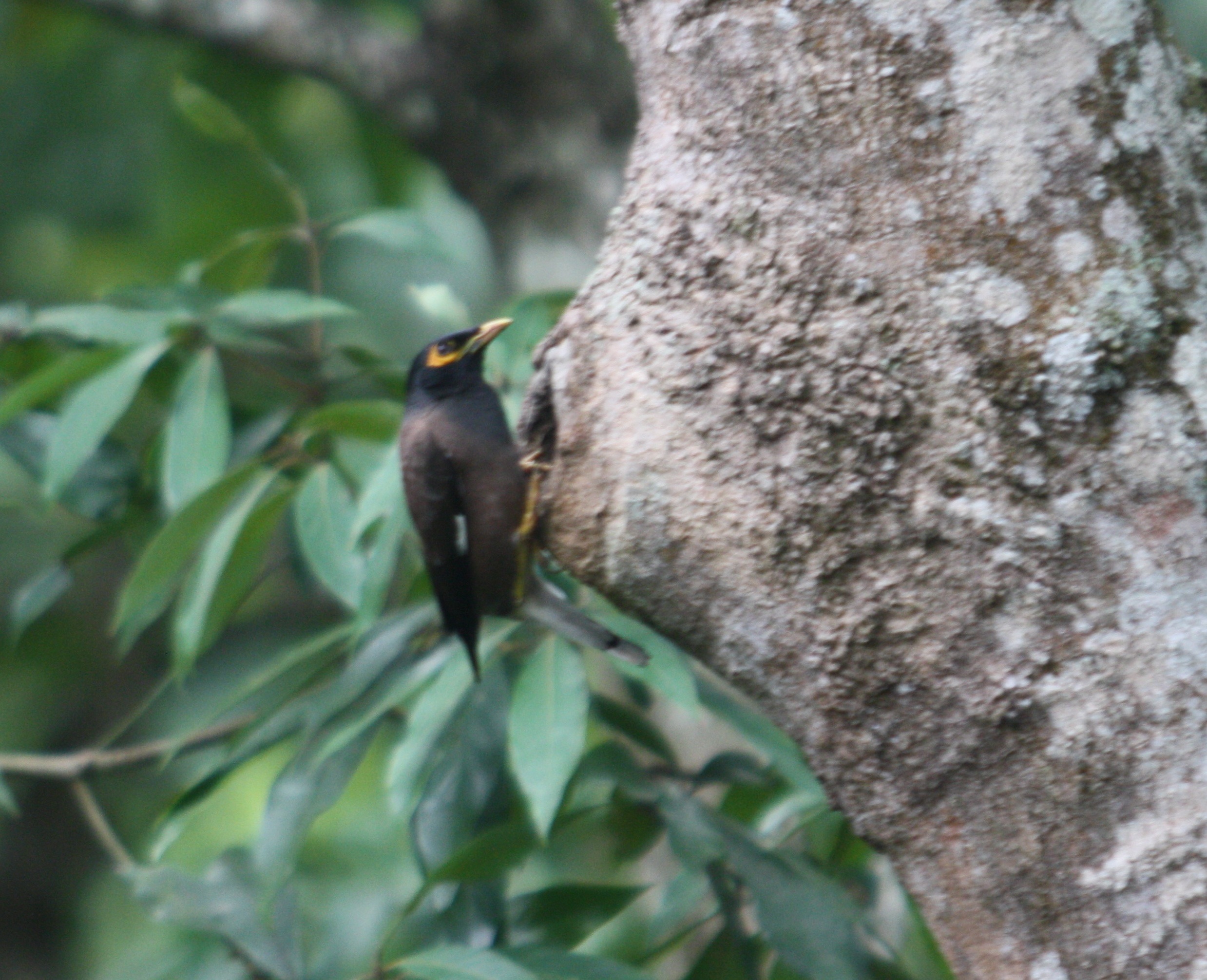
Periyar Tiger Reserve, Kerala
Tree of Life
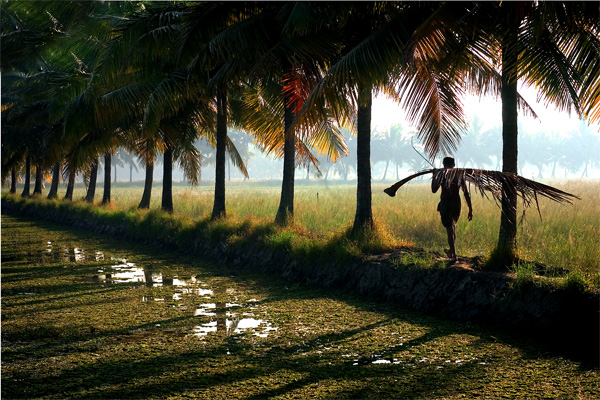
Kerala is one of the leading producers of coconut in the world, producing thirteen billion nuts per annum. Not only is the tree an iconic fixture of the Kerala landscape dotted with green palms and their swaying fronds but this tree is an integral part of the state economy. Numerous products and by-products are derived from all parts of the tree, providing food, shelter and fuel, as well as the raw material for various local crafts. Not surprisingly, in Malayalmam this multi-faceted tree is known as kalpakavriksham or the “Tree of Life”.
Gotta Love It

Bird of the Day: Little Cormorant
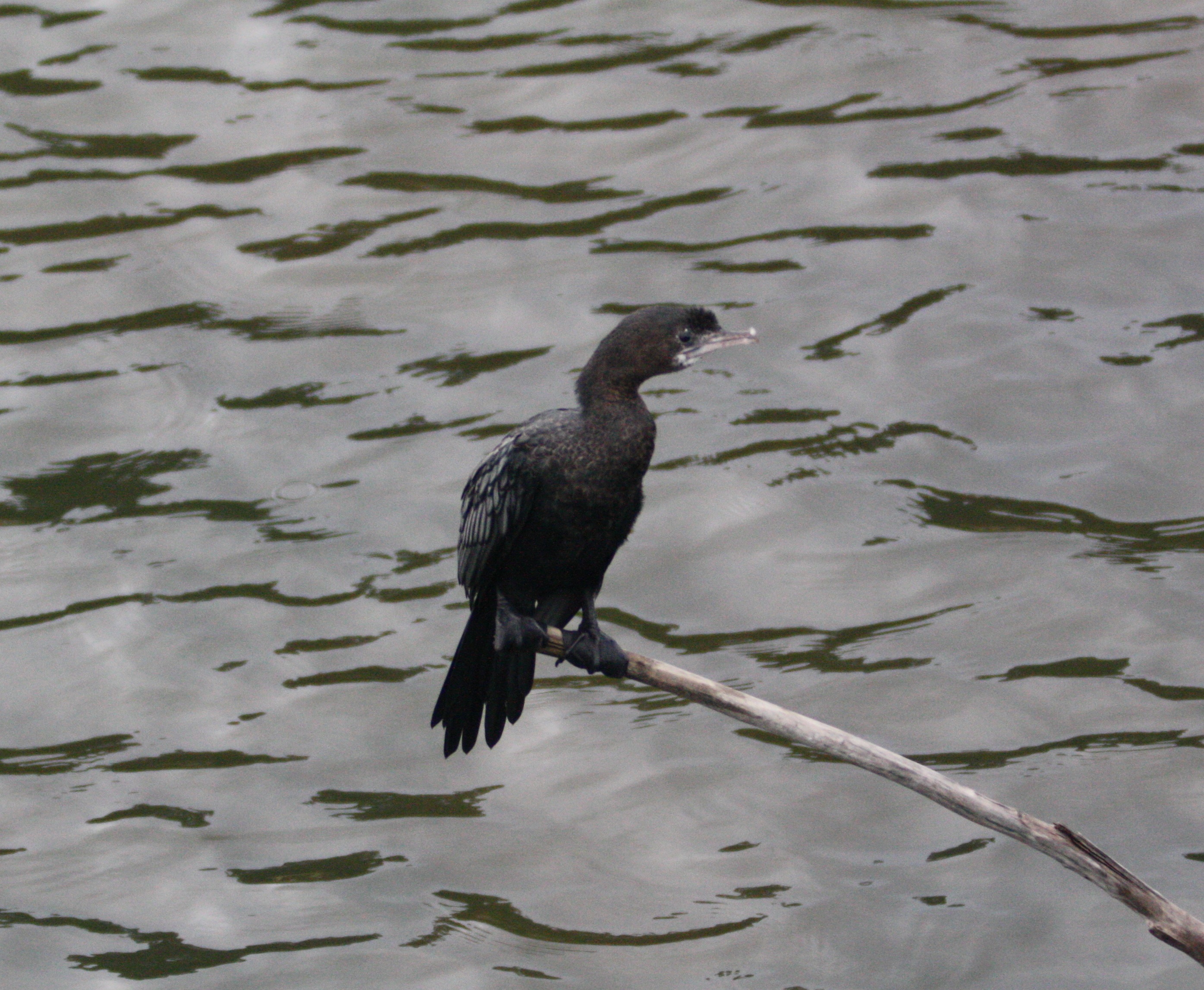
Periyar Tiger Reserve, Kerala
113 Hemingway

Screen shot from my subscriber’s access to old New Yorker articles–the text is cut off at the bottom of the image but you can still savor the journalistic description in the sampling.
Lillian Ross, today among the last living chroniclers, along with A. E. Hotchner, of Hemingway in living technicolor, wrote this profile of him when he was a 50-year old superstar and she was a 24-year old who had been a New Yorker staff writer since she was 19. How’s that?
Who cares how? I care that. And thank her for it on this, his 113th birthday. She has always had a distinctively invisible presence in her writing, which makes Hemingway pop on her page. Of course he never popped. He banged. Exploded. Her profile makes a trip to your local public library worthwhile to find a 62-year old hard copy of the magazine.
Or, if the library near you is no longer, subscribe to the magazine and gain access to all content in past issues. I care that she, and Hotchner, and others, have shared small sketches not designed to titillate as gossip, but yes to amuse. As in amuse-bouche. Small tastes for those who aspire to greatness and are not embarrassed from time to time to wonder how the great think, how they feel, what they do:
Gathering to the Bird Club
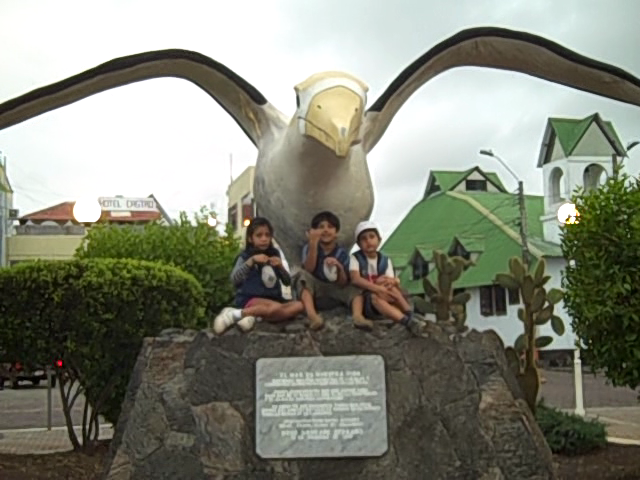 Last week’s Bird Club sessions saw eight, nine, and one participant(s) in the Wednesday 2th-4th grade group, Thursday 5-6th grade group, and Friday 7th-12th grade group, respectively. My goal had been to start a papier-mâché project, but after forty-five minutes the youngest group was eager to walk through town, so we left the balloons to dry and reviewed the usual crowd at the Fisherman’s Wharf with the addition of a Great Blue Heron and an Elliot’s Storm Petrel. Since some of the eight kids hadn’t come to the first week, it was still a pretty good day, except that most of the students didn’t take their balloons home with them. This week, only three students arrived on Wednesday (it is final examination week), so we made papier-mâché again and this time everyone took their birds home to dry for next week’s wing and beak addition, and perhaps even painting.
Given the younger students’ response to the papier-mâché, I came to the Thursday group last week prepared to put the issue to a vote. Quite a few kids came half an hour late, so we ended up walking to Tortuga Bay, a 45-minute trip through the Park on a path surrounded by cacti and trees that always yields Galápagos Flycatchers, Galápagos Mockingbirds, and a couple species of finch. When we reached the shore a small group of Ruddy Turnstones flew away, and after a couple minutes we had to turn back towards Puerto Ayora. This Thursday, almost the same group of nine students made their balloons and drew their wing-plans on cereal boxes.
Lake Periyar
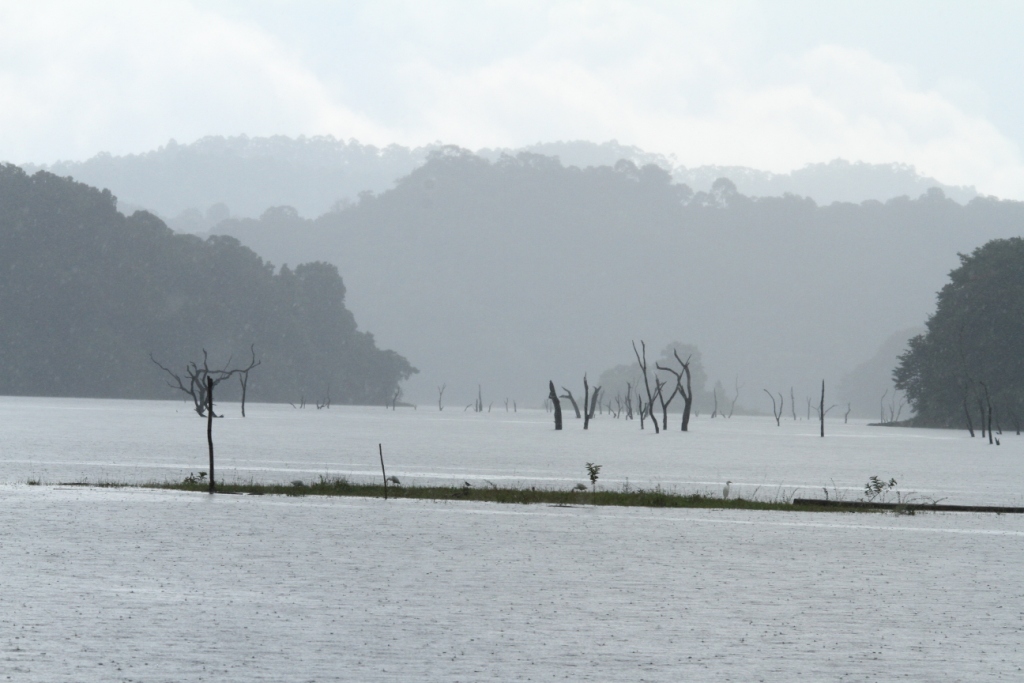
The Periyar River originates in Kerala’s Western Ghats near the Tamil Nadu border and then flows in the northerly direction to the Periyar National Park. The Periyar Lake was created by the British in 1895 with the building of the Mullaperiyar and forms a major watershed for the sanctuary and for both states. The lake forms the nucleus of the reserve, providing a great habitat for water birds such as darters, grey herons, egrets, cormorants and kingfishers. Continue reading
Top 3 Words to Avoid When Talking Shop with Architects
We are working in Cochin and sometimes I feel like I am speaking two different languages. I’m not talking about struggling with mixing English and Malayalam. I’m not talking about scratching my head each time I encounter an Indian head shake/nod (“Wait- was that a yes or a no?”). I’m talking about the client’s language vs. the architect’s language.
This internship really is a “living laboratory.” I am getting a chance to sit on the client side and discuss ideas with the architects that will push Raxa Collective’s vision forward. Crist and Amie have worked with the design team side by side on each project and I am starting to understand how they think, how to make sure my drawings, renderings, and presentations can be clearer, and more. Sitting in on these design meetings in which the architect and clients discuss, propose, discuss, present, discuss, discuss, and discuss some more, I realize…
It’s like talking shop at an auto repair.
Happy Centenary Birthday, Woody
I am a week late, but I do not think he would mind. There is plenty to read and listen to with Woody in mind, but my first realization that I had missed his birthday was while listening to a podcast a few days ago. If you are interested in Woody’s life and the context of his music, it is worth a listen. I also do not think Woody would mind sharing the celebration a bit, so after the jump have another go at this song.
Bird of the Day: Oriental Pipit

Periyar Tiger Reserve, Kerala
Aralam Wildlife Sanctuary, Kerala
Aralam Wildlife Sanctuary is located in the north of Kerala near Kannur. It is one of the state’s smallest wildlife sanctuaries, with an area of just 55 square kilometers. It makes up for its small size with a privileged location on the western slopes of the Western Ghats, an area famous for a wide variety of flora and fauna. Aralam fauna includes mammals such as elephant, bison, deer, wild boar, jungle cats and leopards. Additionally a wide variety of flora is also found in the evergreen areas of this sanctuary.
Bird of the Day: Steller’s Jay (Mountain Center, CA)

Whale Shark Freed From Fishing Net
 Another day, another story of net-freed. Click the image below, which looks like the one in the story here, for the story told briefly by video; yet another hero story we thank The Guardian for:
Scientists free a whale shark caught in a fishing net in Indonesia’s Cenderawasih Bay. Conservation International have completed the first expedition to tag whale sharks with radio-frequency identification making them easier to track and film. Whale sharks swimming into fishing nets has become a problem in the area.

Moottil Pazham (Baccourea courtallensis)

Moottil pazham trees are found only inside the semi-evergreen forest. This unusual tree bears fruits only on the lower part of the trunk, clustered around its base in bunches. The edible portion of the fruits are hard and turn from reddish brown to pink as they ripen. They fruits are a favourite food for forest dwelling tortoise. Continue reading
Bird of the Day: Woolly-necked Stork

Periyar Tiger Reserve, Kerala
Birdman Of Skomer
 For our bird-loving contributors and followers, an interesting story told in a brief video, thanks to The Guardian. (Click on video image to go to the source.)
Tim Birkhead, professor of zoology at the University of Sheffield, talks to Steven Morris about his study of Amos guillemots on the tiny, uninhabited island of Skomer, south-west Wales. Birkhead first visted Skomer in 1972 as a 22-year-old PhD student interested in the sex life of the guillemot. His 40-year investigation into the birds is one of the longest-running field studies of its kind.

Silent Valley National Park, Kerala

Photo by Mr. Vijay Mampilly
Silent Valley National Park is located along the western corner of the Nilgris Mountains in the Palakkad District and remains one of the last vestiges of an undistributed tropical evergreen rainforest in Southern India.

