
Periyar Tiger Reserve, Kerala
Periyar Tiger Reserve, Kerala

Nangiar Koothu is an offshoot of the Koodiyattam theater which combines dance and drama. The dance is performed by women of the Nambiar clan (scholars in Sanskrit) called Nangiars and hence the name Nangiar Koothu. The theme of Nangiar Koothu is the story of Lord Krishna as described in his historical texts called Sree Krishna Charitam. It commences with a ritual dance called Purrapad. Continue reading
 Friday morning, at 9:30, my 10th-12th graders and I took two taxis down to Puerto Ayora to look for birds. We started at the intersection between the two main streets of the town: Baltra Rd, which is the same road all the way from the other side of the island at the canal separating Santa Cruz and Baltra, and Charles Darwin Ave, which is the southernmost street in the area and is lined with tourist shops and the ocean.
We walked down Charles Darwin Ave and easily pished some Yellow Warblers from bushes and overhanging trees on the sidewalks. A little space that cut towards the water and was surrounded by artisans’ booths (closed until the afternoon and evening) had a couple cacti with nests in them, and indeed we saw a pair of Cactus Finches fly away as we approached. Looking out over the water, we could see some frigatebirds circling around the Muelle de Pescadores—Fishermen’s Pier—and Brown Pelicans flapping towards it. We returned to the sidewalk and reached a zigzagging plank pathway that wound between red mangroves and led to stairs descending towards small boats moored next to the pier, and from there we could watch the action at the pier and the surrounding water from a good vantage point. Brown Pelicans, both adults in breeding plumage and the greyer juveniles, sat in the water and trees nearby, and waddled among the feet of the fishermen cleaning their fish. A couple of Lava Gulls were also underfoot, as well as a young sea lion!
The same scene awaited us on Monday afternoon, at 12:30PM, when I went back to the Puerto with nineteen 7th-9th graders and a fellow teacher, Andrew. Continue reading
Basking Ridge, NJ
It has been a week since I arrived in Kerala, India. Not surprisingly, my first cultural shock was the ear-piercing, honking sound of rickshaws (small Indian taxis) that welcomed me when I stepped out of the Cochin airport. In the beginning, I thought the drivers here were just a little more aggressive or would get frustrated easily: the reason why they honked so much. But, as we drove away from the airport, our driver explained to us that these drivers honked to show their existence and alert others. In addition, drivers in India tend to not keep to their lanes. They use the entire road sometimes driving on the left side, right side, and in the middle…so ALL sides! These days, many young Indians are actively protesting to eliminate this unnecessary honking and to reduce noise pollution. So, increasingly you can see many signs like “Yi Horn Not OK Please.”

Rickshaws in India
Click the image to go to the coverage:
Australia has created the world’s largest network of marine reserves and will restrict fishing and oil and gas exploration in a major step to safeguard the environment and access to food.
The area will cover 3.1 million square kilometres (1.2 million square miles) of ocean including the entire Coral Sea, and encompass a third of the island continent’s territorial waters.’

The Great Barrier Reef is one of the areas that will be protected through the marine reserve network. Photograph: Doug Steley B / Alamy/Alamy

The elegance of the classical dances of Kerala are a result of the various cultural influences that took place in the state. These classical forms are a delicate fusion of ancient classical texts and folk traditions, making them distinctive and unique. The Koothu is a solo narrative act. As the performers of the Koothu are from Chakyars- a Brahmin community, it bears the name Chakyarkoothu. Continue reading
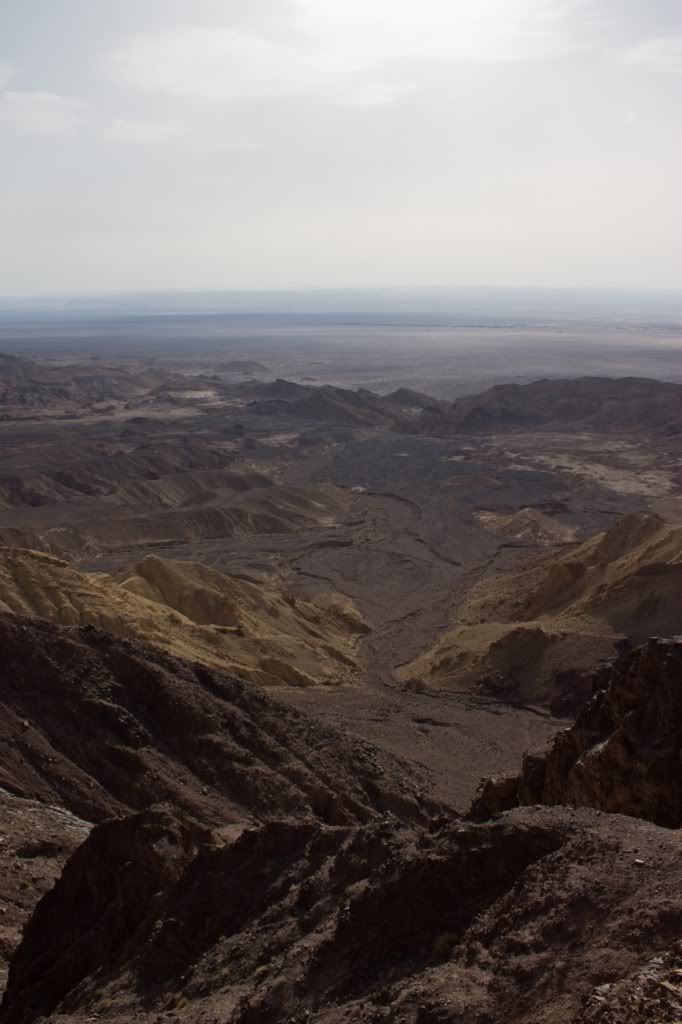
To get from Feynan to Petra, one has two options. The first is a relatively normal road, with pavement and double lanes. This is the longer road. The second one, which I took when driving to Petra, Shobak, and several places in between, is called Namila. By any light, the long, snaky road with dozens of hairpin turns is beautiful, albeit in a slightly Mordorian way. The geological diversity is nowhere near as extreme as it is within the Dana Biosphere Reserve, but impressive nonetheless. Panorama below (click image for higher resolution): Continue reading
Neither had been on our radar before, but with a bit of investigation, we congratulate Satish Kumar on his decision to merge them (click the image below to go to the new site hosting both publications):

A quick sampling of articles led here and to the conclusion that our site will be following this publication for news of a non-conformist nature: Continue reading
Our Central Reservation Team recently visited the Periyar Tiger Reserve.
We were really happy and enjoyed a lot in the Periyar Tiger Reserve. We saw a bunch of elephants and a bison very close to them. Rafting of 3 hours was very good and the chance to be in nature was appreciated. We hope to visit again the next time we’re back in Thekkady.
– Mr. Shyam, Mr. Ashley and Mr. Sumesh
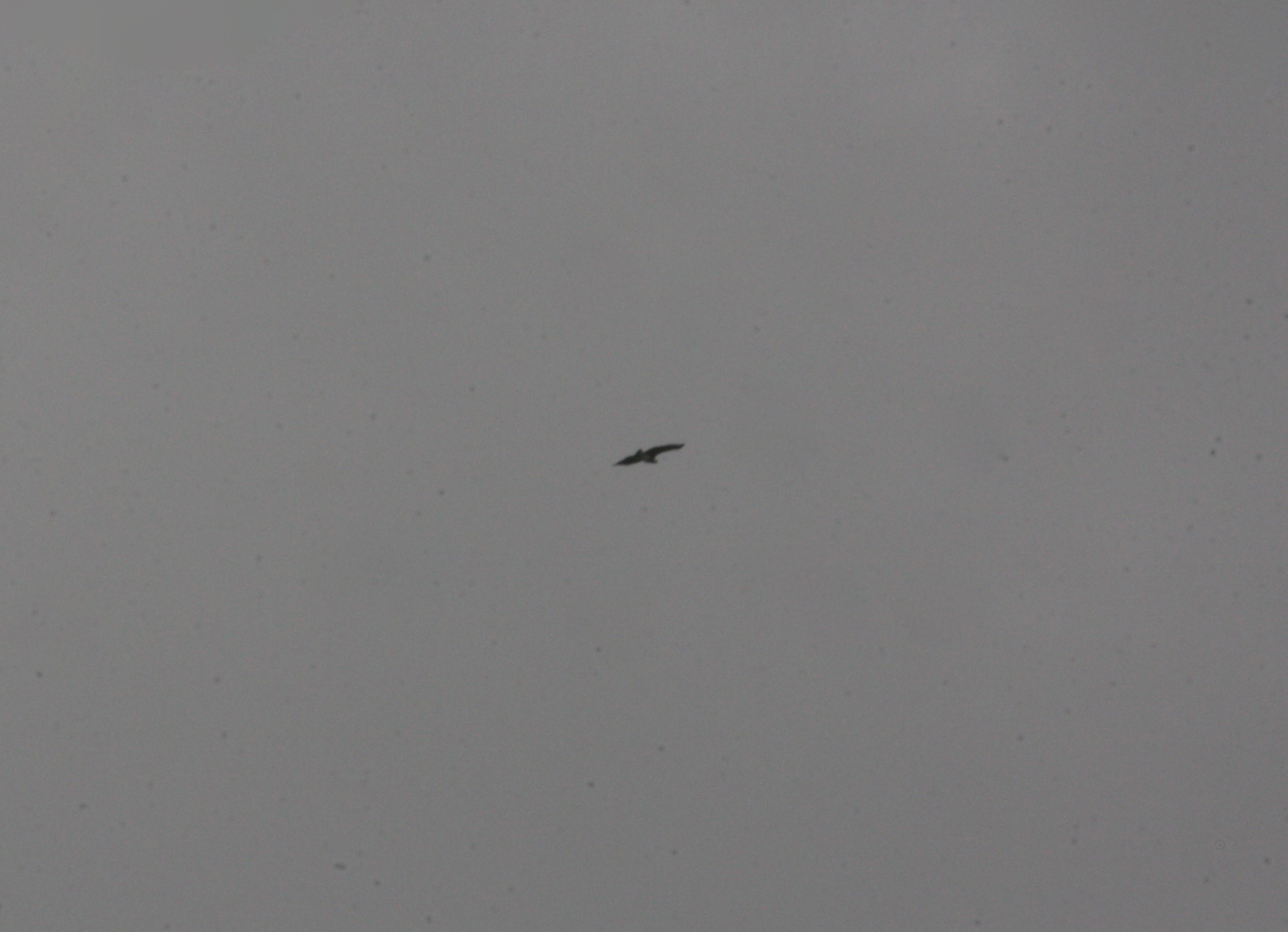
A photo I had to take and post. Although you probably cannot even make out the bird this is #1000, a Grey-headed Fish Eagle
Five years ago, my dad and I walked out of our front door and embarked on my first serious bird walk. As soon as we stepped outside, a House Sparrow flew from the roof of my neighbor’s house and landed in a nearby bush – #1. Throughout the next year, the two of us birded New Jersey extensively, adding to my North American life list. Luckily, New Jersey is one of the best birding states in the country. It is small enough to travel from one location to another in less than four hours to see any bird that winds up in a place like Cape May or even Stokes Forest in High Point, and located right by the coast, it has become famous for both spring and fall migrants and for seabirds on Sandy Hook and at Cape May Point. Furthermore, the hawk migration, during the fall months in the mountainous western part of the state, is certainly something to behold and has captivated my interest over the past few years. Within a year of birding in New Jersey alone, I was able to see 200 birds, my 200th being a Clapper Rail in the marshes at Edwin B. Forsythe NWR.
 This post continues the description of my first week working at Unidad Educativa Tomás de Berlanga.
On Wednesday, I started playing soccer with the students during recess. School for these grades goes from 7:10AM to 2PM with a 25-minute break at 9:10AM and 12:15PM, and many of the boys play on the cement basketball court, which is fitted with soccer goals as well. There is actually a bigger court just a half-minute away, but it is essentially made of crushed lava-gravel (the red variety) and when I asked why they didn’t play there I was told the surface is too slippery to run on without falling relatively often. The guys normally play with teams of three or four and play to between one and three goals, rotating the losing team until recess is over.
As the youngest of the teachers here (and probably the least concerned about getting back to class all sweaty), I’m the only one to play soccer, and so far I’ve been on teams with mostly my own students. I think this helps them remember that I’m not just someone teaching them about birds in English, asking them to quiet down, or tell me what I just said, but a person they can have fun with both in and out of class.
Periyar Tiger Reserve, Kerala
Here is the video I put together of the manakins in Mindo! I added it to my original post as well.
The video is all of the same branch, but there were at least four or five males in the same 10m radius calling from their own branches, often on the same tree.
The Guardian recently ran this piece, whose surprise starts in the title (glaciers in Africa?) and continues on from there:
Ptolemy thought they were the source of the Nile and called them theMountains of the Moon because of the perpetual mists that covered them; Stanley claimed to be the first non-African to see their icecap; and the many thousands of subsistence farmers who today live on the slopes of the fabled Rwenzori mountains in Uganda and the Democratic Republic of the Congo fear that warming temperatures are devastating their harvests.
We recently met Mr. Manoj, a tourist escort who is a regularly visitor at Cardamom County. He was happy to share some photographs from his most recent trip to Thekkady.
I visited Periyar Tiger Reserve along with my some of my business friends. We were really pleased to have such good sightings. We saw elephants, bisons and many birds, but the main attraction was the natural ambiance of the park which helped us to unwind. – Mr. Manoj
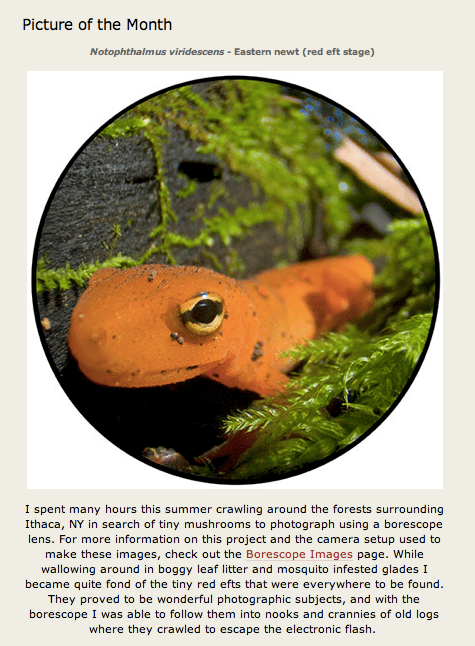
The Cornell Plant Pathology Photo Lab, run by Kent Loeffler, has an archive of photography worthy of a rainy Sunday afternoon…for now just admire this photographer’s discovery and click through (on the image below) to the other eight pictures of the month on the site:

Until I catch up on my school-posts, I won’t be writing much about Mindo. I do, however, have videos and photos that I took on Mari’s camera, so check them out! The round glare you often see is the lens of the camera reflecting against the scope that provided most of the zoom to capture the images—I discovered the annoying way how difficult it is to perfectly align the two device’s lenses. Thus, some of my footage has required heavy splicing to edit out the seconds spent trying to focus the scope (which in addition had a bad leg) in one hand while keeping the lenses in line with the other hand. Unfortunately, the most evasive bird, the Golden-winged Manakin, was the subject of the most troublesome equipment management.
 Organikos