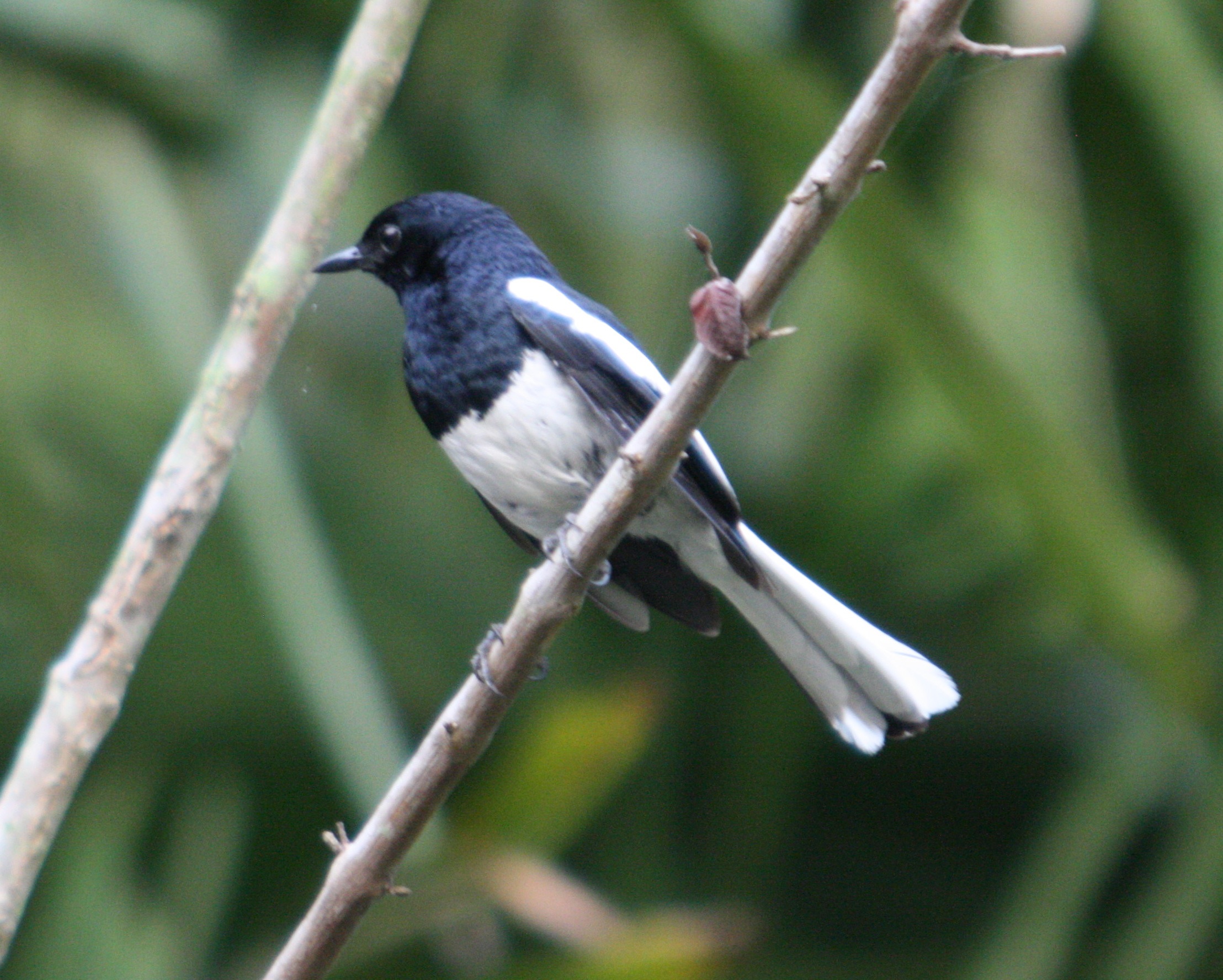
Periyar Tiger Reserve, Kerala
Periyar Tiger Reserve, Kerala

Musa Laterita is a plant that resembles the banana plant naturalized in Kerala for its fibre cultivation. The leaf stem of the plant is cut and left to wilt, then soaked in water and crushed to separate the very strong fibres. These fibres are woven into rope or cord and can be even made into paper. The fibre is prized due to its strength, flexibility and water resistance even to salt water and hence it used for marine ropes, well-drilling cables, etc. Continue reading
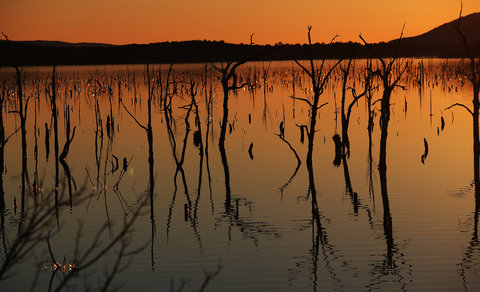
Sardis Lake, a reservoir near Tuskahoma in southeastern Oklahoma, is one of the water supply centers that could be protected by the state’s new long-term voluntary water conservation goals. Photo: Jim Wilson/The New York Times
…You see, California is the state crusading against human-caused global warming while Oklahoma’s senior senator, James Inhofe, has just written a new book excoriating that kind of focus. Continue reading
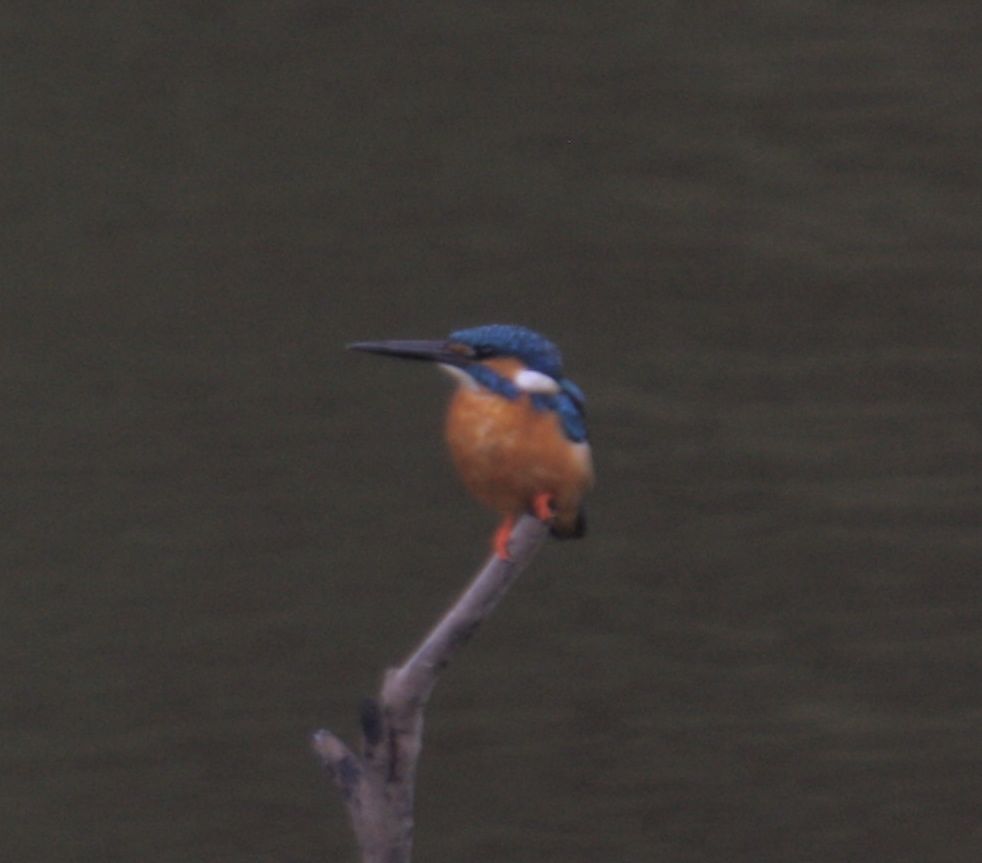
Periyar Tiger Reserve, Kerala

According to NASA, transits of Venus across the disk of the Sun are among the rarest of planetary alignments. The last time it occurred, in 2004, I happened upon some wonderful pinhole viewing boxes set up in a Paris park. (The 2004 transit allowed full visibility throughout Europe, where I happened to be living at the time.) Continue reading

The Pagoda flower is a tropical garden plant with large, heart shaped evergreen leaves found in the Western Ghats of India. The small, orange-red flowers are funnel shaped with long tubes. It is the main food plant of the Southern Bird Wing– the largest butterfly of Southern India. Continue reading
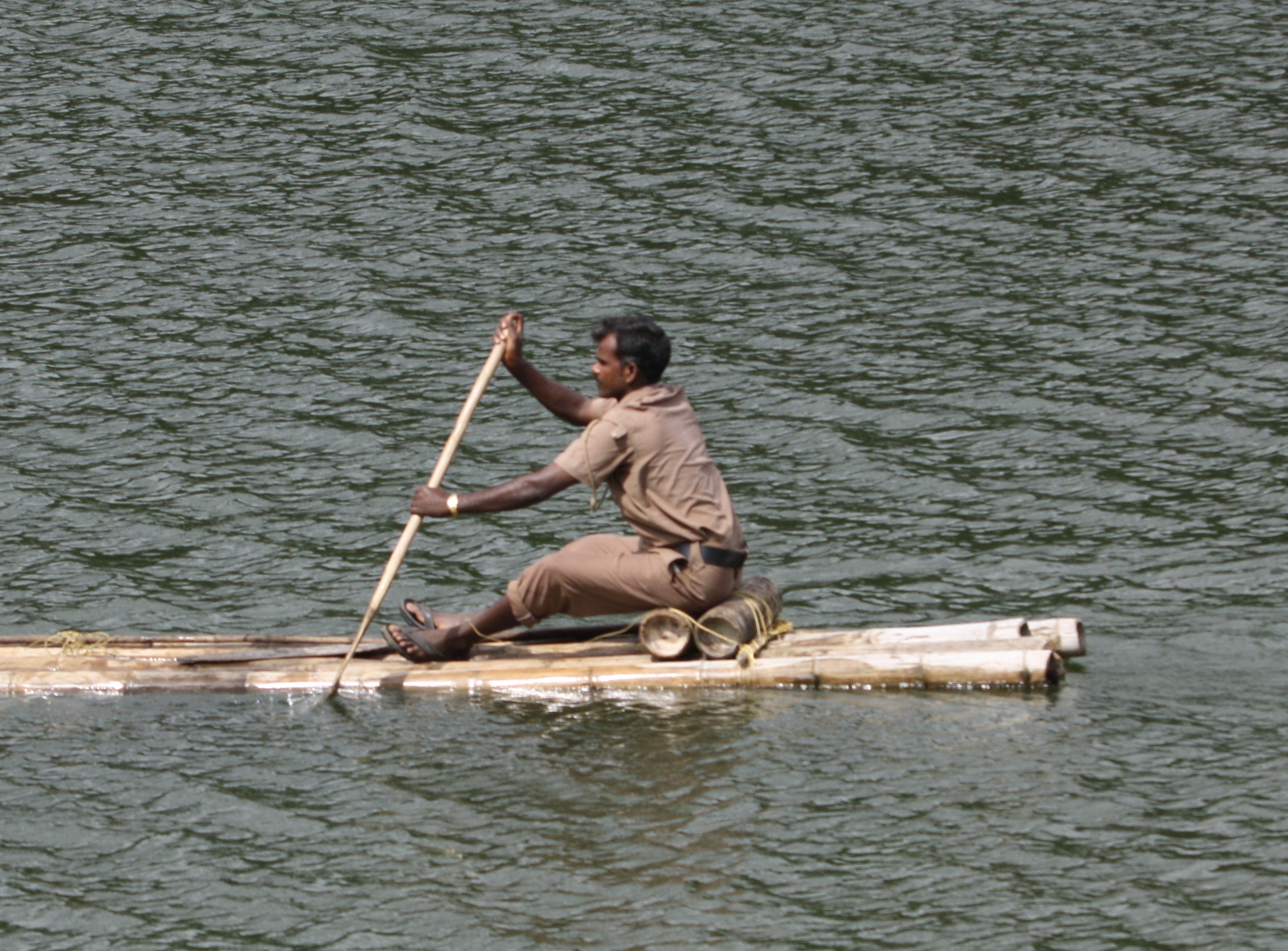
Cardamom County Resort offers a fantastic opportunity to go bamboo rafting through the Periyar Tiger Reserve. The hike to the rafts and the ride along the lake allow you to experience first-hand the beauty of the Tiger Reserve while getting a behind-the-scenes view of the jungle and the animals that inhabit it. I was able to participate in this wonderful activity and would highly recommend it to all resort visitors.
As I had a spare couple days on mainland Ecuador before flying to the Galápagos, I took a very brief trip to Mindo for a day and a half, where Mari Gray, a pre-kindergarten teacher at the Tomás de Berlanga school in Santa Cruz, told me I should be able to see lots of cool birds. Perhaps not too coincidentally, my host in Quito had asked me if I’d heard of Mindo just a few hours after Mari emailed me about the town, similarly informing me that the biodiversity was incredible, particularly for birding.
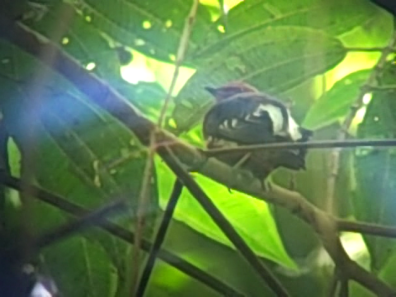
male Club-winged Manakin photographed by the author through binoculars
Even after taking a pretty intense ornithology class at Cornell University and working for the Lab of Ornithology, I don’t really consider myself a birder. When I went on a number of field trips for the class it was the first time I’d really used binoculars with the intent of just spotting birds, and I don’t even know the difference in calls of an American Robin from an Eastern Bluebird, though I can tell you their species, genus, family, and order, as well as those of 149 other common North American birds. Still, when I read that over three hundred bird species reside in the Mindo area, I knew it was an opportunity that nobody should pass up, and this was confirmed by one of my ornithology classmates who knew beforehand over half the bird families we learned. Then I read that the Club-winged Manakin, a bird I’d learned about in class, was fairly easily seen performing its lek courtship display, I knew it was an opportunity I could not pass up.
A lek, although the basic monetary unit of Albania, in this case is the Swedish-based term for a small area where males of a species communally display for females in the hopes of attracting one or more as a mate (the Manakin family, Pipridae, is polygynous, i.e. males have several female mates). Continue reading
Cattle graze on public lands under federal permits, and the fee is heavily subsidized — $1.35 per head of cattle, in contrast with the $22 per head that ranchers pay for their cattle to graze on private land.
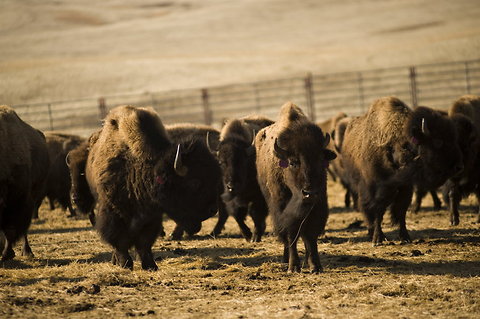
Most days we find stories that bring us back to one of the common themes affecting, and affected by, the one or more of the three “c” words in our site’s banner. Just this last week, in two very different contexts–the Mediterranean fisheries and the great plains of the western USA–we see the potential for the tragedy so commonly affecting unrestricted and accessible open spaces.
Click the image above to go to the second of these stories. While we do not believe markets solve all problems, and certainly do not solve the most complex problems easily, this one seems to be the definition of a no-brainer. Or at least, the questions seem obvious: why do citizens in the USA, who contribute to ranchers abundantly at the supermarket each week, also contribute so generously on April 15 each year? If they reduced the latter would they reduce the former? And would that not be a good thing, in terms of health and environmental considerations?

The Red Trumpet Lily is an ornamental plant commonly naturalized in the high ranges of India’s Western Ghats. The flower gets its name from its trumpet shaped blossom that begins to bloom in April and ends by June. Continue reading
Guest Author: Denzel Johnson

During the 1800’s Buenos Aires hosted a wealthy group of people in what is today’s most popular district- San Telmo. The district today is as popular as it could be and hosts a series of events that accommodate locals as well as tourists as they flock between the clubs and cafes. Continue reading
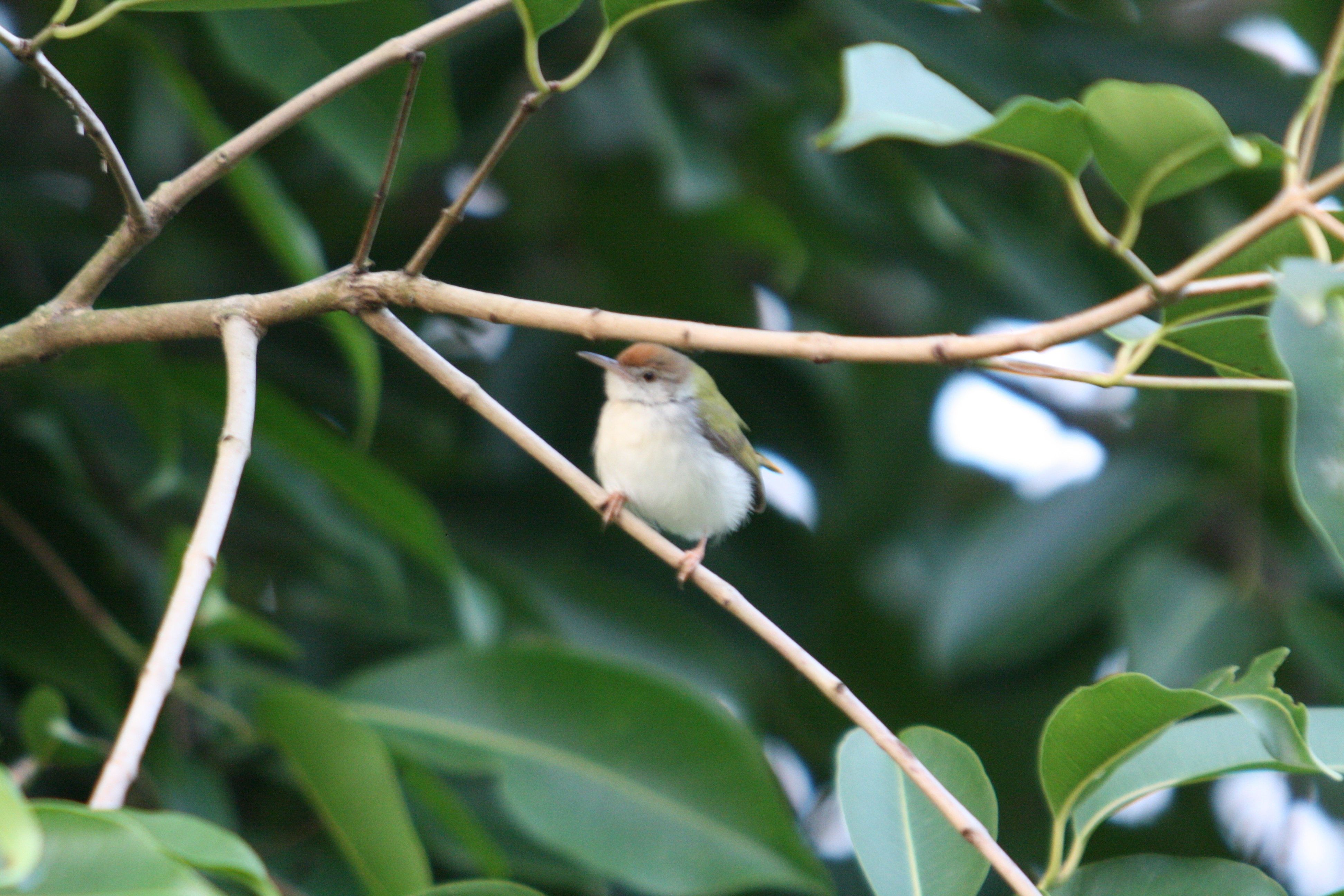
Periyar Tiger Reserve, Kerala
More subscription-worthy coverage from the New York Times:

Mangoes are objects of envy, love and rivalry as well as a new status symbol for India’s new rich. Mangoes have even been tools of diplomacy. The allure is foremost about the taste but also about anticipation and uncertainty: Mango season in the region lasts only about 100 days, traditionally from late March through June; is vulnerable to weather; and usually brings some sort of mango crisis, real or imagined.

In our organization, which includes more than one American working in lodging establishments in India, a sociological investigation like this catches the eye. Click the image to the left for a podcasted author interview. A few fun facts:
– At least 1 out of 2 motels are owned by Indian-Americans.
– Out of those Indian-owned motels, 70 percent are owned by Gujaratis, people with roots in the western Indian state of Gujarat.
– Of those Gujaratis, three-fourths share the last name Patel. There’s even a name for these overnight establishments: “Patel Motels.”
Night Blooming Cereus is one of the most popular garden flowers commonly found in the hill ranges of India’s Western Ghats. A member of the cactus family, its flowers are white and strong scented, with the distinction that they bloom only at night and close by dawn.
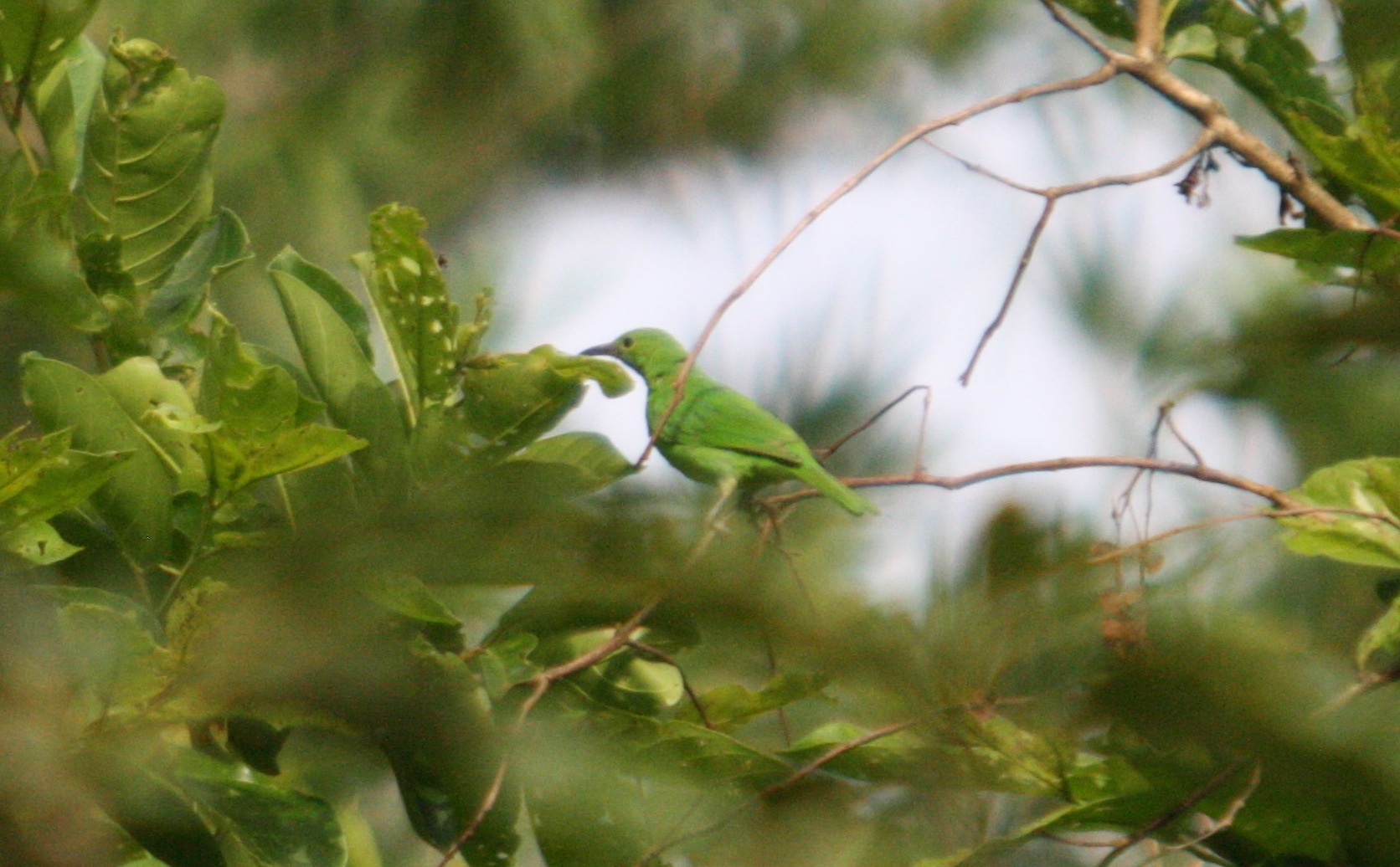
Periyar Tiger Reserve, Kerala

Portrait of Daniel Kahneman, author of Thinking, Fast and Slow, and winner of the 2002 Nobel prize in economic science. New York, NY, April 17 2012.
Click the image above to go to the interview, in Der Spiegel, in which our intellectual superhero finally explains why familiarity feels so good:
Of course, there are other mechanisms of advertising that also act on the subconscious. But the main effect is simply that a name we see in a shop looks familiar — because, when it looks familiar, it looks good. There is a very good evolutionary explanation for that: If I encounter something many times, and it hasn’t eaten me yet, then I’m safe. Familiarity is a safety signal. That’s why we like what we know.
The Periyar Tiger Reserve is one of those places that gets your adrenaline flowing just a little more than usual, because you’re always on the verge or the high of an interesting sighting or sensation. A good reserve does that. It fosters enough of a preserved environment that exploring it brings you back to a pre-industrial state of awareness.
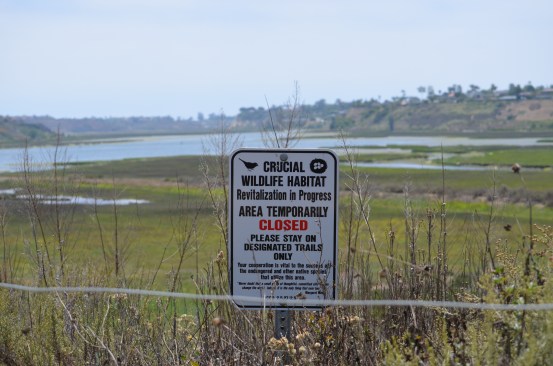
Today I visited the Newport Bay Conservancy in Newport Beach, California. It’s not quite as wildly invigorating as Wild Periyar, but it was a beautiful day and the birds were hungry.
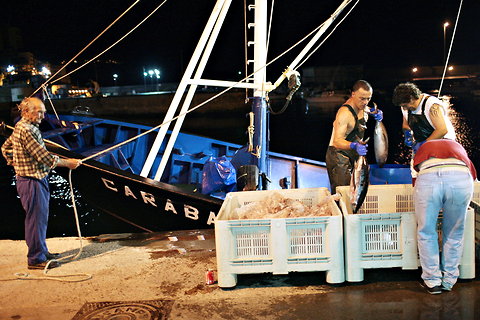
Click the image above to go to the story in Dot Earth:
Talk about timing. As American and European fisheries officials met this week in Brussels to talk about, among other things, the problem of illegal and unregulated fishing, Chinese boats were illegally in the Mediterranean, making a mockery of efforts to manage the bluefin tuna fishing season.

The Thrissur Pooram is the largest of all the festivals held in Kerala. It is a grand bonanza of colors and sound, native drums and horns plus magnifiicent elephant pageantry which cannot be missed. It normally falls between 15th April and 15th May. The festival takes place over two days and surrounding communities set out with their temple icons in all regalia on caparisoned elephants to the Pooram ground in front of Vadakkumnatha temple located in the city centre.
The festival is famous for the fireworks display that begins in the well past midnight into the second day and can last several hours. The Pakal Pooram (Daylight’s Pooram) staged the next morning is a recap of the main Pooram’s highlights. Continue reading
 Organikos