St. Louis, Missouri
St. Louis, Missouri

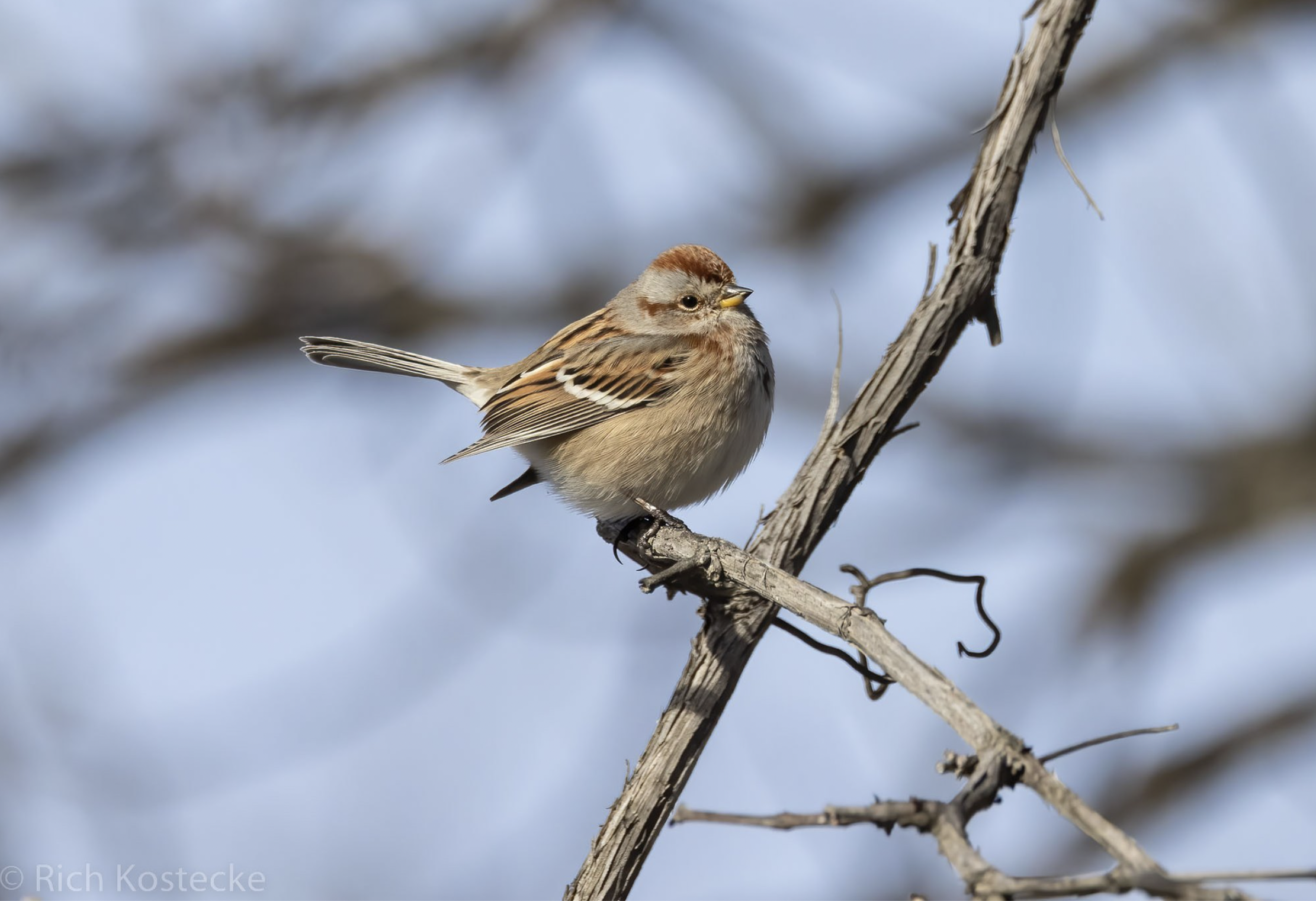
Xiulin Ruan, a professor of mechanical engineering at Purdue University, has created the whitest paint on record with his students. John Underwood/Purdue University
We once again have Cara Buckley to thank:
To Help Cool a Hot Planet, the Whitest of White Coats
Scientists at Purdue have created a white paint that, when applied, can reduce the surface temperature on a roof and cool the building beneath it.
Xiulin Ruan, a professor of mechanical engineering at Purdue University, didn’t set out to make it into the Guinness World Records when he began trying to make a new type of paint. He had a loftier goal: to cool down buildings without torching the Earth. Continue reading

Khichan, Rajasthan
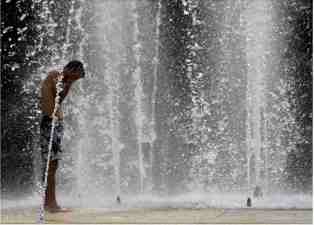
A man cools off by a fountain during a heat wave in Seville, Spain, on July 10th. Photograph by Cristina Quicler / AFP / Getty
It is difficult to imagine, from where I sit in cool weather in the mountains of Costa Rica’s central valley, what that heat would feel like. But it is not difficult to imagine all the possibilities for doing something about it. When you are in a hole that you do not want to be in, stop digging:
Is It Hot Enough Yet for Politicians to Take Real Action?
The latest record temperatures are driving, again precisely as scientists have predicted, a cascading series of disasters around the world.
We’ve crushed so many temperature records recently—the hottest day ever measured by average global temperature, the hottest week, the hottest June, the highest ocean temperatures, the lowest sea-ice levels—that it would be easy to overlook a couple of additional data points from this past weekend. But they’re important, because they help illuminate not just the size of our predicament but the political weaknesses that make it so hard to confront. Continue reading

Female – Photo credit: Nancy Buron
Pawtucket, Rhode Island
 We now have a place to match to the name for our epoch:
The Human Age Has a New Symbol. It’s a Record of Bomb Tests and Fossil Fuels.
A scientific panel has picked Crawford Lake, Ontario, to represent the Anthropocene, a proposed, and hotly contested, new chapter in geologic time.
For almost 15 years, a panel of scholars has been chewing over a big question: Has our species transformed the planet so much that we have plunged it into a new interval of geologic time? Continue reading
Yaoundé, Cameroon
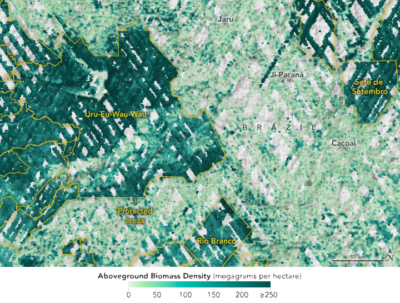
Protected areas, outlined in yellow, in a swath of the Brazilian Amazon are richer in trees than are other areas. NASA
Thanks to Yale e360, a very simple way to put scale on the value of protected areas, and at the same time consider the carbon footprint of the country that emits the most:
World’s Protected Lands Are Safeguarding More Carbon Than the U.S. Emits in a Year
If left unguarded, many of the world’s protected lands would have likely been burned, logged, or otherwise degraded, unleashing huge sums of heat-trapping gas. Continue reading

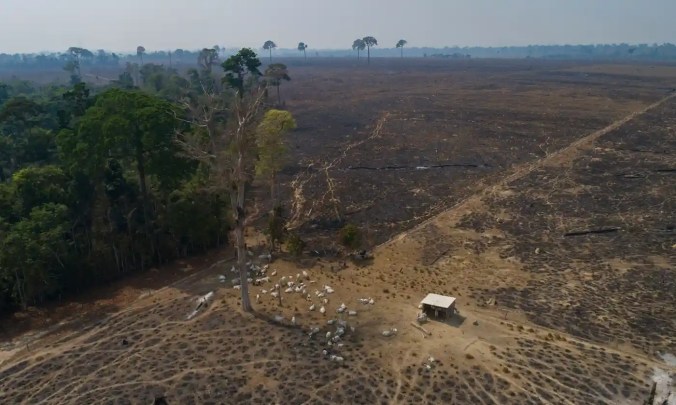
Cattle graze on land recently burned and deforested by cattle farmers near Novo Progresso, in Para state. Photograph: André Penner/AP
A short note following up on the progress reported earlier from our big and very important neighbor to the south:
Brazil: Amazon deforestation drops 34% in first six months under Lula
Government data shows marked reduction against same period last year, reversing trend of destruction during Bolsonaro reign
After four years of rising destruction in Brazil’s Amazon, deforestation dropped by 33.6% during the first six months of President Luiz Inácio Lula da Silva’s term, according to new government satellite data. Continue reading
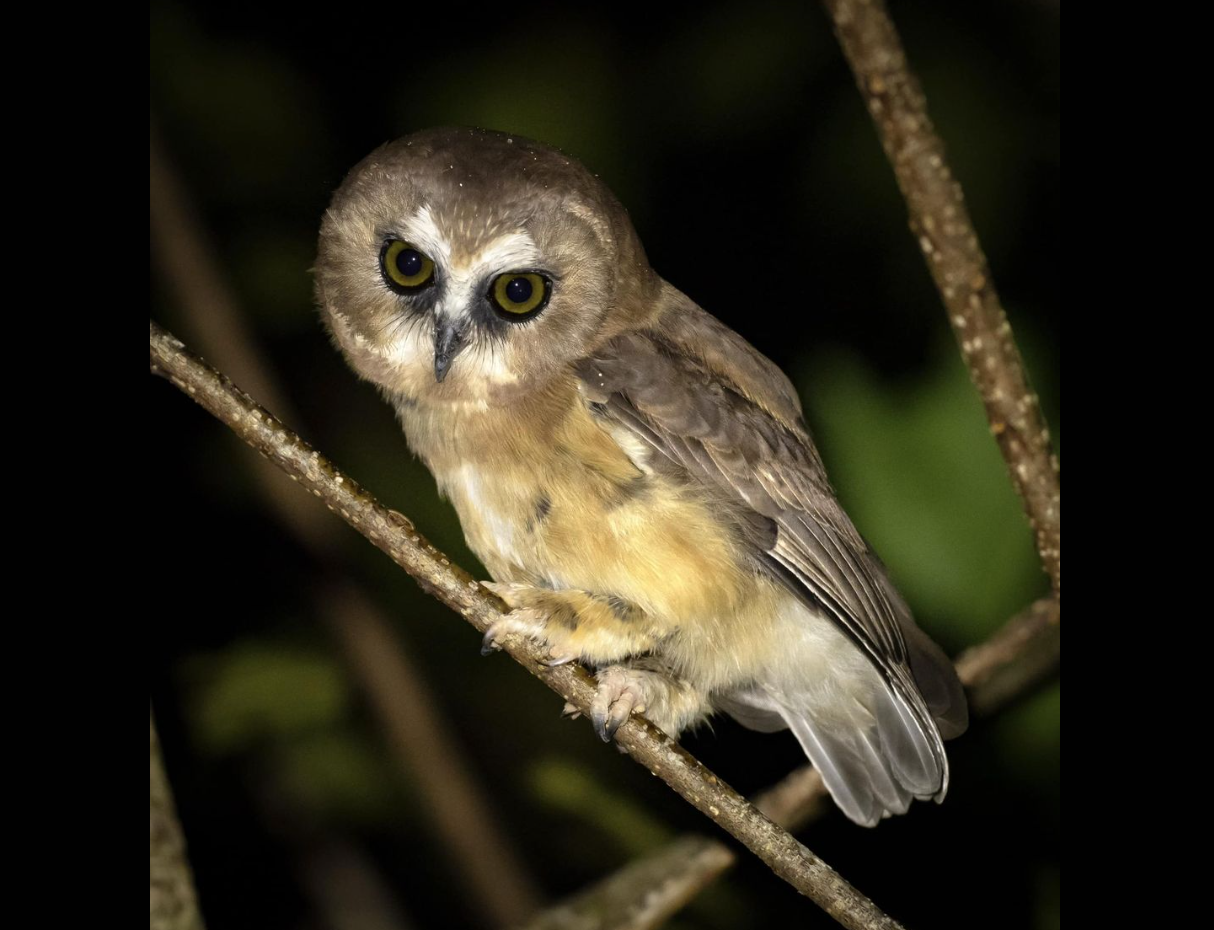
 The Economist reviews this new book by Jennifer Ackerman, and if you do not subscribe to that magazine you can see other reviews here or here:
A raptor’s mystique inspires “What an Owl Knows”
They know rather a lot, reveals the book’s author, Jennifer Ackerman
With a face as round as the first letter of its name and a stance as upright as the last—along with human-like features and a haunting cry—the owl has a mystical, mythical perch in the imagination. Difficult to spot because of their mostly nocturnal habits, and sporting cryptic plumage that helps them melt into landscapes, owls, writes Jennifer Ackerman, are the most enigmatic of birds…

Shai Hills Resource Reserve, Ghana
Nautilus is not one of our go-to sources for inspiration, but with conversations like this it is obvious we should be paying more attention to their work. Thanks to George Musser for this article:
The Biologist Blowing Our Minds
Michael Levin is uncovering the incredible, latent abilities of living things.
Michael Levin, a developmental biologist at Tufts University, has a knack for taking an unassuming organism and showing it’s capable of the darnedest things. He and his team once extracted skin cells from a frog embryo and cultivated them on their own. With no other cell types around, they were not “bullied,” as he put it, into forming skin tissue. Instead, they reassembled into a new organism of sorts, a “xenobot,” a coinage based on the Latin name of the frog species, Xenopus laevis. It zipped around like a paramecium in pond water. Continue reading
Seewinkel National Park, Austria
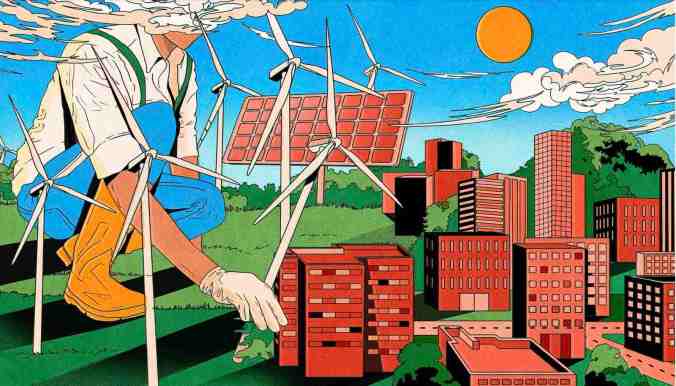
Bill McKibben gives a thorough reconsideration of what, if any, growth is helpful now:
To Save the Planet, Should We Really Be Moving Slower?
The degrowth movement makes a comeback.
John Maynard Keynes once observed that dating from “say, to two thousand years before Christ—down to the beginning of the 18th century, there was no very great change in the standard of life of the average man living in the civilised centres of the earth. Ups and downs certainly. Visitations of plague, famine, and war. Golden intervals. But no progressive, violent change.” Continue reading
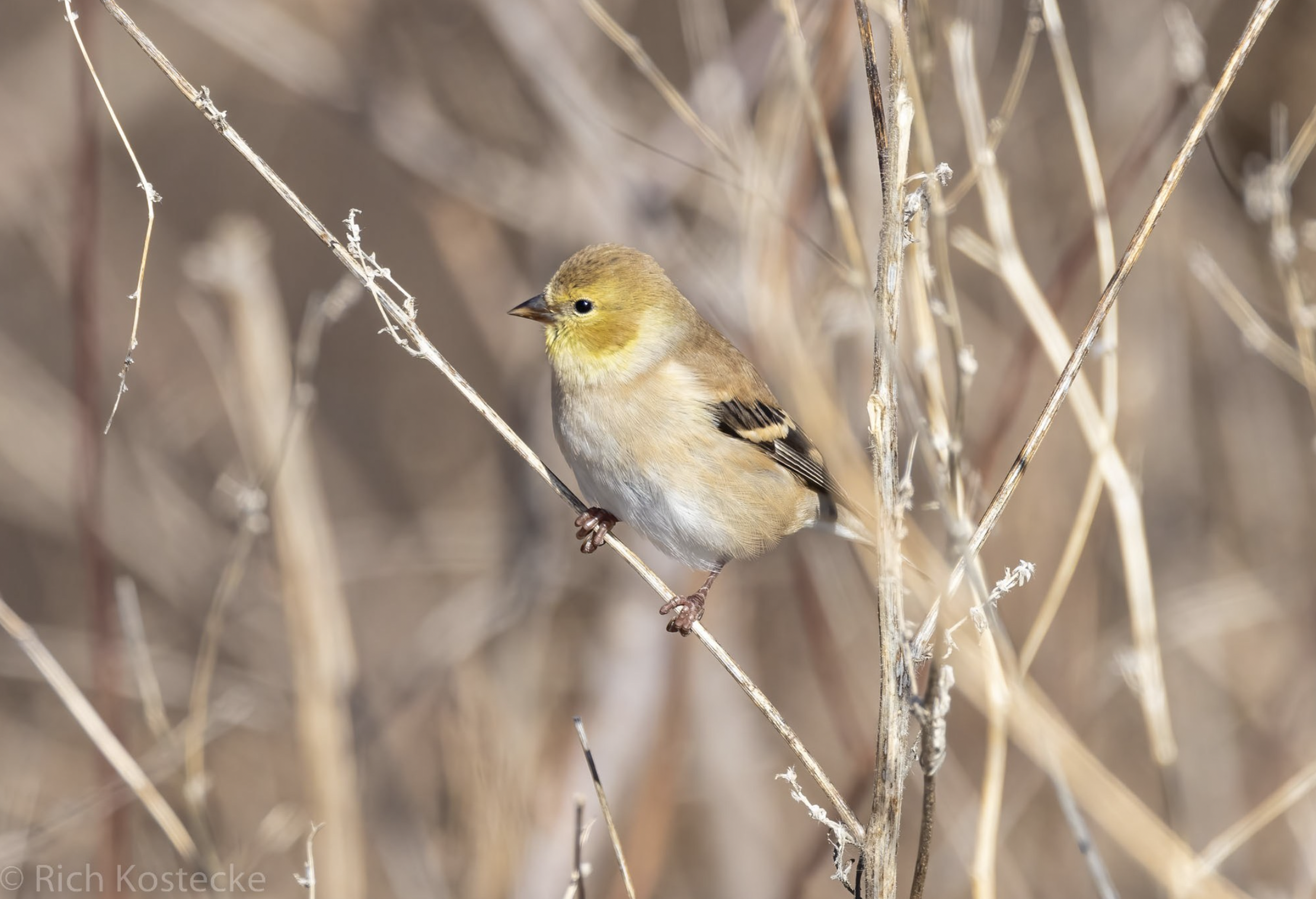
St. Louis, Missouri
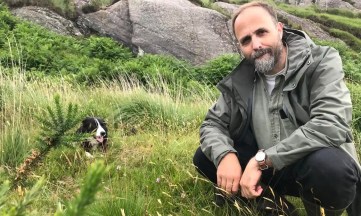
Eoghan Daltun with his dog on his farm, where native trees such as sessile oak, rowan and downy birch have self-seeded. Photograph: Rory Carroll/The Guardian
Rewilding remains one of our favorite topics to read about, and we share accordingly. Thanks to Rory Carroll for this article in the Guardian:
‘The result was amazing’: one man’s mission to reforest a barren Irish hillside
Eoghan Daltun has spent 14 years rewilding part of Beara peninsula into a showcase of diversity
Eoghan Daltun stood on a slope and pointed to a distant vista of verdant fields, craggy hills and conifer trees across the Beara peninsula in west Cork. Continue reading
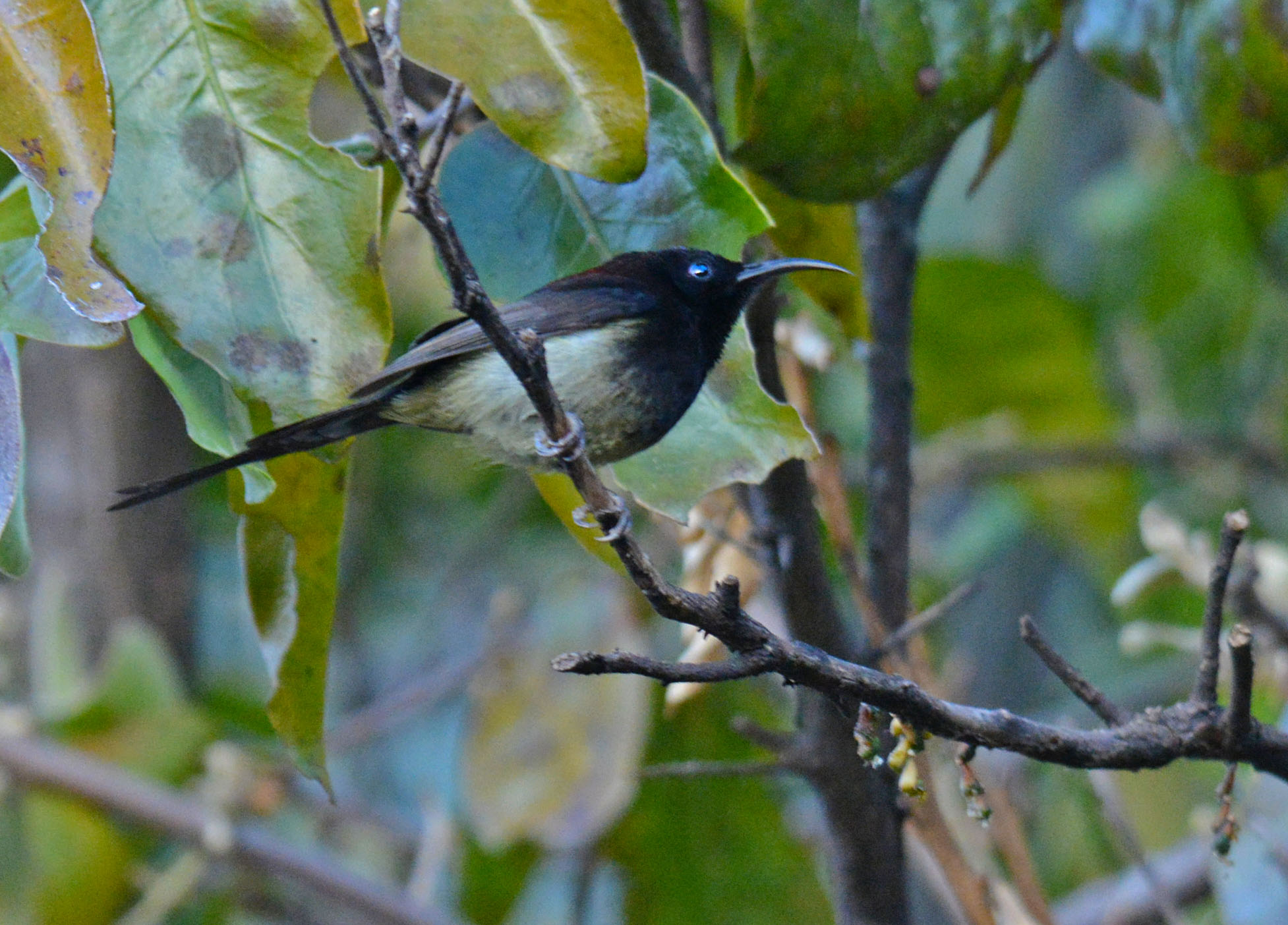
Kumaon Hills, Uttarkhand
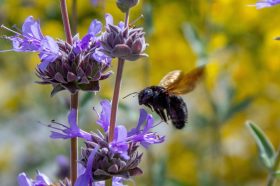
Native Bees Yield Hardier Flowers Than Honey Bees, Research Finds
Bees getting the scientific attention they deserve, our thanks to Yale e360 for summarizing and sharing these findings:
Native Bees Yield Hardier Flowers Than Honey Bees, Research Finds
Flowers pollinated by native bees produce fitter offspring than flowers pollinated by honey bees, according to a new study carried out in San Diego, California. Continue reading
 Organikos