Mycologist Zach Hedstrom sprays a spore-infused liquid to inoculate debris from forest thinning.

Inside Boulder Mushroom’s laboratory, a refrigerator houses an array of agar plates containing diverse mycelium cultures.
We have paid attention to mycological wonders for long enough that surprises are rare; but they happen. Stephen Robert Miller’s reporting, with photography by Jimena Peck were published in the Washington Post and came to our attention by way of the Food & Environment Reporting Network, which is where you can read the entire article:
How mushrooms can prevent megafires
Thinning forests to prevent fires produces a lot of sticks and other debris, which also pose a fire risk. In Colorado and elsewhere, scientists are using fungi to turn those trimmings into soil.
Overgrown stands of lodgepole pine are a risk for megafires. Thinning the stands simulates the effects of a natural fire but also generates a large amount of biomass, called “slash,” which can also fuel forest fires.
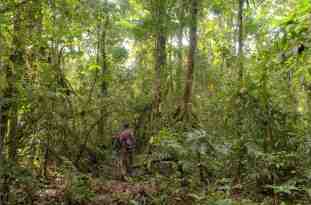
If you’ve gone walking in the woods out West lately, you might have encountered a pile of sticks. Or perhaps hundreds of them, heaped as high as your head and strewn about the forest like Viking funeral pyres awaiting a flame.
These slash piles are an increasingly common sight in the American West, as land managers work to thin out unnaturally dense sections of forests — the result of a commitment to fire suppression that has inadvertently increased the risk of devastating megafires. Continue reading