Gallatin, Montana
Gallatin, Montana
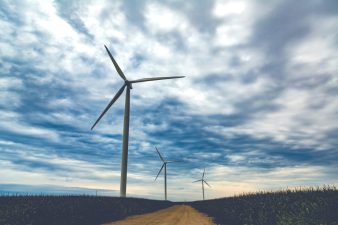
he Pioneer Prairie Wind Farm along the Iowa-Minnesota state line. TONY WEBSTER VIA WIKIPEDIA
If you are in the USA and are looking for more reasons to celebrate independence, consider renewables (thanks to Yale e360):
U.S. Wind and Solar Overtake Coal for the First Time
In a first for the U.S. power sector, wind and solar have generated more electricity than coal so far this year. Continue reading
Kumaon Hills, Uttarakhand
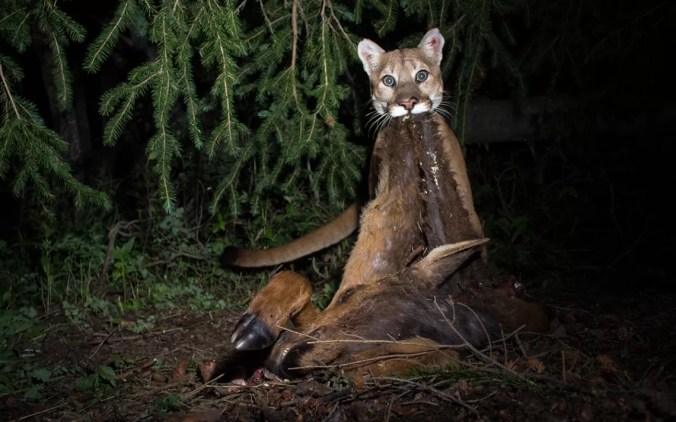
Puma in Wyoming. | Photo by Neal Wight, courtesy of Panthera
Thanks to Grace van Deelen for this article in the magazine of the Sierra Club:
Mountain Lions Are Murder Gardeners
By leaving carcasses, mountain lions create lush landscapes for future victims that could attract prey
If you’re hiking in Yellowstone and stumble upon an unusually lush landscape, you might have found a mountain lion’s garden. Continue reading
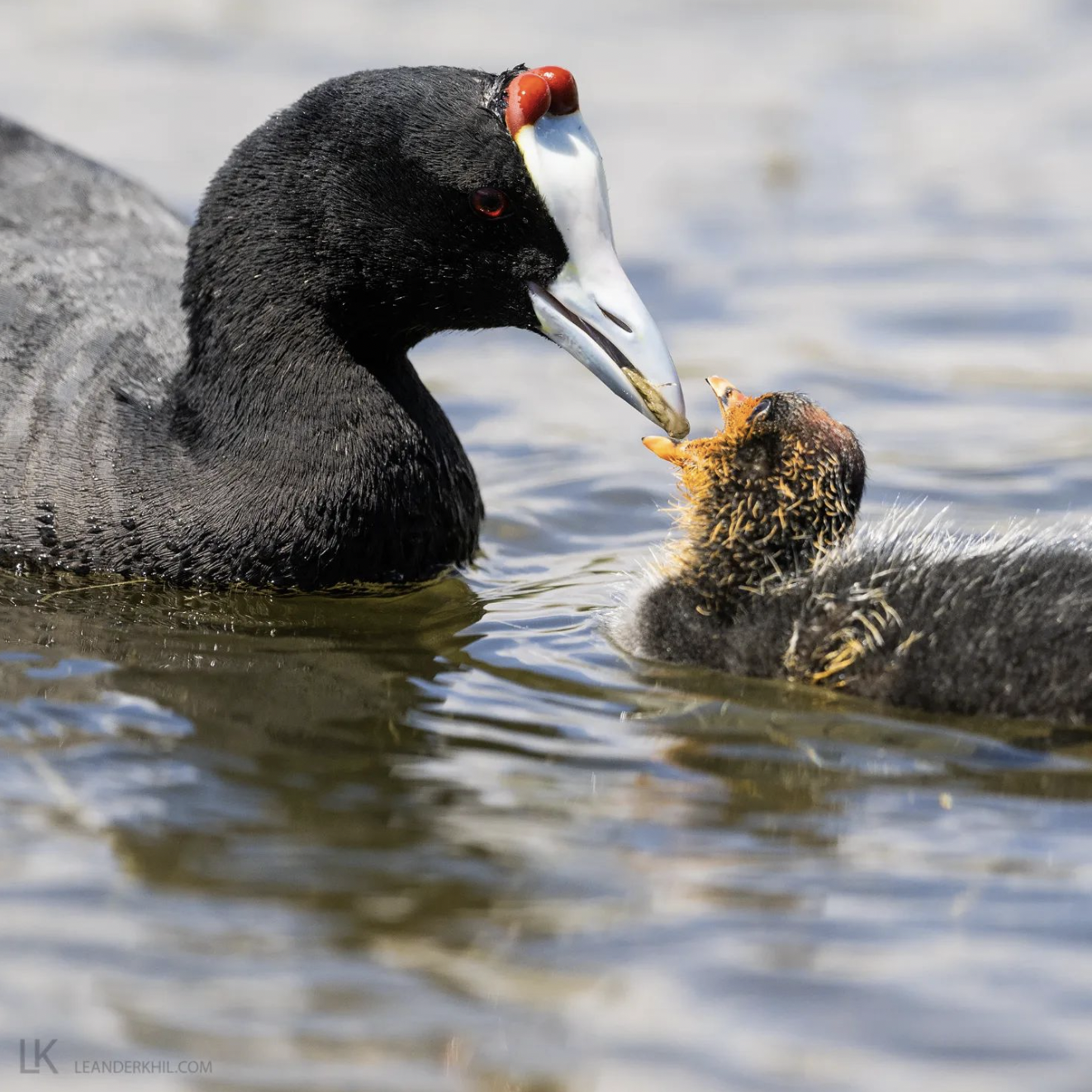
Leander Khil Photography – very rare species, feeding its young
Albufera de Valencia, Spain
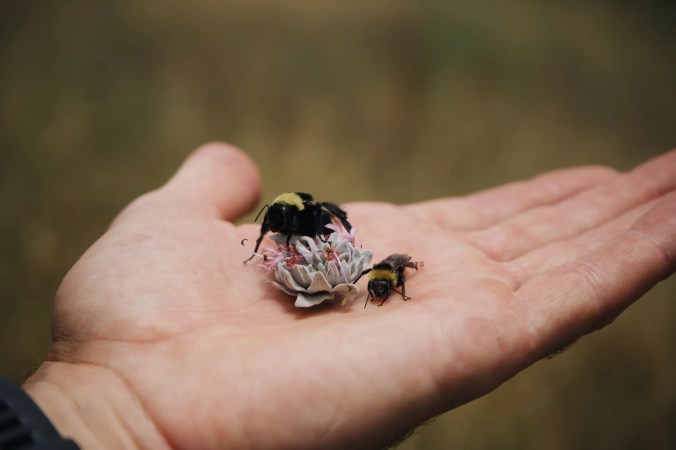
Leif Richardson examines a queen bee. Grace Widyatmajda/NPR
Bumble bees need help and the California Bumble Bee Atlas Project is on it. Thanks to National Public Radio (USA) for bringing it to our attention:
Krystle Hickman, a bee photographer and volunteer for the Bumble Bee Atlas Project, carefully places a bee onto a flower.
Grace Widyatmadja/NPRNets, coolers and courage: A day in the life of a volunteer bee conservationist
I never realized how fuzzy a bumble bee is until I got to hold one between my fingertips. It feels like a furry black and yellow bear, buzzing with its tiny body, wriggling with its legs.
The conservation biologist Leif Richardson, who handed me this bee a moment ago, has some advice for holding it. “You’re going to squeeze harder than you think you need to, but not so hard that you hurt him.” Continue reading
Yaoundé, Cameroon
Reporting from Niger, the Economist offers a glass-half-full consideration of a daunting topic (the podcast version of this story is excellent), and pulls it off:
image: josh haner/the new york times/redux/eyevine
The surprising upside of climate migration
To adapt to climate change, people will move. The results will not be all bad
On the outskirts of Niamey, the capital of Niger, it looks as if the countryside has moved to the city. Clusters of dome-like wooden huts have popped up. Cows and goats are tethered in the shade. Waves of rural folk have arrived, largely because of climate change. Continue reading
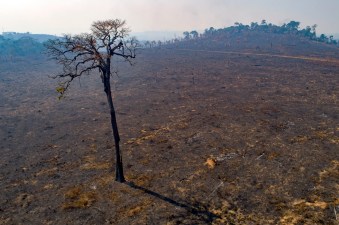
A section of forest in the Brazilian Amazon that was burned by cattle ranchers, seen on August 16, 2020. Cattle ranching is the largest driver of deforestation in the Amazon rainforest. Andre Penner/AP
The photograph heading the story is alarming enough, but the illustrations (especially the “scroll down” graphic) accompanying the written explanations are extremely compelling. Thanks to Benji Jones for the story and to Alvin Chang for the graphics in this Vox article:
The alarming decline of Earth’s forests, in 4 charts
Deforestation raged ahead again in 2022, even after scores of countries pledged to protect their forests.
Over the last decade, dozens of companies and nearly all large countries have vowed to stop demolishing forests, a practice that destroys entire communities of wildlife and pollutes the air with enormous amounts of carbon dioxide.
A big climate conference in Glasgow, in the fall of 2021, produced the most significant pledge to date: 145 countries, including Brazil, China, and Indonesia, committed to “halt and reverse” forest loss within the decade. Never before, it seems, has the world been this dedicated to stopping deforestation. Continue reading
Kumaon Hills, Uttarakhand
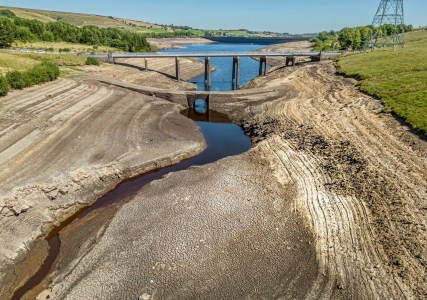
Baitings reservoir in Ripponden, West Yorkshire, in summer 2022, when the total stock of water in England’s reservoirs was at its lowest level since 1995. Photograph: Danny Lawson/PA
We do not favor panic button words in headlines; but when the cap fits, wear it:
‘Drought is on the verge of becoming the next pandemic’
While the world becomes drier, profit and pollution are draining our resources. We have to change our approach
The River Derwent in Cumbria has run dry in parts of the Borrowdale valley for the third consecutive year. Photograph: Christopher Thomond/The Guardian
During the summer months in the Oxfordshire town where I live, I go swimming in the nearby 50-metre lido. With my inelegantly slow breaststroke, from time to time I accidentally gulp some of the pool’s opulent, chlorine-clean 5.9m litres of water. Sometimes, I swim while it’s raining, when fewer people brave it, alone in my lane with the strangely comforting feeling of having water above and below me. I stand a bottle of water at the end of the lane, to drink from halfway through my swim. I normally have a shower afterwards, even if I’ve showered that morning. I live a wet, drenched, quenched existence. But, as I discovered, this won’t last. I am living on borrowed time and borrowed water. Continue reading
Varanger Peninsula, Norway
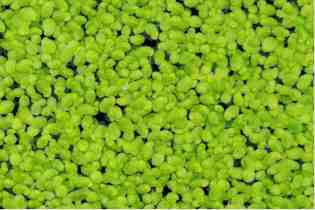
Duckweed at the Plantible Foods aqua farm in San Marcos, Calif. (Eric Thayer/for The Washington Post)
We link frequently to articles about meat replacement options, and this appears to be the first time that duckweed is the plant protein being featured. So, thanks to Michael J. Coren, a climate advice columnist at the Washington Post, for this:
The plant protein that could push meat off your plate
Plantible grows duckweed in ponds housed in greenhouses. (Eric Thayer/for The Washington Post)
SAN MARCOS, Calif. — I came to this aquatic farm an hour outside of San Diego because I wanted to see what could be the future of humanity’s protein supply.
At the moment, it looks more like a meth lab out of the drama “Breaking Bad,” jokes Tony Martens Fekini, the chief executive of Plantible Foods.
Debris from a machine that grinds duckweed. (Eric Thayer/for The Washington Post)
Decrepit recreational vehicles squat on the property. In one corner, people tend to vials, grow lights and centrifuges in a trailer lab. More than a dozen big ponds filled with duckweed, a tiny green plant, bask in the Southern California sunshine.
But the only thing cooking here is protein.
Riverview Park, Virginia

A turbine blade more than 300 feet long. The $4 billion Vineyard Wind project is expected to start generating electricity by year’s end. Bob O’Connor for The New York Times
On previous occasions when we linked to stories about windfarms‘ large turbines, we have noticed that aesthetics can get in the way of progress, so thanks to Stanley Reed and Ivan Penn for this reporting from the New England coast:
A Giant Wind Farm Is Taking Root Off Massachusetts
The offshore energy project will have turbines taller than any building in Boston, but they will be barely visible from Martha’s Vineyard.
On a chilly June day, with the Massachusetts island of Martha’s Vineyard just over the distant horizon, a low-riding, green-hulled vessel finished hammering a steel column nearly 100 feet into the bottom of the Atlantic Ocean. Continue reading
Kumaon Hills, Uttarkhand
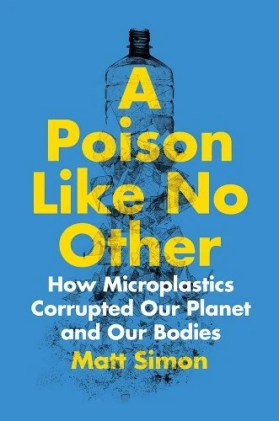 Four books have been read and summarized, thanks to Elizabeth Kolbert (the information challenges you, of course). The covers of those books appear here with links to independent booksellers where they are or will be available, and at minimum the opening story of Kolbert’s article is a must-read if you care about plastic:
They both release and attract toxic chemicals, and appear everywhere from human placentas to chasms thirty-six thousand feet beneath the sea. Will we ever be rid of them?
In 1863, when much of the United States was anguishing over the Civil War, an entrepreneur named Michael Phelan was fretting about billiard balls. At the time, the balls were made of ivory, preferably obtained from elephants from Ceylon—now Sri Lanka—whose tusks were thought to possess just the right density. Phelan, who owned a billiard hall and co-owned a billiard-table-manufacturing business, also wrote books about billiards and was a champion billiards player. Owing in good part to his efforts, the game had grown so popular that tusks from Ceylon—and, indeed, elephants more generally—were becoming scarce. He and a partner offered a ten-thousand-dollar reward to anyone who could come up with an ivory substitute.
A young printer from Albany, John Wesley Hyatt, learned about the offer and set to tinkering. In 1865, he patented a ball with a wooden core encased in ivory dust and shellac. Players were unimpressed. Next, Hyatt experimented with nitrocellulose, a material made by combining cotton or wood pulp with a mixture of nitric and sulfuric acids. He found that a certain type of nitrocellulose, when heated with camphor, yielded a shiny, tough material that could be molded into practically any shape. Hyatt’s brother and business partner dubbed the substance “celluloid.” The resulting balls were more popular with players, although, as Hyatt conceded, they, too, had their drawbacks. Nitrocellulose, also known as guncotton, is highly flammable. Two celluloid balls knocking together with sufficient force could set off a small explosion. A saloon owner in Colorado reported to Hyatt that, when this happened, “instantly every man in the room pulled a gun.”
It’s not clear that the Hyatt brothers ever collected from Phelan, but the invention proved to be its own reward. From celluloid billiard balls, the pair branched out into celluloid dentures, combs, brush handles, piano keys, and knickknacks. They touted the new material as a substitute not just for ivory but also for tortoiseshell and jewelry-grade coral. These, too, were running out, owing to slaughter and plunder. Celluloid, one of the Hyatts’ advertising pamphlets promised, would “give the elephant, the tortoise, and the coral insect a respite in their native haunts.” Continue reading
Monteverde Cloud Forest Reserve, Costa Rica

Paris mayor Anne Hidalgo and the co-president of the Paris bid for the 2024 Olympics, Tony Estanguet, paddle on the Seine in Paris. Photograph: Reuters
Since 11+ years ago many valuable environmental opinions by George Monbiot have been linked to in our pages; today a celebration of a neighboring country’s efforts:
When it comes to rich countries taking the environment seriously, I say: vive la France
Emmanuel Macron’s government is at least doing the bare minimum to avert the planetary crisis – and putting the UK to shame
While we remain transfixed by a handful of needy egotists in Westminster and the crises they manufacture, across the Channel a revolution is happening. It’s a quiet, sober, thoughtful revolution, but a revolution nonetheless. France is seeking to turn itself into an ecological civilisation. Continue reading

 Organikos