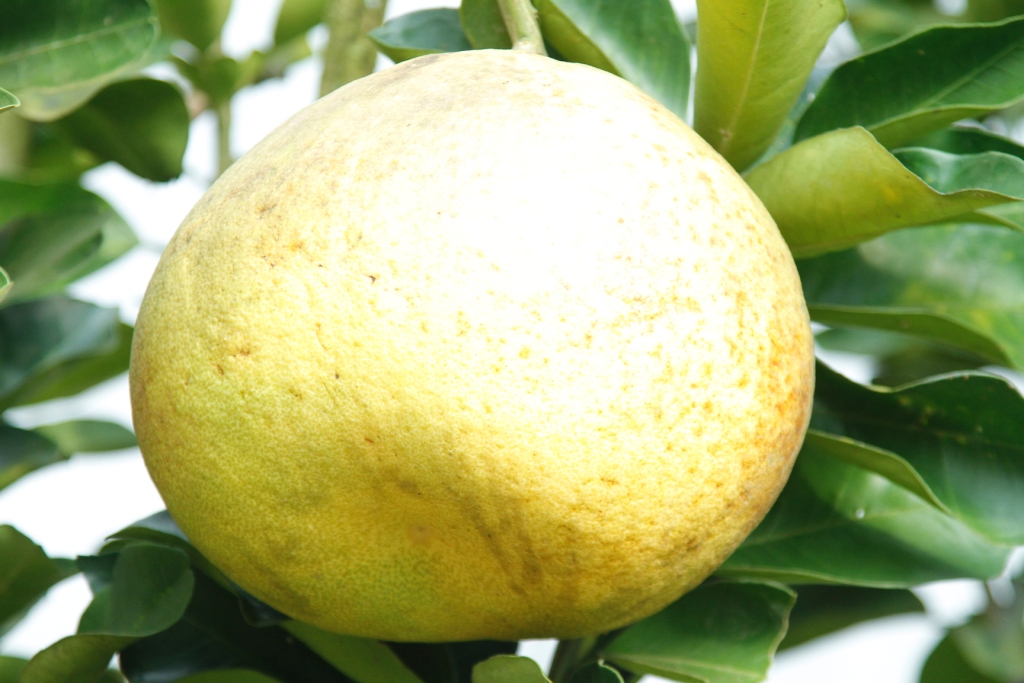
Pomelo (Citrus maxima)

The pomelo is the largest fruit in the citrus family and usually grows throughout Southeast Asia. The thick, easy to peel rind surrounds, juicy and fairly sweet yellow or pink flesh. The fruit averages about 15-25 centimeters in diameter and weighs around 1-2kg. Continue reading

Paper Guardian

Samantha Contis for The New York Times ©

Click the image above for a profile of an amazing entrepreneurial conservationist.  The New York Times continues to demonstrate its subscription-worthiness.  The key line in the profile, which we can relate to both in principal and practice:

Barrett, who is 61, has dedicated his life to unlocking the mysteries of paper, which he regards as both the elemental stuff of civilization and an endangered species in digital culture. For his range of paper-related activities, he received a $500,000 fellowship from the MacArthur Foundation in 2009. “Sometimes I worry about what a weird thing it is to be preoccupied with paper when there’s so much trouble in the world,” Barrett told me, “but then I think of how our whole culture is knitted together by paper, and it makes a kind of sense.”

Continue reading

Melville’s Muse

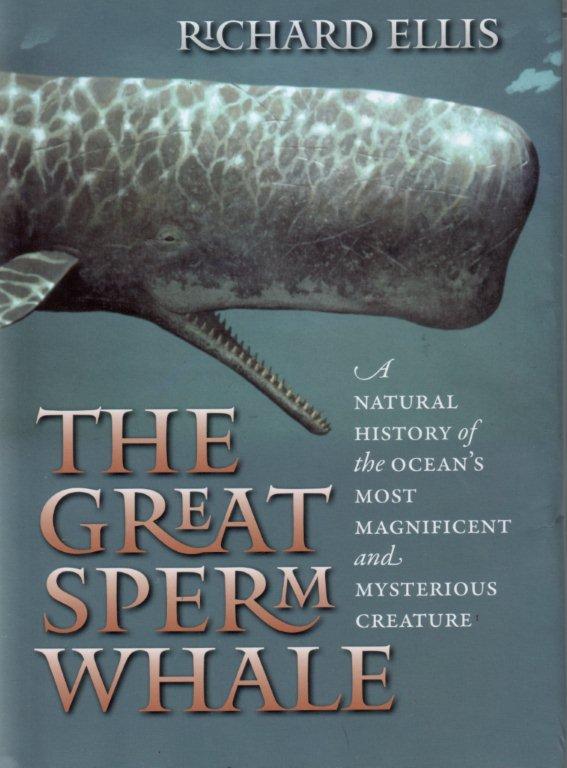
Click the image above to go to the publisher’s website (which also sells the book directly).  If your only knowledge of the title creature comes from a high school literature class, the blurb on the book’s promotional page might make you think this book belonged in the syllabus of the last biology course you took:

Ranging far and wide, Ellis covers the sperm whale’s evolution, ecology, biology, anatomy, behavior, social organization, intelligence, communications, migrations, diet, and breeding. He also devotes considerable space to the whale’s hunting prowess, including its clashes with the giant squid, and to the history of the whaling industry that decimated its numbers during the last two centuries.

According to the review provided in the Times Literary Supplement, the book deserves more attention than that blurb would imply. Continue reading

Indian Coral Tree ( Erythrina Indica)

Two days ago, when I went for a morning walk in the Periyar Tiger Reserve, the spectacular show of bright crimson flowers attracted my eyes and forced me to stop and take photos. Due to the change of seasons, the trees are shedding their leaves and putting their energy into blooming flowers–and the results are fabulously picturesque.

Continue reading

The Heart of The Matter

This slideshow requires JavaScript.

Playgrounds are fairly ubiquitous in most parts of the world, be they rusty swings or elaborate constructions. My own sons have clamored up wooden forts and rope bridges in upstate New York where they were born; metal piping in the shape of a plane fuselage in Costa Rica where they grew up; and inventive, child friendly park structures in Paris where we lived as well…not to mention any and all trees, stone walls and Mayan temples they would find in between.

In 2009 Japanese architectural firm Tezuka Architects teamed up with renowned Japanese crochet artist Toshiko Horiuchi MacAdam to create a play space both uniquely charming and innovative, that even the most “Global Citizen” of children would be amazed by. Continue reading

Travel, Writing & Games

This series has always been worth reading, whether you are an American looking through the eyes of a fellow American, or otherwise intrigued by a niche of American perspective that is not quite representative of that culture as a whole.

First things first: sometimes a book, a music recording or other item is only available from the mainstream online retailers such as Amazon or iTunes, but whenever possible we promote the purchase from independent sellers.  So click the image to the right if you want a link to independent booksellers in the USA, provided by the ever-entrepreneurial American Booksellers Association.

Now, the side show: the series editor Jason Wilson is also a contributor to a site we refer to on occasion, and he wrote an interesting item a couple of years ago that began:

Continue reading

Ideas About Why To Hug A Tree

In several earlier posts Seth highlighted the evolution of environmental philosophy in readings for a course he was taking at Cornell University.  For those of us not lucky enough to be in a course like that, there is a magazine whose current issue covers some of the same terrain.  From one of the articles in that issue (click the image above to go directly to the source):

Leopold argued for the extension of what we see as worthy of our respect from the human community to include animals and the natural world, or what he referred to as ‘the biotic community’. His famous principle, briefly expressed, was, ‘A thing is right when it tends to preserve the integrity, stability and beauty of the biotic community. It is wrong when it tends otherwise’.

Continue reading

Wild Things Lurk In Tranquil Places

Two of Milo’s recent posts–one about appetites and the other about maternal instincts–provide reminders that as beautiful as nature is, there are situational downsides. In an earlier post we mentioned Walton Ford, and it is interesting to consider Milo’s photographic observations in light of Ford’s work.  And since Milo was writing from India, perhaps even in conjunction with the musical encounter below.

This slideshow requires JavaScript.

Do not let Milo’s fearsome photography, nor Walton Ford’s phantasmagorical extrapolations, lead you astray. Continue reading

Motherly Love

The dangers of coming between a mother and her child are well known. Bears are infamous for their maternal aggression. Lionesses delegate to other lionesses their maternal duties in order to hunt, but if anything gets too close, it’s “out with their bowels”! What about herbivores?  Continue reading

Tigerkill

_MG_2565

People come to the Periyar Wildlife Sanctuary in hopes of seeing tigers. Few do, but with a dwindling population and excursions limited to the fringes of the reserve, it’s no surprise. However, the tigers that do venture on the edges of the forest, mere kilometers away from Thekkady, leave ample evidence of their lifestyle. Paw prints are a common sight, and less frequently, carcasses of their prey. Simply being in their habitat is an experience worth having.  (Warning: slightly graphic images below) Continue reading

Forest Adventures

Here we are sharing the rare collections of Mr.Kannan (a senior forest watcher), a person who is particularly adventurous and due to his fortunate job is able to stay deep inside the forests to study and share the habits of wild animals. Continue reading

Patagonian Expedition Race

Ready, Set…And the Race is On!

We had the good fortune to work directly with the Patagonian Expedition Race and its founders for several years, both behind the scenes and in the field, and it was an exhilarating experience to say the least.

Blending adventure, conservation, sportsmanship and the ancient concept of finding “the sacred” in nature, the race gives athletes the opportunity to test their ingenuity and endurance while bringing attention to one of the earth’s last wild places. Continue reading

Cardamom Plantations

Kerala’s hill districts are a historical hub of trade and culture – George discussed a bit of that history in his previous post. But spice plantations, which are one of the region’s main economic assets, are not very similar to most people’s view of agriculture. Enormous flat fields of rigidly regimented plants are not a common sight here (except for rice paddies), and spice plantations are quite different from this doctrine.  Continue reading