Mosstrix

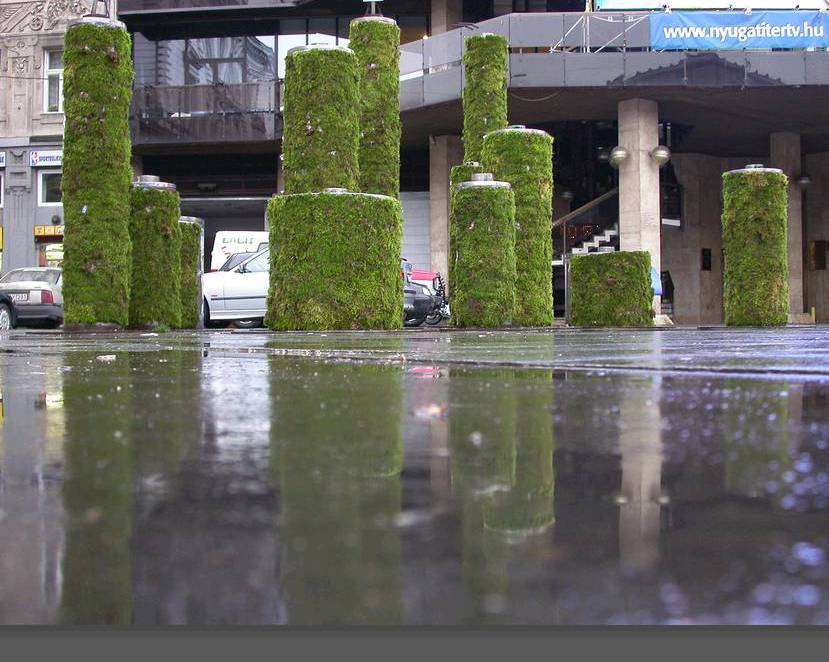
Mosstika: As It Started, Budapest, 2004

Nature calls to us.  All the more so in urban settings.  This is evident in the long history of elaborate parks and gardens in major cities, dating back to Frederick Law Olmstead,  André Le Nôtre and beyond.  Olmstead’s designs were meant to emulate the Savana landscape that strikes so strong a chord in people around the world, whereas Le Nôtre helped define that famously manipulated symmetry of the classic French garden.

Both respond to what we now refer to as biophilia, the magnetic draw that nature has on each of us.  The question we have to ask ourselves is which one is “Art”.  Not an easy task, to be sure. Perhaps the solution is to say “both” and leave it at that. Continue reading
Krulwich Wonders (click on image)

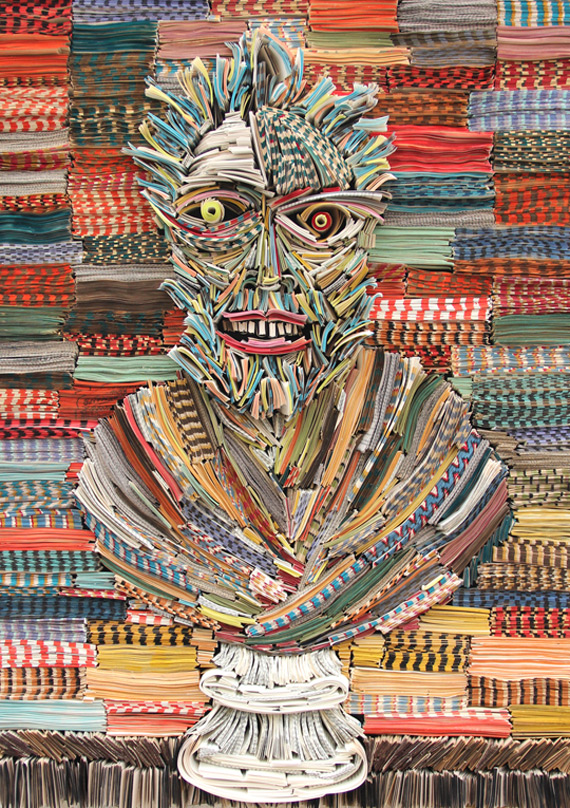
I tried. I told myself, “You get one week to write about camouflage. One week only.”

I love hiding in plain sight. It makes me almost giddy. So last week I went on a camo binge: I wrote about hunting camo, food camo, underwater camo, but I can’t stop. I’ve got to do one more. Just one.

I’m calling it Celestial Camouflage.

Then we’ll move on. I promise.

So look at this:


And the “Fourth R Award” Goes to….

This slideshow requires JavaScript.

Two months ago I wrote about British restaurateur Arthur Potts Dawson and his closed loop restaurant concepts and social enterprise food cooperatives here.   When I came across the Greenhouse I found the perfect follow up.  One would not be amiss to call the Australia based designer/builder/environmentalist Joost Bakker “green-blooded”.  His Dutch flower growing heritage helped forge a lifelong passion with growing things and plant inspired structures, such as greenhouses and conservatories.  His greenery walls invoke the power of nature creeping back into urban environments, making them simultaneously comforting and edgy. Continue reading

El Silencio

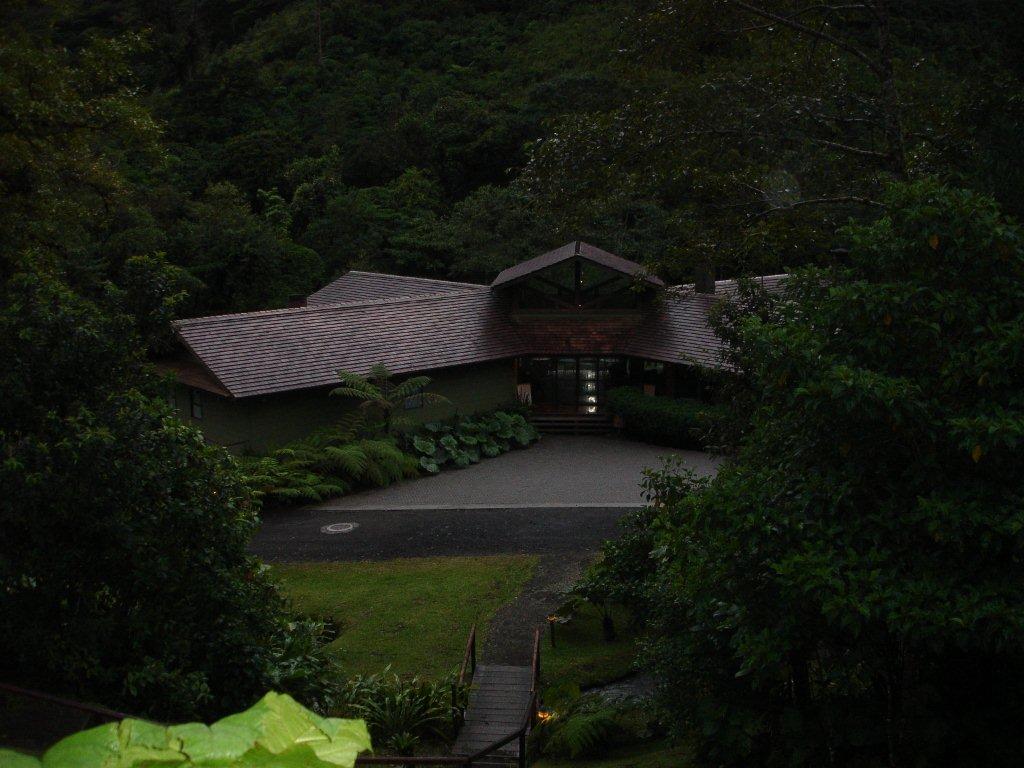
I have spent the last two days at a lodge called El Silencio. And it does full justice to it’s name. This is a beautiful spot!! Very secluded, just 16 bungalows, with a very strong focus on conservation, sustainability and community development. The food is all organic and very, very good! Actually the best I’ve had so far in Central America. Continue reading

Footprint Exercise

In an earlier post I was reminded of the origins of the metaphor we now commonly use to consider the impact we have on the environment.  Then a few weeks ago Seth mentioned that he was invited to have dinner with the fellow who brought that metaphor into common usage.  He did not post on the discussion that took place during that dinner, but here is how Cornell’s newspaper of record covered the presentation that followed.

Now, thanks to the BBC’s website, I have encountered this metaphor once again.  If you click on the image above and plug in your birthdate, you can have a quick snapshot of where you fit into the timeline of human history (I was approximately the 76,944,046,711th person born in history, according to my birth date, whereas someone born today would be somewhere around the 83,214,560,807th).

If you click through from that first step to the next in this mental exercise calculator, you can consider a couple more variables related to the human footprint over time and space.  Thank you again Mr. Wackernagel.

Prime Directive, Reconsidered

Global climate change will soon be changing ecosystems around the world to such an extent that many species will no longer have proper habitats to survive and reproduce in. Over the past several years, the scientific community has been discussing the possibility of moving such species to new ranges in order to conserve biodiversity and reduce potential for extinction. This controversial process, known as assisted colonization or managed relocation, might be able to save some species from their current state of risk, but it may also prove dangerous for the natives of whatever area the “colonizers” are moved to. By diligently evaluating the perils and uncertainties of relocation and carefully considering the repercussions of leaving species to their shrinking habitats, The Nature Conservancy (TNC), given its mission and vision statements, should determine that in most cases, the costs of assisted colonization outweigh the benefits.

Patagonian mountains

By assisting the colonization of species with limited ability to adapt or relocate, the annual number of species gone extinct might be lowered in the coming decades. There are, however, disagreements as to whether or not humans should meddle with species movement. Continue reading

Bend It Forward

This slideshow requires JavaScript.

Over ten years ago South African designer Marisa Frick-Jordaan literally wove together two of her apparently disparate passions : Socio-economic development and contemporary craft and design.  A BA Honors degree in Politics and Fine Arts at the University of Natal and a Fashion Design Diploma at Natal Technikon was followed by 6 months at the Cité Internationale des Arts, a residential arts cooperative in Paris, similar to London’s Cockpit Arts.

A long time interest in African art forms took her from a clothing line that incorporated Zulu beadwork to a telephone wire weaving project that blends traditional craft with avant-guard, award winning design.  Weaving is an ancient art around the world and in addition to the use of grasses, the decorative use of wire in Southern Africa dates back hundreds of years. Color coated copper telephone wire came with modernization and the rural to urban migration created access to these new industrial materials. Continue reading

Green Marsh Hawk

Mating pair of Green Marsh Hawks (Orthetrum sabina) in the Periyar Tiger Reserve. The duo is surprisingly aerodynamic – despite the female’s unusual position (as I found out from having to chase the dynamic duo across a field). This was not only the first copula I have seen in person, but the first I photographed – I’m quite happy with the results.


The Natural

Teddy Roosevelt and John Muir at Yosemite 1903

One hundred and fifty-two years after his birth, Theodore Roosevelt’s legacy as a conservationist lives on in the nearly 230 million acres of land he helped place under public protection.  During his 2 terms as the 26th President of the United States of America he established 150 National Forests, 51 Federal Bird Reservations, 5 National Parks, 18 National Monuments, 4 National Game Preserves, and 21 Reclamation Projects, in many cases designated the first of their kinds. Continue reading

Arenal +

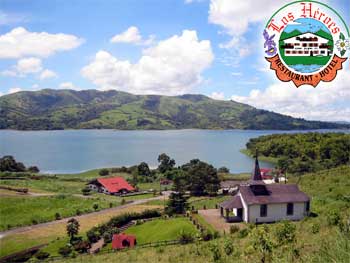
The trip from Islita to La Fortuna was very nice, especially the very scenic drive alongside the Laguna de Arenal.  The only weird thing during the drive was to spot ‘little Switzerland’. A Swiss guy has built his version of Switzerland at the shore of the lake: several chalets, a church and even a small railway system – it does look very Swiss indeed.

Continue reading

Another Eight Year Echo

Seth wrote several times about La Cumplida, so I will let those serve as an introduction to both the farm and to its several important educational initiatives.  Here I will note that my first visit to La Cumplida was in early 2003, and my most recent visit was last week.  The photo to the left shows several of us standing in lush arabica coffee at about 1,200 meters.

Seth told me numerous times over the summer that Don Clemente wanted me to return to this spot, where I had visited with him in 2003, to take another look at this location for a new entrepreneurial conservation initiative.  I did so, and for now I can only say wow.  I hope to be able to say more in the near future.

Wordsmithing: Collective

Thanks as always to the OED, a splash of cool water on a word of obvious interest to us.  It is more straightforward than we might have thought when deciding what word best complemented Raxa to communicate, through a name, both the means and the ends of a new effort:

…gathered into one; taken as a whole; aggregate…

When it comes to words that are part of names, though, straightforward is not the only consideration that matters.  Implied meaning, even if not recorded anywhere with specificity, matters too.  There is some other sense to the word collective beyond those words in the OED definition, and hopefully that sense is reflected in the actions taken by Raxa Collective.