Wheels, wheels and more wheels!
Crunch

Hans Gigginger photo from The New Yorker
I consider myself a pretty adventurous eater. In fact, I will easily go so far as to call myself a “foodie”. I’ve spent my adult life living on various continents, trying to understand the history and culture of the cuisine wherever I was living. I’ve patiently explained my dinner party plans to vendors at Parisian fromageries (in hopes they will approve and allow me to complete my purchase). I’ve “mastered” what I like to call Kitchen Croatian, or a knowledge of food nouns in that language, to be able to market and somewhat communicate recipes to kitchen staff while living there. Malayalam still totally eludes me, but it is one of the world’s most difficult languages after all, so please don’t hold that against me.
But to the best of my knowledge, I’ve never eaten a bug Continue reading
4-Minute Symphony
Gulf Of California

I had not been exposed to the corridor known as La Giganta, which you can see in the background of the above photo, when I carried out my work on behalf of WWF several years ago. Now that I have, over the last week, I can only say that it had such an impact on me that I am still processing it. It is partially the geology of this portion of the peninsula known as Baja California Sur. It is partially how that geology intersects with the marine ecosystem. But it is mostly–and here I refer to the impressions I am still processing–the intersection of local people with those two natural wonders that really got to me. The photo above looks from the back of a panga (the type of boat local fishermen use) as we departed a property that is best described as an oasis. Continue reading
Bird of the Day: Nilgiri Fly-catcher
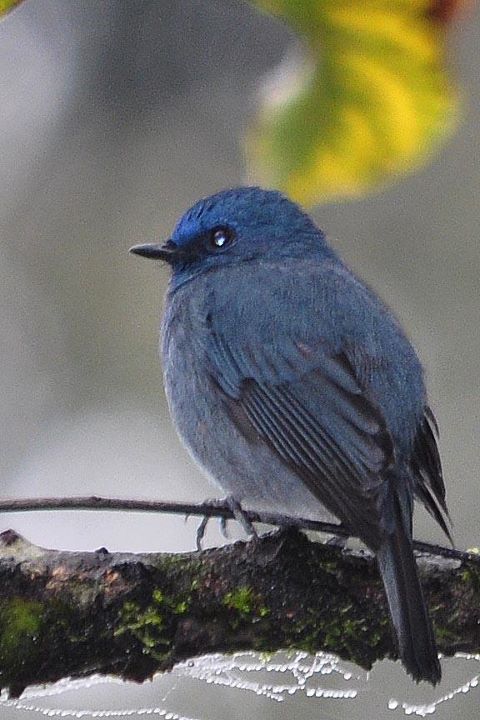
Munnar, India
Summer In Perspective

It has been about three weeks since I left Kerala but my joyful and peaceful memories are still very fresh. Living in the midst of skyscrapers of Seoul, I occasionally try to break free from all the busy, noisy, and exhausting life of the city and reminisce about the warm and welcoming smiles of Cardamom County staff, endless green of the Periyar Reserve, and the fresh and cool air blowing in from the Western Ghats.
After I arrived in Korea, I could not post here until now, and I want to give a sum up of my experience in Kerala, India as soon as possible. The photo above, randomly selected from those I took over the summer, is a visual reference point for what I can say now. Continue reading
Wind, Water, Light

Janet Echelman, Her Secret is Patience, Phoenix, AZ, U.S.A. 2009
American artist Janet Echelman has worked in numerous mediums throughout her career and has a long history of working collaboratively with communities outside of her own culture, whether it be Balinese textile artisans or Indian bronze castors.
A Fulbright lectureship about painting brought her to Mahabalipuram, India, a fishing village in Tamil Nadu famous for sculpture. But it was watching the millennia-old craft of weaving and working with nets that ultimately inspired the work that now defines her art. When she watched the men making piles of nets on the shore she began wondering if the material was “a way to create volumetric form without heavy, solid materials.” Continue reading
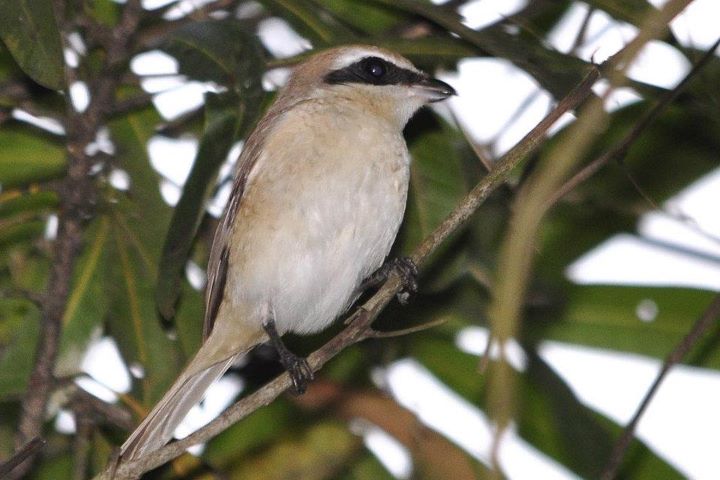
Bird of the Day: Brown Shrike (Kumily, India)
New Energy From The Amazon
Guest Author: Tyler Gage

Crist asked if I would share some of our experience starting up Runa because, as a social enterprise, we are working in some of the same space–environmental and social responsibility being centerpieces of our business model–as other businesses that Raxa Collective showcases on this site. We agreed that a good place to start would be with some questions we encounter frequently. If there is interest in hearing more, I will be back to tell more of the story in finer detail.
Your website says Runa does not actually farm Guayusa. What do you do and why should people care about Guayusa?
Runa is creating markets for beverages created with Guayusa (“gwhy-you-sa), a native Amazonian tree leaf that contains more caffeine and double the antioxidants of any tea. With a flavor that is smooth and clean, guayusa offers a new kind of energy what the indigenous Kichwa people call “mental strength and courage”. Continue reading
Bambouzle
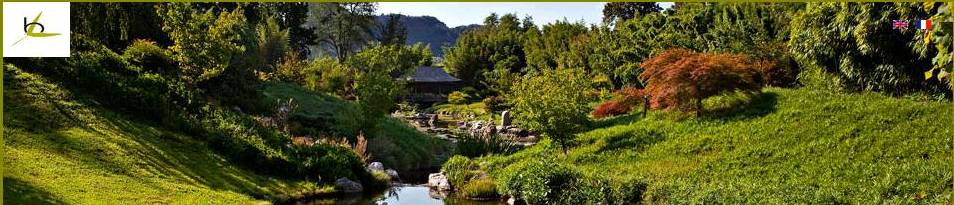
France has a horticultural history that goes back centuries, from the forested hunting grounds to the formal gardens of kings. But “Liberté, égalité, fraternité” leads to parks for the people, offering countless opportunities for visitors to fulfill their desires to commune with nature.
Wordsmithing: Spa
When it is capitalized, this word refers to the mineral springs in Liège, Belgium, believed to have curative properties. In the last several centuries the meaning of the word has been generalized to refer to almost any place that has curative mineral waters, according to OED, so that “a town, locality, or resort possessing a mineral spring or springs; a watering-place of this kind” is fairly known as a spa.
The generalization has expanded further in recent decades through commercialization, and as always OED’s tracking of the etymology is intriguing:
A commercial establishment which offers health and beauty treatment (esp. for women) through steam baths, exercise equipment, massage, and the like. U.S.
1960 Life 8 Feb. 111/1 The submerged specter above‥is getting a hydraulic underwater massage at a plush health spa near San Diego called the Golden Gate beauty resort whose customers are usually female.1976 Vogue Dec. 214/1 Most American spas are designed exclusively for women.1981 W. Safire in N.Y. Times Mag. 21 June 10/2 Only fuddy-duddies go to the gym,‥the upscale‥crowd goes to the spa.
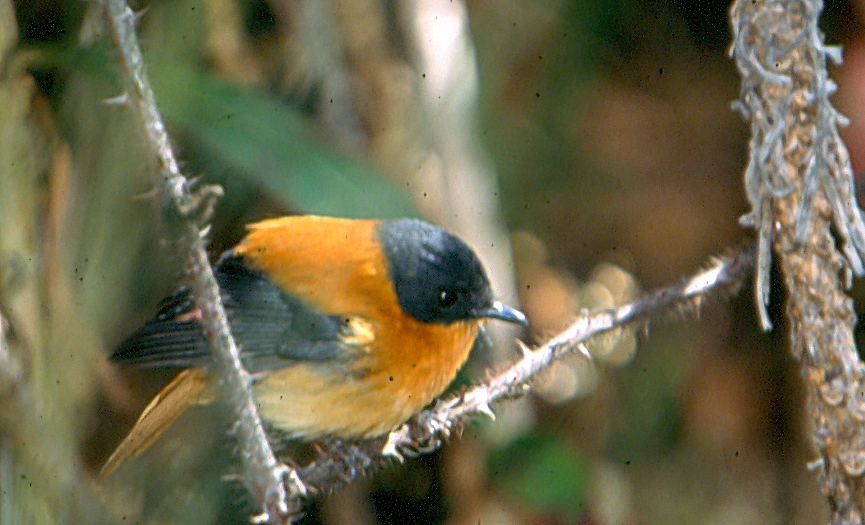
Bird of the Day: Black and Orange Flycatcher
Breaking News! Prices of Old Newspapers Soar!
Guest Author: Diwia Thomas
While asking around for newspaper donations, I often meet with reluctance and wondered why? Ten years ago a kilo of old newspaper fetched only a meagre Rs 3/- , today the raddi-wala (the guy down the road who buys scrap) pays an enticing and irresistible Rs 7/- per kg. I promptly made a trip down there to broker a deal with him for a steady supply of newspaper for our paper bags. He tells me that newsprint companies in India have begun to recycle old newspaper into newsprint. In the past newspaper was recycled into boards or brown coloured paper for packaging and boxes because recycled newsprint turns a dull greyish colour unsuitable for printing. Indian newspaper companies have found ways to deink newsprint pulp and retain its brightness for printing purposes. Mammoth deinking machines do this job. Featured here is a small one, just to demonstrate the process. Continue reading
Le Vélo Bambou? Le Wow!

Bicycles are ubiquitous forms of transportation in my part of the world. Previously I’ve posted how they can mean more than the sum of their parts, or in the urban art example, they can represent only their parts!
So what happens when form and function converge with sustainability, balance and simplicity? Continue reading
Bird of the Day: Heart-spotted Woodpecker

Pause and Reflect

Land Art Installations can be as varied as the land they sit upon and the vision of the individuals who create them. Sometimes urban and often in wilderness areas, they almost always offer a window into the hearts of their creators.
I’ve spoken about the convergence of art and architecture in previous posts, and Swedish firm Kjellgren Kaminsky Architecture was one such example. Whereas the installation Clear Cut makes a visual statement about a particular conservation issue, Reflecting Time is a study of the interaction of light and landscape.
The team headed north along the Norwegian coast, their only tools for this ephemeral installation 100 simple reflectors and the cameras they would need to record the work. They climbed the seaside mountain, placing the reflectors in straight, parallel lines that defied the undulating landscape. Then they spent time by the sea itself, marking the coast with tiny glimmers.
The tide is strong in Norway shifting the sea level up to 2 meters every day. A line of reflectors marked the coast, sometimes the reflectors lay on the ground later they float in the water. We made a ring further out in the sea untouched by the tide. It had an ephemeral glow that fascinated us.
In both cases the changing light and tides did the work, the art lay in meditating on the results.
Sticky Sonics
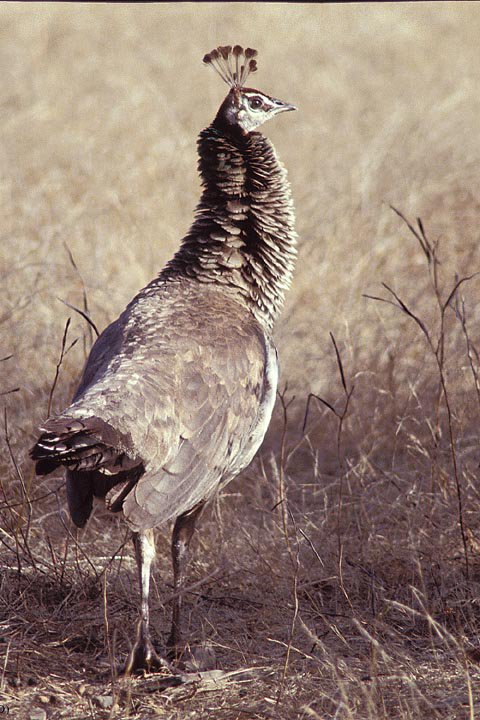
Bird of the Day: Peacock in Dry Season
Resilience, or Failure?
It is said that our early experiences create connections in our brains that last throughout our lives. In one particular case I know this to be true: visiting Tikal and Copan as a child filled me with a lifelong awe and interest in the Mayans. So in my current studies it is an easy leap from that simple interest to a more scholarly one.
 For hundreds of years human civilizations have looked back on previous societies and wondered why they made certain decisions, how they coped with diverse problems, and what caused them to change. In his popular book Collapse: How Societies Choose to Fail or Succeed, Pulitzer-winning author Jared Diamond examines societies that he claims had unsustainable relationships with their ecosystems, and describes how their actions largely led to their demise. He also refers to some current communities, such as those of modern-day Rwanda, but for my purposes I will only address the past societies (the most academically pertinent and personally interesting to me being the Mayans, because their disappearance from their grandiose cities–Tikal and Copán, for example–has historically been mysterious, and may be closely related to environmental stresses). Continue reading
 Organikos