Putting Kashmir On The Map

Guest Author: CJ Fonzi

I recently received this link from a Facebook friend.  One of those Facebook friends that you meet on an adventure somewhere, instantly bond with, keep in touch with forever.  This particular guy is an oil engineer from Norway- an unlikely friend of a sustainable business consultant in New York City.  But that is what travel and exploration are all about.

Kashmir- the name brings images of war, struggle, and International politics.  But to those of us who have been there the images that come to mind are more like the ones shown here.
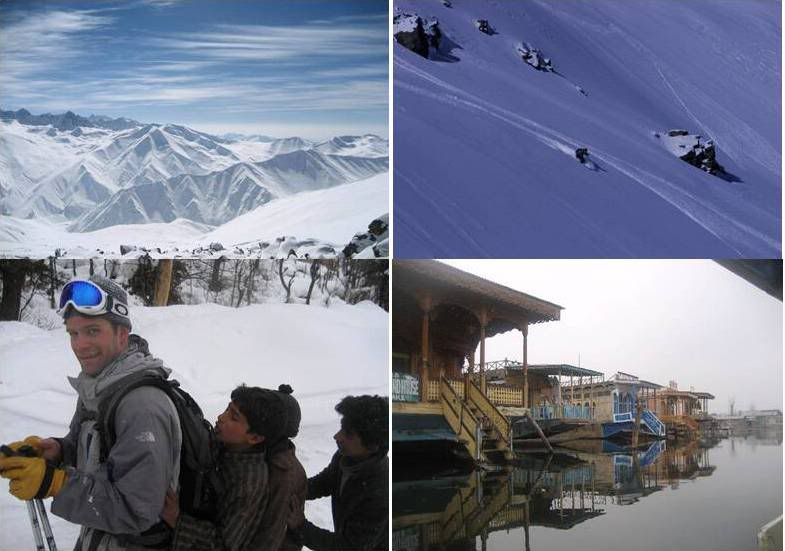
The village is called Gulmarg and it hands down has the best skiing in the world.  Continue reading
Wordsmithing: Conservation

In a nod to recent posts on this site about new entrepreneurial conservation initiatives, some etymology to complement the OED‘s first entry in the definition of this noun:

The preservation of life, health, perfection, etc.; (also) preservation from destructive influences, natural decay, or waste…The preservation, protection, or restoration of the natural environment and of wildlife; the practice of seeking to prevent the wasteful use of a resource in order to ensure its continuing availability

No surprises there.  A rather nice surprise, considering the world we live in today, is that most of the references, going back to 1398 and with a long line of ever-strengthening suggestions, point to a divine origin and in more recent centuries a responsibility of man to the divine, to engage in conservation.

The High Line

Notice where the railway used to enter the building

The High Line railway was originally designed to bring shipments straight from the Hudson to manufacturing warehouses in Manhattan. The train cars could run packages from wharves to upper-level floors of these industrial buildings without having to obstruct street traffic or be carried up several stories manually (freight elevators weren’t a common sight in the 1930s, whether for safety, efficiency, or invention reasons I don’t know).

In 1980 the High Line trains stopped running, and construction of the new park design started in 2006 (after seven years of planning). The first section opened to the public in 2009, and the second section in 2011.

I first heard of the High Line Park this summer, while doing some browsing about the city online. I was immediately struck by the ingenuity of converting what had once been industrial space Continue reading

Double Standards

Kids and young adults are very good at identifying double standards. They can tell  right away if you are preaching one thing and not acting accordingly.  On the one hand, adults talk about honesty and truth. And then one day they might ask their children to tell the aunt that dad is not home (maybe he cannot talk to her at that moment).   How many times does a parent tell his/her child to lower their voice to be respectful, but say it to the child with a strong, demanding tone? Continue reading

Through the Looking Glass

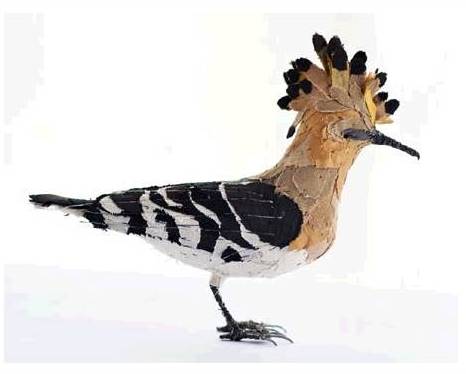
Hoopoo by Textile Artist Abigail Brown

Question: What would a Natural History Museum look like in Wonderland?

Answer:  Abigail Brown’s studio.

The Victorians were avid collectors, and there’s something deliciously Victorian about the detail and precision with which textile artist Abigail Brown practices her craft, bringing the winged world to life with bits and pieces of cloth that each carries their own history. Continue reading

Hatched Hats

For several decades after the 1880s, seeing birds on women’s hats in the United States was very common. It was fashionable to have everything from a couple flowing plumes to a whole pheasant on a hat; the ornithologist Frank Chapman found forty species in the millinery district of Manhattan.

Less than a decade earlier, wild passenger pigeons had gone extinct in North America, due to unfettered hunting and deforestation. It looked like the same was happening to several other species, but instead of being hunted for food like the pigeons, these other birds were killed solely for their bodies or feathers.

Snowy egrets and great white egrets were nearly decimated … The millinery trade in the 1880s and 1890s cleaned out tern, heron, gull and egret rookeries up and down the Atlantic coast, from Maine to the Florida Keys. Continue reading

Gulf Of California Partnership

Reviewing events in the region since I was last there, I came across this news (three years late, for something this interesting, is better than never to learn about it). WWF, to its great credit and the world’s benefit, found creative ways to partner with entities during the time since I completed my small task for them.  Listening to this man speak on behalf of the aquarium, I see the enormous educational impact such an institution can have (and here I must acknowledge that I have always found zoos and aquariums melancholia-inducing places, with charismatic mega-fauna trapped in relatively small spaces for us to muse over; but I am changing my perspective):

The WWF press release at the time started:

Long Beach, Calif., April 30, 2008— Described by Jacques Cousteau as the world’s aquarium, Mexico’s Gulf of California is one of five marine ecosystems in the world with the highest diversity of wildlife.

Continue reading

Can Your Horoscope Do This?

Living in India has really highlighted the cultural differences of things that I have often taken for granted.  How we meet our future spouses is most definitely a case in point.

My culture certainly has its fair share of well meaning friends, relatives and co-workers who have the “perfect person” in mind for someone to spend their lives with.  Even if one doesn’t wish to avail themselves of this advice, it is often persistently given.  Barring that, people meet frequently at school, parties, conferences, libraries, sporting events, airports…the list is endless, and one has to wonder at the statistics of how frequently those serendipitous meetings lead to long term relationships.

In Kerala (and I believe the rest of India as well) there is still a tradition of family involvement in the choice of life partner. Historically there was always an “auntie” (the catch-all name for an older, married woman) who has just the right match for young men and women of their acquaintance.  But times are changing and computers and the internet have taken a role in this process, whether it be “on line dating” in the Western world, or “matrimonial sites” here.

I was recently shown a “print out” from an on line matrimonial site based in Kerala.   Continue reading

Mission-Driven Development in Baja California Sur

In the first third of the 17th Century the Spanish crown sent Jesuit priests to establish missions in what is now Baja California Sur.  The fourth of these–Misión San Francisco Javier Vigge Biaundó–was active from 1699-1817.  What is amazing is that the installation has remained intact even centuries after its last priest left (abandoning the missions at the gun-pointing insistence of the crown as independence movements fomented, which is a story worthy of your further investigation).  Having found this particular oasis in the last third of the 17th Century, the priests cultivated grapes, dates, olives and other produce which, remarkably, still grow here today.

This slideshow requires JavaScript.

It is visually and olfactorally stunning to be in a place with the cactus and other desert flora native to the region Continue reading

Pico Iyer: Global Soul

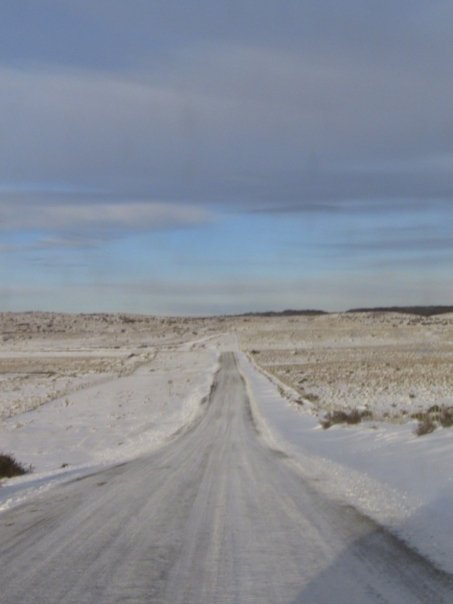
Deserted road on Tierra del Fuego

For me the whole point of travel is to leave yourself behind, to leave your assumptions behind, to become cleared out and to step into another person.

–Pico Iyer

Sometimes I have to wonder what kind of rock I live under.  I mean, really!  Despite my peripatetic lifestyle I seem to be strangely illiterate in “travel writer” terms.  Busy “doing” perhaps?  Perhaps.

So when I received an email from Diwia with a video link and the short note: “Great listening Amie, watch the first 15 mins – you’ll be hooked to the very end”.  I clicked with the clear mind of the uninitiated. Continue reading

The Eye of the Beholder

Chris Jordan, Caps Seurat, 2011

Seattle based photographer Chris Jordan has been making visual statements about mass consumption for over ten years. Using the “artist’s eye” to be able to step back from the overwhelming truths of societies’ excesses, he simultaneously breaks down that mass consumption into its smallest part and its incomprehensible whole.

Jordan uses  commodities  that are discarded daily–plastic and paper cups, newspapers, electronics–as the “brushstrokes” to illustrate the wastefulness  in cultures of consumerism. His photographs place both conscious and unconscious behaviors under a microscope, which is often unsettling, and always thought provoking. Continue reading

La Giganta, Baja California Sur

As noted in the first and second posts on this topic, the question at hand is whether there is a formulation that can effectively bring thousands of hectares of private lands into a conservation area that is supported by entrepreneurial activity.  That activity puts conservation and social welfare of the local communities as the top priorities–the motivation for bringing conservation-minded travelers to valorize these protected areas.

This slideshow requires JavaScript.

Continue reading