How Many Trees Are Needed In The Amazon?

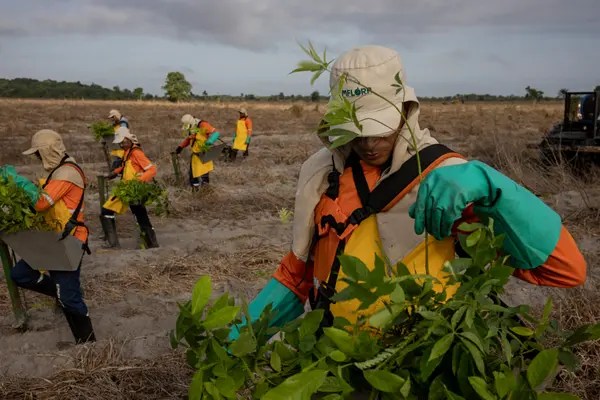
Forest restoration workers planted native Amazonian seedlings on degraded pastureland in Mãe do Rio, Brazil.

We do not know how many trees are needed but hope that the answer to the question below is yes:

Can Forests Be More Profitable Than Beef?

Cattle ranches have ruled the Amazon for decades. Now, new companies are selling something else: the ability of trees to lock away planet-warming carbon.

The residents of Maracaçumé, an impoverished town on the edge of the Amazon rainforest, are mystified by the company that recently bought the biggest ranch in the region. How can it possibly make money by planting trees, which executives say they’ll never cut down, on pastureland where cattle have been grazing for decades? Continue reading

The Most Important View, If Climate Change Interests You


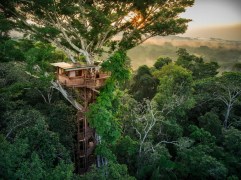
In a vulnerable, defendable part of the Amazon, the hundred-and-ten-foot-high tree house was built to attract wealthy tourists—and potential funders of conservation.Photograph courtesy Tamandua Expeditions

Tree house lodging is not new, but beyond beauty is impact. In that regard the accommodations with the most important view right now might be here:

The Highest Tree House in the Amazon

In 2023, conservationists and carpenters converged on Peru to build luxury accommodations in the rain-forest canopy.

Every day, empty logging trucks rumble into Puerto Lucerna, a small outpost on Peru’s Las Piedras River, which snakes through the lush Amazon rain forest. There, workers load them up with pyramids of freshly cut logs—cedar, quinilla, and, most important, ironwoods, which are prized for their hardness and rich color. Continue reading

Ancient Amazon Carbon Capture

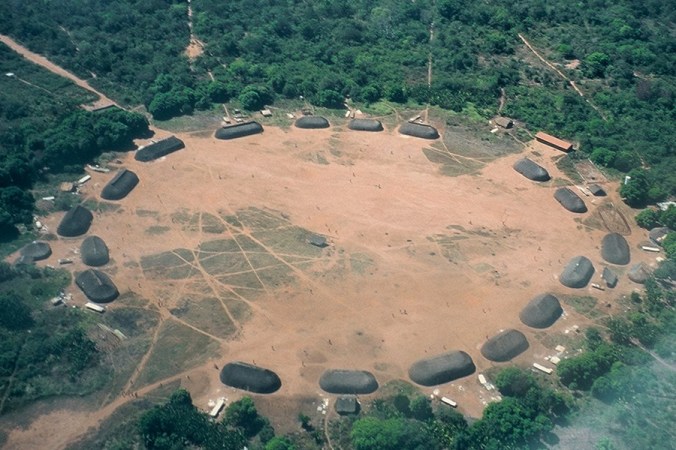
A Kuikuro village in the southeastern Amazon. JOSHUA TONEY

Thanks to Yale e360 for this one:

How Ancient Amazonians Locked Away Thousands of Tons of Carbon in “Dark Earth

A new study reveals how, by cultivating fertile soil for farming, ancient Amazonians locked away thousands of tons of carbon that have stayed in the ground for centuries. Continue reading

Reversal Of Absurd Destruction Counts As Progress in Brazil’s Amazon

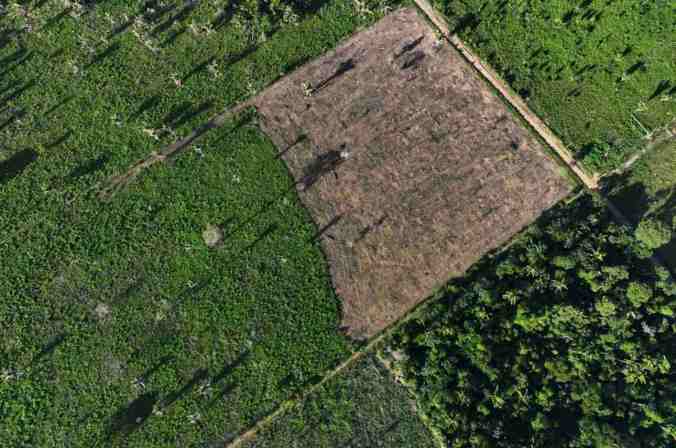
An aerial view shows a deforested area during an operation to combat deforestation at the Cachoeira Seca indigenous reserve, in Uruara, Para State, Brazil January 19, 2023. REUTERS/Ueslei Marcelino

What counts as good news now in one part of the world is simply a reversal of absurd destruction trends of recent years. Without minimizing its importance we can acknowledge that a positive reversal is a low bar for what needs to be accomplished:

Deforestation in Brazil’s Amazon falls 68% in April, first major drop under Lula

SAO PAULO, May 12 (Reuters) – Deforestation in Brazil’s Amazon rainforest fell 68% in April from the previous year, preliminary government data showed on Friday, a positive reading for President Luiz Inacio Lula da Silva as it represents the first major drop under his watch. Continue reading

Roots Of Biodiversity

052918_antonelli_0090.jpg

Alexandre Antonelli references the International Plant Names Index to identify specimens.
Rose Lincoln/Harvard Staff Photographer

Our practice was born in Costa Rica, so we sometimes may appear partisan when it comes to celebrating the sciences related to biodiversity. Costa Rica has impressive credentials in that realm, especially relative to its size as a country. But we are very clear on the fact that it would take dozens of Costa Rica-sized biodiversity hotspots to match the scale of the Amazon region, and it is no surprise that studies like those of these scholars are carried out with Amazonian data:

The Amazon as engine of diverse life

052918_antonelli_0233.jpg

“Most evolutionary research focuses on how new species form. But we want to understand how whole ecosystems evolve,” said Alexandre Antonelli.
 Rose Lincoln/Harvard Staff Photographer

A recent study says that many of the plants and animals that call Latin America home may have had their roots in the Amazon region.

The study, co-authored by Harvard Visiting Scholar Alexandre Antonelli and an international team of researchers, says that a dynamic process of colonization and speciation led to the formation of the American tropics, which is the most species-rich region on the planet. The study is described in a paper published in the Proceedings of the National Academy of Sciences.

“We were astonished to detect so much movement across such different environments and over such large distances,” said Antonelli, the study’s lead author. “Up until now, these natural dispersal events were assumed to be quite rare. Our results show how crucial these events have been in the formation of tropical America’s unique and outstandingly rich biodiversity.” Continue reading

Oh Amazon, Where Art Thou?

time-lapse-tablet.jpg

By The New York Times

It is a heavy read, but now is not the time to shrink away from the tough news. Something can be done, and something must be done. Soon. Thanks to the New York Times for the reporting on this topic:

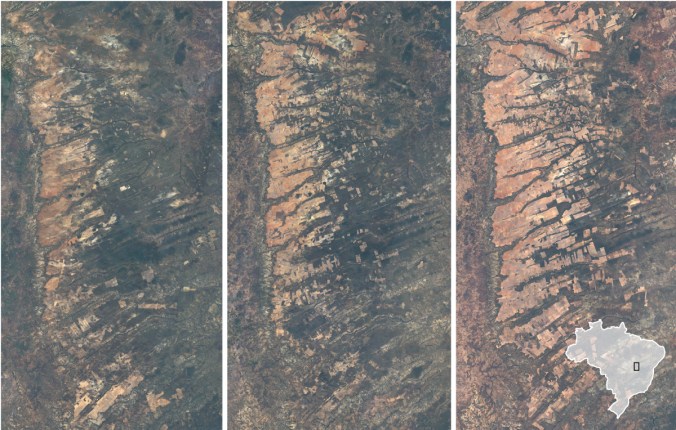
Amazon Deforestation, Once Tamed, Comes Roaring Back

A decade after the “Save the Rainforest” movement captured the world’s imagination, Cargill and other food giants are pushing deeper into the wilderness. Continue reading

Shoutout To Tyler Gage & His Runa Crew

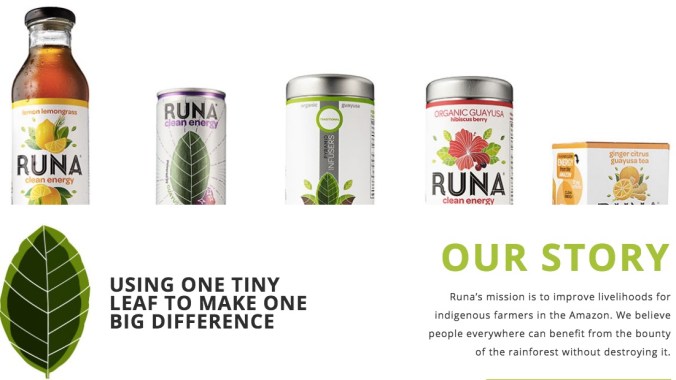
RunaLast time I spoke with Tyler, he was just a couple years into his startup. He and I both participated in a program to share our experiences in the form of a live case study shared with social entrepreneurship students at Brown University, which inspired me for quite some time. Still does. Tyler was kind enough to contribute on this site back when he had time. Look at him now. Wow. This story in Scientific American is worth the read:

Can Tea Help Save the Amazon?

An effort in Ecuador might point the way to a more sustainable future for the rainforest and people

Continue reading