Gardens As Havens For Wildlife

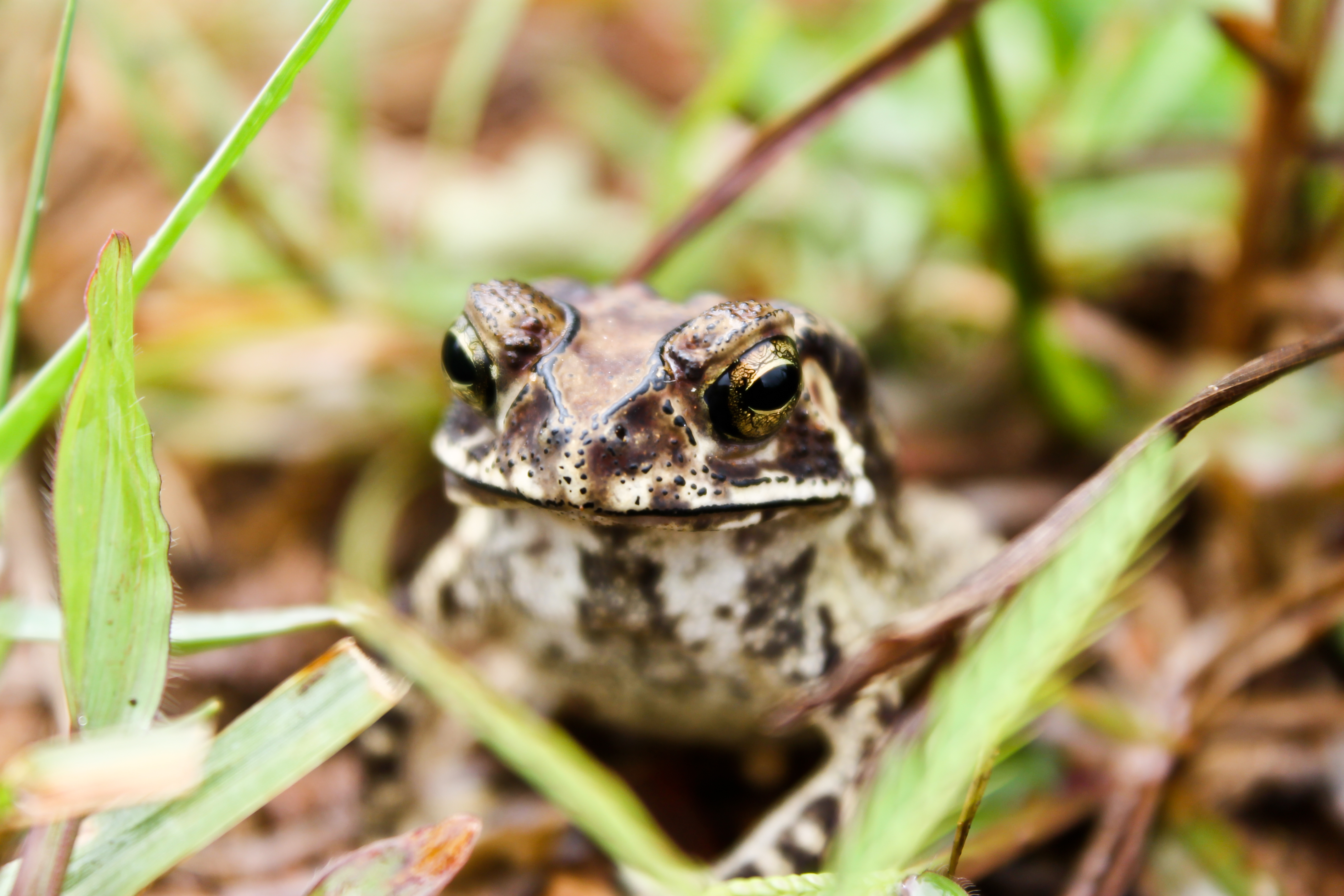
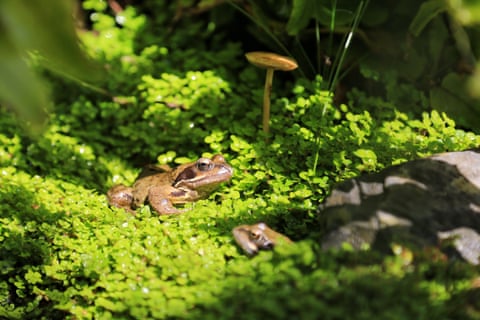
Two frogs in a garden pond enjoying the sunshine on a bed of weed.

Common frogs and other amphibians will spawn in the most modest of garden ponds. Photograph: Brendan Allis/Getty Images/iStockphoto

There are many variations on the theme of garden as haven in our pages over the years. The common thread is that at the scale of a garden, there is much that the individual can do to support conservation. Thanks to Jules Howard for adding to the theme:

The frogs may be gone, but life goes on: how I regained my faith in gardening for wildlife

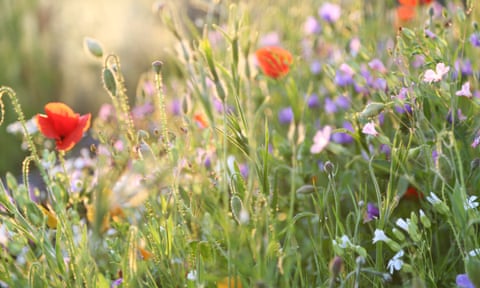
Wildflower field

Gardens allowed to grow a little wild can be a lifeline for struggling pollinator populations – in rural as well as urban areas. Photograph: kirin_photo/Getty Images/iStockphoto

The extremes of the climate crisis mean it’s harder than ever to provide a garden haven for birds, insects and other animals. Some gardeners are questioning whether trying to do the right thing is time well spent

More than two decades ago, I had the honour of running the world’s last (possibly only) frog telephone helpline. No, this is not a set-up for a punchline. Continue reading
Frogs, Western Ghats & Science

Sathyabhama Das Biju (from left), James Hanken, Harvard’s Alexander Agassiz Professor of Zoology, and Sonali Garg during a June 2023 field trip to study amphibians in the Western Ghats, a biodiversity hotspot in India. Photo by A.J. Joji

During our seven years living and working in the Western Ghats we came to appreciate frogs through the eyes of our family, those of our staff, as well as travelers and occasional scientific references (the man on the left in the photo to the left having shown up in our pages one of those times). Good to know that the science is being shared for good cause, thanks to Anne J. Manning in this article for the Harvard Gazette:

The Indian Purple Frog, first described by Sathyabhama Das Biju in 2003.

Who will fight for the frogs?

Indian herpetologists bring their life’s work to Harvard just as study shows a world increasingly hostile to the fate of amphibians

Having pulled themselves from the water 360 million years ago, amphibians are our ancient forebears, the first vertebrates to inhabit land.

After 136 years from its original description, Günther’s shrub frog was recently rediscovered in the wild. Credit: S.D. Biju and Sonali Garg

Now, this diverse group of animals faces existential threats from climate change, habitat destruction, and disease. Two Harvard-affiliated scientists from India are drawing on decades of study — and an enduring love for the natural world — to sound a call to action to protect amphibians, and in particular, frogs.

Sathyabhama Das Biju, the Hrdy Fellow at Harvard Radcliffe Institute and a professor at the University of Delhi, and his former student Sonali Garg, now a biodiversity postdoctoral fellow at Harvard’s Museum of Comparative Zoology, are co-authors of a sobering new study in Nature, featured on the journal’s print cover, that assesses the global status of amphibians. It is a follow-up to a 2004 study about amphibian declines.

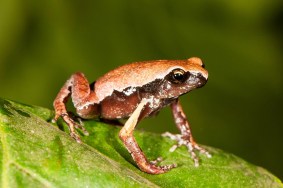
Franky’s narrow-mouthed frog is among the threatened species. Credit: S.D. Biju and Sonali Garg

Biju and Garg are experts in frog biology who specialize in the discovery and description of new species. Through laborious fieldwork, they have documented more than 100 new frog species across India, Sri Lanka, and other parts of the subcontinent.

According to the Nature study, which evaluated more than 8,000 amphibian species worldwide, two out of every five amphibians are now threatened with extinction. Climate change is one of the main drivers. Continue reading

Op-Ed For Amphibians

Photographs and video were taken by Bobby Altman at the Francis Marion National Forest, S.C., with assistance from Amphibian and Reptile Conservancy, a national nonprofit.

Every now and then we link to a gem by Margaret Renkl, and these often calm the environmentally-rattled nerves, as is the case today:

Why Tiny Ponds and Singing Frogs Matter So Much

NASHVILLE — I wish you could hear what it sounds like to sleep near an ephemeral pond in early springtime on the Cumberland Plateau, especially on a rainy night. As darkness begins to fall, the small frogs called spring peepers begin to sing. At first their song is the sonic equivalent of the way popcorn pops: each peep a single sound, each sound buffered on either side by silence. Continue reading

Charismatic Doesn’t Always Have to Be Cute

We applaud Pennsylvania lawmakers for choosing to highlight a creature whose presence in waterways indicates healthy ecosystems. Thanks to NPR for the story.

Snot Otter Emerges Victorious In Vote For Pennsylvania’s Official Amphibian

Pennsylvania’s soon-to-be official amphibian has more than its fair share of nicknames: snot otter, mud devil, Allegheny alligator, devil dog, lasagna lizard.

In short, it’s not exactly a looker.

But the Eastern hellbender salamander was the overwhelming choice of lawmakers for amphibian representation in the state. On Tuesday, the state’s House of Representatives voted 191-6 on a bill that would name the aquatic creature its state amphibian. The Senate passed the bill in February.

The hellbender is a nocturnal salamander that can grow more than 2 feet long. The mud-colored creature, covered in a layer of mucus, breathes primarily through loose flaps of thick, wrinkled skin that look a little bit like lasagna noodles.

The hellbender is also a canary for environmental degradation. Continue reading

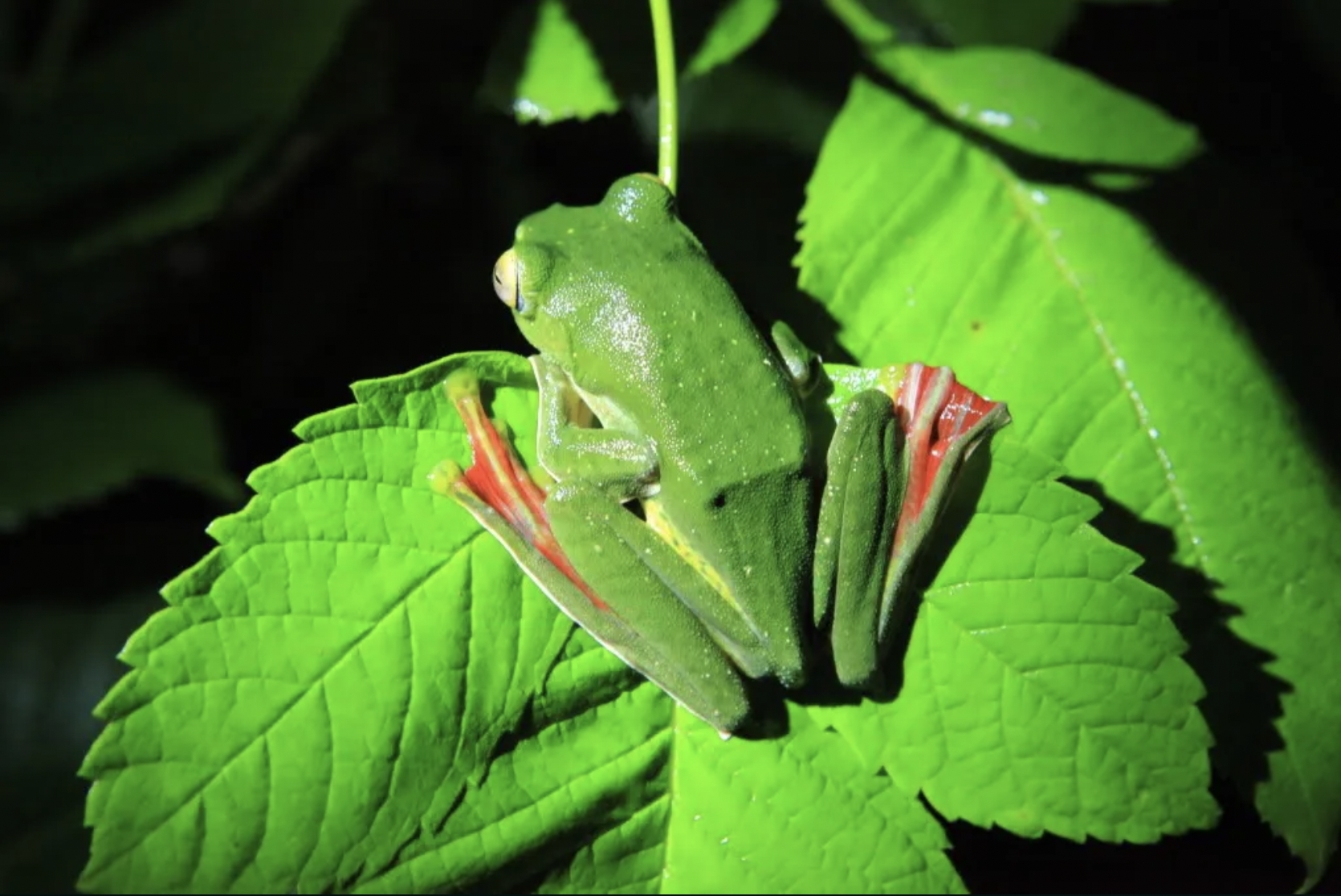
Malabar Gliding Frog (Rhacophorus malabaricus)

Malabar gliding frogs are widely distributed in the Western Ghats of India, primarily in evergreen and semi-evergreen forests at altitudes between 500 to 1200 meters above sea level. These pictures were taken at the Aralam Wild Life Sancatury near Kannore.

Continue reading

Amphibians of Periyar

So far, my treks in the Periyar Tiger Reserve have yielded a generally consistent array of wildlife sightings. Insects and spiders are a constant, birds of some sort or other are common, boar and gaur are to be expected, deer are a pleasant (but not huge) surprise. Elephants are not uncommon to see, but don’t stand around modelling for pictures, and are usually sighted from a great distance. Tigers are out of the question to see, except for the extremely fortunate. Of course, this leaves out dozens of categories of creatures, and hundreds (possibly thousands) of species. Amphibians are a pretty constant sighting, mainly in the form of frogs and toads. To be honest, I don’t really know the difference, but I do have a definite ID on one species: the Common Indian Toad (Duttaphrynus melanostictus).

Continue reading