Heat-Beating Strategies For Birds

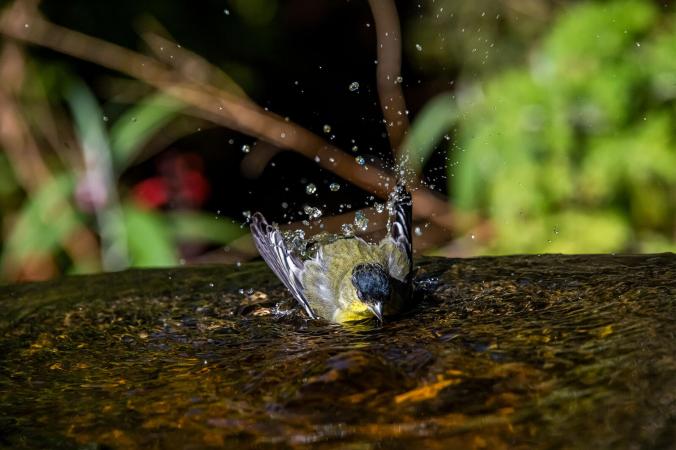
Splooting works for some species but birds can use our assistance with other strategies:

How to Help Birds Beat the Heat

Extreme temperatures add stress to already-fragile ecosystems. Here’s how you can help birds stay cool.

Extreme weather events like heat waves remind us of how urgent the climate crisis really is. Continue reading

Splooting To Beat The Heat

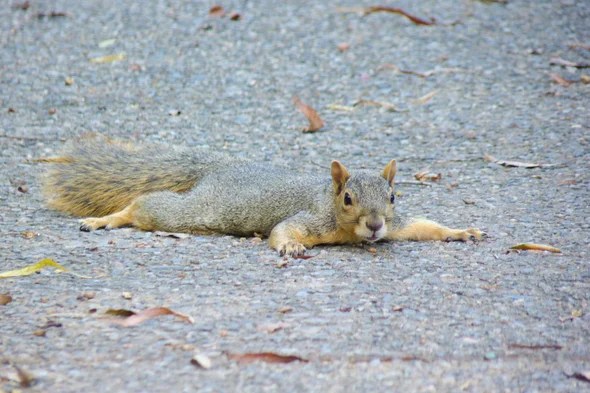
A squirrel in full “sploot” posture. Credit: Debra L Tuttle/Getty Images

Funny as it sounds, it is worth considering how animals deal with heat:

During a Heat Wave, You Can Blast the AC, but What Does a Squirrel Do?

Although recent spikes in temperature affect all of us, our urban critters have had to find their own ways to beat the heat. Sometimes they “sploot.”

It’s summertime in New York City–birds are chirping, insects are scurrying, and everything feels alive! While recent heat waves have pushed a lot of us indoors to the respite of air conditioning, the critters of this city were left to fend for themselves. Continue reading

Whales, Fishing Boats & Depredation’s Discontents

Yesterday’s dramatic photograph at sea shows an interaction between two sea creatures, and combines stark beauty with the occasional terror of pure nature. Man and nature in conflict at sea is not beautiful in any manner. This article below, authored by Nick Rahaim and published in Hakai Magazine, helps put the video above in context. Please click the title to read the story in full at its origin, or listen to it here:

Clever Whales and the Violent Fight for Fish on the Line

As a commercial fisher, I’ve watched colleagues shoot at whales looting from their lines. Here’s why everyone loses when that happens.

Whales seem to be increasingly looking to fishing boats, especially longliners (not pictured), as sources of free meals. Photo by Audun Rikardsen

As I coiled rope on the deck of a commercial fishing boat in the western Gulf of Alaska, I felt the sudden thud of a revolver reverberate in my chest. Continue reading

Fuzz, Author Interview

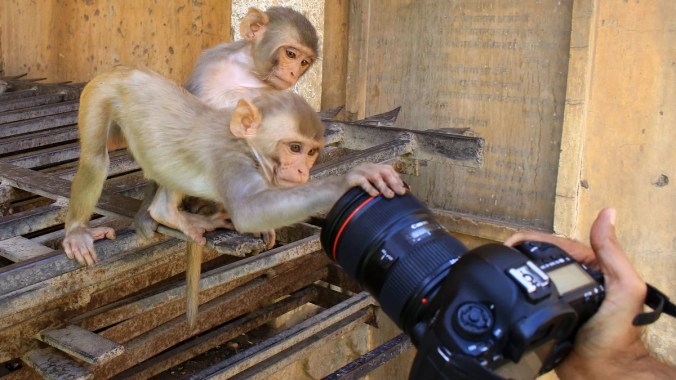
Macaques check out a camera in Galtaji Temple in Jaipur, India. Monkeys have been known to sneak into swimming pools, courts and even the halls of India’s Parliament. One attorney told author Mary Roach about a macaque that infiltrated a medical institute and began pulling out patient IVs. Vishal Bhatnagar/NurPhoto via Getty Images

This conversation with the author Mary Roach is plentiful with surprises about the human-animal interface, occasionally unfortunate and sometimes hilarious:

Fuzz: When Nature Breaks the Law by Mary Roach. Penguin Random House

Animals living among us often ignore the rules we try to impose on them. Science writer Mary Roach experienced this firsthand when a group of macaque monkeys accosted her in India.

“I was kind of asking for it,” Roach admits. “I walked up this trail where I knew there were a lot of macaques, and I walked up holding a bag of bananas.”

At first, nothing happened. Then Roach saw a monkey pop its head up from behind a boulder, “kind of like the bandits waiting for the stagecoach.” Continue reading

To Build A Good Home, Sometimes You Need Pluck

We were aware that birds will build nests out of just about anything they can find, and sometimes in the strangest places. But how they get the material is less familiar, and in the article below is a video of a bird plucking fur from a fox, about as fun to watch as anything we have seen recently, so click through to the full story:

Sneaky Thieves Steal Hair From Foxes, Raccoons, Dogs, Even You

It’s simple: Mammals have hair or fur. Birds want it.

As anyone who has ever tried to eat french fries on a beach will attest, stealing is not an uncommon behavior among birds. In fact, many birds are quite skilled at bold and brazen theft. Continue reading

Clever & Adaptable Down Under

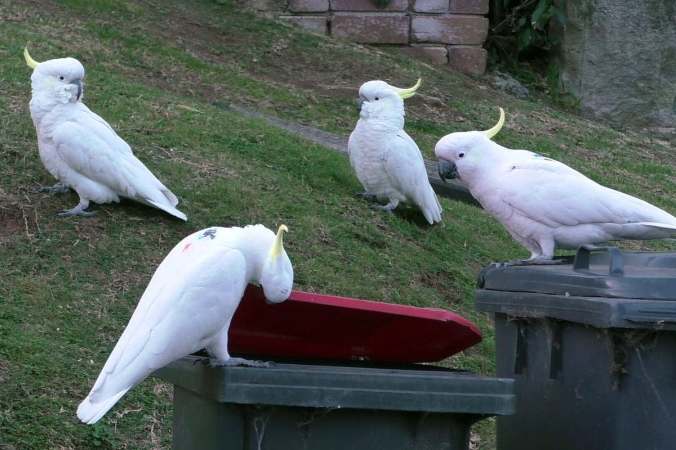
A cockatoo did the work while others observed. Barbara Klump/Max Planck Institute of Animal Behavior

Watch the half-minute video accompanying this story and you will understand the words “clever” and “adaptable” in a new way:

Trash Parrots Invent New Skill in Australian Suburbs

Sydney’s clever and adaptable sulfur-crested cockatoos learn how to pry open garbage bins by watching one another.

You’ve heard of trash pandas: Raccoons raiding the garbage. How about trash parrots?

Sulfur-crested cockatoos, which may sound exotic to Americans and Europeans, are everywhere in suburban areas of Sydney. They have adapted to the human environment, and since they are known to be clever at manipulating objects it’s not entirely surprising that they went after a rich food source. But you might say that the spread of their latest trick, to open trash cans, blows the lid off social learning and cultural evolution in animals. Continue reading

Reform School For Cats

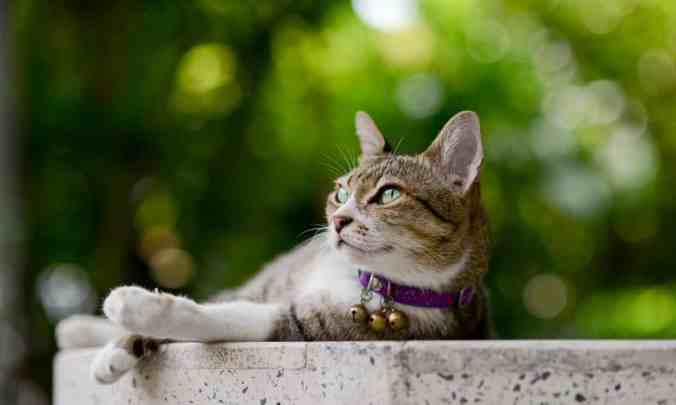
The study also found that bells on collars made no difference to the number of animals killed by a cat. Photograph: GluePromsiri/Getty/iStockphoto

I am a cat person by nature. I have lost count of how many cats I had as pets since early childhood and well into adulthood, but I do remember our last two cats from three decades ago. Boris, a black cat with a tip of white on his tail, learned to jump up into my cradled arms if I stood in front of him and made a certain noise. His sister Mimi was named for the plaintive mi-mi cry she made when she climbed up onto the bathroom sink and rubbed her mouth against the faucet head, wanting us to turn the water on to drip out so she could drink. They lived long lives as indoor cats who did no harm to anyone or anything (that we knew of).  But when we learned how many birds, among other wildlife, that cats kill per year we decided not to adopt any more cats; we switched to dogs. Now, all these years later, I am happy to see there is hope for reformed cat behavior:

Meaty meals and play stop cats killing wildlife, study finds

Millions of pet cats are estimated to kill billions of animals a year but grain-free food can change cat behaviour

Feeding pet cats meaty food and playing with them to simulate hunting stops them killing wildlife, according to a study. Continue reading

“Bye Bye” to Dolphin Selfies

5400

Dolphins are one of the most adored aquatic mammals due to their charismatic and friendly nature. In Hawaii, spinner dolphins attract thousands of tourists to the island every year, but the lack of regulation on human interaction with these social creatures is changing their behavior and disrupting their sleep cycle:

Spinner dolphins are nocturnal, foraging in the deep ocean at night and returning to shallow waters to rest during the day, said Susan Pultz, the chief of conservation planning and rule-making for the National Marine Fisheries Service.

“When you get the numbers [of tourists] we’re seeing, they’re constantly disturbed all day long. That’s their resting period,” said Pultz.

“As we all know, if you don’t rest day after day after day, it does affect your fitness.”

Continue reading

A Fluttery Meal Companion

img_9901_zps957eyelg

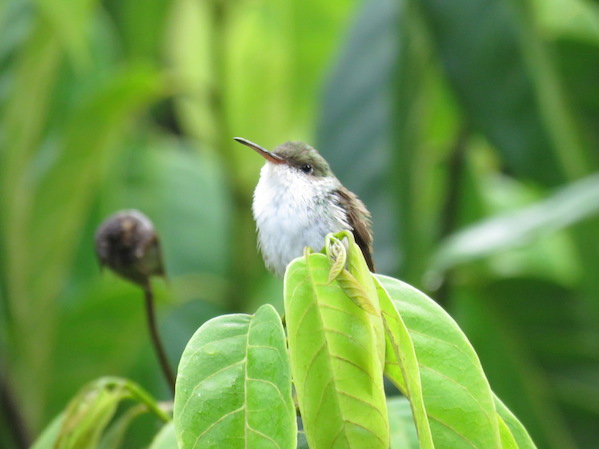
White-bellied Emerald by Seth Inman

You are always guaranteed to have a fluttery companion at every meal at Chan Chich Lodge. Whether you are sipping on an early morning cup of Gallon Jug coffee or munching on a hearty black bean burger for lunch, a variety of hummingbird species will perch on nearby branches, whiz by your ears, and fight one another for a precious sip of sugary liquid from the hummingbird feeder and nearby flowers. It is an entertaining and lively spectacle full of reproachful tweeting and muffled buzzing as the hummingbirds dive and zig-zag through the different obstacles (sedentary, observant humans included) that surround the dangling feeder.

Continue reading

Corvid Playtime

Speaking of birds, we love playing around with examples of creativity in the animal kingdom. There was a time when scientists claimed the use of tools was what set humans apart from animals. Continue reading

Canopy Feeding

This slideshow requires JavaScript.

We were on our first Sunday outing of the new year at Hebbal Lake in Bangalore. Towards the end of the birding session, we stopped to click pictures of a little Egret and an Intermediate Egret.

The Intermediate Egret was busy preening for a very long time. As we enjoyed watching it, there was one another interesting behaviour that I got to record – “Canopy feeding”. Continue reading

Wild Periyar – Mud Puddling (Butterflies)

Common Blue Bottle; Graphium sarpedon

Mud puddling is a social insect activity usually involving newly hatched males where several butterflies of one or more species gather on moist banks of sand or mud. Mud puddling butterflies often spend a long time on these damp patches, where they suck salts along with water to obtain nutrients. Continue reading