Ants & Us

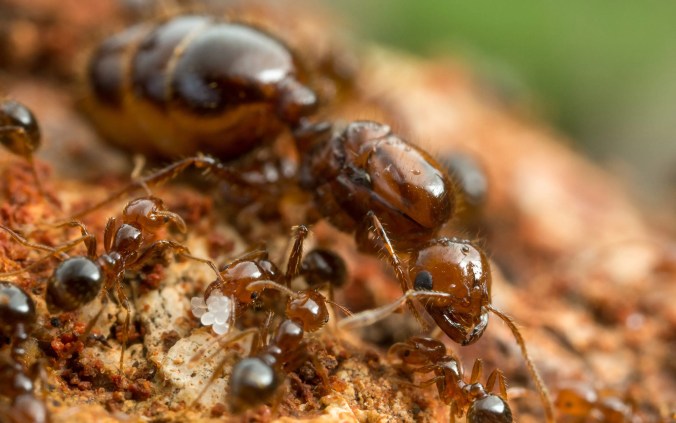
A queen Solenopsis invicta, an invasive fire ant. Photo by Alex Wild

John Whitfield, author of this article in Aeon, is a science journalist whose writing has appeared in Nature, among publications:

A polygyne population of red imported fire ants at Brackenridge Field. Austin, Texas, USA. Photo by Alexander Wild

Ant geopolitics

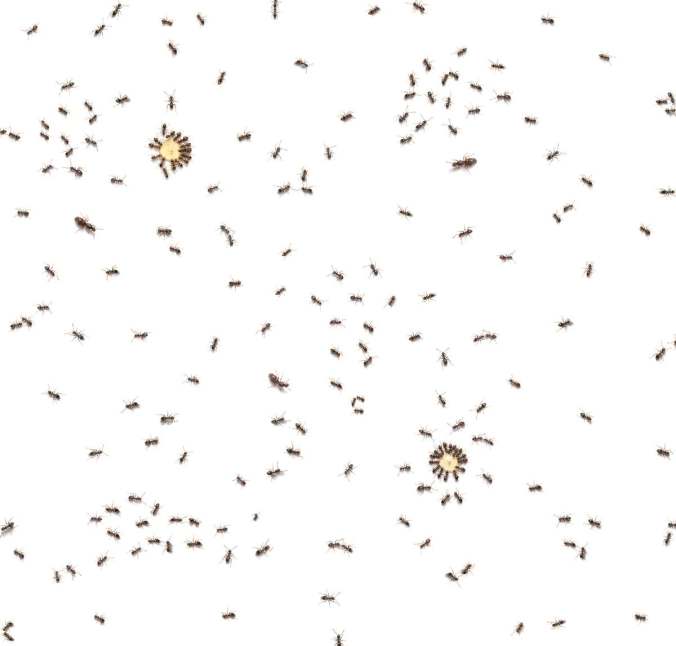
Over the past four centuries quadrillions of ants have created a strange and turbulent global society that shadows our own

It is a familiar story: a small group of animals living in a wooded grassland begin, against all odds, to populate Earth. At first, they occupy a specific ecological place in the landscape, kept in check by other species. Then something changes. The animals find a way to travel to new places. They learn to cope with unpredictability. They adapt to new kinds of food and shelter. They are clever. And they are aggressive. Continue reading

On Those 20 Quadrillion+ Ants, Again

Ants in Escazu

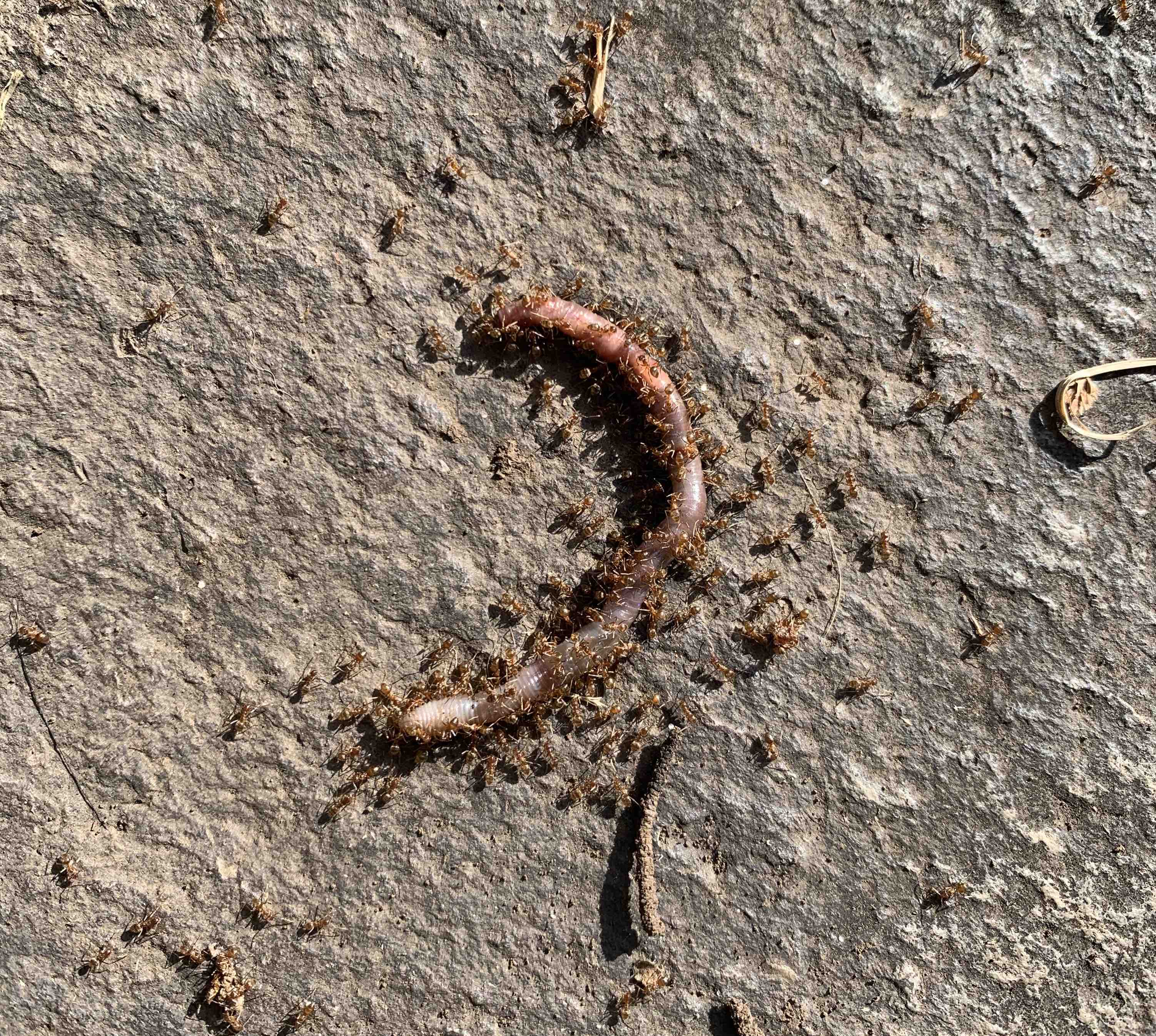
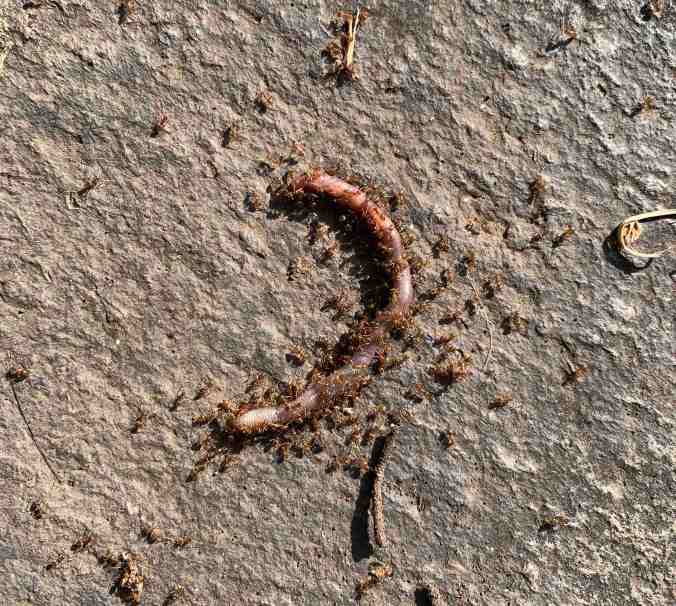
The earthworm in the photo above had been in a bag of soil where a coffee seedling started germinating earlier this year. I was moving the seedling from its small “starter” bag to a larger one, and the earthworm jumped out, wriggling under the nearby supplies I was working with. I did not see it again until it was too late. Since earthworms are good for soil, and we are in the early stages of a soil regeneration project, I was sorry to see the worm lose its life. This particular species of ant is currently everywhere on the property where we are re-planting coffee. I have not seen so many of this type of ant at any point in the last 22 years on this property, and their shocking abundance made me think of that new ant study. Normally we do not repeat sharing of news stories here, unless new information has come to light. It has only been a couple days, but I must share more on the study because my planting work is keeping the subject in front of me, and the photos in this article are that good.
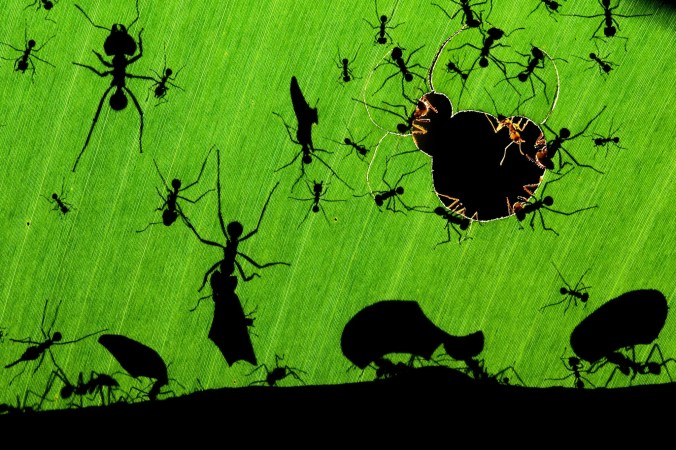
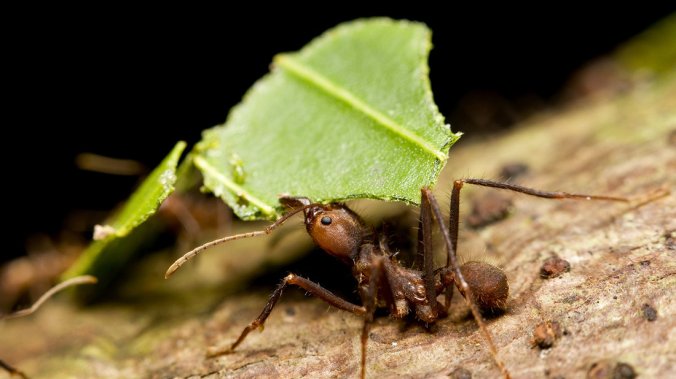
Leaf cutter ants in Costa Rica. The researchers sampled 1,300 locations around the world, estimating ant abundance in different environments in areas such as forests and steppes. Bence Mate/Nature Picture Library, via Alamy

Rebecca Dzombak, who authored this article for the New York Times, will be on our radar from now on:

Weaver ants engaged in teamwork. Sunthorn Viriyapan/Alamy

Counting the World’s Ants Requires a Lot of Zeros

There are 20 quadrillion ants worldwide, according to a new census, or 2.5 million for every living human. There are probably even more than that.
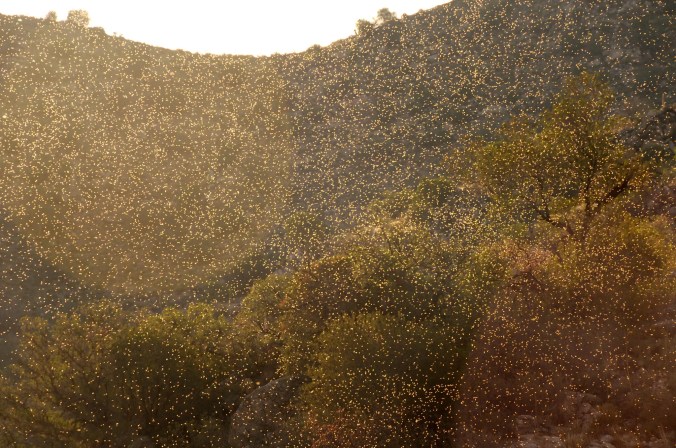
Male leaf cutter ants on the move over the Sonoran Desert in search of females and to make more ants. Norma Jean Gargasz/Alamy

Right now, ants are scurrying around every continent except Antarctica, doing the hard work of engineering ecosystems. They spread seeds, churn up soil and speed up decomposition. They forage and hunt and get eaten. You may not know how much you rely on them. Continue reading

Ant Mass Calculation

In this photo provided by the U.S. Fish and Wildlife Service, yellow crazy ants are seen in a bait testing efficacy trial at the Johnston Atoll National Wildlife Refuge in December, 2015. An invasive species known as the yellow crazy ant has been eradicated from the remote U.S. atoll in the Pacific. Robert Peck/AP

The mass of ants on earth is not a topic we have considered, but there is not too much surprise at reading this news:

The number of ants on Earth has a mass greater than all birds and mammals combined

For every human on Earth, there are estimated to be about 2.5 million ants — or 20 quadrillion in total.

A new study published by researchers at both the University of Hong Kong and University of Würzburg in Germany attempts to count the total number of ground-dwelling and tree-dwelling ants. Continue reading

Crazy Yellow Ants, Be Gone From This Island

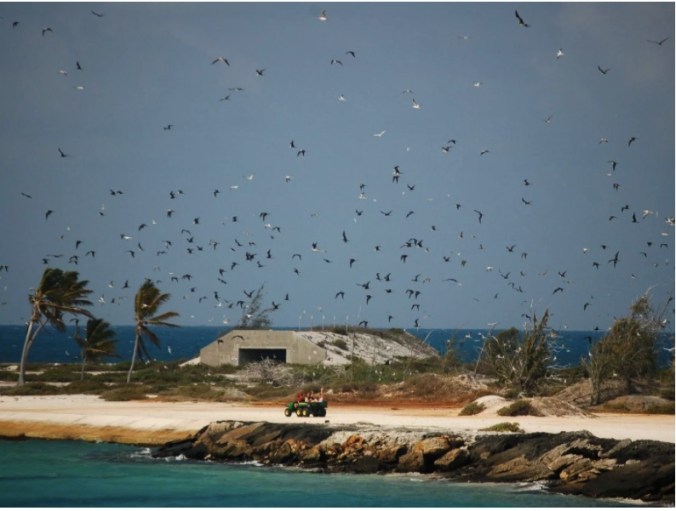
Hundreds of frigate birds and boobies fly over a Crazy Ant Strike Team crew of volunteers at Johnston Atoll NWR.
USFWS

In common language, they are called crazy. They terrorize birds on an island where they did not belong. On this platform we are always going to side with the birds. Full stop. But, even these lousy things ants do are impressive. They remind us that one day ants will rule the planet.

Yellow Crazy Ants, An Enemy To Seabirds, Have Been Wiped Out On A Remote Atoll

The yellow crazy ant was last spotted by Crazy Ant Strike Teams on the vital seabird nesting grounds in December 2017, but it was too soon to tell if they’d been fully extinguished because their colonies are found underground. Robert Peck/HCSU/USGS

After more than a decade, the terrorizing reign of the yellow crazy ant is over on the Johnston Atoll National Wildlife Refuge, part of the Pacific Remote Islands Marine National Monument.

The nonnative invasive insect had been threatening ground-nesting seabirds on the atoll since at least 2010, nearly wiping out the island’s red-tailed tropicbird colony in just a few years and wreaking havoc on other seabirds. But the U.S. Fish and Wildlife Service announced Wednesday that its campaign to eradicate the insects has been a success. Continue reading

Ant Respect

Common black ant (Lasius niger) workers and three queens.

Any given day in Costa Rica the number of insects one is likely to encounter is too great to count. Ants are not automatically loved, but they are respected. Brooke Jarvis, whose writing we saw primarily in the New Yorker previously, has spectacular photography to accompany her text in this New York Times article in the Science section:

Let Us Now Praise Tiny Ants

Even in the densest human habitations, there are orders of magnitude more ants than there are of us, doing the hard work of making our crumbs disappear.


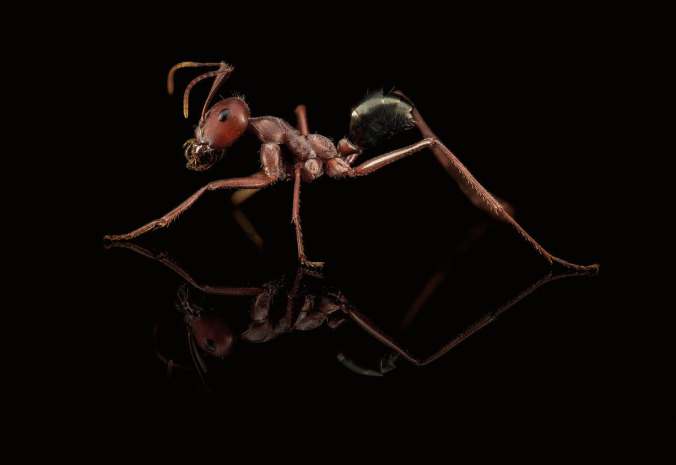
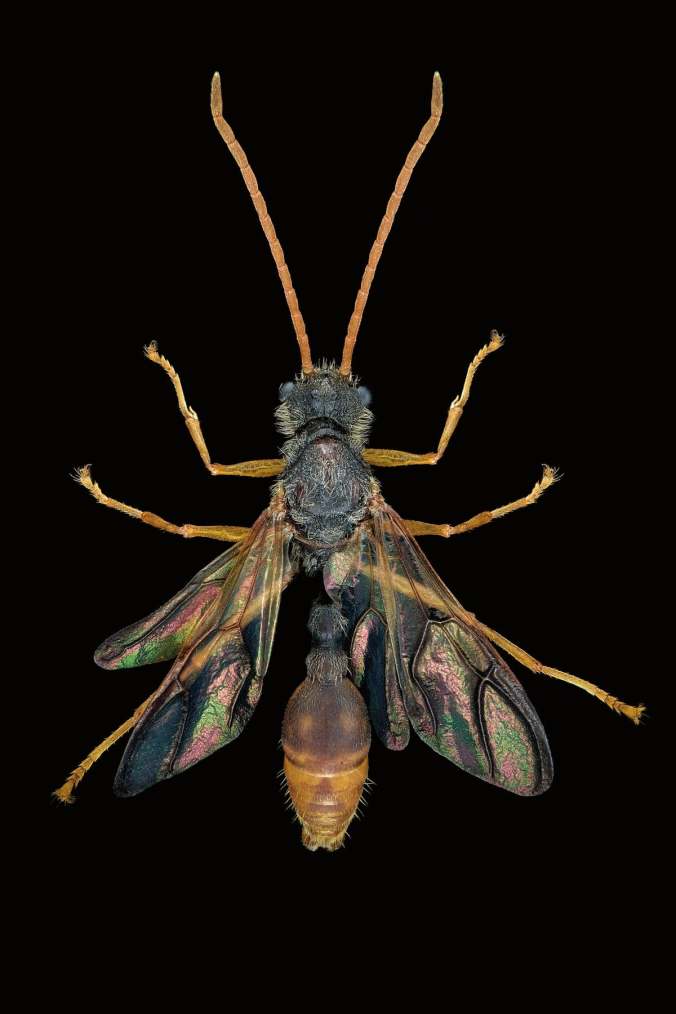
It is telling, the entomologist Eleanor Spicer Rice writes in her introduction to a new book of ant photography by Eduard Florin Niga, that humans looking downward on each other from great heights like to describe the miniaturized people we see below us as looking “like ants.” By this we mean faceless, tiny, swarming: an indecipherable mass stripped of individuality or interest.

Daceton armigerum, male, from northern South America.

Intellectually, though, we can recognize that each scurrying dot is in fact a unique person with a complicated and interconnected life, even if distance appears to wipe away all that diversity and complexity. Continue reading

Agricultural Origin Story

leaf-cutter-ants_wide-6b7093087f0ce34d72d51f5eebb34ebc9db81df7-s1100-c85

Various species of ants engage in some kind of agriculture. Here, a leaf-cutter ant gathers food for its fungus farm. Mark Bowler/Science Source

Thanks to National Public Radio (USA):

Who Invented Agriculture First? It Sure Wasn’t Humans

Ants in Fiji farm plants and fertilize them with their poop. And they’ve been doing this for 3 million years, much longer than humans, who began experimenting with farming about 12,000 years ago. Continue reading

The Big Headed Ant


072716_ca_ants_feat_new

Source sciencenews.org

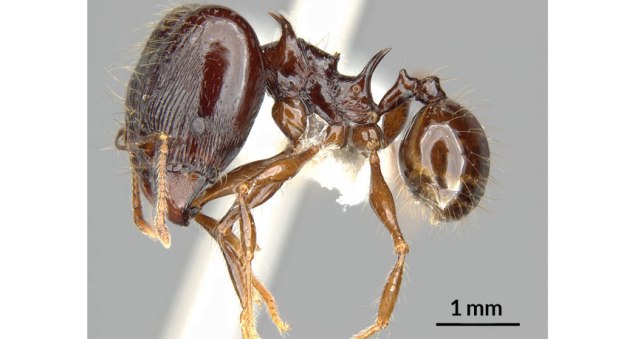
Whether it be inside or outside of our homes, ants are everywhere on land. The Pheidole drogon and Pheidole viserion worker ants, found in the rainforests of Papua New Guinea, are ones that have spines protruding from their thoraxes, an intimidating sight for anyone or anything trying to tangle with them. However, researchers suggest that the thorny-looking spine might instead be a muscular support for the ant’s over-sized head, which is used to crush seeds. Continue reading

Ants & Agriculture

attaqueennest1cropt1web.jpg__800x600_q85_crop

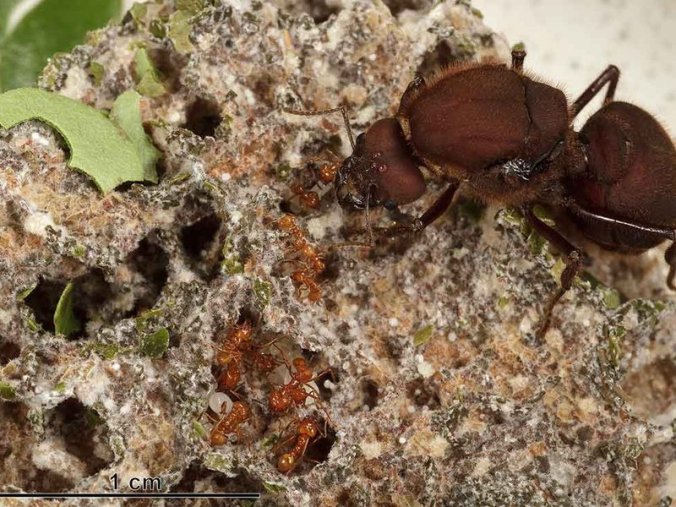
Tiny nurse ants tending to white ant larvae are dwarfed by the queen ant in the upper right. All the ants feed upon protein-rich food produced by a white-grey fungus that they cultivate underground. (Karolyn Darrow)

Thanks to the folks at Smithsonian for this one:

Were Ants the World’s First Farmers?

A new study shows that a group of ants have been conducting a subsistence type of farming since shortly after the dinosaurs died out

By Jackson Landers

Humans have been practicing agriculture for about 10,000 years. But the attine ants of South America (which include the well-known leafcutters) have us beat by a long way.

According to a new paper co-authored by entomologist Ted Schultz, curator of ants at Smithsonian’s National Museum of Natural History, attine ants, which farm on an industrial scale similar to humans, have been carefully cultivating gardens with a complex division of labor to grow an edible fungus. Schultz’s team found that the ants have been doing this far longer than previously believed—up to 65 million years—and that we have much to learn from them. Continue reading