The Japanese Fine Art of Bragging

Gyotaku, the art of making inked prints from real fish, originated in 19th century Japan. Above, three examples from modern Gyotaku artist Heather Fortner (from left): Under the Rainbow Rainbow Trout; Little big skate and Primary colors butterfly ray. Courtesy of Heather Fortner

Gyotaku, the art of making inked prints from real fish, originated in 19th century Japan. Above, three examples from modern Gyotaku artist Heather Fortner (from left): Under the Rainbow Rainbow Trout; Little big skate and Primary colors butterfly ray. Courtesy of Heather Fortner

How did fishermen record their trophy catches before the invention of photography? In 19th century Japan, fishing boats were equipped with rice paper, sumi-e ink, and brushes in order to create gyotaku: elaborate rubbings of freshly caught fish.

Fish printing often attracts those who have a connection with the ocean or marine life. Wada, who is Japanese-American, grew up in Hawaii and was taught how to fish by his family at a young age. And before she became a gyotaku artist, Fortner was a commercial fisherman, research vessel deckhand, and a ship’s officer and Master in the U.S. Merchant Marine. “I have always loved the ocean and anything from the ocean,” she says.

She adds: “Gyotaku allows you to express an appreciation for the natural world by partnering with the finest artist in the world: Mother Nature.”
Continue reading

Innovating on the Ocean Bed

It's important that mercury pollution be contained at the site of spillage, especially oceans, to prevent it from travelling through the food chain. PHOTO: Wikipedia

It’s important that mercury pollution be contained, especially in oceans, to prevent the chemical from travelling through the food chain. PHOTO: Wikipedia

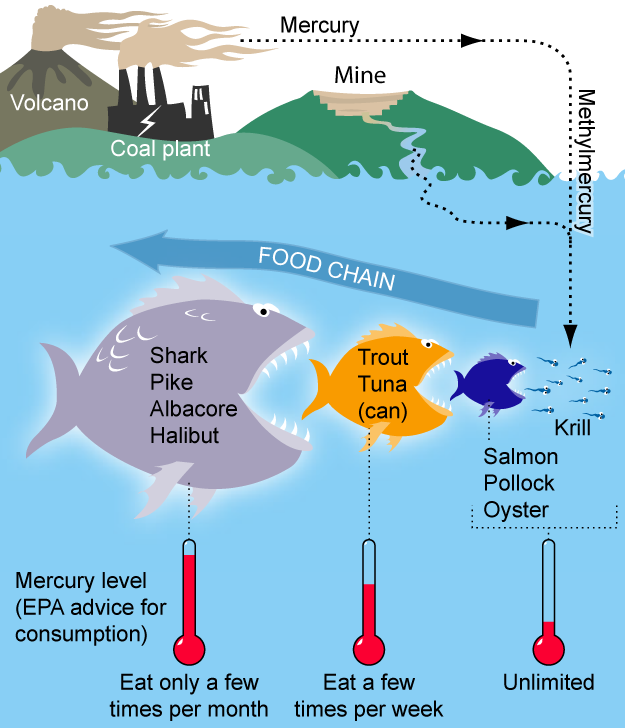
Mercury is a potent toxin that can accumulate to high concentrations in fish, posing a health risk to people who eat large, predatory marine fish such as swordfish and tuna. In the open ocean, the principal source of mercury is atmospheric deposition from human activities, especially emissions from coal-fired power plants and artisanal gold mining. Mercury concentrations in Hawaiian yellowfin tuna are increasing at a rate of 3.8 percent or more per year, according to a new University of Michigan-led study that suggests rising atmospheric levels of the toxin are to blame. And there’s a ‘fake’ solution at hand.

Continue reading

Big Fish, Small Fish

Encouraging consumers to eat fish such as herring, mackerel, and butterfish might, ironically enough, be the best way to save those species. PHOTO: Nutritional Thinking

Encouraging consumers to eat fish such as herring, mackerel, and butterfish might, ironically enough, be the best way to save those species. PHOTO: Nutritional Thinking

From the beginning of time and until relatively recently, little fish had only big fish to fear. Since the middle of the twentieth century, however, some little fish—forage fish, to be precise—have faced radically increased threats from humans, and, by extension, from the pigs and chickens that the fish are increasingly being fed to. Forage fish are now threatened worldwide, which has potentially troubling implications for the entire food chain. In conservation circles, the suggestion lately is that encouraging consumers to eat small fish might, ironically enough, be the best way to save them.

Continue reading

What’s the Real Price of Fish?

In 2010, environmental NGO Oceana ordered studies of fish in 14 major metropolitan areas and found that roughly one third of the fish found in restaurants and markets was mislabeled . PHOTO: Wikimedia Commons

In 2010, environmental NGO Oceana ordered studies of fish in 14 major metropolitan areas and found that roughly one third of the fish found in restaurants and markets was mislabeled . PHOTO: Wikimedia Commons

The efforts of the government to regulate Big Fishing and all its known and unknown evils often have the adverse effect of undercutting people for whom the ocean is something more than mere industry. The realities on the docks aren’t always as legislators understand them, says this first installment of the Medium‘s  inaugural episode of Food Crimes: The Hunt For Illegal Seafood.

The United States imported as much as 90 percent of its fish in 2013, up from 54 percent in 1995, according to the National Oceanic and Atmospheric Administration (NOAA). In fact, the United States has tripled the dollar amount of fish it imports, to more than 5 billion pounds of fish worth $18 billion. Couple these figures with the staggering estimate that between one quarter and one third of all fish sold in the United States is illegal, and you’re an equation or so away from going vegan.

Continue reading

Fishing for Life

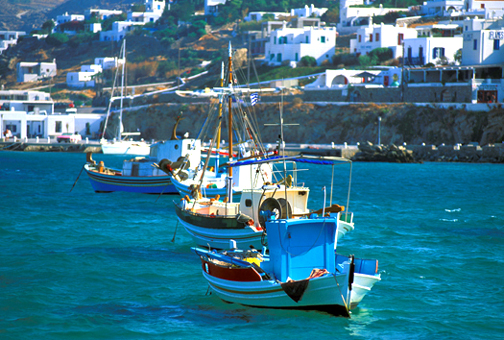
Greece is now heavily investing in open-ocean fish farming to meet demand.  PHOTO: Gerald Brimacombe

Greece is now heavily investing in open-ocean fish farming to meet demand. PHOTO: Gerald Brimacombe

The traditional Greek fisherman casting a net from his small wooden caique is a postcard image of the Mediterranean. In the past, these fishermen supplied tavernas and fish markets. But fish stocks are so low now that many say they can’t make a living. Reason? Commercial trawlers scoop most of the fish out of the sea, there’s over-exploitation of marine wealth, and fishing regulations are lax. National Public Radio tells this story from the port of Laki, a fishing village on the Aegean island of Leros:

It’s a sunny afternoon on the port of Laki, a fishing village on the Aegean island of Leros. The seaside tavernas are filled with happy tourists and local families listening to traditional violin music and eating fresh grilled fish. But fisherman Parisi Tsakirios is not celebrating. He’s on his wooden fishing boat, cleaning a bright yellow net. Two days at sea, he says, and barely a catch.”We caught just 20 pounds of fish,” says Tsakirios, who, at 29, has been fishing for 15 years. “We can sell that for 200 euros (about $225). But fuel costs almost as much, so we’ll be lucky if we make 20 euros (about $22).”

Continue reading

Flavours Of Kerala- Karimeen (Pearlspot)

Kerala’s extensive network of rivers and backwaters means that fish is plays a central role on any menu and Karimeen (Pearlspot) has come to symbolise that part of the cuisine. Karimeen is a bony fish, treasured for its taste. Its most famous recipe is Karimeen Pollichathu where it is marinated in masala, wrapped in a banana leaf and broiled. Continue reading