
Vechur cow
We recently talked about the cowbird, but today I’d just like to talk about cows. Cows are ubiquitous here in India. The Vechur cow, however is on the FAO’s ‘Critical-Maintained Breeds List.’ Continue reading
Vechur cow
We recently talked about the cowbird, but today I’d just like to talk about cows. Cows are ubiquitous here in India. The Vechur cow, however is on the FAO’s ‘Critical-Maintained Breeds List.’ Continue reading
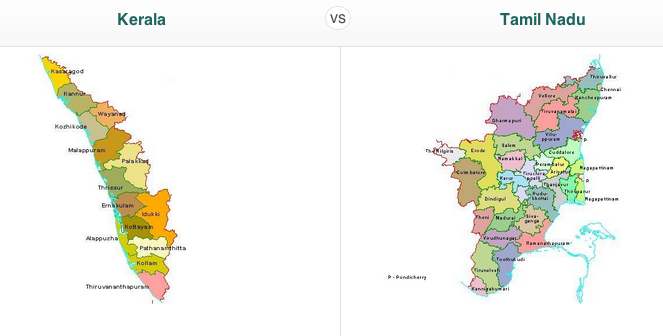 I live in New Jersey and go to school in New York, and consequently, I have crossed the border into New York on many occasions. During my drives, I often don’t even realize when I cross the border; the only thing that lets me know is a small sign that welcomes me to the state of New York. Almost a product of its name- the United States of America- this holds true for many states across the United States. When you travel between neighboring states, the principal language is the same (English), and apart from a few exceptions, people usually both look and sound similar.
As part of my summer interning at Raxa Collective, I am currently staying in Thekkady, which is located in the Indian state of Kerala. A couple days ago, a few colleagues and I decided to go for a ride to one of the neighboring states, Tamil Nadu. Because of my experiences in the United States, I expected both Kerala and Tamil Nadu to be very similar. Boy, was I wrong. While the only indicator that signaled my entrance into Tamil Nadu was a gate manually operated by a few workers, it was clearly evident that I was somewhere different. Continue reading
Guest Author: Siobhan Powers
I’ve been staying in the beautiful backwaters of Kerala for the past few days, which has put me at ease as I always feel more comfortable by the water. Jonathon and I took some time out of our workday to take a walk and get a feel of the area, including all it has to offer, both culturally and agriculturally. We interrupted the construction of a stone wall surrounding a rice paddy field and watched a young boy catch fish in a stream at the side of the narrow road. In the heat of the Indian sun’s rays, we contemplated buying ice cream, but, on our return, settled on the universal refreshing thirst-quencher that is an ice-cold cola.
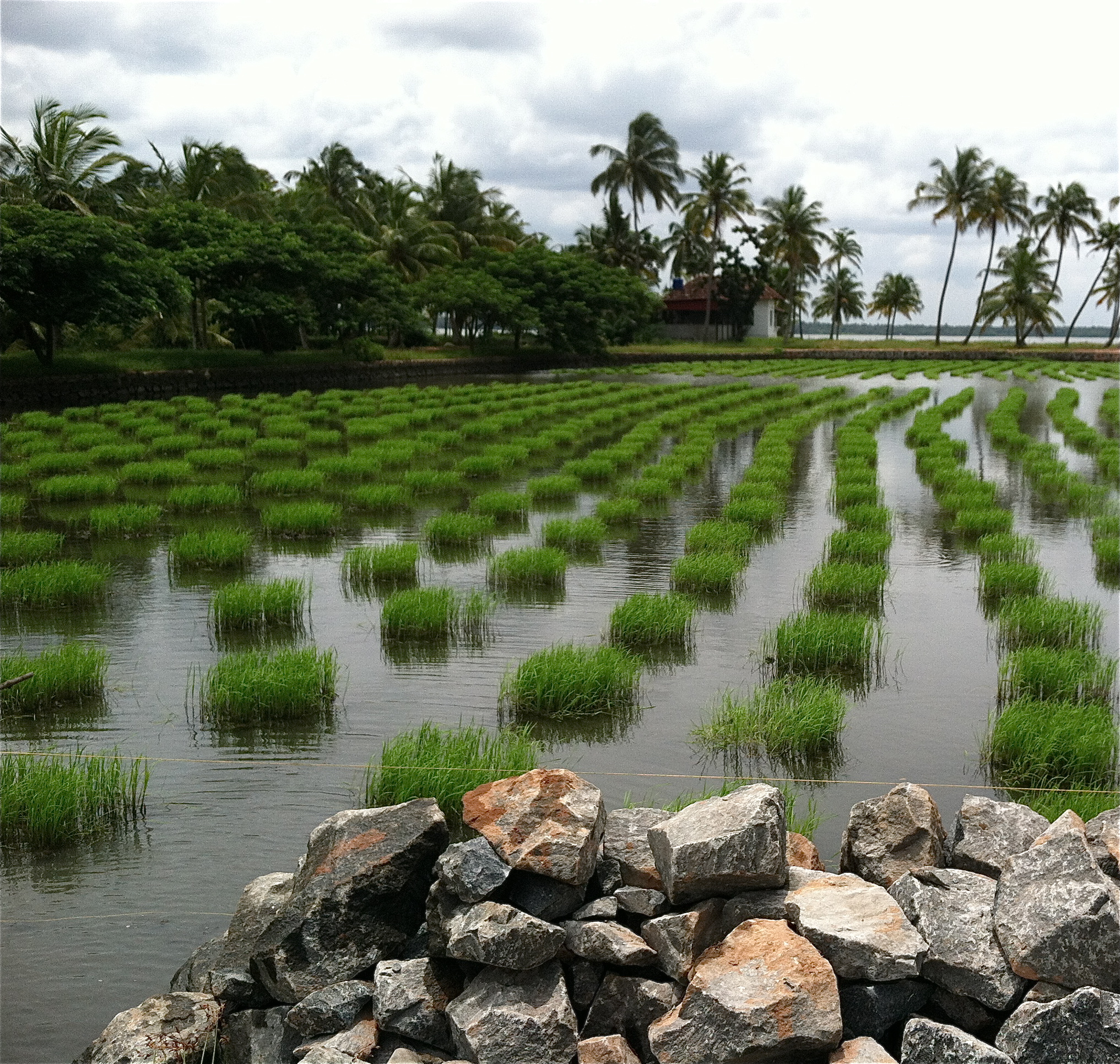
Rice paddy in Panangad
Guest Author: Siobhan Powers
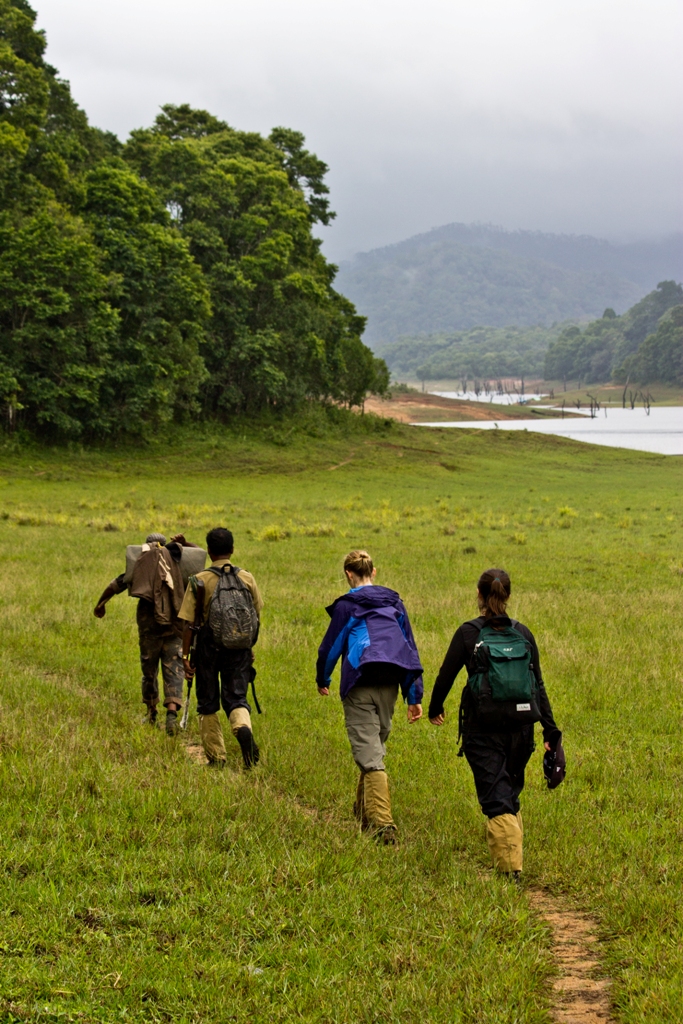
Photo Courtesy of Milo Inman
Before my journey to India, I’d never camped. Sure, I had slept in a tent in my friend’s backyard and gone to Girl Scout camp with my Scooby Doo sleeping bag, but I was feet from indoor plumbing and a roof every time. Where’s the fun in that? When I was belatedly asked to join a few interns on the Tiger Trail overnight trip into the Periyar Tiger Reserve, I was skeptical. My summer nights are usually spent running seafood to a hungry customer or chasing a high-maintenance boy across the beaches of the Jersey shore-therefore my presence in the jungles of Asia is quite ectopic, but I am an adventurous person (sometimes to my detriment). I took the opportunity for what it was- a once-in-a-lifetime chance to snuggle up to some tigers. Continue reading
I frantically grabbed the phone and dialed the front desk. I hastily told the night auditor of my situation and begged him to send help. Within minutes, not one but two maintenance men were at the entry path leading to my room to redirect the furry night creature that (in my imagination, at least) seemed intent on spending the night too close for my comfort. A few minutes later “it” had exited back to the forest, and I had met three new members of Cardamom County, one of whom managed to gain my trust through a single phone call: Faruk.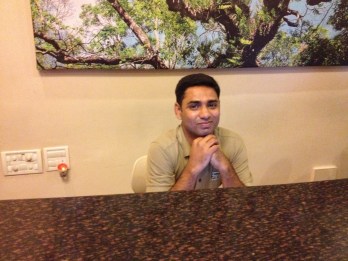
He works the night shift at Cardamom County and is quite a remarkable person. This gentleman is oft my unfortunate sounding board when I can’t sleep or arise before the rooster crows (a reality next to the beautifully quaint farm here). He was manning the reception desk after my enlightening night visit to the kitchen. When I wrote about meeting Jimmy he said if I ever were to write about him I should use him as an example of night shift mishaps, laziness, or incompetency. I didn’t think much of his suggestion at the time, but in hindsight, I scoff at the thought of doing such a thing; Faruk is likely the furthest thing from the aforementioned negativity. Continue reading
Guest Author: Rania Mirabueno
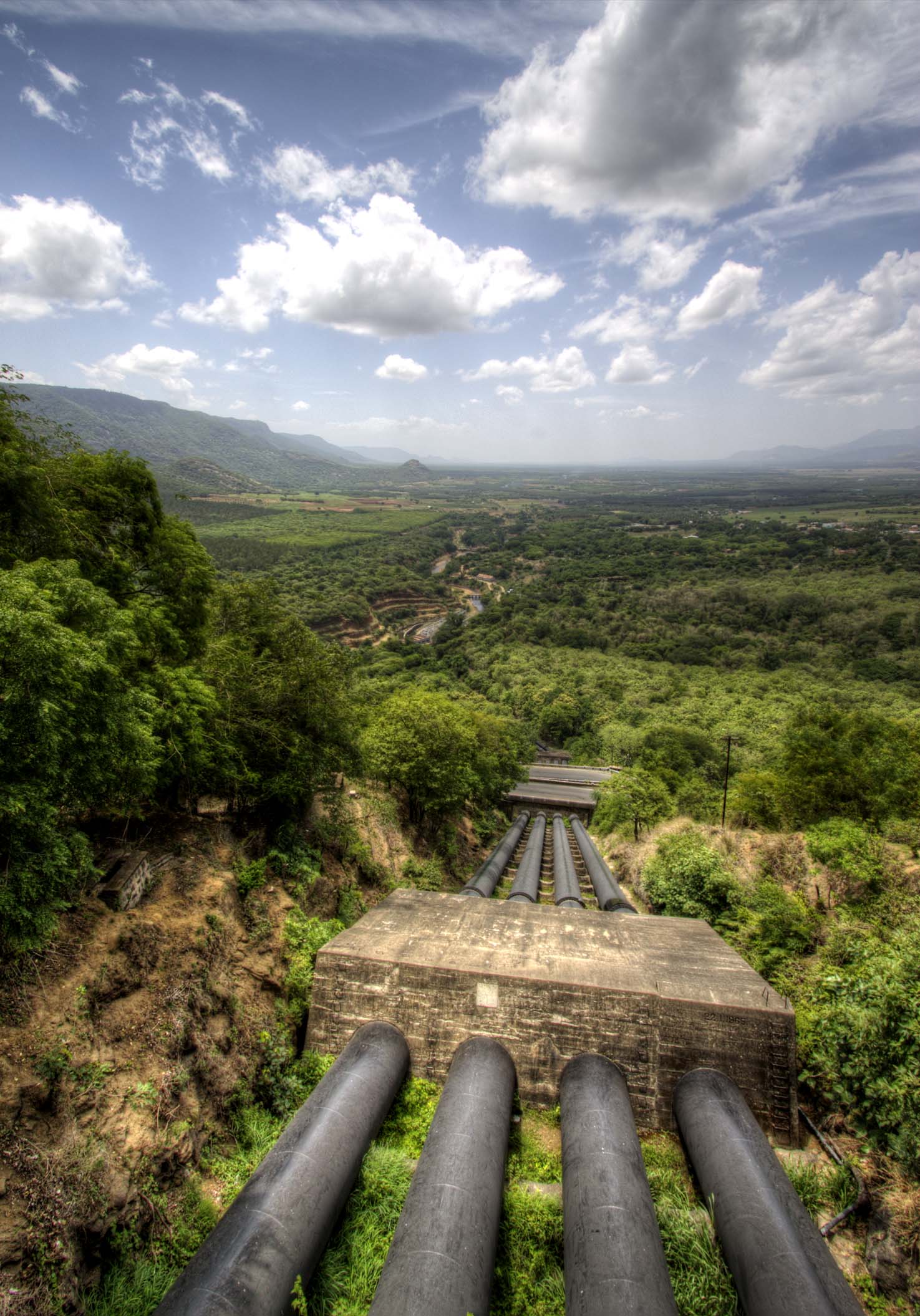
Mullaperiyar Dam taken by Milo Inman

View from Mullaperiyar Dam taken by Milo Iman
Sustainable Water Fountain taken by Seth Inman
While enjoying this beautiful view into Tamil Nadu from the top of the Cardamom hills in Thekkady, Kerala, I began to think about what was behind me. A massive water system, four gigantic pipes directing water from the Mullaperiyar dam to its neighbor, Tamil Nadu. It instantly hit me how vital water is to human civilization that no pie chart or graph can depict any clearer.
The dispute of water from Kerala to Tamil Nadu rings close to my heart with similar water challenges to my home in the Southwest region of the United States. The Hoover Dam is the lifeblood for populations nearing more than 3 million in Los Angeles to Phoenix. Sustaining livelihoods of people will require creative collaborations among cities and increasing educational initiatives about how our actions as a civilization can negatively or positively affect our land and resources, especially water.
The real question is how does this EZ-fill water fountain found at Cornell University fit in with Mullaperiyar dam? Continue reading
Many Cornell “hotelies” are multilingual; not only bilingual but often speaking three or four languages. Their coursework is in English, they may speak Spanish or French from high school education, and Chinese helps as the number of Chinese travelers increase every year. For example, my good friend from the Cornell Hotel School speaks Spanish because she is from Venezuela, speaks Chinese because her family is a Chinese-origin, speaks English just like all my classmates, and maybe she speaks some other languages that I don’t even know about. Similarly, I speak English, Korean, and some Spanish and Mandarin. So, as an hotelier, I called myself a multilingual and thought I could easily communicate with people anywhere I go. Until I arrived in Kerala.
Learning Malayalam is the first time in my life trying to learn a language that has a totally different alphabets and pronunciation. So the experience is totally different from learning English, Spanish, or French. One of my colleagues here learned Hindi before she arrived in Kerala for her studies but Malayalam is so different from Hindi that it doesn’t help her communicate. The one thing that saved all of us (Interns from US) is that English is an official second language in Kerala so all of the resort staffs here speak English pretty well. However, most of them speak Malayalam to each other during work and speak English only with foreigners, so I thought that learning Malayalam would be a good idea to get to know the culture and people better.
My first step in learning Malayalam started with memorizing some simple words and phrases so that I can initiate conversation with everyone. So our journey of learning Malayalam started by asking around for some Malayalam lessons.
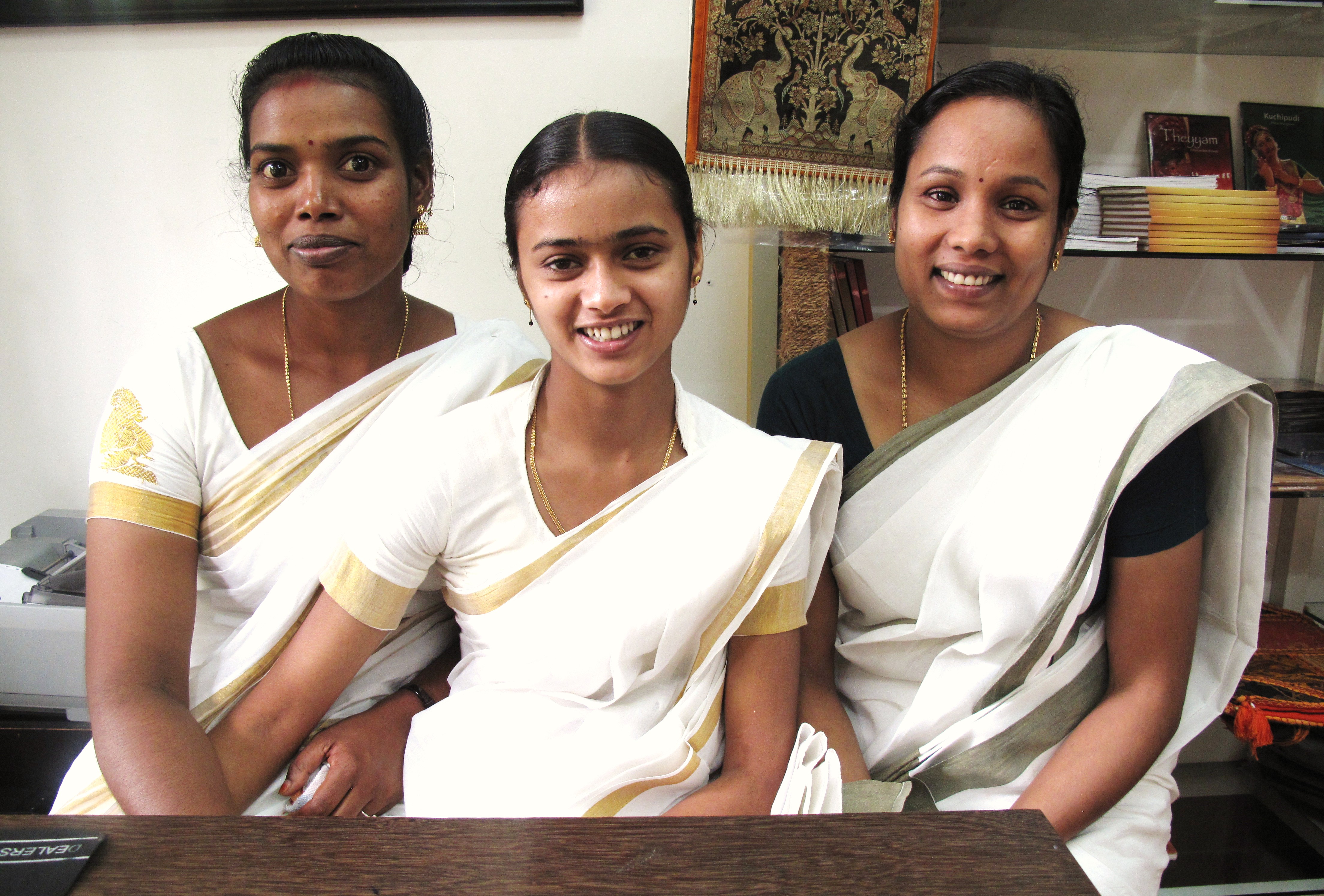
Ayuraveda Therapists & Receptionist
Three days ago, we pulled up in front of an art deco gate and half-abandoned mansion on the property of a soon-to-be new RAXA Collective resort. By ‘we’ I mean the design team comprising of an architecture student (me, Chi-Chi), a landscape architecture student (Rania), a hotelie-turned-interior architecture student (Jonathon), and an engineering student (Siobhan). We were told to get a feel of the property.
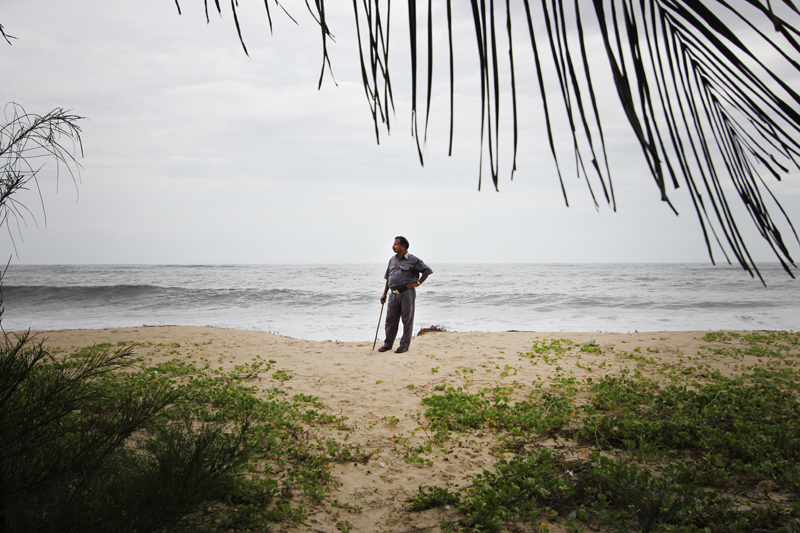
We, the interns, walked around the property with Amie and the trusty guard. The bamboo stick to protect against rumored snakes on the beach.
We found: ‘objects’ (modest fishermen’s homes); an endless, unobstructed beach with marbled sand and black waves; and our new favorite hangout spot, a nearby internet café.
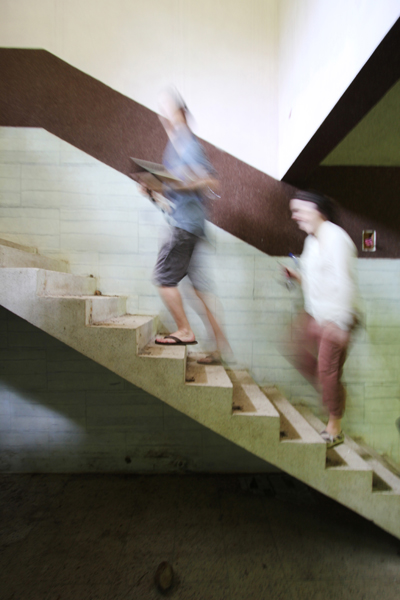
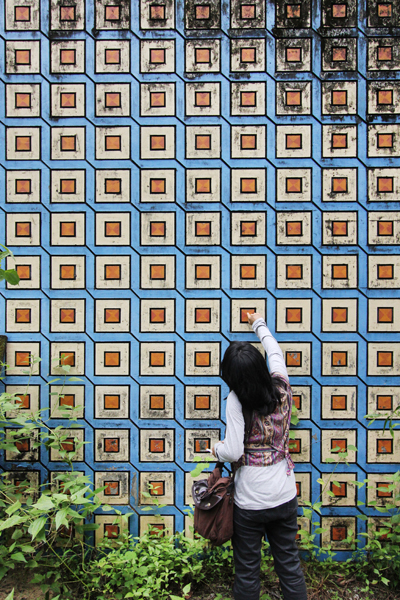
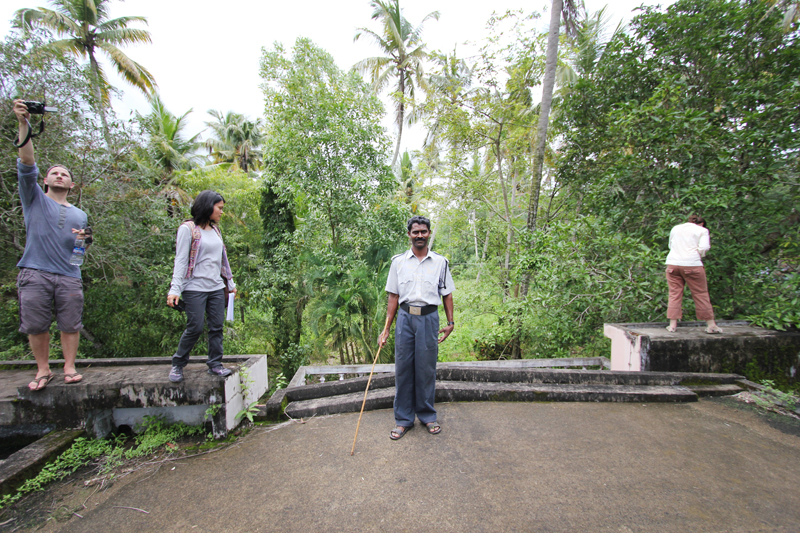
Exploring the roofline of an abandoned wealthy fisherman’s house with the guard.
Kaiser found: two Indian security guards; their next-door-neighbor friend; our cook Manu; and us.
Kaiser is a tiny mixed puppy who arrived on site only an hour before we did. As a dog-lover and all-around “everything happens for a reason” believer, I KNEW KAISER WAS A SIGN. A sign for what, I don’t really know, but he was a very cute and very small sign, so I immediately focused all my down-time obsessing and fussing over Kaiser.
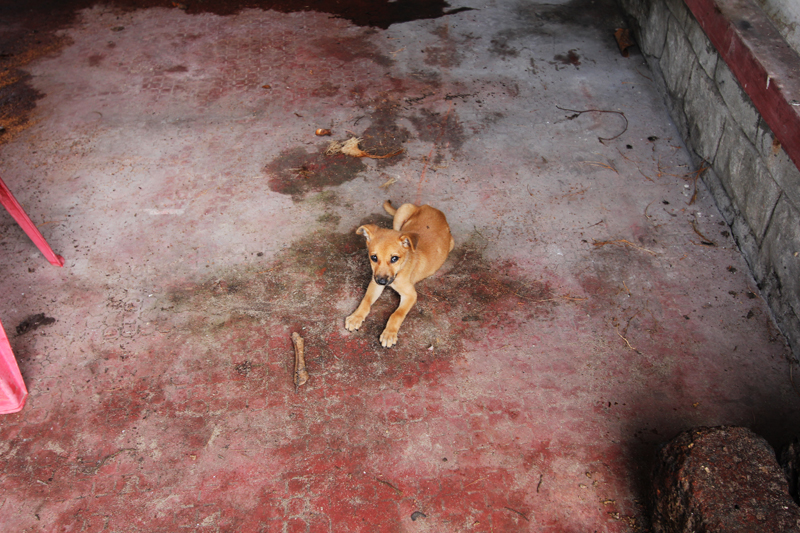
This is Kaiser.
I think Kaiser gave me more insight to Indian attitudes. It’s very difficult to converse with someone about abstract ideas without a common language, but if you throw a dog in the mix, it becomes a lot easier.
Like many people that can’t sleep at two o’clock in the morning, I let my nose lead me into the kitchen. In the wee morning hours, I was surprised to find one, lone and hardworking chef, Jimmy, preparing the morning’s breakfast buffet. I was drawn to the beverage station where I stood aghast, hoping my drip coffee machine would appear. As I looked pained with an overwhelming desire for caffeine, Jimmy’s hospitality ensued. He lowered the heat to his Aloo Bhaji, grabbed a saucepan, and began making me some coffee the “old fashioned” way with only a pot, water, ground coffee, and a sieve.
With my fuel source performing caffeinated magic, I observed his hard work ethic, learned how to make Kozhukattai, and had good conversations despite my poor and minimum Malayalam and his frequent inability to understand my East Texas “twangy” accent. I was filled with respect when I found he alone prepared the delicious breakfast for the guests of the retreat. I grew greater appreciation for my Wusthof knives; and, once again, I was, and continue to be, awed and inspired by the hospitality and giving character of the people I’ve met in Kerala.
Rarely do I find such great rewards for sleepless nights, but this night I found gold. I’m thankful and I “remove my hat” to Jimmy of the Allspice Restaurant. It’s people like these in this culture that increase my fondness for this state of India and strengthen my wish to stay or repeatedly return.
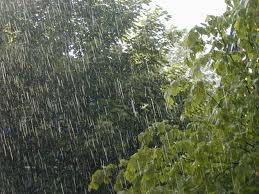 The song of the rain washes over me. It soothes my soul and calms my buzzing thoughts. Never would I have imagined forming a sense of respect and admiration for this wet, and often noted, overwhelming natural phenomenon. Yet, the monsoon rains of Kerala are magically revitalizing, relieving, and so much more.
Like blessings the droplets fall on my skin, awakening my soul from its lazy trance. I am increasingly able to understand how artists find it inspiring, how birds find it song-worthy. I am as thankful as the parched earth that I relinquished many of my hesitations towards the rain; my mind is open and ready for more.
When the rain ceases and the sky reveals the sun’s rays, it is a rainbow I hope to see. I find its colors in the cheerful tunes of the birds, the slow rustle of the leaves, and the intermittent chirps of the emerging insects. These few, along with many other, “colors” create a reflection of hope in the puddles of my mind.
As my days increase, I do not expect my puddles of misunderstanding, disbelief, or hesitation to completely dissipate. I only desire that, like I have with the rain, I am able to find positive and inspiring reflections within them.

India’s Western Ghats are one of our planet’s most biodiverse zones – as well as an intensely beautiful geological spine that separates the southwestern coast of the subcontinent from the southeastern. Kerala’s border with Tamil Nadu coincides with the range, which poses no mysteries. Transportation over the hills and mountains is tedious, and each side has it’s own cultural and meteorological identity; the border makes sense to an outsider. Continue reading
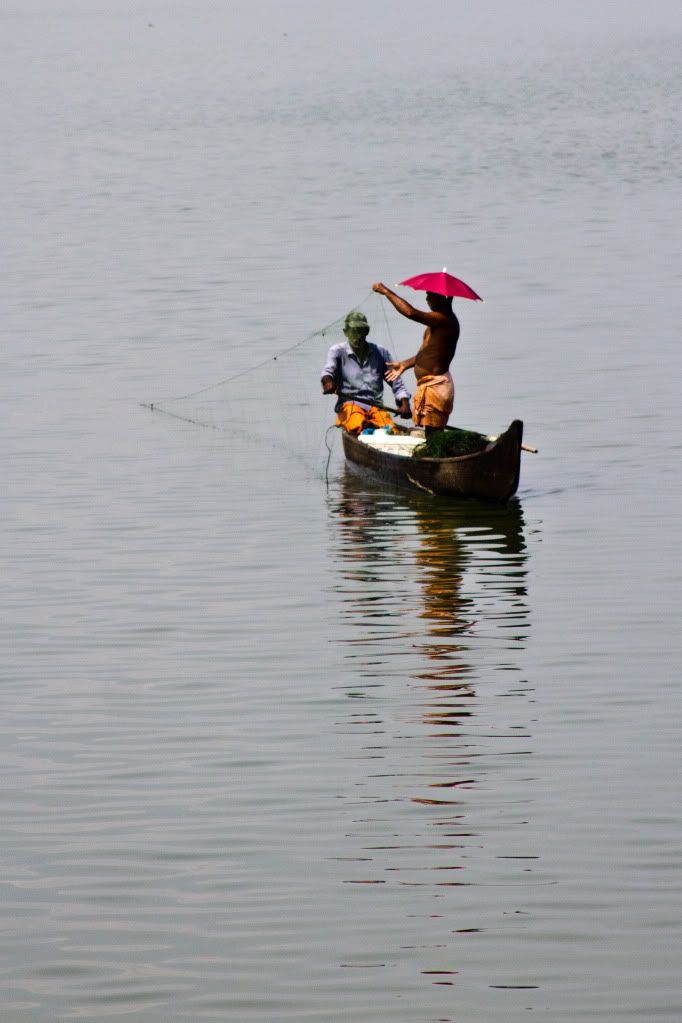
A morning on Kerala’s Backwaters. Although in the general sense you know what to expect in terms of how the day will play out, you are guaranteed to see some strange and possibly surreal things between breakfast and lunch. More if you rise before the sun comes up. This is purely out of self-preservation – during the heat of the day, any significant physical activity ends up being exhausting, and the locals know best. That said, it’s worth being up early to catch a number of interesting photographs that you would have been unable to were you sleeping. To the left are two fishermen – one rowing slowly while the other (suitably attired for protection from the sun) checks nettings for a catch. This was my first time seeing fishermen wearing umbrella hats, but I see workers in the paddy fields with them often. Despite this fact, I haven’t photographed them due to poor lighting conditions and a significant distance between us every time. Continue reading
The fringes of society are not the only point of convergence for odd characters. Least of all in India. Confronted by a foreigner with a camera, a man of modest means, excited by said foreigner’s appearance and interest in him, might act rather queerly. Although this response isn’t strictly natural in the general sense, it is by no means posed or artificial, as the subject is acting entirely of their own accord. So when they proffer bananas in shock, or hide their face behind a cup of chai or a cigarette, that’s the reaction I capture. The most frequent response is nervously calling out to friends nearby to “get a load of this”.
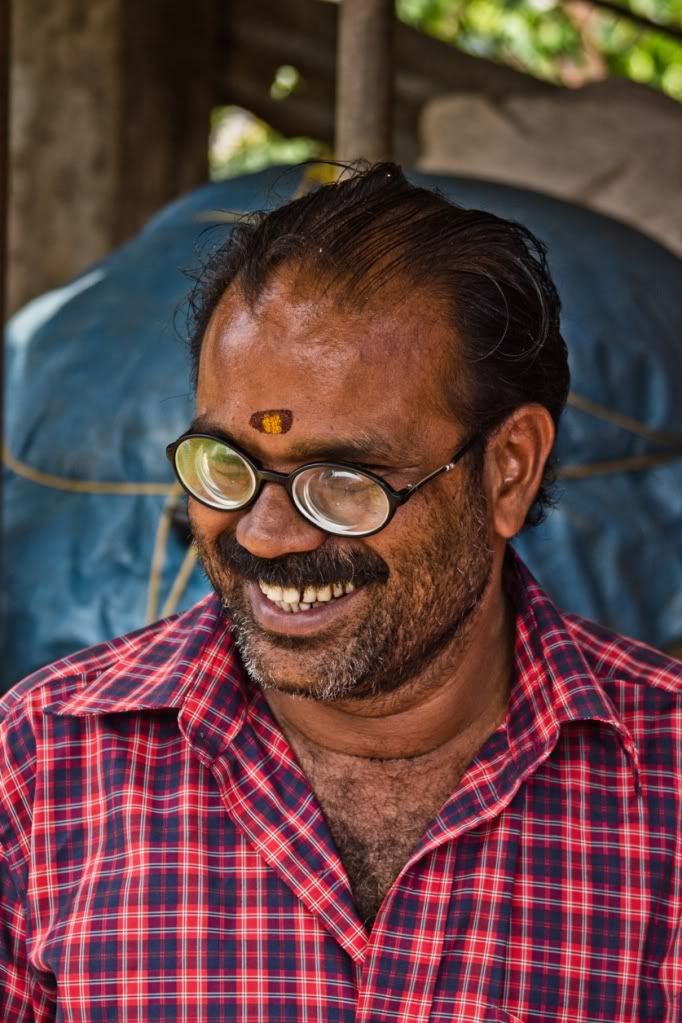
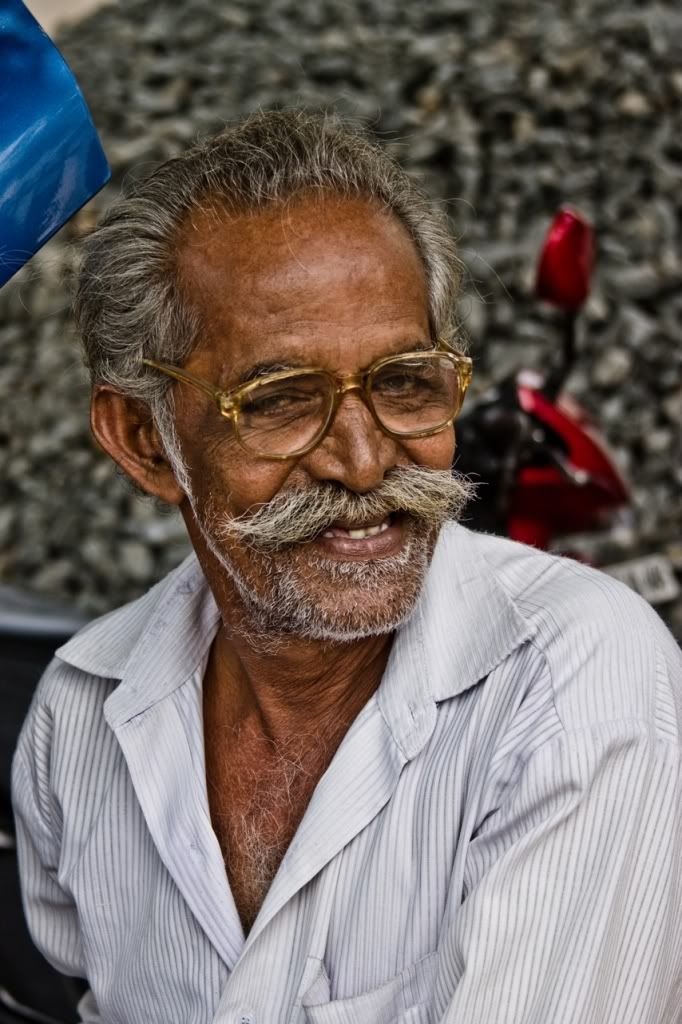
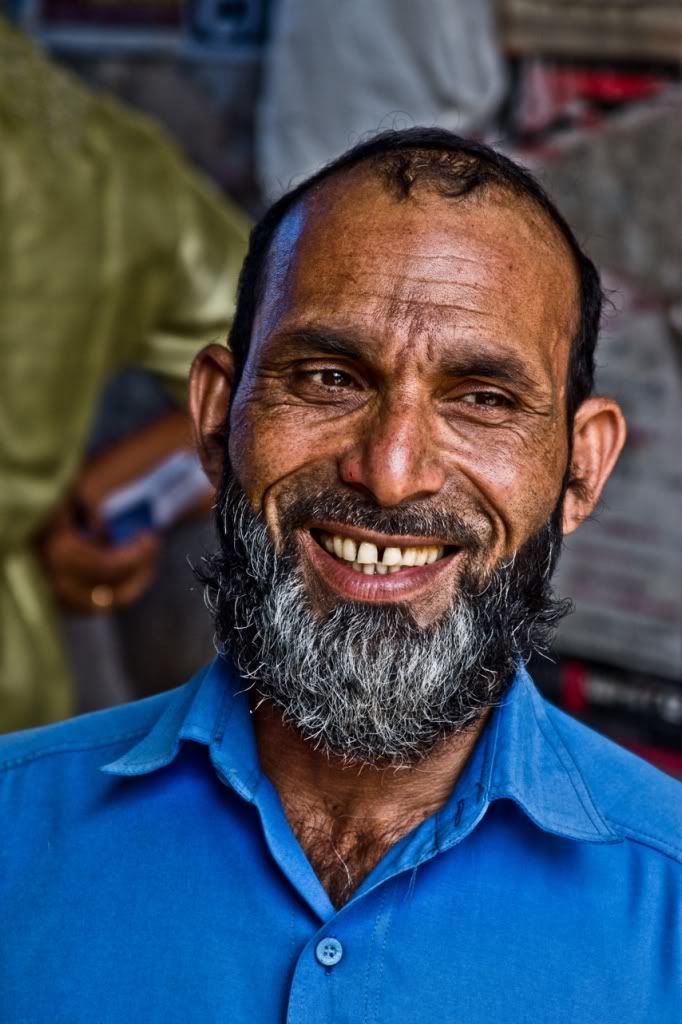
There’s something about Indian men above the age of fifty. Their features seem to lend themselves to being photographed. When they have beards, they are twice as photogenic, and when they crack a smile, it’s twice as radiant as that of a man half their age. One of my favorite aspects of the British colonial residue (or perhaps the Indian custom rubbed off on the Brits!) is the extravagant facial hair exhibited by many Indian men of a certain age – Keralites with enormous mustaches are not as common as in Tamil Nadu, but when they do it, they do it with class.
Throughout Kerala, colorful trucks unload tons of produce and commodities every morning. Wholesalers, warehouses, and markets all maintain a steady flow of goods – and the cycle begins anew each morning. I occasionally venture into central Cochin’s main market (Broadway) to photograph the process, and the colorful people that are washed about by the endless tide of fruits and vegetables, fish and fowl.
Snake Boat races are the largest team sport in the world. These races integrate team spirit, adventure and a great sense of rhythm. A number of small boats also participate in these events. Usually, a snake boat is manned by four helmsmen, 25 singers, and 100-125 oarsmen, who row in unison according to the fast rhythm of the racing songs. The songs sung by the helmsman is known as ‘Vanchipaatu’. Boat races take place seasonally. The Champakulam Moolam Boat Race in Jun-Jul at Alappuzha, the Aranmula Boat Race in Aug-Sep at Aranmula, the Payippad Jalotsvam during the Onam festival in Aug-Sep at Alappuzha, and the Nehru Trophy Boat Race in the second Saturday of August at Punnamada Lake-Alappuzha. The following photographs were taken at the Payippad Jalotsvam Boat Race by Mr. Joshi Manjummel during the last Onam festival in August-2011.

Photo by Mr. Joshi Manjummel at Payippad, Alapuzza
Elusive, elemental, and extremely beautiful – this natural phenomenon is breathtaking and actually quite simple to explain. Commonly known as light beams, crepuscular rays are caused by an effect similar to Rayleigh scattering, and are rare to see in a natural environment save near the twilight peripheries – hence the name. Steam, smoke, and dust during the rest of the day makes these beams visible to us from all angles, but short of these mediums, angle and hour are the most significant factors for seeing them.
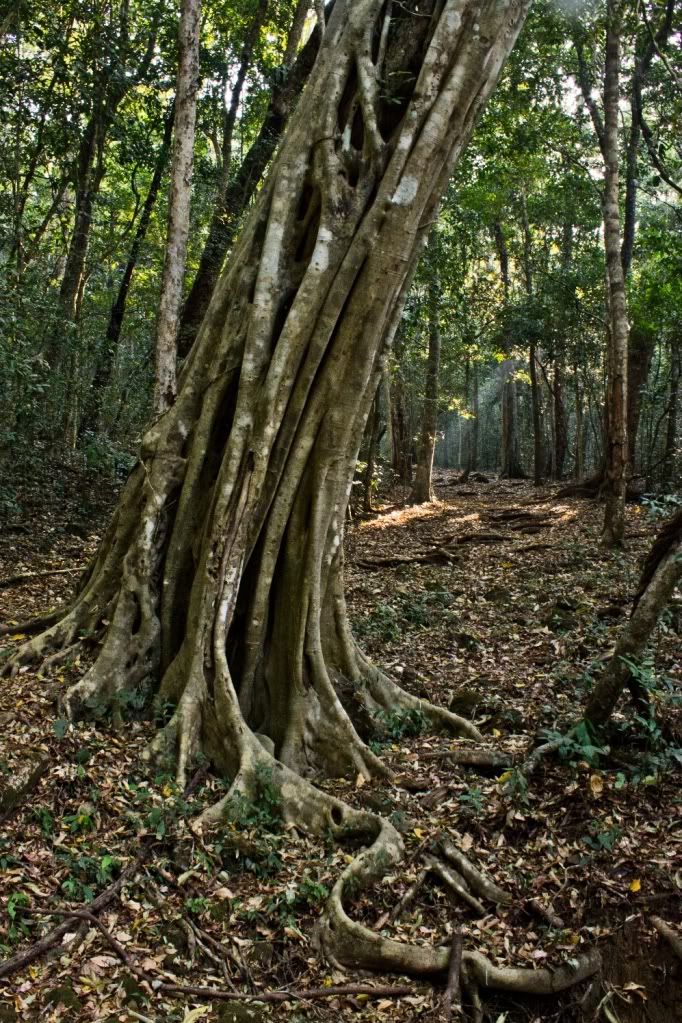

Kerala’s hill districts are a historical hub of trade and culture – George discussed a bit of that history in his previous post. But spice plantations, which are one of the region’s main economic assets, are not very similar to most people’s view of agriculture. Enormous flat fields of rigidly regimented plants are not a common sight here (except for rice paddies), and spice plantations are quite different from this doctrine. Continue reading
 Most of the people in India have enjoyed the sweet and pungent taste of Cinnamon. Also known as “Sweet Wood” in some countries, Cinnamon is one of the species native to the hills of Kerala and Sri Lanka.
Cinnamon Bark is widely used in cooking as a flavoring spice in both sweet and savory recipes. Cinnamon is main flavor in Indian dishes like Briyani, chicken curry etc. Continue reading
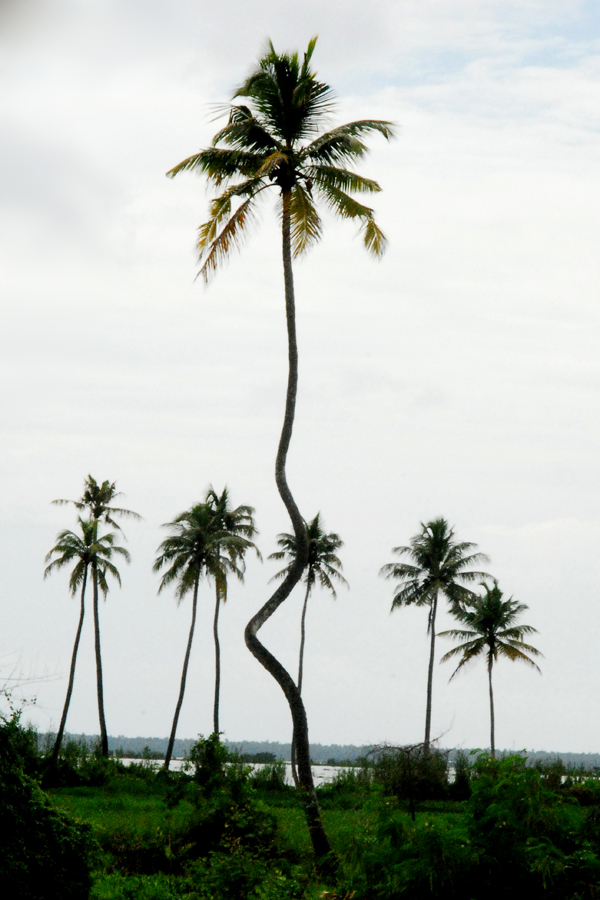
Photo: T J Varghese
Photo taken near Alappuzha, Kerala.
 Organikos