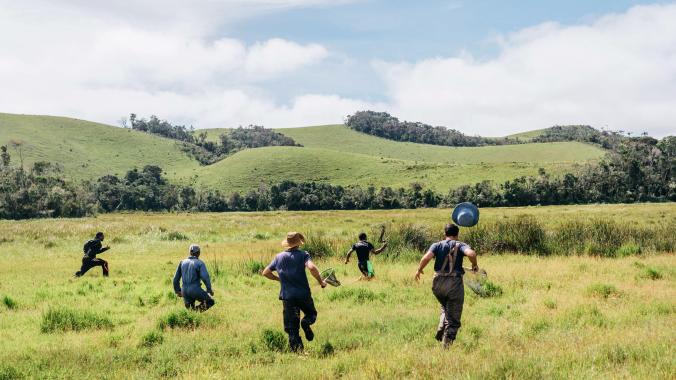
Expedition members sprint to flush Slender-billed Flufftails, among the world’s most elusive birds, in a marsh in Bemanevika reserve. Photo: Tristan Spinski
Bioprospecting, a topic we have not posted enough about, came to our attention in the mid-1990s through Costa Rica’s National Institute of Biodiversity. Kimon de Greef, writing for Audubon Magazine, offers an inside view of a prospecting expedition in one of the most wondrous, and at-risk natural habitats on the planet:
The rediscovery of a long-lost duck spurred the creation of two protected areas in the country. Now researchers are scouring these spots for other endemic species before it’s too late.
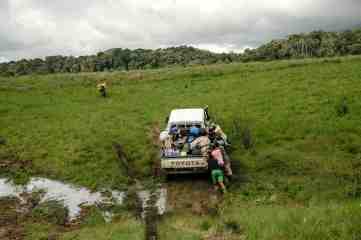
With only a few kilometers to go during day-long to Bemanevika, challenging road conditions forced the group to disembark from the two Toyota Land Cruisers and push them through the deep mud. Much of the terrain required the forest technicians to utilize the wench, which they fastened to tree stumps to wind the vehicles up the muddy mountain roads. Photo: Tristan Spinski
We had come this far and now we were stuck, dug in on a dirt track high above the plains. It was monsoon season in Madagascar, and thunderstorms had laid waste to the deeply rutted road. Already we had traversed seemingly unnavigable passes on our way to the remote northern mountains, mud churned to slurry by each passing set of wheels. Almost 24 hours later, this slope flanked by agave plants had defeated us. Our drivers took up shovels: There were ruts to flatten, boulders to excavate and heave into the bushes. As the workers toiled, cicadas hissed from the treetops.
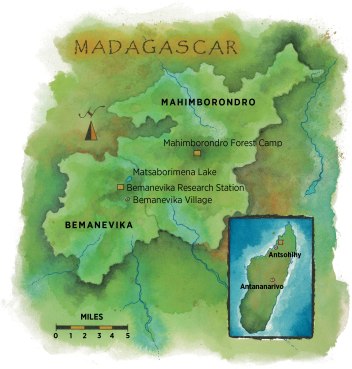
Map: Mike Reagan
For the field biologists I was accompanying, this breakdown of rural infrastructure held great promise. They were on their way to survey some of the island’s last remaining virgin rainforests—shrinking havens of exceptional biodiversity, including some of Earth’s rarest birdlife. “There’s definitely a correlation with how hard it is to get in,” said John Mittermeier, an expedition leader, ornithologist, and geography Ph.D. student at Oxford University, “and how likely you are to find new stuff.”
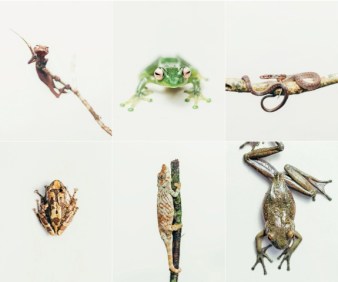
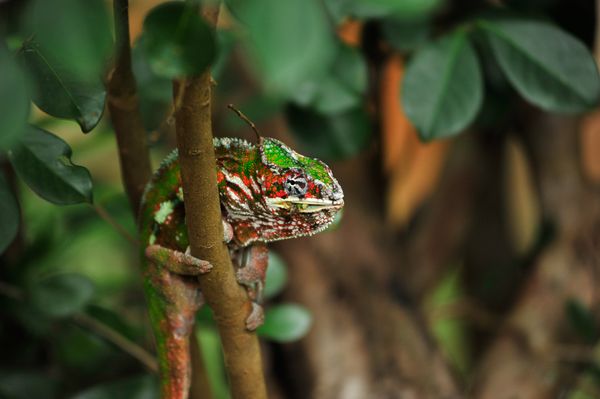
Clockwise from top left: Spearpoint leaf-tail gecko; Andreone’s tree frog; Compsophis fatsibe snake; Boophis goudot frog; Calumma nasutum chameleon; Spinomantis nussbaumi frog. Photos: Tristan Spinski
Now a cry went up among the team. A snake was moving its way through the undergrowth, and with abandon they leapt after it. Luke Kemp, the herpetologist on the expedition, crouched beside the bushes, poking around but coming up empty. “It’s like an addiction,” he told me. “I can’t stop.”
The biologists had congregated from four countries, united by a relentless, even maniacal fascination with wildlife. They wore faded shirts from scientific conferences and were never without their binoculars. Instead of making small talk, they discussed bird calls and sampling methods, animated by purpose and shared expertise. In unison, like meerkats, Mittermeier and the other two birders swung their binoculars from side to side, trying to glimpse what sounded to them like an endemic robin. The two entomologists swept the air with butterfly nets; they would not hesitate, when their hands were full, to pop wriggling insect specimens between their lips. Continue reading →

 Organikos