McKibben On The LNG Methane Problem

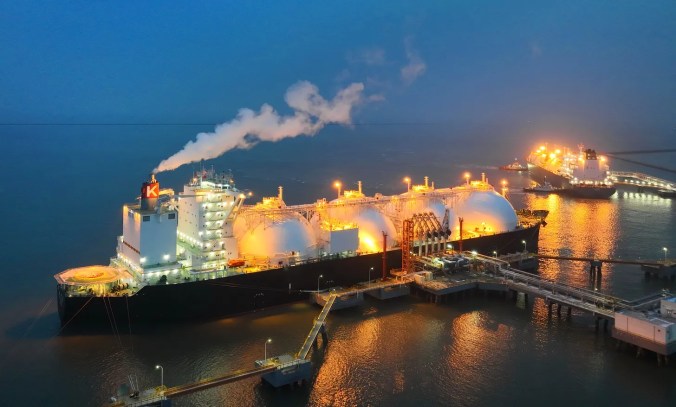
Exporting LNG to China helps no one but frackers

Not as cheerful as Mr. Grouse, but this week’s newsletter is important reading in the interest of progress of this looming LNG problem (a gentle way of putting it, since it is more a PROBLEM than a problem):

Different Kinds of Winning

Helping Biden Help Himself–and the Planet–on Climate

We are, I think, edging towards a win on LNG exports, which would be a very good thing: a pause on the biggest fossil fuel expansion plan on earth. The question, I think, is if it will be the kind of win that makes it easier to boost the beleaguered presidential campaign of Joe Biden—which has got to be a central focus for anyone worried about the planet’s (and our democracy’s) future. And that is largely up to the White House. Continue reading

Viewed From Above, Our Most Important Leaks

Illustration by Ard Su

David W. Brown offers this updated look at the use of satellite technology for a key metric:

A Security Camera for the Planet

A new satellite, funded by a nonprofit, aims to pinpoint emissions of methane—a gas that plays a major role in global warming.

When his phone rang, Berrien Moore III, the dean of the College of Atmospheric and Geographic Sciences at the University of Oklahoma, was fumbling with his bow tie, preparing for a formal ceremony honoring a colleague. He glanced down at the number and recognized it as nasa headquarters. This was a bad sign, he thought. In Moore’s experience, bureaucrats never called after hours with good news.

It can see large methane concentrations along its orbital path, but can’t pinpoint emissions sources. Illustration by Ard Su

For roughly six years, Moore and his colleagues had been working on a space-based scientific instrument called the Geostationary Carbon Cycle Observatory, or GeoCarb. nasa had approved their proposal in 2016; it was now 2022, and GeoCarb was being built by Lockheed Martin, in Palo Alto, California. Once it was in space and mounted to a communications satellite, GeoCarb would scan land in the Western Hemisphere continuously in strips, taking meticulous measurements of three carbon-based gases: carbon dioxide, carbon monoxide, and methane. It would give scientists a detailed view of the carbon cycle—the process by which carbon circulates through the Earth’s forests, lakes, trees, oceans, ice, and other natural features. Continue reading

Moderating Methane

20190923_SEAWEED_2000.jpg

Cristina Byvik

During June and July last year we were in residence on a dairy farm, and the prospective benefit of cows having seaweed added to their diet came to my attention. Today another briefing on this topic, from Rowan Walrath writing in Mother Jones, notifies me that this idea is making progress:

One day in January 2014, police rushed to a farm in Rasdorf, Germany, after flames burst from a barn. They soon discovered that static electricity had caused entrapped methane from the flatulence and manure of 90 dairy cows to explode.

Headline writers had a field day. But the incident pointed to a serious problem: Ruminant livestock, mostly cattle, account for 30 percent of all global methane emissions, pumping out 3 gigatons of the gas every year in their burps, farts, and manure. Methane is an especially potent greenhouse gas: During its 12-year lifespan after being released, it traps 84 times as much heat as carbon dioxide, and its effect on global warming over a century is 34 times that of CO2. According to the United Nations, reducing methane emissions from cows could be one of the quickest ways to slow climate change. Continue reading

Merdacotta from Castelbosco

Merdacotta (baked processed cow dung mixed with clay and hay) products. Credit Alex Majoli

I’ve shared some thoughts on dung in the past, and also experienced first-hand the use of methane collected as an alternative energy source at a coffee farm in Nicaragua. There, the gas was used for cooking fuel, but in the case of Castelbosco farm in Piacenza, Italy, dairy farmers who make Grana Padano cheese also generate electricity from their dung’s methane, and run a museum that showcases poop in part of a medieval castle. They also make the beautiful pots, tableware, and tiles shown in the photo above. Christine Smallwood writes for the New York Times Style Magazine:

THE DAIRY FARMER Gianantonio Locatelli climbed up the steel ladder and peered over the brim of a large corrugated vat, about the size of a very deep above-ground swimming pool. “It’s full!” he exclaimed, with warbling joy. “It’s beautiful!”

The vat was full of liquid cow dung. I handed my phone to Locatelli’s friend, the architect Luca Cipelletti, and climbed the ladder to the top, disembarking on a viewing dock. Beneath my feet the manure bubbled and gurgled, forming foamy peaks and crests. It was a topographical map, a primordial stew. A rich and beautiful shade of brown.

Continue reading

Feeding Fish with Methane?

Our last post on farmed fish revolved around grubs – dried black soldier fly larvae – as an alternative and more sustainable feed in aquaculture. Today I learned about yet another method for feeding fish that doesn’t involve catching wild fish or using petroleum-reliant grains, and actually helps control a problematic greenhouse gas, methane. Kristine Wong writes for Civil Eats, a website that acts as a “daily news source for critical thought about the American food system”:

Wild seafood is disappearing rapidly and many consumers have turned to farmed fish as a way to help reverse the trend. But finding a sustainable source of food for carnivorous fish such as salmon and tuna—which rank as the second and third most popular types of seafood in America—has been a persistent challenge for aquaculture producers.

Continue reading

Gobar Gas

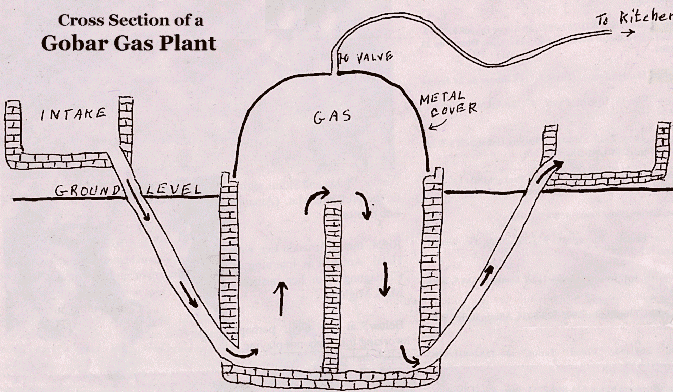
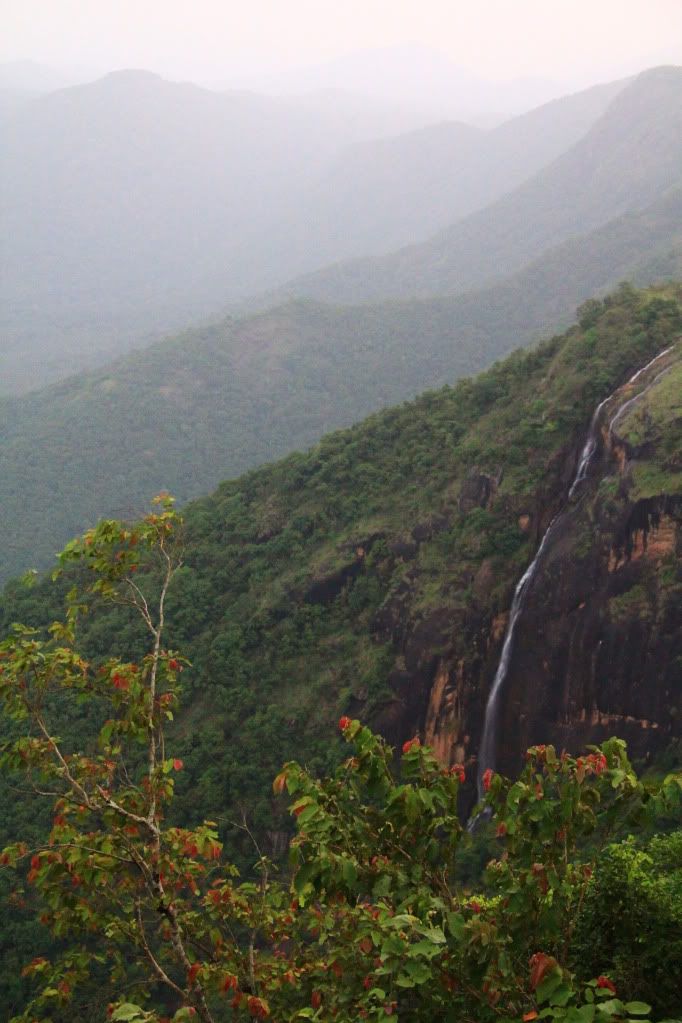
Is it just me, or is there nothing quite like a casual sight-seeing venture yielding a lesson in biogas and anaerobic digestion? I mean, don’t get me wrong; there’s plenty of value in a pretty vista– what was in today’s case a view of Tamil Nadu’s agricultural smorgasbord and a breathtaking, silky and sleek waterfall. But despite the landscape, I was left most impressed by an ingenious contraption we happened upon while passing through the family-owned spice plantation between our parking space and the scenic spot. Continue reading