Motherly Love

The dangers of coming between a mother and her child are well known. Bears are infamous for their maternal aggression. Lionesses delegate to other lionesses their maternal duties in order to hunt, but if anything gets too close, it’s “out with their bowels”! What about herbivores?  Continue reading

Tigerkill

_MG_2565

People come to the Periyar Wildlife Sanctuary in hopes of seeing tigers. Few do, but with a dwindling population and excursions limited to the fringes of the reserve, it’s no surprise. However, the tigers that do venture on the edges of the forest, mere kilometers away from Thekkady, leave ample evidence of their lifestyle. Paw prints are a common sight, and less frequently, carcasses of their prey. Simply being in their habitat is an experience worth having.  (Warning: slightly graphic images below) Continue reading

Cardamom Plantations

Kerala’s hill districts are a historical hub of trade and culture – George discussed a bit of that history in his previous post. But spice plantations, which are one of the region’s main economic assets, are not very similar to most people’s view of agriculture. Enormous flat fields of rigidly regimented plants are not a common sight here (except for rice paddies), and spice plantations are quite different from this doctrine.  Continue reading

Flowers in Kerala

I’ve posted about flowers in Kerala before, with no knowledge of their names or properties. Salim has covered many flowering plant species in his posts, providing scientific, cultural, and historical insights for each species. My aim is not to educate, but to encourage further interest via art.  Continue reading

Peel, Warp, Rust

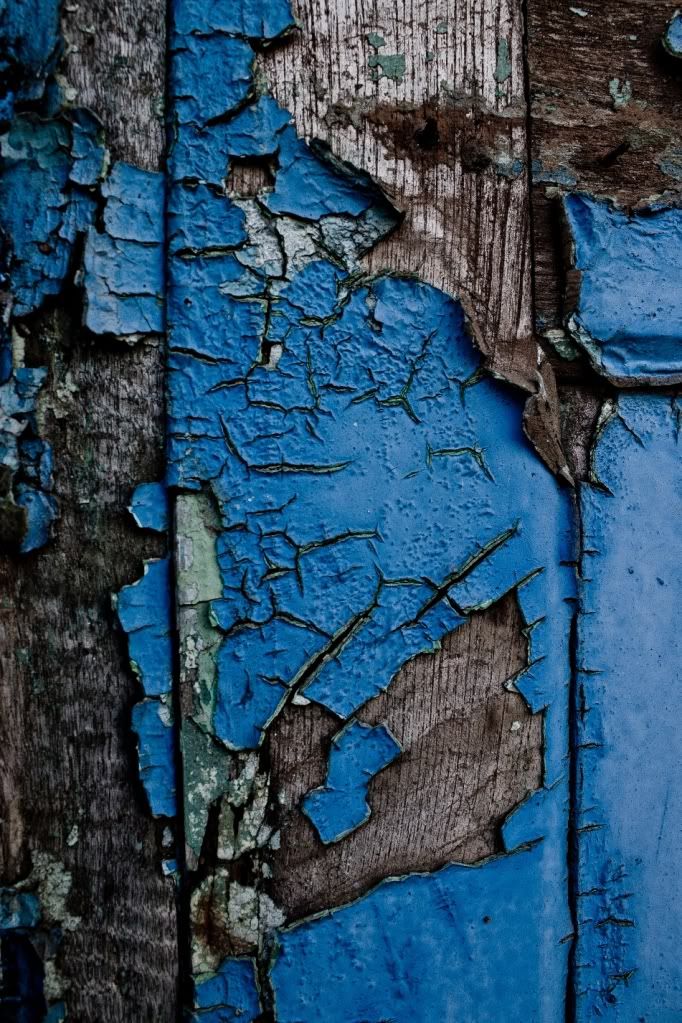
Urban decay. From a bird’s eye view, an old city overgrown may look as clean and composed as a modern metropolis. But for an insect on a wall, every surface is a landscape; cracked and scarred, bruised and faded. Paint peels, creepers climb, and dust invades, creating an eerily beautiful  visage of element and age. Historic Fort Kochi has no shortage of crumbling buildings and waterfronts, most of which are still in use. Mattancherry’s spice wholesalers operate out of buildings with as much character as themselves, and ferries come and go from half-sunken jetties of old stone. Any of a thousand walls can be seen as a canvas, small pieces of which may paint a tale of time.  Continue reading

Pied Paddy Skimmer, Revisited

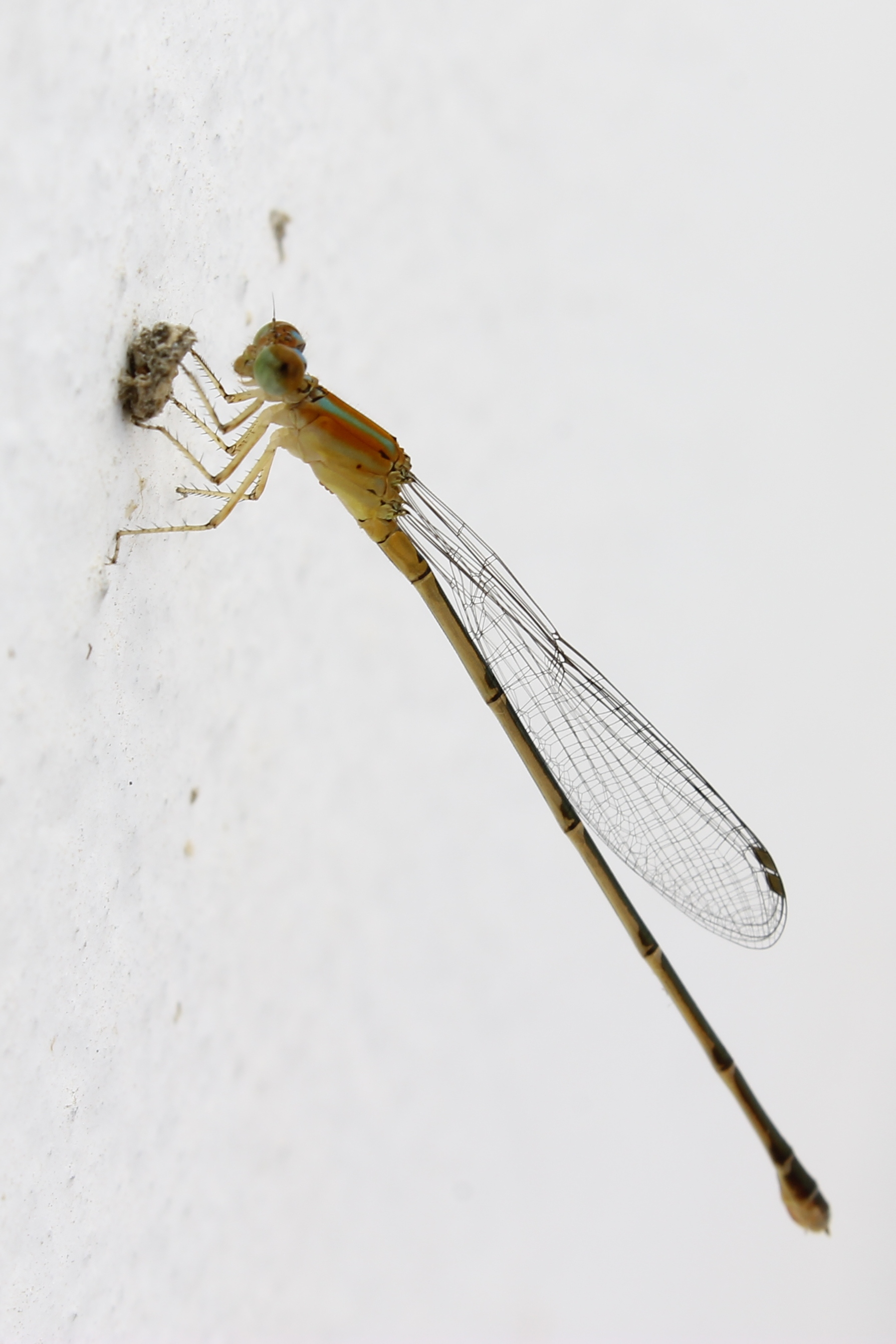
A few days ago while walking around Kumily, I saw one of Kerala’s more common species of dragonfly, Neurothemis tullia. Having written about the species before, I didn’t photograph it as usual, until I realized I had a new accessory on my person. The reverse lens adapter is a brilliant money saver, and while not quite as powerful or versatile as a macro lens, costs close to 50 times less than a new lens. Using the final technique described here, the adapter basically replaces the duct tape and allows for much steadier hands. Focusing is still very difficult, and the focal plane is usually limited to under a centimeter, but this often allows for very unusual and abstract images. Such as this young female Pied Paddy Skimmer:

Continue reading

Munnaranorama

Creating panoramas is an imprecise art – a photographer has to account for several variables when planning a shot. Composition is itself the most simple of these variables – despite the fact that what you see is rarely what you get. A good vantage point at a higher altitude than the subject is ideal, although occasionally elements which frame in the view add interest to the image. Symmetry isn’t necesary, but unbalanced shots should have either objects of interest or follow the rule of thirds (which is by no means an actual rule). A panorama need not be a full 360 degrees, and besides the ‘wow’ factor there is usually little value to this property. The picture ends up being more like a strip than something easily viewable, and takes a great deal of time to see and appreciate.


Continue reading

Blue Grass Dartlet

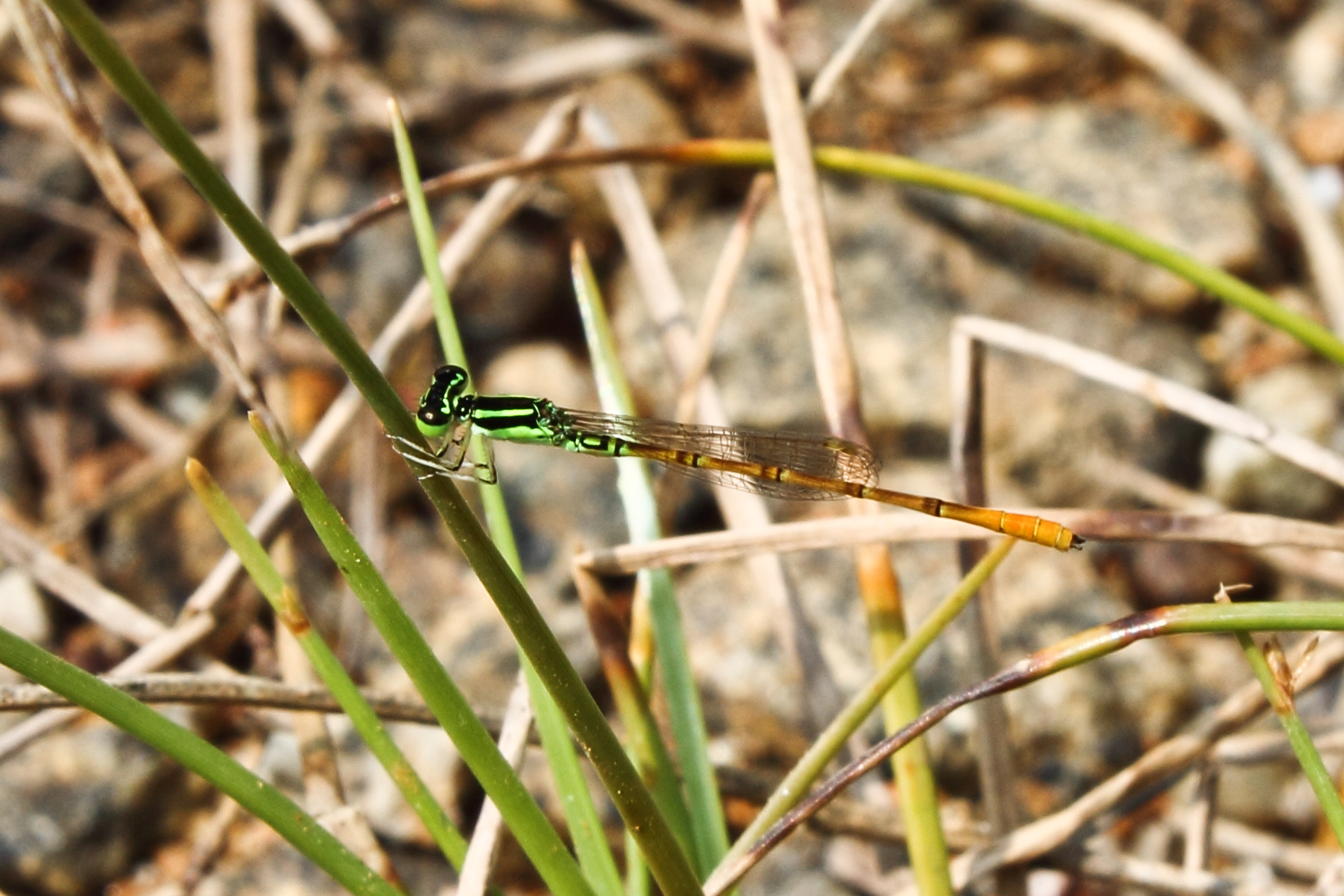
The first time I saw this species, I was dumbfounded, to say the least. We live in a 10th floor apartment in urban Cochin, which admittedly is on the banks of the backwaters. Nonetheless, I was quite surprised to see a dull-colored damselfly float through a window and over our dining room table, and out the door onto the balcony on the opposite side of the room. Fortunately, I gathered my wits quickly enough to rush back with my camera, and corralled the enigma into a corner in the balcony (non-violently, of course), and was able to get a few shots before it breezed off in the lethargic float I’ve come to associate with damselflies. The only time I’ve seen any damselfly zooming the way most dragonflies do is when they’re swooping in on their prey, at which point even the laziest, slowest, and smallest of them can put on quite a turn of speed.

Continue reading

Male Trumpet Tail (Revisited)

A few months ago while staying at Cardamom County, I spent a morning with a wonderful character named Jain – a tribal man with an avid interest in insects and arachnids, working as a guide in the Periyar Wildlife Sanctuary, and incidentally, a friend and student of Mr. Vijaykumar Thondaman‘s. Both armed with cameras, Jain and I entered the reserve just after dawn, and spent the best part of the morning hunting dragonflies and damselflies across streams and fields, ponds and gullies. Continue reading

Relics

Everywhere you go in India, even cities considered ‘modern’ by today’s standards, there are relics of the past. Architecture, attire, animals walking through the street. In Cochin, one of Kerala’s biggest cities, locals don’t even look twice if an elephant walks down the street – the same street with IT parks and shopping malls on it.  Continue reading

Kerala: Seeing & Learning

As I begin putting myself in situations in which photographing people in their natural state is more possible, I’m finding that I not only become more comfortable doing so, but the quality of my photographs improves. The subject doesn’t always have to be smiling, or even friendly – my best portraits are the ones that express the authenticity of a subject’s disposition and emotion in a single frame. Asking a scowling subject to smile will usually result in a sheepish grin, or a reluctant curve upward of the lips that ends up radiating a general feel of puzzlement.  Continue reading

Kerala Wildflowers

It doesn’t take a gardener or horticulturalist to appreciate the beauty of an angiosperm’s blossom – whether a flower felled from dozens of meters above splayed on the ground; a gorgeous splash of color on the forest floor, or purple puffs of perfectly formed pollination mechanisms overlooking the steep slopes of the Western Ghats – Kerala is a bouquet of stunning wildflowers. Continue reading

Hiding Outside, Hiding Inside

As mentioned before,  most organisms a link or two down on the food chain rely on at least one defense mechanism to survive. Remaining unseen, looking toxic, and tooth-shattering carapaces are all relatively common on all fronts. The crab pictured above, photographed on Aswem Beach in Goa, relies on the first option – besides measuring under an inch across, it camouflages exceptionally well into the sand it scuttles across – and when feels threatened, dashes into hastily excavated boltholes.  Continue reading

Bi-Colored Damselfly

As mentioned in an earlier post, I’ve been developing my techniques for improved macro photography without a macro lens. Tough work, but highly rewarding. Besides areas I will soon explore thanks to a new array of equipment (extension tubes, magnification filters, etc.), I have currently enjoyed a great deal of success with the relatively unknown backward-lens trick. Although you lose the ability to focus and meter light, the technique is excellent for artistic photographs of small things. And if it hasn’t been made clear from my dozens of posts on the subject – I love small things. Continue reading

Steer Clear

One of my uncles was visiting Kerala for a few days, and we did what we always do with VIP visitors: trekking together in the Periyar Reserve.  48 hours ago we were in the Gavi sector, and as always my attention was drawn as much to the charismatic micro-fauna as to their mega- counterparts.  In all the places where my family has lived and worked–North, Central and South America, Western and Eastern Europe, and now India–we have always been most impressed by interpretive naturalist guides that can make insects as interesting as primates, pachyderms or felines.

It is not easy, but it is possible.  So I am focusing alot of attention lately on small creatures like the one in the photograph above, hoping to unlock visually what these great guides do with words crafted into stories. Continue reading

Urban Deterioration

You see them everywhere you go in India: buildings crumbling, their bricks and mortar moldering and turning to dust over the decades. Paint peels, debris accumulates, industrious plants creep surreptitiously along the gritty terrain until before you know it, a small forest occupies the ruins where Uncle Kumar’s tea shop once stood. But that’s urban decay. I like to call the process itself urban deterioration – the point at which the elements’ progress is visible, and still reversible, but steadily inching towards, for all intents and purposes, the end of a small bit of civilization.

Continue reading

Scarlet Basker, Revisited

In my previous post about this species, I gave a very brief description of its physiological features. Urothemis signata is indeed called the Scarlet Basker because of the mature male’s coloration, although the young male and female are quite similar, and therefore difficult to differentiate.  The difference (prior to maturity) between the two, as far as I can tell, is that the female’s abdomen has somewhat more extensive black markings, becoming almost ringlike, whereas the male’s markings are more like patches.

Although it is very possible that there were mature males flying about the area in which I photographed this specimen (there were probably 6 or 7 immature ones about), it would be almost impossible to tell because  Continue reading

Thekkady’s Streets

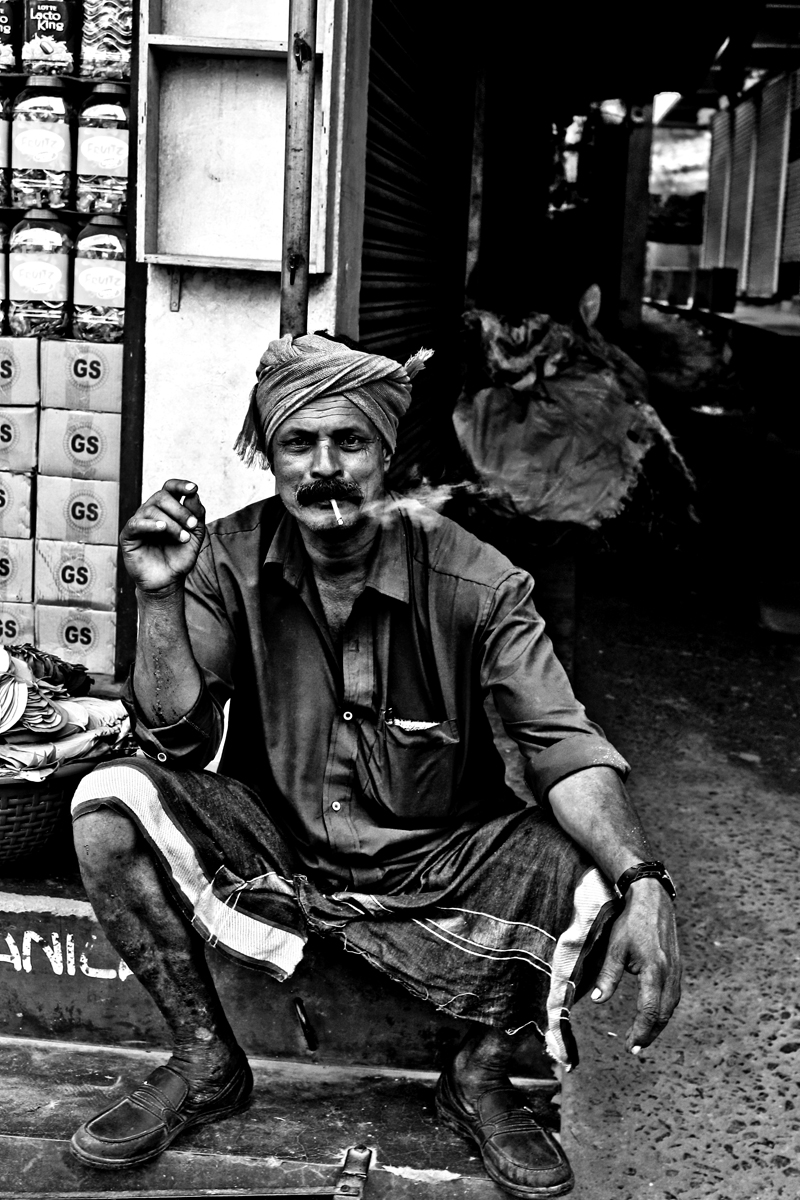
Although I thoroughly enjoy viewing street photography for its spontaneity, diversity, and ability to display the flow of life of any culture, I generally refrain from partaking due to a generally awkward disposition and inhibitions around strangers. Being unusually tall (to Indians) and quite white, I also get a lot of stares as it is, and waving a camera around at people certainly does not make me go unnoticed. However, in areas more frequented by ‘foreigners’ such as Thekkady, a tall Caucasian isn’t all that exciting, and many locals are in fact enthusiastic to have their pictures taken.

Continue reading

Pygmy Dartlet

The Pygmy Dartlet is a very widespread species of damselfly, surprisingly enough. Measuring about 16 millimeters, Agriocnemis pygmaea is undoubtedly the smallest damselfly or dragonfly I’ve seen. The species is known to have many different appearances, with both male and female displaying up to three or four different color combinations. The male is pictured above, and the female below.  Continue reading