
Shawn Heinrichs
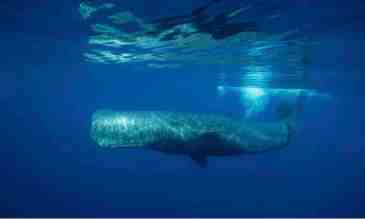
Marine biologists are full of surprises, and those who study whales sometimes give the best surprises. Thanks to Ross Andersen and The Atlantic for this story:
HOW FIRST CONTACT WITH WHALE CIVILIZATION COULD UNFOLD
If we can learn to speak their language, what should we say?
One night last winter, over drinks in downtown Los Angeles, the biologist David Gruber told me that human beings might someday talk to sperm whales. In 2020, Gruber founded Project CETI with some of the world’s leading artificial-intelligence researchers, and they have so far raised $33 million for a high-tech effort to learn the whales’ language. Gruber said that they hope to record billions of the animals’ clicking sounds with floating hydrophones, and then to decipher the sounds’ meaning using neural networks. I was immediately intrigued. For years, I had been toiling away on a book about the search for cosmic civilizations with whom we might communicate. This one was right here on Earth. Continue reading
 Organikos