More Good Fishery News in Arctic

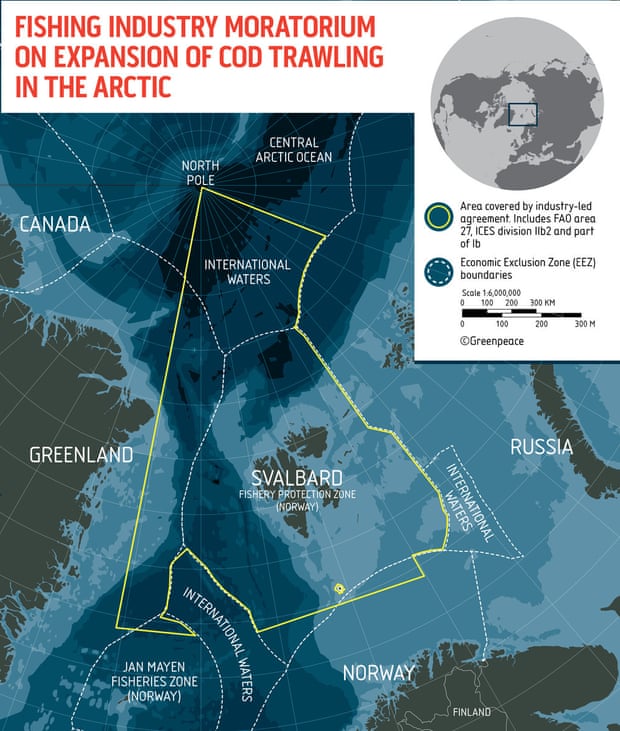
Map of the area of northern Barents Sea including the waters around Svalbard where some of the world’s largest seafood and fishing companies have committed not to expand their search for cod into. Photograph: Greenpeace

We read yesterday about countries agreeing to stand against piracy in fishing, which is great, and The Guardian is continuing its optimistic reporting by sharing news on leading seafood-consuming companies have decided to source from industrial fisheries that don’t target a particularly pristine Arctic region. Jessica Aldred reports:

Fishermen and seafood suppliers struck a major deal on Wednesday that will protect a key Arctic region from industrial fishing for cod.

Companies including McDonald’s, Tesco, Birds Eye, Europe’s largest frozen fish processor, Espersen, Russian group Karat, and Fiskebåt, which represents the entire Norwegian oceangoing fishing fleet, have said their suppliers will refrain from expanding their cod fisheries further into pristine Arctic waters.

“From the 2016 season the catching sector will not expand their cod fishing activities with trawl gear into those areas where regular fishing has not taken place before,” the deal reads.
Continue reading

Well Done, Portugal!

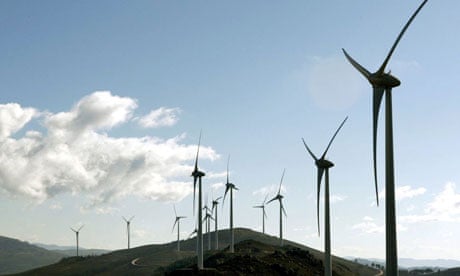
Europe’s biggest wind energy park [in 2008] in the northern region of Viana do Castelo, Portugal. Photograph: Estela Silva/EPA

Always on the look for good news in the sphere of renewable energy, we found out this week that Portugal, a country with a population of over 10 million, operated for 107 hours solely on the alternative energy sources from wind-, solar-, and hydro-powered electricity. Arthur Nelsen reports for The Guardian:

Portugal kept its lights on with renewable energy alone for four consecutive days last week in a clean energy milestone revealed by data analysis of national energy network figures.

Electricity consumption in the country was fully covered by solar, wind and hydro power in an extraordinary 107-hour run that lasted from 6.45am on Saturday 7 May until 5.45pm the following Wednesday, the analysis says.

Continue reading

Weed-whacking Goats in New York City

Photo © babygoatsandfriends.com

Goats are fun creatures, providers of milk, cheese, and meat, and also simply petting experiences. Apparently, they can even be rented out as lawn-mowing weed controllers, eating unruly plants where pesticides would otherwise be used. And certain parks in New York City are getting goats on contract to meet that need, as Olga Oksman reports for The Guardian:

Overexcited children and reporters mill around the fence enclosing part of the Prospect Park woodlands. “Daddy, daddy, look!” one eager little boy yells. Everyone is craning their necks, raising their cameras to get a shot. The latest celebrities to grace Brooklyn are a group of eight weed-eating goats, and they are taking up residency through the end of the summer.

Later this week, Prospect Park has arranged a wine and cheese reception so the public can formally meet the goats, which range from Nubian to Angora and Pygmy breeds. Tickets have already sold out.

Continue reading

Another Call to Action from McKibben

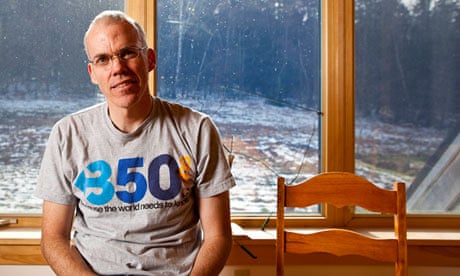
Photo of Bill McKibben by Corey Hendrickson/Polaris via The Guardian

We’ve been sharing pieces about or by Bill McKibben for many years now, like this interview from 2012, the news that he was stepping down from leading 350.org, a piece he wrote for the Guardian last year, and the story of his direct activism in New York a couple months ago. He’s now published an article, once again in the Guardian, about the need to take action around the world against fossil fuel companies. “The time has come to turn up the heat on those who are wrecking planet Earth,” McKibben writes, the question being, what are we all waiting for?

Global warming is the biggest problem we’ve ever faced as a civilisation — certainly you want to act to slow it down, but perhaps you’ve been waiting for just the right moment.

The moment when, oh, marine biologists across the Pacific begin weeping in their scuba masks as they dive on reefs bleached of life in a matter of days. The moment when drought in India gets deep enough that there are armed guards on dams to prevent the theft of water. The moment when we record the hottest month ever measured on the planet, and then smash that record the next month,and then smash that record the next month? The moment when scientists reassessing the stability of the Antarctic ice sheet have what one calls an ‘OMG moment’ and start talking about massive sea level rise in the next 30 years?

Continue reading

Kenya Burns Over 100 Tons of Illegal Ivory

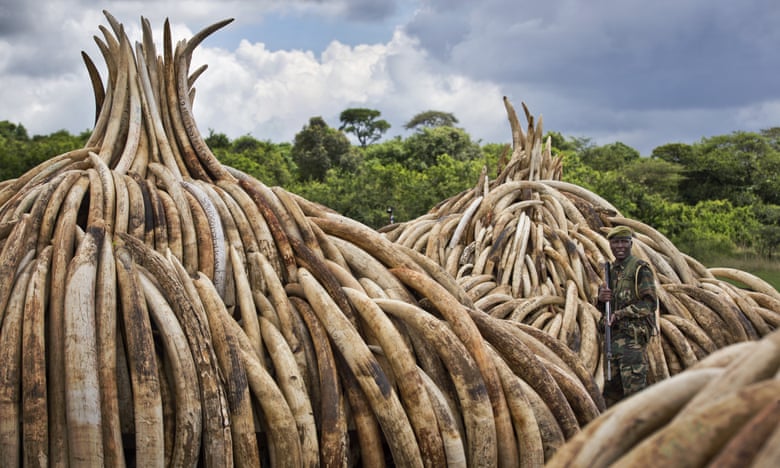
Kenya will burn about 105 tonnes of elephant ivory and 1.5 tonnes of rhino horn in 11 large pyres, about seven times the amount previously burned in a single event. Photograph: Ben Curtis/AP via The Guardian

We featured poaching a few weeks ago here, in the case of primates, and we have discussed the illegal ivory trade and other endangered wildlife on the black market before. This weekend, Fiona Harvey reports for the Guardian, Kenya burned a massive amount of tusks from poached elephants, in a symbolic act of destruction that presumably cost the black market millions of dollars, and thousands of elephants their lives:

Tusks from more than 6,000 illegally killed elephants will be burned in Kenya on Saturday, the biggest ever destruction of an ivory stockpile and the most striking symbol yet of the plight of one of nature’s last great beasts.

The ceremonial burning in Nairobi national park at noon will be attended by Kenya’s president, Uhuru Kenyatta, heads of state including Ali Bongo Ondimba of Gabon and Yoweri Museveni of Uganda, high-ranking United Nations and US officials, and charities. A wide network of conservation groups around the world have sent messages applauding the work.

Continue reading

South Australia’s Renewable Energy

Wind turbines at the Snowtown Facility.

Any story regarding the expansion and encouragement of renewables to promote sustainable development is a good story in our book, and we’re impressed by the Clean Energy Council policy manager’s statement, “If South Australia was a nation, it would be second only to Denmark [in renewables].” South Australia is a state in the middle of the southern coast of the country, about a hundred square miles larger than the US state of Texas, so it’s great to hear that such a large area relies so much on innovation. Kathy Marks reports for the Guardian:

In a state that leads the country – in fact, much of the world – in producing electricity from renewable sources, Snowtown is wind central. The first stage of a $660m, 270-megawatt farm, with 47 turbines, opened in 2008, 5km west of the town; the second, adding another 90 turbines, came on stream in 2014.

Developed by New Zealand’s Trustpower, South Australia’s biggest wind facility – and Australia’s second biggest – created hundreds of construction jobs and 21 permanent positions.

Continue reading

WWF Reports Half of World Heritage Sites Put at Risk by Development

Ambatotsondrona cliffs, in the Marojejy National Park of Madagascar. This park is one of several included in the UNESCO World Heritage Site named Rainforests of the Atsinanana, which has been declared In Danger. Photo by Jeff Gibbs via WikiMedia Commons

We deeply care about UNESCO World Heritage Sites anywhere on the globe, and believe they can be a great conservation tool, so reading that the World Wildlife Fund thinks almost three times more of the Sites are threatened than UNESCO lists as “In Danger” is worrisome, to say the least. Fiona Harvey reports for the Guardian:

Close to half of the sites around the world designated for special protection as areas of outstanding importance for nature are now being threatened by industrial development, a new survey has shown.

The sites, which include Australia’s Great Barrier Reef, the Grand Canyon in the US, and China’s giant panda sanctuaries in Szechuan, are all supposed to be protected under the United Nations’ designated world heritage status. But encroachments from industries, including fossil fuel exploration and illegal logging, are threatening to destroy the valuable habitats, the conservation charity WWF said on Wednesday.

Continue reading

Ever Heard of a Quoll?

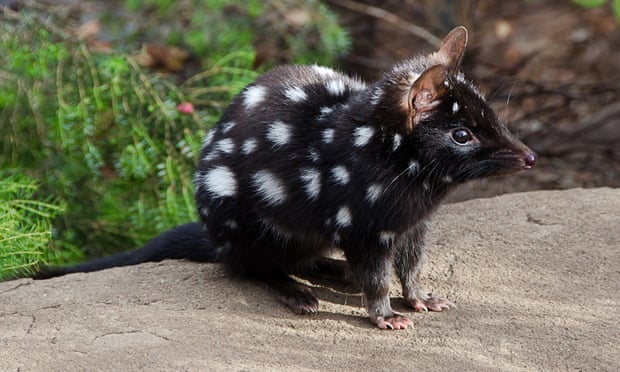
An eastern quoll. Professor Adrian Manning said it was the first ‘translocation’ of wild eastern quolls ‘into a free-ranging situation’ on the Australian mainland. Photograph: Marc Faucher, via The Guardian

We’re always happy to hear about the reintroduction of a previously extirpated species to its original habitat, even if we’re wary of some of the more ambitious projects from prior extinctions. Even though we weren’t aware of the existence of this cute marsupial named the Eastern Quoll, we’re glad to know that it is returning to its homeland. Elle Hunt reports for the Guardian:

The eastern quoll is making a comeback to mainland Australia, from where it disappeared more than 50 years ago, with a new generation introduced to the Australian Capital Territory from Tasmania.

A team of researchers from the Australian National University has reintroduced a group of wild eastern quolls from Tasmania into the Mulligan’s Flat Woodland Sanctuary in Canberra.

The small, carnivorous marsupial has not been seen there for almost 80 years.

Prof Adrian Manning, who led the team from the ANU’s Fenner School of Environment and Society, said it was the first “translocation” of wild eastern quolls “into a free-ranging situation” on the Australian mainland.

Continue reading

Green Investing Sees Boost from NY State

img_7424_zpsm6rbrbaj

Wind turbines seen across the Central Valley from Xandari Resort, Costa Rica

We’ve been hearing about divestment from fossil fuels for a while now, whether it be from university endowment funds (and full or partial divestment), and also featured a story from the Guardian about Bill Gates, who argued that divestment would have little impact, and rather backing green energy and investing in high-risk technologies makes more of a difference in combatting climate change.

In last week’s Opinion pages of the New York Times, Tina Rosenberg describes New York State’s new Common Retirement Fund, which is the United States’ third-largest pension fund and will put $2 billion into a Goldman Sachs investment fund that selects companies to invest in with smaller carbon footprints but have similar risk and return to typical benchmark index funds. From the sound of it, greener investment opportunities will start becoming more common and easily accessible to those of us without Bill Gates levels of money to invest in the higher-risk technologies:

Goldman created the investment fund only for New York State. But similar funds
introduced in 2014 or 2015 are open to other investors, although they have not yet attracted the capital to match New York State’s investment. And more are likely to come — especially after New York’s vote of confidence in a form of green investing that may become mainstream.

Continue reading

Ocean Cleanup Project Tests Successfully

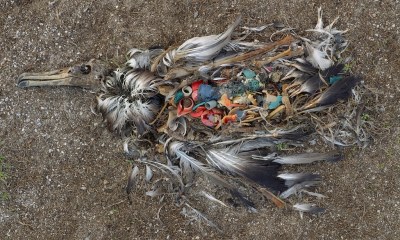
Around 90% of the world’s sea birds have eaten plastic items that they mistook for food, a study estimates. Photograph: Chris Jordan/Midway: Message from the Gyre

We’ve alluded to the Great Pacific Garbage Patch before, though we haven’t shared any stories covering it directly. Last week, The Guardian reported some good news from The Netherlands, where the prototype for a 100km-long, crowdfunded cleanup boom for the ocean was tested successfully. Arthur Nelsen reports:


Further trials off the Dutch and Japanese coasts are now slated to begin in the new year. If they are successful, the world’s largest ever ocean cleanup operation will go live in 2020, using a gigantic V-shaped array, the like of which has never been seen before.

The so-called ‘Great Pacific garbage patch’, made up largely of tiny bits of plastic trapped by ocean currents, is estimated to be bigger than Texas and reaching anything up to 5.8m sq miles (15 sq km). It is growing so fast that, like the Great Wall of China, it is beginning to be seen from outer space, according to Jacqueline McGlade, the chief scientist of the UN environmental programme (Unep).

Continue reading

The Impressiveness of Cephalopod Sight

Photo via EuclidLibrary

We’ve long known that octopuses have some of the most powerful eyes among invertebrates, but a recently published article in the Journal of Experimental Biology titled “Eye-independent, light-activated chromatophore expansion (LACE) and expression of phototransduction genes in the skin of Octopus bimaculoides” is showing that members of cephalopoda (octopus, squid, cuttlefish) may also have light-sensitive cells in their skin that effectively transform the large outer organ — already famous for its color- and shape-shifting qualities — into a perceptive one as well. The science sections of the New York Times and The Guardian, along with National Geographic‘s Phenomena webpage, all cover the story (click on the reporter’s name to reach the original articles):

Octopuses can mimic the color and texture of a rock or a piece of Continue reading

Algae Could Turn Toxic Water Into Metal and Biofuel

Contaminated water at Wheal Jane, where the Department for Environment is spending £2m a year on combating pollution. Photograph: Rex Features. Via The Guardian.

We’ve featured pieces on different biofuels before, though probably not enough of them. We’ve also recently seen an example of how science can help clean up the messes that other scientifically informed — but less environmentally scrupulous — activities create, like the new carbon-scrubbing structures that might be used in coal plants. The topic of bioremediation is one of great interest and which we plan on sharing more about, especially in the mycological realm. For now we’ll start with this story of algal bioremediation and resource recuperation in Cornwall, one of England’s most historically important mining regions. Jamie Doward reports for The Guardian:

A groundbreaking research project to clean up a flooded Cornish tin mine is using algae to harvest the precious heavy metals in its toxic water, while simultaneously producing biofuel.

If the project, which is at a very early stage, is proven to work, it could have huge environmental benefits around the world.

Continue reading

Australian Emissions Drop With New Carbon Tax

Via The Guardian

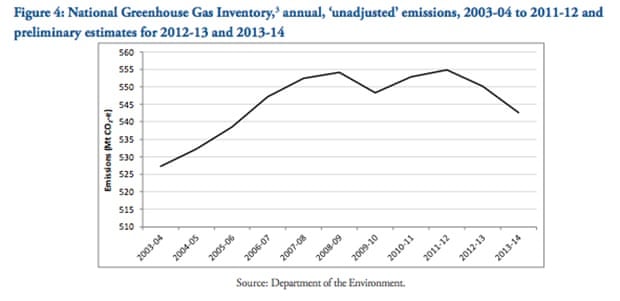
In 2012, Australia introduced a carbon tax, or carbon “price,” with the goal of reducing the country’s greenhouse gas emissions. Then, this July, the Australian government — under a different party than in 2012 — abolished the carbon tax to fulfill an election promise, since they argued that the tax was too much of a burden on homeowners and also discouraging industry. But data released this month by the Department of the Environment shows that Australia’s emissions dropped 1.4% during 2013 (the second year of the tax), which is the highest annual decrease in the country’s emissions within the last decade. Oliver Milman reports for The Guardian:

The latest greenhouse gas inventory showed emissions from the electricity sector, the industry most affected by carbon pricing, fell 4% in the year to June.

Electricity emissions account for a third of Australia’s emissions output, which stood at 542.6m tonnes in the year to June, down from 550.2m tonnes in the previous 12 months.

Emissions from transport dropped 0.4% in the year to June, with gases released by the agriculture industry decreasing by 2.6%. Industrial processes emitted 1.3% less greenhouse gas during the year, although fugitive emissions, such as those from mining, rose 5.1%.

Electricity emissions peaked in 2008 and have steadily decreased ever since, driven by a number of factors such as the winding down of parts of Australia’s manufacturing base and energy efficiency initiatives.

Continue reading

Winning Wildlife Photography of 2014

2014 Wildlife photographer of the Year invertebrate category winner: ‘Night of the deadly lights’ by Ary Bassous (Brazil). Photograph: Ary Bassous/2014 WPY. Via The Guardian.

We’ve always loved wildlife photography, and the explosion of competitions over the web in the last decade has created the type of arms race for the best shot in which the audience always wins. Folks over at The Guardian know what’s up: they’ve compiled some of the most amazing wildlife photographs from various competitions over the course of 2014, so we have an even greater pool of shots to enjoy.

Continue reading

Whale Shark Freed From Fishing Net

Another day, another story of net-freed.  Click the image below, which looks like the one in the story here, for the story told briefly by video; yet another hero story we thank The Guardian for:

Scientists free a whale shark caught in a fishing net in Indonesia’s Cenderawasih Bay. Conservation International have completed the first expedition to tag whale sharks with radio-frequency identification making them easier to track and film. Whale sharks swimming into fishing nets has become a problem in the area.