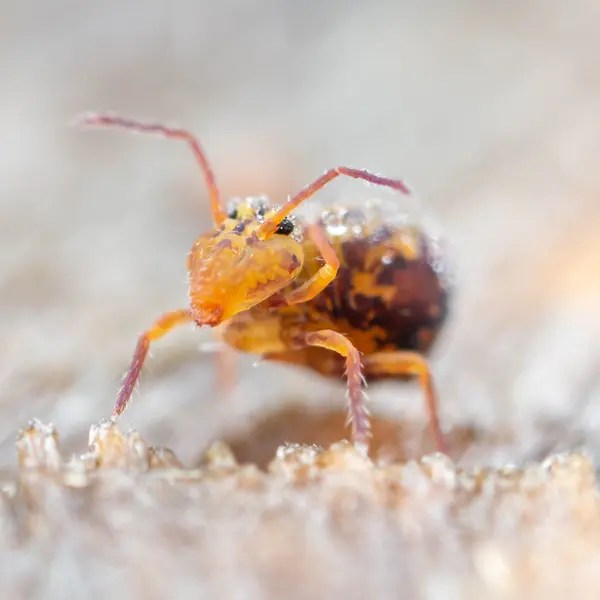
Scientists have identified about 9,000 species of springtails, but that number might represent just a fraction of their global species richness. Frank Ashwood
We have shared articles about the type of small creatures that we rarely think about, but which may be important to the wellbeing of the planet. Sofia Quaglia, an award-winning freelance science journalist (new to us), has written this story for the New York Times with exceptional photos by Frank Asherood:
Life in the Dirt Is Hard. And Climate Change Isn’t Helping.
Heat and drought are taking a toll on the tiny soil creatures that help to lock away planet-warming carbon, according to a new analysis.
They’re dirt-dwelling invertebrates, but, in a sense, they’re the real backbone of Earth’s carbon cycle.
Thousands of species of mites and springtails, living in soil all around the world, provide a crucial service by munching organic matter like fallen leaves and wood, transferring its planet-warming carbon into the ground and releasing nutrients that help new plants grow.
But now, a new analysis that combined data from 38 different studies on the organisms suggests that drought in some parts of the world, often supercharged by climate change, are killing them off at alarming rates.
“It is important to take care of these critters in particular because we know so little about them,” said Ina Schaefer, a soil invertebrate ecology researcher at the University of Göttingen in Germany.
While some of these organisms live deep within the soil, others spend most of their lives scuttling around on the surface. Scientists don’t fully understand exactly how they break down decaying organic matter, but new molecular research shows springtails actually have special genes for the job.
(That’s not their only talent: Some springtails are about the size of a grain of sand and can fling themselves into the air like circus acrobats, spinning up to 500 times per second. Scientists think it could be a way to escape predators.)
Mites and springtails have not been widely studied, despite their importance, but scientists do know that some of the soft-bodied creatures are very sensitive to moisture in their environment.
When the soil dries up during times of aridity they, too, can dry up, shrivel and die. On average, their populations shrink by a whopping 39 percent during long stretches without rain, according to the analysis, which was published this month in Global Change Biology…
Read the whole article here.
 Organikos