Spider’s Silk, Minus the Crawlies

Bolt Threads' technology was inspired by the spider, but it has broadened into a platform of programmable polymers: a protein material that can be tuned to create a nearly limitless array of properties PHOTO: Researchgate

Bolt Threads’ technology was inspired by the spider, but it has broadened into a platform of programmable polymers: a protein material that can be tuned to create a nearly limitless array of properties PHOTO: Researchgate

Welcome to the age of slow fashion. Fashion that’s got its sense and sensibility focused on sustainability. Slow fashion represents all things “eco”, “ethical” and “green” in one unified movement. It was first coined by Kate Fletcher, from the Centre for Sustainable Fashion, when fashion was compared to the Slow Food experience. Carl Honoré, author of “In Praise of Slowness”, says that the ‘slow approach’ intervenes as a revolutionary process in the contemporary world because it encourages taking time to ensure quality production, to give value to the product, and contemplate the connection with the environment. And now meet Bolt Threads. A company that started out to make spider’s silk sans the creepy crawlies. Have they succeeded?

Continue reading

Your Worst Dragons Are Your Best Teachers

PHOTOGRAPH BY ELI REED/MAGNUM

PHOTOGRAPH BY ELI REED/MAGNUM

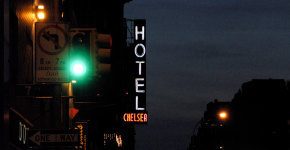
Amie and I lived around the corner from the Chelsea Hotel during the second term of Ronald Reagan’s presidency. At that moment in our lives, newly married and full of that kind of hope, we nonetheless observed with concern the culture of the USA changing radically around us. New York City, in particular seemed an epicenter for the demonization of “welfare queens” (Reagan terminology) and homeless people (of which there was a sudden massive increase due to various social safety nets being eliminated, a result of the “Reagan revolution”), while the values associated with speculative money, and cronyism, were ascendant.

It seems to me in hindsight that it was the moment when entrepreneurial capitalism receded as a driving force of the culture, giving way to a strong strain of some other form of capitalism. A much darker, or at least shadier, form that culminated in the economic tragedies of recent years in the USA, including contagious sub-strains that made their way to Europe and can be seen in the Greek tragedy today.

Reading that the Chelsea Hotel is g0ing “boutique” is at first depressing, but then not; it is a reminder of how New York City has been transformed by the new rules of capitalism; yet encouraging, even if the Chelsea Hotel’s role as an institution will be lost, because some of its core values remain intact as residents live out their terms there. The heartless strain of capitalism that bred and multiplied in the 1980s, which we have thought monstrous, has forced us to look for answers, which in turn has led us to the entrepreneurial conservation concept that animates our work, daily. The dragon sometimes teaches:

At a moment when the once beautifully entangled fabric of New York life seems to be unravelling thread by thread—bookstore by bookstore, restaurant by restaurant, and now even toy store by toy store—it might be time to spare a thought or two for the Chelsea Hotel. At the hotel on Twenty-third Street, famously rundown and louche—the Last Bohemia for the Final Beatniks, our own Chateau Marmont, where Dylan Thomas drank and Bob Dylan wrote “Sad-Eyed Lady of the Lowlands” and Leonard Cohen wore (or didn’t; people argue) his famous blue raincoat, and Sid Vicious killed (or didn’t; they argue that, too) Nancy Spungen—the renovators and gentrifiers have arrived. The plastic sheeting is everywhere, the saws buzz and the dust rises. In a short time, the last outpost of New York bohemia will become one more boutique hotel. Continue reading

Rewilding’s Great Rewards

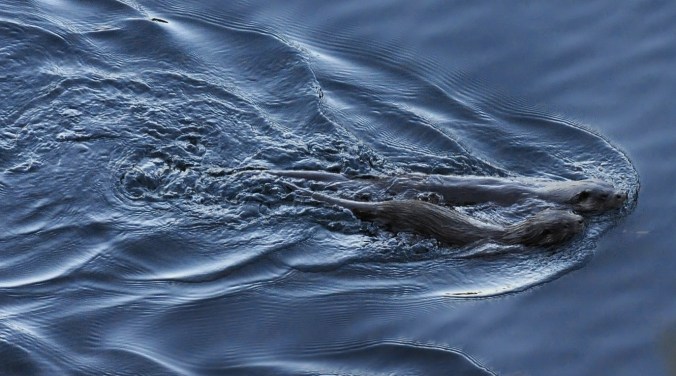
Otters near Shieldaig Island, Loch Shieldaig, Scotland. Photograph: Steve Carter

Otters near Shieldaig Island, Loch Shieldaig, Scotland. Photograph: Steve Carter

Although he may not use the term, George Monbiot believes in biophilia. His devotion to the concept of rewilding is evident in both his actions and his words, and his expressive writing about nature’s resilience and the richness of “ecological interactions” prove the point. His description of a recent trip to the Scottish highlands exemplifies both the draw of nature and his response to it:

As I came over a low ridge, I noticed a disturbance in the water below me, a few metres from the shore. I dropped into the heather and watched. A moment later, two small heads broke from the sea, then the creatures arced over and disappeared again.

After another moment, the larger one – the dog otter – scrambled out of the water with something thrashing in its mouth. He dropped it on to the rocks, gripped it again, then chewed it up. Then the bitch emerged from the sea beside him, also carrying something, that she dispatched just as quickly. They plunged in again, and I watched the trails of bubbles they made as they rummaged round the roots of the kelp that filled the shallow bay. Continue reading

Monemvasia

Monemvasia

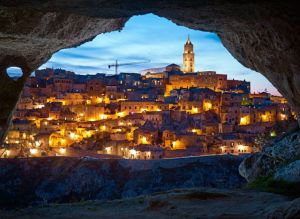
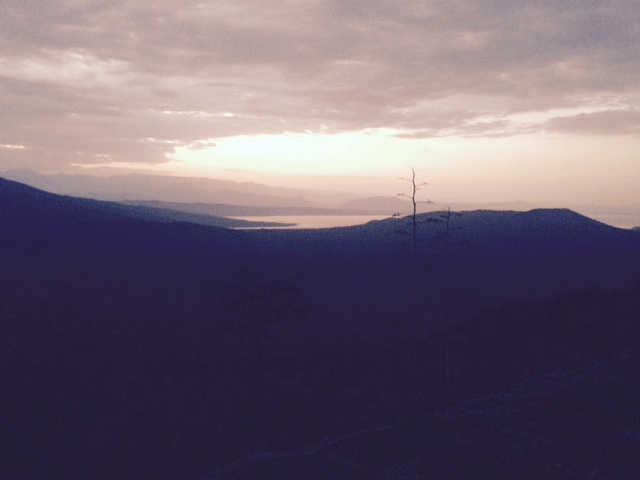
In 2008 Amie, Seth and Milo made a pilgrimage with me, accompanying my mother to her village in the mountains north of Sparta, in the region of southern Greece’s mainland known as the Peloponnesos. My mother’s village is in a region known for producing some of the finest olives on earth. More on that later. While there for some days we had outings, including to the walled fortress town of Monemvasia, built nearly 1,500 years ago.  In the picture to the right you can see a photo I took from inside a hermitage, a cave where various monks lived throughout centuries, above the walled city.

When I opened the New Yorker this week, I was struck by a photo accompanying one of the stories. It reminded me of the photo I took, but the story below could not be more different than the story I would tell about this hilltop town in southern Greece:

Inhabited since prehistoric times, the caves of Matera, in the Basilicata region, housed mostly the very poor until recent renovations. CREDIT PHOTOGRAPH BY SIMON NORFOLK / INSTITUTE

Inhabited since prehistoric times, the caves of Matera, in the Basilicata region, housed mostly the very poor until recent renovations. CREDIT PHOTOGRAPH BY SIMON NORFOLK / INSTITUTE

Take any road in Italy, look up, and you’ll see a lovely hilltop town: a campanile, a castello, a few newer buildings spilling down the slope, as if expelled for the crime of ugliness. But even amid this bounty there is something exceptional about Matera. It clings to a denuded peak in the extreme south of the country, in the Basilicata region—the instep of Italy’s boot. Travellers are often shocked by the starkness of Matera. Continue reading

Ethiopia, Diaspora, Community, Success

21MARATHONweb3-sfSpan-v3

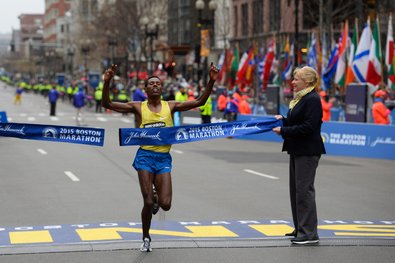
C.J. Gunther/European Pressphoto Agency. Lelisa Desisa crossing the finish line. As he rounded Hereford Street for a well-honed sprint to the finish, he cast off his hat in pre-emptive triumph and waved to the crowd.

Today’s news about an Ethiopian man winning the Boston Marathon gives me the hook to write a post that has been on my mind since Friday. Back before I knew much about Ethiopia from actual experience, I heard an interview with a man from Ethiopia, an emigre in New York City. Adopted man. Adopted city. And a worldview, a lifeview, that I could relate to with a powerful intensity that I did not fully understand at the time:

This Time, Lelisa Desisa Wins Boston Marathon for Himself

Something in that interview began changing the structure of my thoughts about Ethiopia. And then within months of that one of our colleagues from the Zaina Lodge project started telling me that the next place I “must, must, must” explore is Ethiopia. The dial moved even further because that colleague told me stories I could hardly believe about the beauty of Ethiopia. And when I finally made my first visit, I was nonetheless awed beyond what the colleague had led me to expect. So, Ethiopia has been on my mind every day for a couple months now.

And then a couple of days ago, another Ethiopian emigre to New York City checked in to Marari Pearl. Continue reading

Umberto Eco, Come To Kerala!

In “How to Write a Thesis,” Umberto Eco walks students through the craft and rewards of sustained research. CREDIT PHOTOGRAPH BY MARTINE FRANCK / MAGNUM

In “How to Write a Thesis,” Umberto Eco walks students through the craft and rewards of sustained research. CREDIT PHOTOGRAPH BY MARTINE FRANCK / MAGNUM

I have excerpted the first two paragraphs, and the last two, of a delightful and delightfully odd book review in order to finally extend an invitation to Umberto Eco that is long overdue. The review is odd only in the sense that the book was first published when I was a sophomore in high school, 20 years before I completed my doctoral dissertation (which I was working on 20 years ago), and is only now appearing in English for the first time, one year after my son completed his undergraduate honors thesis (the best advice we could send him back then was this).

The review is anything but odd, if you have been following our blog for the last four years.  It is about the effort required to understand sufficiently, and to communicate effectively, on a topic you care about–and provides some tricks of the trade that sound geared for university students but apply to members of our collective as well.  We are not in thesis mode at Raxa Collective. What we do is not theoretical, but grounded in the grind of hard work every day in our chosen profession. But we are in constant search mode for thesis-forged talent who know how to express themselves, to join us as interns or as employees (see Rosanna’s post for our latest talent acquisition in this spirit).

Umberto Eco is my favorite author, mainly because of one short book of his collected writings that I read when I was working on my doctoral dissertation. And mainly for that same book I extend to him an invitation to visit with us in Kerala, as our guest. Maybe I did not need the book reviewed below to complete my thesis, but I am sure I would have devoured it if given the opportunity at that time:

“How to Write a Thesis,” by Umberto Eco, first appeared on Italian bookshelves in 1977. For Eco, the playful philosopher and novelist best known for his work on semiotics, there was a practical reason for writing it. Up until 1999, a thesis of original research was required of every student pursuing the Italian equivalent of a bachelor’s degree. Collecting his thoughts on the thesis process would save him the trouble of reciting the same advice to students each year. Since its publication, “How to Write a Thesis” has gone through twenty-three editions in Italy and has been translated into at least seventeen languages. Its first English edition is only now available, in a translation by Caterina Mongiat Farina and Geoff Farina. Continue reading

Jane Goodall, Journey On

Michael Christopher Brown/Magnum, for The New York Times. Jane Goodall on Lake Tanganyika, offshore from Gombe Stream National Park in Tanzania.

Michael Christopher Brown/Magnum, for The New York Times. Jane Goodall on Lake Tanganyika, offshore from Gombe Stream National Park in Tanzania.

A journey to Greece in 1969 planted a seed in me that grew into my life’s ambition. Another in 1983 led to meeting Amie, and fusing our life’s ambitions together. Together we went to Costa Rica in 1995, which led to continuing our joint life’s journey abroad.

Jane Goodall Is Still Wild at Heart

Half a century ago, she journeyed into the Tanzanian jungle to change how the world saw chimpanzees. Today the world’s most famous conservationist is on a mission to save their lives.

I believe in the power of a journey to change one’s life path. In the story that follows, this woman’s singular life’s journey is just one more example, albeit an extreme and heroic one, of why we believe in the power of a journey. She visited Cornell while I was a graduate student, and Amie and I were deeply moved by what she came to say. Seth was a one year old and Milo was not yet a “twinkle in the eye.”

The child-sized t-shirt we bought to support the Jane Goodall Institute with our limited graduate student funds was passed from older brother to younger until neither of them could fit into it any more, by which time we were well into our new lives in the emerging field of entrepreneurial conservation in Costa Rica.  In no small part, our family’s dedication to conservation is an unexpected outcome of a short journey across campus that Amie and I made to listen to Jane Goodall talk about her long life’s journey. Continue reading

A River Runs Through It, In Ethiopia

One of Ethiopia's many excellent national parks

One of Ethiopia’s many excellent national parks

This is not the post promised. It is a taste of why I must post, as promised. This canyon, this river, this view came early in our expedition and is among the strongest in my visual memory. It seemed fortunate, at the time, to catch this view at sunset but the more I think about it the more I am convinced that the place is worthy of a snapshot any time of the day. And it is worth making future visits, so next time I intend to navigate downriver (from the right in this photo), arriving at the place where I snapped this photo after hiking up the canyon. Continue reading

What A Certain Change Of Scenery Can Do

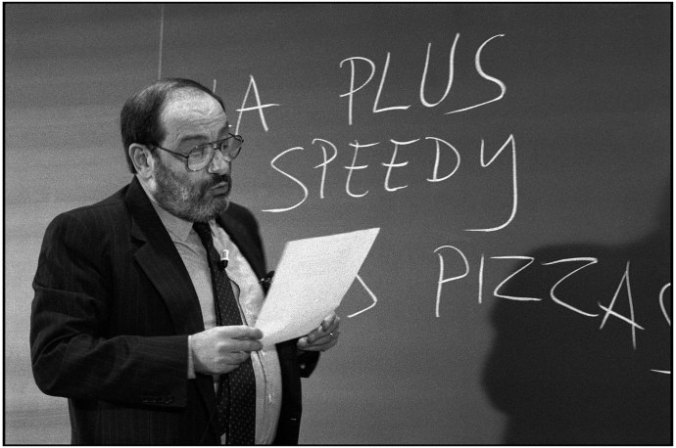
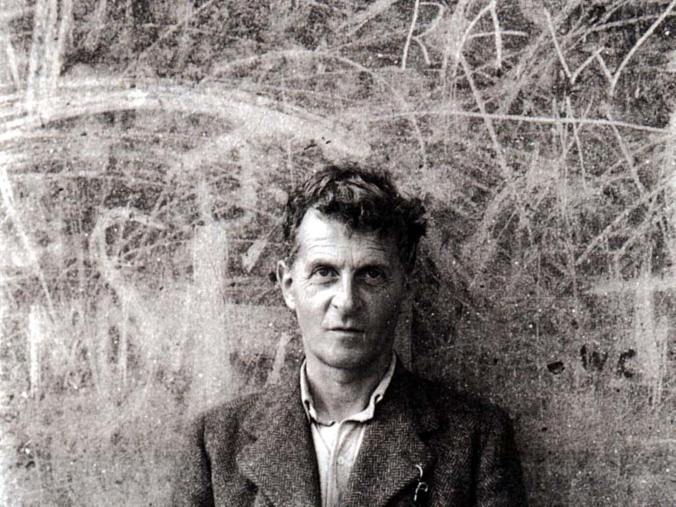
Ludwig Wittgenstein, who knew how to sully a chalkboard with the best of them.

Ludwig Wittgenstein, who knew how to sully a chalkboard with the best of them.

The photo above will make sense below, I hope. Read on. Derek is with us in Kerala for one more week before he moves on to Australia. I am reflecting on his time here, while also currently in conversation with prospective interns for the second half of 2015. And I just received news of Michael, the poet prince of past interns, who is currently on a tug boat in the Atlantic ocean. His experience, since graduating from Amherst College the year after he interned with us, is not typical of anything other than that we have had a very interesting variety of interns who go on to do very diverse, interesting, meaningful things of their own choosing.

These reflections are mixing up with reflections on Ethiopia that I hope to make enough sense of to produce one relevant post, soon. The meaning of our Ethiopia expedition, I already know, will have something to do with the value of perspective, and change of scenery, and leapfrogged expectations.

The pitch for an internship with us is related to those same values and is straightforward, in one sense: practical work experience in sustainable hospitality, social enterprise, or some variation of the two. The trickier part of the pitch is being clear about the value of spark plugs blowing out in the middle of the night before you’ve reached the top of the mountain.  It is not possible to predict what a particular spark plug moment is going to be like in the future, or even that a particular person will be ready for it.

But it is possible to predict that most of us, most of the time, benefit from removing ourselves from our comfort zone. We may have just one zen moment, or a whole string of them, or none at all. And any of those may be just the right thing for us. It is making the decision to put one foot forward in a particular direction, and living with it for as long as it is useful for you, that seems to be the real source of valuable life experience.

So, the photo. It is not necessary to know who this philosopher was, or even that he was a philosopher. Just knowing what follows is enough to appreciate that sometimes a change of scenery is the best way to prepare yourself for the next big thing in your life:

…He revolutionized philosophy twice, fought with shocking bravery in World War I, inspired a host of memoirs by people who knew him only glancingly—and for six years taught elementary school in the mountains of rural Austria. Biographers have tended to find this bizarre. Chapters covering the period after his teaching years, when Wittgenstein returned to philosophy, are usually called something like “Out of the Wilderness.” (That one’s from Ray Monk’s excellent Ludwig Wittgenstein: The Duty of Genius. The next chapter is called “The Second Coming.”) Continue reading

Words, Landscapes, And Pondering Ethiopia

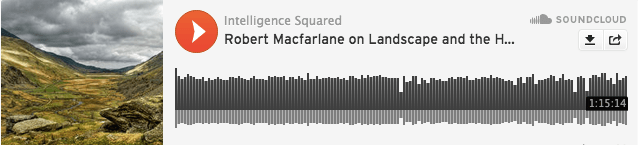
The most illuminating 75 minutes with earbuds on, in a long time or possibly ever (since my history with earbuds is only a few years old), by far, were spent listening to this. If you are a combined “words person” and “nature person”–how else would you have found your way to this blog?–then you will understand.

Ethiopia, from the perspective of our recent expedition which I have barely begun to process with words, was illuminated for me just a bit hearing this man talk about how we describe places and the impact that ecosystems have on us. Ecosystems serve as metaphors, he says. And that prepositions matter a great deal to how we communicate the impact ecoystems have on us, literally and metaphorically.

Ethiopia was an enriching experience, in these senses.  I will write separately on that illumination. For now, a bit more from Robert Macfarlane, the illuminator on nature, through words. After listening to the podcast of his lecture, I had to know who this was, and it brought me here:

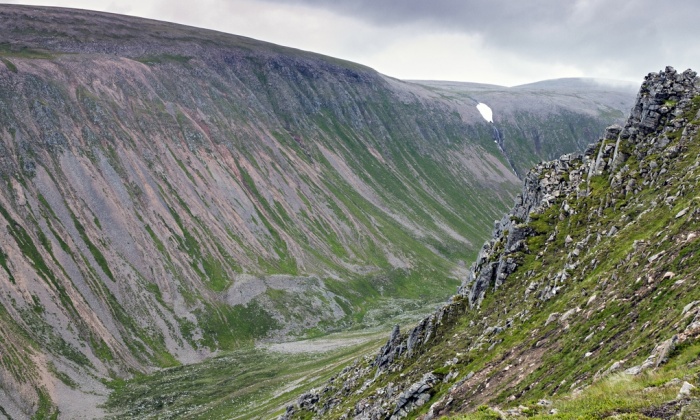
Làirig – ‘a pass in the mountains’ (Gaelic). Photograph: Rosamund Macfarlane

Làirig – ‘a pass in the mountains’ (Gaelic). Photograph: Rosamund Macfarlane

Eight years ago, in the coastal township of Shawbost on the Outer Hebridean island of Lewis, I was given an extraordinary document. It was entitled “Some Lewis Moorland Terms: A Peat Glossary”, and it listed Gaelic words and phrases for aspects of the tawny moorland that fills Lewis’s interior. Reading the glossary, I was amazed by the compressive elegance of its lexis, and its capacity for fine discrimination: a caochan, for instance, is “a slender moor-stream obscured by vegetation such that it is virtually hidden from sight”, while afeadan is “a small stream running from a moorland loch”, and a fèith is “a fine vein-like watercourse running through peat, often dry in the summer”. Other terms were striking for their visual poetry: rionnach maoim means “the shadows cast on the moorland by clouds moving across the sky on a bright and windy day”; èit refers to “the practice of placing quartz stones in streams so that they sparkle in moonlight and thereby attract salmon to them in the late summer and autumn”, and teine biorach is “the flame or will-o’-the-wisp that runs on top of heather when the moor burns during the summer”. Continue reading

Dirt Candy. Say It. Now Resist. It’s Futile.

Whenever we see a story about innovative, excellent food that involves no animals, we check on its suitability for this blog. We are not committed, by any means, to exclusive consumption of vegetarian cuisine but we believe going easy on the meat is a good way to do the green thing. This headline makes me think of the several of us contributing here who spent time in Ithaca, NY USA; and especially makes me think of a certain restaurant, Moosewood by name, that may have been the reference in Little Sprout Grows Up by Jeff Gordiner:

Ben Russell for The New York Times

Dishes at Dirt Candy tend to be composed and clever, but unapologetically crave-inducing. Here, the cabbage hot pot. Ben Russell for The New York Times 

Amanda Cohen Replants Her Vegetable Restaurant Dirt Candy.

Back when the chef Amanda Cohen was running her restaurant, Dirt Candy, out of an East Village nook that felt only slightly more commodious than a gopher hole, she received a call from someone representing a famous man who wanted to eat her food. Although they may hesitate to admit it, most chefs in New York would mount a synchronized swan dive into the iced-over Hudson River if it would help entice celebrities through their front doors. But Dirt Candy, in spite of being one of the most prominent and influential vegetarian establishments in the United States, was so small it almost qualified as a bonsai restaurant. Ms. Cohen had only 18 seats. She didn’t feel right giving a pair of nonfamous customers the cold shoulder. Continue reading

Mega-Meme Coffee Can Still Surprise

We care about coffee. Not only for 10th latitude reasons (geckos and coffee seem to go together), or 1,200 meter reasons (Xandari is perfectly located). Derek gets at it here, but there is more to say and the recent expedition to Ethiopia provides fodder for the next best post on topic. But that will come in due time.  Mainly, we just love coffee and we happen to work in places where it grows well.

So we watch for useful stories about coffee.Below is an excerpt from midway through a great piece from Atlantic‘s website, the most surprisingly interesting written piece on coffee in a long time, and as you have likely noticed coffee stories are a mega-meme these days:

Like many users of the Internet, I had actually already seen “Kill the K-Cup.” The mysteriously anonymous YouTube video was published this January, and spread widely. It spawned a hashtag #KillTheKCup (at the suggestion of the final frames of the video), which is still alive on multiple social-media platforms. Continue reading

Craters Of Man’s Devotion

StG Ethiopia

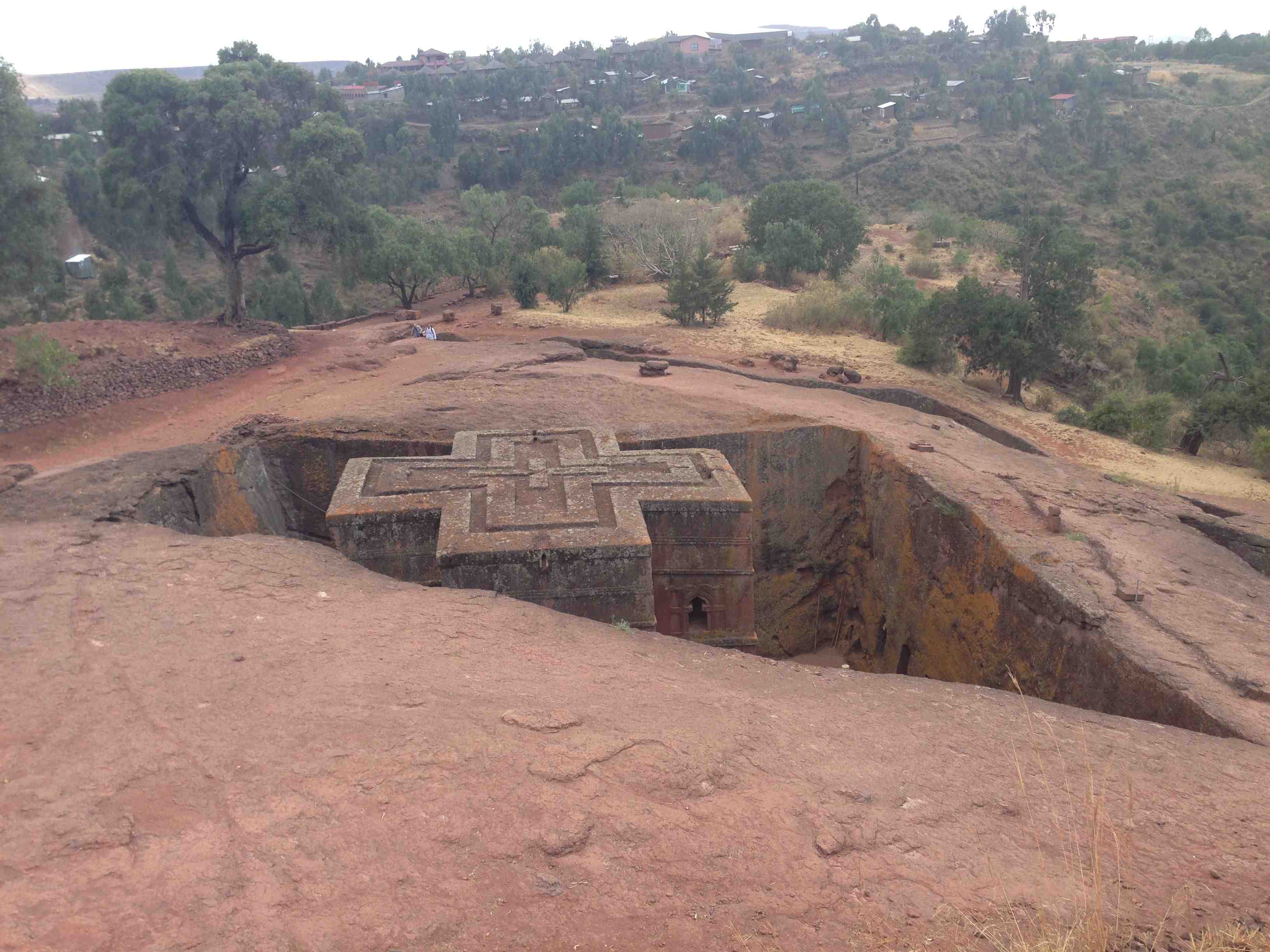
Some snapshots of my Ethiopian expedition, just ended, are in order; not of the national parks which were the main purpose of the expedition–more on which later–but from the visit to the north which is where most visitors to Ethiopia currently make a sort of pilgrimage for reasons you can understand looking at these snapshots.

It would be difficult for any photo to do justice to this wonder, a church created by men 1,000 years ago by carving down into the stone mountain. But words are even less helpful for reasons you can probably best understand by seeing another view of the same, following what the UNESCO World Heritage Centre has to say about this and the other churches of Lalibela, Ethiopia:

…The churches were not constructed in a traditional way but rather were hewn from the living rock of monolithic blocks. These blocks were further chiselled out, forming doors, windows, columns, various floors, roofs etc. This gigantic work was further completed with an extensive system of drainage ditches, trenches and ceremonial passages, some with openings to hermit caves and catacombs…

StG 2

As impressive as those craters in Siberia may be, they pale compared to what man can do when he is sufficiently motivated, which may be the one source of hope for addressing the challenges of climate change (one of the seemingly impossible challenges of our own time). This modern challenge, now that I think of it, seems particularly well-suited to the beliefs many hold, across various religious traditions, about the saint who is the namesake of this particular church.

Continue reading

Dear Bob, Thanks For All Of It

Arba Mintch

As coincidences go, this one is nothing but typical: Seth’s post about wrapping up the first leg of his scientific expedition in Jamaica is there to be read; this song is coming through the earbuds (do yourself a favor and find it; do the estate of the artist a favor by finding a legal copy to ensure royalties go where they belong); I am looking out over the most fertile lands in Ethiopia, getting ready to board a boat to pass by the hippos and 7-meter long crocodiles that live in the water in the distance (in the photo above) and then climb the hills to where the zebras roam, to see what we can see. And then perfectly, as I glance at the news, a small feature catches my attention:

When people ask where I live and I say Jamaica, it’s almost a given that someone will then randomly say “ah, Bob Marley” in response. It can grate that one man can define an entire country, but this man was that most rare of individuals, an icon, the man who introduced reggae to the world and who drove an equally iconic vehicle, a Series III Land Rover.

I care nothing about cars, but at the moment the story catches my attention I am deeply immersed in the earliest recordings of Bob Marley as preparation for the exploration of Ethiopia. So I read on about this car in Jamaica. And the playlist continues, now Chances Are (again, find it; from when the artist was living in the USA, but this was not released until years later and never got the airplay it deserved) makes me want to know even more about this Land Rover before getting into that boat. Thanks, Bob, for prepping me for the beauty of Ethiopia, and sending me on my way today in good spirits.

Continue reading

Making The Most Of The Golden Years

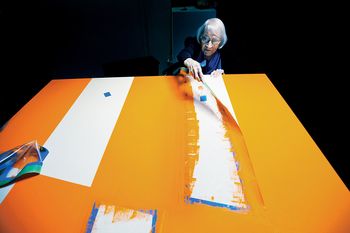
Carmen Herrera, painter, 99, in her Manhattan studio. Herrera sold her first painting at age 89. Today her work is in the permanent collections at the Museum of Modern Art and the Tate Modern.

Carmen Herrera, painter, 99, in her Manhattan studio. Herrera sold her first painting at age 89. Today her work is in the permanent collections at the Museum of Modern Art and the Tate Modern.

David Bowie sang of golden years, but we did not think of those this way. Many of us are already there, and all of us are on our way there, to the golden years; the question is what we make of those years. Thanks to Lewis Lapham for his inspirational report in the New York Times:

…The portraits here are of men and women in their 80s and 90s, rich in the rewards of substantial and celebrated careers, and although I know none of them except by name and reputation, I’m asked why their love’s labor is not lost but still to be found. Why do they persist, the old masters? To what end the unceasing effort to discover or create something new? Why not rest on the laurels and the oars? Continue reading

Authenticity And Its Discontents

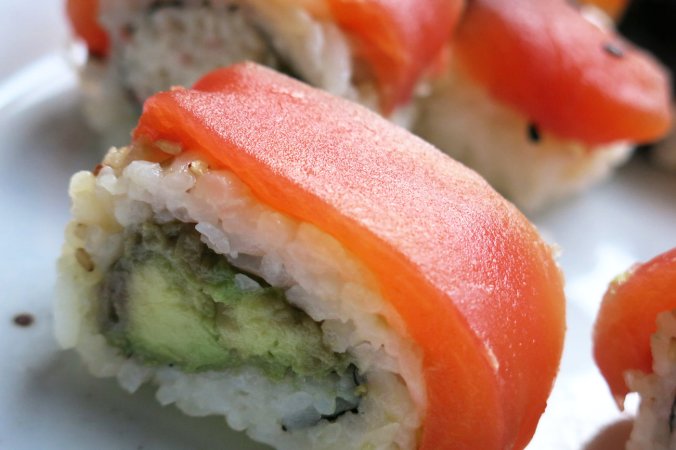
Chef James Corwell's nigiri sushi rolls made with Tomato Sushi, a plant-based tuna alternative, in San Francisco. Alastair Bland for NPR

Chef James Corwell’s nigiri sushi rolls made with Tomato Sushi, a plant-based tuna alternative, in San Francisco.
Alastair Bland for NPR

I am realizing more each day how complex the notion of authenticity is. It is often, I see with increasing frequency, a cliche thrown casually into descriptions and promotions of this or that. Are there times when something other than authenticity is appropriate, even for an organization such as ours that promotes offering travelers authentic experiences of various cultures around the world, including local cuisine?

This story has me thinking (thanks to National Public Radio, USA and its program called “the salt”) that if foodies can make the leap from literal authenticity to a more complex notion of authenticity, for the sake of the environment as well as for broadened pleasures of the palate, it may serve as a model for how to approach seemingly intractable challenges facing the planet (in the case of this story, fisheries collapse but also the broader challenges of collapse), including the ever-changing cultures that make our planet worth traveling:

It’s a dead ringer for Ahi tuna sashimi. It cuts into glistening slivers that are firm and juicy. And it’s got a savory bite.

But this flesh-like food is not fish. It’s made of tomato, and it’s what San Francisco chef James Corwell hopes could be one small step toward saving imperiled species of fish, like bluefin tuna.

“What I want is to create a great sushi experience without the tuna,” Corwell tells The Salt.

To make this Tomato Sushi, he skins and removes the seeds from fresh Roma tomatoes. Then he vacuum seals them in sturdy plastic bags and cooks them in hot water for about an hour — a technique called sous-vide. Continue reading

Words Forming A Name, Becoming A Brand

Illustration by Paul Sahre

Illustration by Paul Sahre

We spent much of the first half of 2011 poring over dictionaries. Mostly Sanskrit to English dictionaries, but also Malayalam to English, and also just English dictionaries with the occasional thesaurus to inspire.

We thought a lot about a company that two of us had formed that had done a lot of projects relevant to, and some interestingly different from, the new enterprise that would re-brand the hospitality portfolio of a major business group based in Kerala, India. We recorded a few facts about that naming process at the time this blog went live. This article not only brings back memories of those days, weeks, months of name-pondering, but gets us thinking about the meaning of Raxa Collective now versus what we thought then:

The Weird Science of Naming New Products

To find the perfect brand, leave no word unturned.

The Second Annual Thevara Badminton Tournament

Thevara2014Badminton2

The 2014 edition of our neighborhood sporting event of the year officially kicked off this evening, with two Raxa Collective representatives sharing the stage with two politicians, a priest and the neighborhood association’s leadership (who graciously invited Raxa Collective to join in again) prior to the first match.  We look forward to announcing the champion on December 31. Continue reading

Tricking Taste Buds: Easy as Miracle Fruit Pie?

© Getty Images / BBC

p02f6t3k.jpg

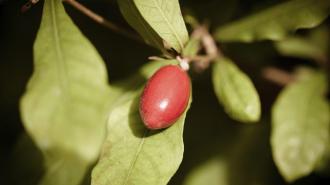
Synsepalum dulcificum, also known as miracle fruit (Thinkstock)

The miracle fruit is one of the many trees that we have incorporated into the edible landscape at Marari Pearl. So we thank Veronique for writing about it in her BBC feature article How to Hack Your Tastebuds. In Kerala we have an abundance of the Indian gooseberry, or amla, which is described as sour, astringent, pungent, and bitter, but also sweet. A weird combination, to say the least. After reading Veronique’s explanation, it is easier to understand that the transition from sour to sweet in one or two bites can be explained through some chemistry that takes place on the tongue:

p02f6t2z.jpg

Tasting orange juice after brushing your teeth can be unpleasant, but why? (Thinkstock)

Your tongue is not a blank slate. What you’ve just eaten can change the flavour of what you eat next – for better or for worse. It’s all because your taste buds respond differently when the environment around them shifts – an effect you can use to go on a little mouth-hacking tour.

Let’s start with an artichoke. Eat one and then drink a glass of water and you might notice that the liquid tastes strangely sweet. Then there’s orange juice. Drink a glass after brushing your teeth with toothpaste, and the normally sweet drink tastes foul instead. And for mind-bending parlour tricks, nothing beats miracle fruit. These little red West African berries make anything sour taste sweet – and it’s a remarkably clean, pure sweetness. Continue reading

Amazon, Thinking Of Our Future

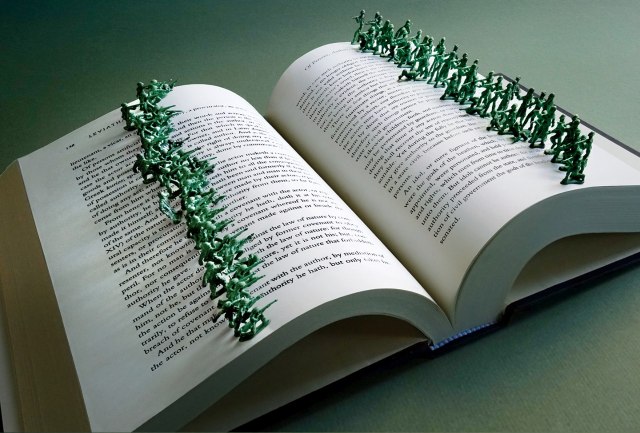
LINES ARE DRAWN A battle over pricing may have been the Sarajevo moment. But the war is really about the future of publishing—and maybe of culture.

LINES ARE DRAWN A battle over pricing may have been the Sarajevo moment. But the war is really about the future of publishing—and maybe of culture.

I never tire of “think pieces” on Amazon because it is about our cultural future:

The War of the Words

Amazon’s war with publishing giant Hachette over e-book pricing has earned it a black eye in the media, with the likes of Philip Roth, James Patterson, and Stephen Colbert demanding that the online mega-store stand down. How did Amazon—which was once seen as the book industry’s savior—end up as Literary Enemy Number One? And how much of this fight is even about money? Keith Gessen reports.

By Keith Gessen  Photo Illustrations by Stephen Doyle Continue reading